Feb 11, 2019 | News
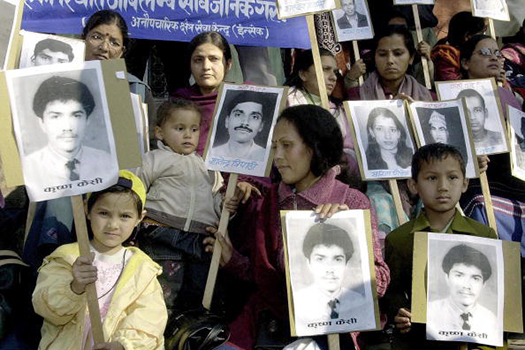
The ICJ, Amnesty International and TRIAL International today called for the Government of Nepal to commit to a transparent and consultative transitional justice process that complies with international law and the judgments of the Supreme Court of Nepal.
On 6 February, the Government of Nepal extended the mandates of the Truth and Reconciliation Commission (TRC) and the Commission on the Investigation of Enforced Disappearance of Persons (CIEDP) for an additional year and committed to the selection of new commissioners by April 2019.
Following the announcement, the ICJ, Amnesty International and TRIAL International voiced concerns about past approach to transitional justice and urged the Government to ensure that the next two months are used to get the flawed process on track.
The organizations warned that this should not become another missed opportunity to ensure that victims are provided the justice, truth and reparation that they so desperately seek.
“A further one-year extension will be meaningless if measures are not taken to secure the independence and impartiality of the commissions,” said Frederick Rawski, ICJ Asia Pacific Director.
“This can only be achieved through a transparent selection process driven by a genuine will to combat impunity – not just for conflict victims, but for future generations,” he added.
The three organizations reiterated their view that the process to date has failed to deliver justice, truth or reparation for victims of crimes under international law and gross human rights violations or establish laws and institutional safeguards to ensure that such crimes are never repeated.
The organizations underscored the need for independent, competent and impartial commissions, compliance with international law, and the meaningful participation of conflict victims, civil society and National Human Rights Commission in the design and implementation of the process.
“This is a great opportunity for Nepal to learn from its past, as well as experiences from other post-conflict societies, that the credibility of transitional justice process ultimately lies on the integrity, competence, independence and expertise of the commissioners. The independence of the Commission, together with a legal framework in accordance with international law, will make or break the success of the commitment to guarantee justice, truth and reparation,” said Biraj Patnaik, South Asia Director of Amnesty International. “The process for appointing new commissioners must be transparent and open to public scrutiny. Victims and civil society must have a robust opportunity to propose and vet candidates.”
The organizations also noted with disappointment that substantive legal concerns raised repeatedly by victims, civil society and the international human rights community have gone unanswered.
The government has not given a clear indication as to whether or how these concerns will be addressed.
“In addition to its obligation to ensure that conflict victims have access to an effective remedy and reparation, the authorities have a separate and independent obligation to investigate and if there is sufficient admissible evidence, prosecute those suspected of criminal responsibility in fair trials before ordinary civilian courts – and, if found guilty, punish them with appropriate penalties which take into account the grave nature of the crimes,” said Helena Rodríguez-Bronchú, Head of TRIAL International’s program in Nepal.
“These obligations are clearly established in international law, as well affirmed in ruling after ruling by the Supreme Court. It is about time that the Government stopped proposing measures that are clearly inconsistent with the letter and spirit of those judgements,” she added.
Concerns raised about existing, and proposed, legislation include: disparities between the definitions of specific crimes under international law and human rights obligations and violations under national, and international law; inadequate provisions to ensure that serious crimes under international law are subject to criminal accountability (including punishment proportionate to the seriousness of the crimes); and a reliance on compensation at the expense of other forms of reparation and remedy for conflict survivors and their families
The ICJ, Amnesty International and TRIAL International had previously submitted a legal analysis of draft transitional justice legislation circulated in 2018, including recommendations on how to ensure compliance with international law and good practices.

Feb 7, 2019 | Advocacy, Non-legal submissions
The ICJ has submitted a written statement on Sri Lanka to the Human Rights Council ahead of its 40th Session in Geneva.
Almost ten years after Sri Lanka emerged from a period of conflict and massive human rights violations, the Government of Sri Lanka still has largely failed to implement its human rights obligations and commitments as reflected in Resolution 30/1.
The ICJ statement focuses on two of four transitional justice mechanisms which the Government committed to establish under the Resolution: (a) the judicial mechanism with special counsel to investigate violations of human rights and international humanitarian law; and (b) the office of missing persons. It highlights how female victims of war are uniquely impacted by the Government’s failure to implement the commitments made before the UNHRC and underscores the importance of holistically including women when such measures are implemented.
Recommendations:
The ICJ considers that the gravity and character of the crimes under international law committed in Sri Lanka, and the failure of the Government of Sri Lanka to meet its obligations and commitments to ensure justice for such crimes including as provided for in resolution 30/1, means that referral to the International Criminal Court or the creation of another international mechanism to facilitate criminal accountability would be fully warranted. If however the Council does not choose to pursue these options at this stage, the ICJ urges the Council at minimum to:
- Continue the monitoring of Sri Lanka through the adoption of a new resolution to ensure that the Government complies with all its obligations and commitments as reflected in resolution 30/1.
- Provide for OHCHR to develop, with the Sri Lankan Government, an implementation strategy with definitive timelines to ensure that the time afforded under the new resolution is utilised to expedite the implementation of measures assured under Resolution 30/1.
- Encourage Member States to exercise universal jurisdiction in order to bring perpetrators to justice.
The ICJ urges the Government of Sri Lanka to:
- Take immediate measures to establish the judicial mechanism with international involvement as contemplated under operative paragraph 6 of Resolution 30/1. The mechanism should ensure gender parity, be accessible for women in civil society, and allow female victims to fully participate in the process.
- Spread awareness regarding the importance of certificates of absence and confirm to the community that issuance of a certificate will not result in the end of efforts to find the person.
- Ensure an overall gender strategy is integrated in all other transitional justice mechanisms that are yet to be established so that structural injustices against women, especially in terms of discrimination and lack of participation, are addressed.
(full text of submission, in PDF: UN-HRC40-SriLanka-WrittenStatement-2019-EN)
Jan 29, 2019 | News
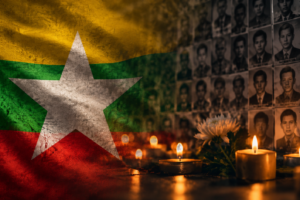
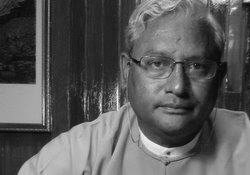
On the second anniversary of the killing of prominent lawyer U Ko Ni, in public view at Yangon International Airport, the ICJ repeats its calls for a thorough and impartial investigation with a view to establish the facts, to deliver justice and to deter the repetition of similar crimes.
“This brazen killing of a prominent democracy advocate demands a rigorous State response to show this type of crime will be fully punished,” said Frederick Rawski, the ICJ’s Director for Asia and the Pacific.
Despite an official investigation and reports of more than 100 court hearings, nobody has been held accountable for U Ko Ni’s death – criminally or otherwise – and the circumstances have not yet been satisfactorily explained.
“Myanmar simply cannot satisfy its international law obligations without conducting an impartial and independent investigation that is free of military influence. Such an investigation is a pre-requisite for conducting an effective prosecution in a fair trial setting,” added Rawski.
U Ko Ni was well known as a vocal advocate for human rights and democratic reform in Myanmar. As an adviser to the National Legal of Democracy party, he was involved in creating the position of State Counselor, which formalized a leadership role for Daw Aung San Suu Kyi, despite a constitutional provision barring her from the Presidency.
At the time of his death, it is understood that U Ko Ni was working on proposals to replace Myanmar’s 2008 Constitution, the source of law underpinning military power.
“A credible justice process is required not only for U Ko Ni and his family, but to demonstrate the State will protect the right to life of all people including democracy advocates,” said Sean Bain, legal adviser for the ICJ.
“A crime of this nature stifles participation in the democratic process and so an effective justice process is imperative to deter its repetition,” Bain added.
Myanmar has a particular obligation to ensure that lawyers and others acting as human rights defenders are protected in carrying out their work.
Any justice process must be timely, effective and shed light on the facts.
The investigation into U Ko Ni’s killing has been beset by obstacles, including the unknown whereabouts of a primary suspect, the incorrect identification of a deceased individual as a suspect and the arrest of a person with the same name, and reported military involvement in the police investigation. Lines of inquiry related to the political motivations for the killing, particularly considering the military links of many suspects, do not appear to have been pursued satisfactorily, nor impartially, given military involvement in the investigation.
Criminal proceedings in Yangon’s Northern District Court, and related proceedings in the Yangon High Court, have been sluggish. Observing lawyers and individuals including from the ICJ have noted multiple instances of admission into evidence of testimony that appears to be irrelevant, failures of key witnesses to appear, and the long drawn out process of court proceedings whereby weeklong delays are common while continuances over successive days are rare.
These issues are emblematic of challenges in Myanmar’s justice system previously identified by the ICJ in which police, prosecutors and courts generally lack the independence and or will to effectively administer justice, particularly in politically sensitive cases.
“Two years is an incredibly long time to get to the position we are in now, and in our experience this highlights broader problems with the administration of justice in Myanmar,” added Bain.
Contact
Frederick Rawski, ICJ Asia Pacific Region Director, e: frederick.rawski(a)icj.org
Sean Bain, ICJ Legal Adviser, e: sean.bain(a)icj.org
Download:
Myanmar-Ko Ni Statement-News-web stories-2019-ENG (full story with background information, PDF)
Myanmar-Ko Ni Statement-News-web stories-2019-BUR (full text in Burmese, PDF)
Read also:
Myanmar: reverse laws and practices that perpetuate military impunity – new ICJ report
Killing of lawyer U Ko Ni must be promptly and impartially investigated
Dec 14, 2018 | News
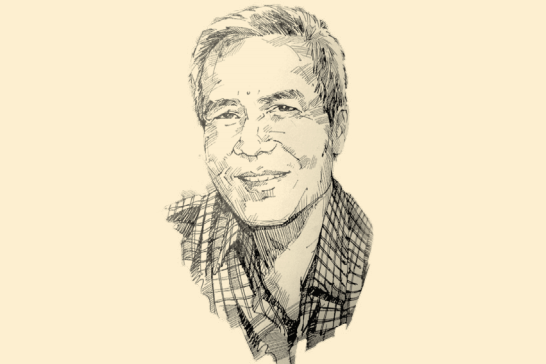
Today, on the sixth anniversary of the disappearance of Lao civil society leader Sombath Somphone, the ICJ joined 106 organizations and 37 individuals in a joint statement calling for an independent, impartial and effective investigation to reveal his fate and whereabouts.
The statement read as follows:
14 December 2018: On the eve of the sixth anniversary of the enforced disappearance of Lao civil society leader Sombath Somphone, we, the undersigned organizations, reiterate our calls for the Lao government to conduct an independent, impartial and effective investigation to reveal his fate and whereabouts.
Sombath was last seen at a police checkpoint on a busy street of the Lao capital, Vientiane, on the evening of 15 December 2012.
Footage from a CCTV camera showed that Sombath’s vehicle was stopped at the police checkpoint and, within minutes, individuals forced him into another vehicle and drove him away in the presence of police officers. CCTV footage also showed an unknown individual driving Sombath’s vehicle away from the city center.
The fact that police officers were present at and witnessed Sombath’s abduction and failed to intervene strongly indicates state agents’ involvement in, or acquiescence to, human rights violations committed against Sombath, which include the crime of enforced disappearance.
Later that evening, witnesses reportedly saw Sombath at a police holding facility in Vientiane yet to date officials have provided no information about what he was doing there and subsequently what happened to him.
For the last six years, the Lao government has failed to provide any credible answers with regard to the disappearance of Sombath Somphone.
In its most recent pronouncements, made during the review of Laos’ initial report by the Human Rights Committee (CCPR) in July 2018, the Lao government said it had been “trying very hard” to investigate Sombath’s fate and whereabouts.
However, this statement has been contradicted by the government’s refusal to accept international assistance in conducting the investigation and to provide any details about the progress of its investigation.
Lao authorities have failed to disclose any new findings from their investigation of Sombath’s case to the public since 8 June 2013 and have met with his wife, Shui Meng Ng, only twice since January 2013.
Despite the government’s recent claim that police had the “capacity and techniques” to reveal Sombath’s fate and whereabouts, we remain extremely concerned by the lack of progress in the investigation by Lao authorities into his case and reiterate our call for Vientiane to allow international assistance towards conducting an independent, impartial and thorough investigation according to international law and standards.
The Lao authorities have international legal obligations to conduct such investigations and to bring persons responsible for serious violations to justice under treaties to which they are party, including the International Covenant on Civil and Political Rights and the Convention against Torture.
We also urge the Lao government to ratify the International Convention for the Protection of All Persons from Enforced Disappearance, which Laos signed in September 2008, to incorporate the Convention’s provisions into the country’s domestic legislation, and implement it in practice.
Until Sombath Somphone’s fate and whereabouts are revealed, we will not stop demanding that Sombath be safely returned to his family and we will continue to ask the Lao government: “Where is Sombath?”
Laos-SombathSomphoneDisappearance-Advocacy-JointStatement-ENG-2018 (full statement, including list of signatories, PDF in English)
Dec 12, 2018 | News
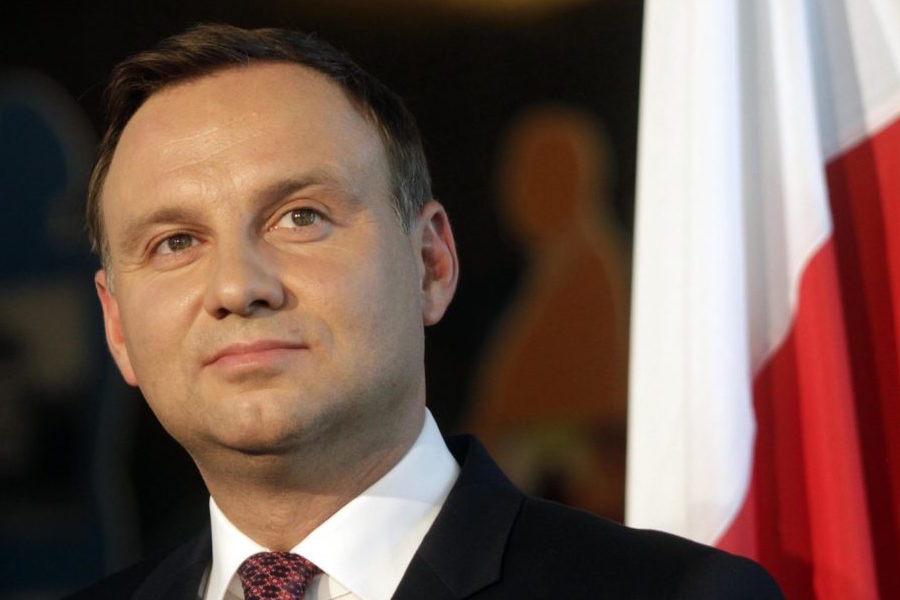
The ICJ today called on President Andrzej Duda to sign legislation that would require the reinstatement of the Supreme Court justices that were forcibly “retired” in July 2018.
On 21 November 2018, the lower house of the Polish Parliament (Sejm) approved Draft Law no. 3013, which would amend the Law on the Supreme Court. This amendment would ensure that the Supreme Court and Supreme Administrative Court justices who “retired … return in office on the day of entry into force of this Law” (Article 2.1).
The Minister of Justice has stated that the Law is being adopted to implement the EU Court of Justice interim measures issued in the infringement proceedings against Poland for the failure to respect the tenure of its Supreme Court justices.
“The draft law is a step in the right direction to implement the interim measures by the Court of Justice of the EU,” said Massimo Frigo, Senior Legal Adviser for the ICJ Europe and Central Asia Programme.
“It is important that President Duda signs this law promptly to ensure the independence of the judiciary in Poland as well as respect for its obligations under EU law,” he added.
The ICJ however is concerned that this law still refers to the Supreme Court justices to be reinstated as “retired.”
The forced “retirement” of one-third of the Supreme Court Justices constituted effectively a disguised dismissal in breach of international law and EU law standards on the rule of law and the independence of the judiciary.
Any reference to the “retirement” of the Supreme Court Justices should therefore be deleted.
“The Government’s intention that these measures be issued to implement the Court of Justice’s interim measures suggests that these measures are not intended to be permanent,” said Massimo Frigo.
“The Court of Justice and the European institutions should pursue the Article 7 procedure and the infringement proceedings until the forced judicial “retirements” are fully rescinded and no further similar attempts are made to undermine judicial independence and function.”
Background
A law on the Supreme Court, which entered into effect in July 2018, attempted to force the “retirement” of 27 of the 72 Supreme Court judges, including the First President, by lowering the mandatory retirement age for its judges from 70 to 65 years.
The ICJ has condemned the “forced retirement” of the 27 Supreme Court Justices as violating the security of tenure of judges in direct contravention of the principle of judicial independence, as expressed in international law and standards.
These include the UN Basic Principles on the Independence of the Judiciary, Council of Europe standards, the European Court of Human Rights’ jurisprudence and the rule of law principles enshrined in article 2 of the Treaty on European Union.
An ICJ letter of 11 July 2018, signed by 22 senior judges from all regions of the world, urged the Polish government to act immediately to reinstate the forcibly retired judges in office.
The European Commission has recognized the current situation as undermining “the principle of judicial independence, including the irremovability of judges” and has triggered a procedure under Article 7 of the Treaty of the European Union that could ultimately lead to suspension of Poland’s EU voting rights.
The Commission has also launched infringement proceedings against Poland in respect of the law on the Supreme Court.