Nov 1, 2017 | News
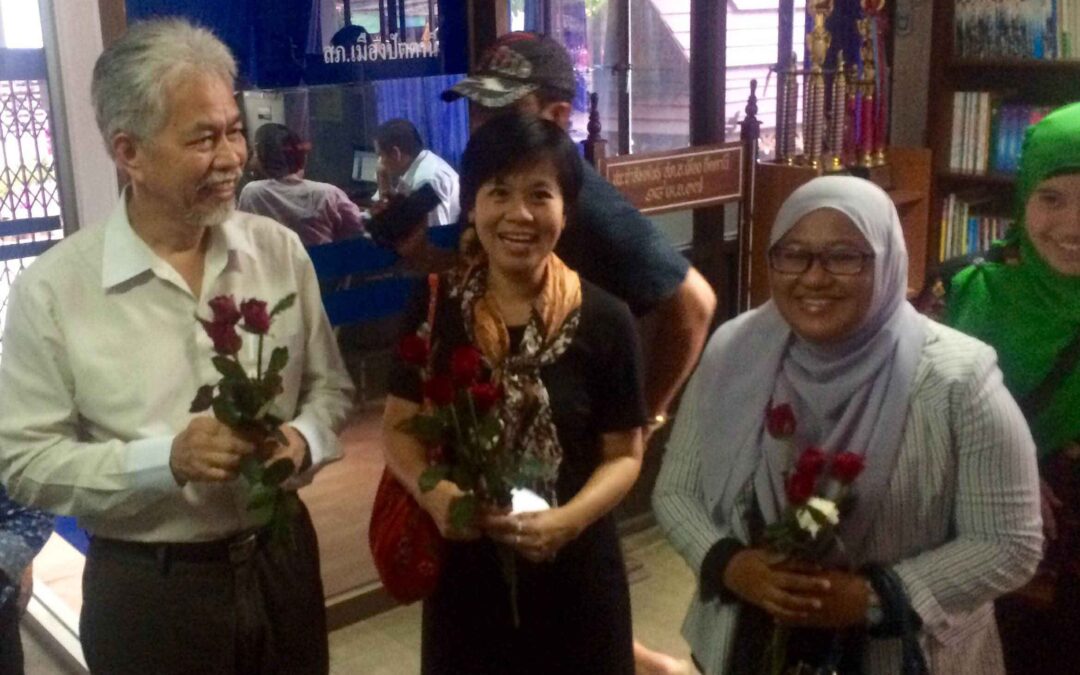
The ICJ welcomes the Pattani Provincial Prosecutor’s decision to end the criminal prosecution of three prominent human rights defenders who raised allegations of torture in Thailand’s restive deep South: Ms Pornpen Khongkachonkiet, Mr Somchai Homlaor, and Ms Anchana Heemmina.
On 24 October 2017, the Region 9 Senior Expert Public Prosecutor, on behalf of the Pattani Provincial Prosecutor, informed the Superintendent of the Muang District Pattani Police Station of the decision to end the prosecution of the three defenders for criminal defamation and violation of the Computer Crime Act.
The ICJ has previously expressed concern that the prosecutions were unwarranted and abusive and were aimed at chilling the exercise of critical human rights work in Thailand.
“While we welcome the decision to end these prosecutions, they have already caused a tremendous amount of damage to complainants of serious human rights violations like torture and ill-treatment, civil society, and the local community in the deep South that must now be repaired,” said Kingsley Abbott, the ICJ’s Senior International Legal Adviser for Southeast Asia.
“An important first step would be to pass legislation which criminalizes torture and ill-treatment and provides meaningful protections for those who wish to come forward with allegations of violations,” he added.
On 28 February 2017, the UN Office of the High Commissioner for Human Rights announced that it had been informed that the Thai National Legislative Assembly (NLA) would not enact legislation then under consideration criminalizing torture and enforced disappearance, the Draft Prevention and Suppression of Torture and Enforced Disappearance Act (Draft Act).
The following day, an NLA official speaking to BBC Thai confirmed that the Draft Act would be “returned [to the Thai Cabinet] for more consultations… with Interior officials, police authorities, the national security sector, military authorities and prosecutors.”
The Draft Act remains with the Thai Cabinet.
“It is long past time for Thailand to make good on its repeated commitments on the international stage to pass this essential piece of legislation in accordance with its international human rights obligations,” added Abbott.
Contact
Kingsley Abbott, Senior International Legal Adviser, ICJ Asia Pacific Regional Office, t: +66 94 470 1345, e: kingsley.abbott(a)icj.org
Background
On 10 February 2016, three Thai organizations, the Cross Cultural Foundation (CrCF), Duay Jai Group (Hearty Support Group), and the Patani Human Rights Organization (HAP), issued a report that documented 54 cases of alleged torture and ill-treatment by the Thai security forces in the deep South since 2004.
In response, the Internal Security Operations Command (ISOC) Region 4 (Forward Command) – created to resolve the situation in the deep South – made complaints of criminal defamation against the three co-editors, Pornpen Khongkachonkiet (Director of the CrCF), Somchai Homlaor (Senior legal advisor to CrCF and Hearty Support Group), and Anchana Heemmina (founder and Director of the Hearty Support Group).
On 26 July 2016, the Thai police charged the three defenders with criminal defamation by means of publication under Article 326 and 328 of the Penal Code, and importing false information to a computer system under Article 14 (1) of the Computer-Related Crime Act B.E. 2550 (2007).
On 7 March 2017, the ISOC 4 Forward Command announced its intention to drop the complaints at a press conference in Bangkok.
Thailand is a State party to the International Covenant on Civil and Political Rights (ICCPR), the Convention against Torture and other Cruel, Inhuman or Degrading Treatment or Punishment (CAT) and has signed, but not yet ratified, the International Convention for the Protection of All Persons from Enforced Disappearance (ICPPED).
Further reading on these criminal proceedings
Thailand: ICJ welcomes dropping of complaints against human rights defenders but calls for investigation into torture
Thailand: stop use of defamation charges against human rights defenders seeking accountability for torture
Thailand: immediately withdraw criminal complaints against human rights defenders
Further reading on the Draft Prevention and Suppression of Torture and Enforced Disappearance Act
Thailand: ICJ commemorates international day in support of victims of enforced disappearances
Thailand: pass legislation criminalizing enforced disappearance, torture without further delay
Thailand-News-Pressreleases-humanrightsdefenders-2017-THAI (full press release in Thai, pdf)
Oct 4, 2017 | News
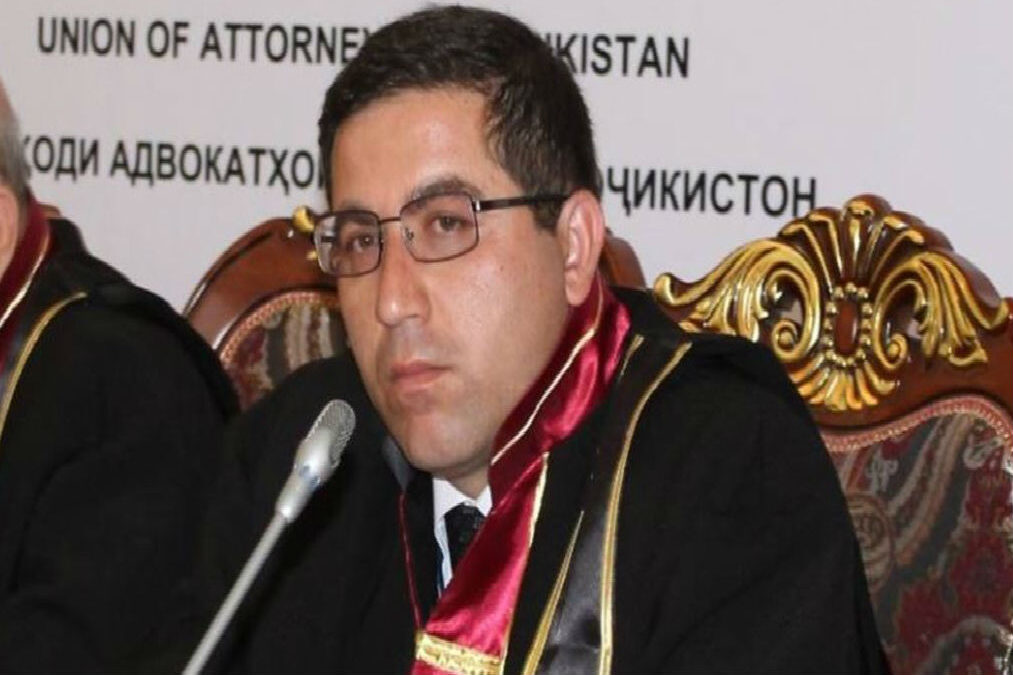
Tajikistan should take urgent action to ensure the protection of Buzurgmehr Yorov, a lawyer serving a 28-year sentence in prison, following his conviction being based on clearly improper charges related to the defense of his clients, the ICJ said today.
The ICJ is aware that Bugurgmehr Yorov has been subjected to acts amounting to torture or other ill-treatment.
The responsible authorities must ensure that such ill-treatment immediately ceases and that allegations that Buzurgmehr Yorov’s rights that have been violated are promptly and thoroughly investigated by an independent body.
Anyone responsible for violations of his rights must be held accountable and brought to justice, as required under Tajikistan law as well as international human rights treaties to which Tajikistan is a party.
Buzurgmekhr Yorov was arrested two years ago on 28 September 2015, on charges of “fraud” and “forgery of documents.”
Later, he was accused of violating three more articles of the Criminal Code, including in relation to alleged “public calls for extremist activity.”
On 6 October 2016, The Dushanbe City Court sentenced Yorov to 23 years imprisonment in a strict regime prison.
In March this year, Yorov was sentenced to an additional two years’ deprivation of liberty for “contempt of court and insulting the representative of power.”
In August 2017, he received a further three years sentence on charges of “insulting the president.”
On 27 September 27 2017, Hurinniso Ishokova, mother of Buzurgmehr Yorov, obtained permission to visit her son in a pre-trial detention facility, for the first time in nine months.
Following the visit, she alleged that her son had been systematically beaten by prison staff during the whole period of his detention, and that in the last month the beatings had intensified.
She also said that at an unspecified time during his detention Buzurgmehr Yorov had been admitted to the hospital at the pre-trial facility.
After several days of treatment, he was again sent back and the beatings by prison staff resumed.
According to his mother, these beatings were accompanied by insults, humiliation and threats. Reportedly, on three recent occasions Buzurgmkhar Yorov was placed in a punishment cell for several days.
On September 28, 2017 the head of the pre-trial facility rejected all claims that Buzurgmkhar Yorov had been subjected to torture or other ill-treatment.
Background:
The ICJ has, on a number of occasions, expressed its serious concerns over the arrest and conviction of Buzurgmehr Yorov and other lawyers in Tajikistan.
The ICJ is concerned that Buzurgmehr Yorov’s conviction may constitute a reprisal for his defense work in high-profile political trials in connection with his representation of thirteen leaders of the Islamic Renaissance Party of Tajikistan (IRPT).
See:
https://www.icj.org/tajikistan-long-prison-sentences-for-lawyers-endangers-the-fairness-of-the-justice-system/
https://www.icj.org/tajikistan-arrest-of-lawyer-raises-concern-over-reprisals-for-defense-of-clients/
https://www.icj.org/tajikistan-icj-concerned-at-arrest-of-lawyer/
Tajikistan is a party to the International Covenant on Civil and Political Rights (ICCPR) and the UN Convention against Torture (CAT) both of which enshrine the absolute prohibition on torture or other cruel inhuman and degrading treatment, and require that allegations of such ill-treatment should be subject to independent, thorough and prompt investigation, and that perpetrators of crimes of torture should be brought to justice.
According to UN Basic Principles on the Role of Lawyers, lawyers “shall not suffer, or be threatened with, prosecution or administrative, economic or other sanctions for any action taken in accordance with recognized professional duties, standards and ethics.” (Principle 16(c)).
Yorov_statement_rus (Russian translation – pdf)

Sep 27, 2017 | News
The ICJ has welcomed the recent decision of the African Commission on Human and Peoples’ Rights (ACHPR) on a recent decision found the Democratic Republic of Congo (DRC) responsible for the massacre of 70 people in Kilwa in 2004.
In its decision, the Commission not only urges the DRC State to pay 2.5 million US dollars compensation to eight victims and their families but also urges the DRC to prosecute Anvil Mining’s personnel involved in the massacre.
The African Commission also acknowledged the involvement of mining company Anvil Mining, an Australian-Canadian company (later bought by the Chinese company MinMetals) operating a copper and silver mine in Dikulushi, located 50 kilometers from Kilwa, that would
have provided logistical support to soldiers who bombarded civilians.
This decision sheds light on the corporate legal responsibility for human rights abuses, particularly in the extractive
industry sector, and suggests legal avenues for action against Anvil for alleged abuses.
Universal-KilwaMassacre-News-2017-ENG (full pdf ENG)
Sep 25, 2017 | News
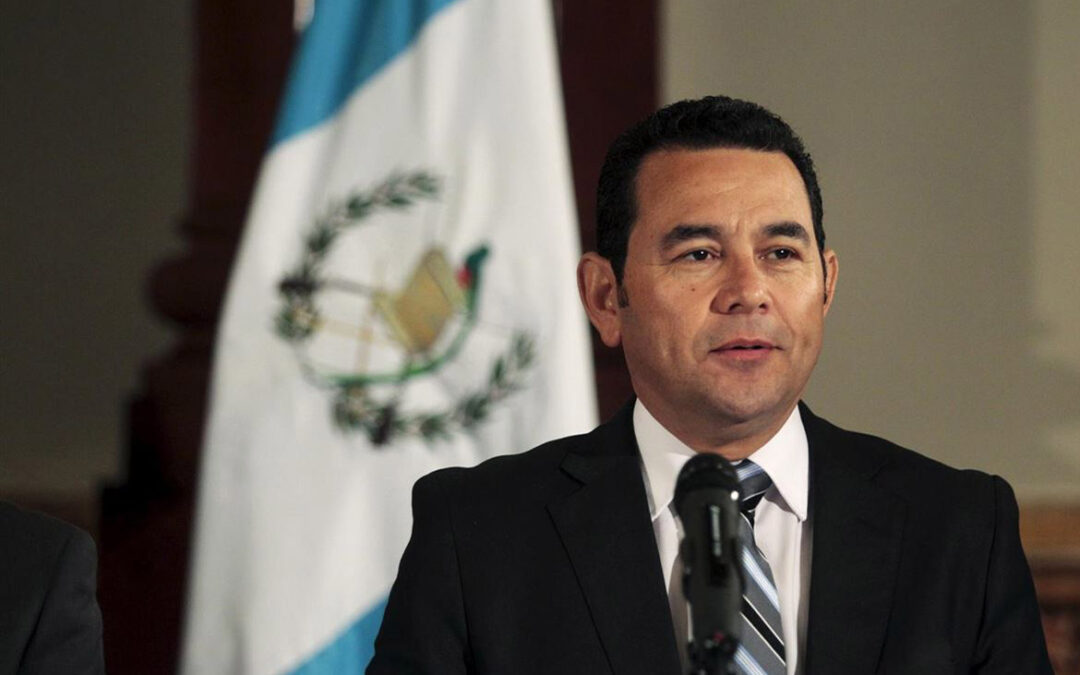
Guatemala’s Congress should immediately remove obstacles to investigation and accountability of President Jimmy Morales (photo) and other public officials for alleged violations of campaign finance rules and corruption, the ICJ said today.
The ICJ also called on President Morales to cease efforts to impede the effective functioning of the United Nations mandated International Commission against Impunity in Guatemala (CICIG).
“Guatemala’s president and some members of Congress are obstructing justice by abusing their authority to avoid investigations for corruption and block the important work carried out by the Attorney General, with CICIG’s assistance,” said Sam Zarifi, ICJ’s Secretary General, just returned from a visit to the country.
“Guatemala, with CICIG’s assistance, has witnessed important progress in the fight against corruption and impunity in recent years, and Congress should be making sure that this trend continues,” he added.
The Congress voted on September 21 to reject the request by Attorney General Thelma Aldana and Ivan Velasquez, Commissioner of CICIG, to strip President Morales of Constitutional immunity he enjoys as president, in connection to allegations that his political party failed to report more than $800,000 in campaign financing.
But the Congressional vote fell short of the threshold of 105 votes needed to reach the necessary two-thirds of Congress needed to reach a final decision and thus can be reconsidered.
On September 13, Congress voted to revise the country’s criminal code by removing Secretary Generals of political parties from accountability for violations of electoral laws (instead limiting accountability to accountants) and to commute the sentences of those already convicted of a number of serious crimes, including corruption, trafficking of persons, and sexual abuse.
The legislators rescinded the vote after two days of nationwide public demonstrations and a decision of the country’s Constitutional Court to suspend the law’s application.
The Guatemalan Constitutional Court suspended the revisions in response to a writ of amparo and characterized Congress’ revisions to the criminal code as “a threat that, in case of being implemented, could cause irreparable damage to the judicial system”.
“The Constitutional Court’s speedy action avoided a massive blow to the fight for accountability in Guatemala, because if the law had gone into effect for even one hour, it would have provided a legal basis for politicians convicted on corruption charges to demand release or commutation of their sentences,” Zarifi said.
Congress’s actions followed an attempt by President Morales to expel CICIG’s Commissioner Velasquez, as persona non grata and to revise CICIG’s mandate, in an apparent bid to block investigations into his alleged wrongdoing.
“Since CICIG was formed in December 2006 at the request of the Guatemalan government, it has worked closely with the country’s Attorney General to improve accountability, and its impact has been undeniably positive,” Zarifi said.
“This is a model of international support for national accountability mechanisms that should be studied and emulated around the world; its continued operation is therefore of interest not just to Guatemala and the region but to global efforts to combat impunity,” he added.
The ICJ called on the Guatemalan government to comply with its international legal obligations as a State party to the 2004 United Nations Convention Against Corruption and the 1996 Inter-American Convention Against Corruption.
Background
Article 30(2) of the UN Convention Against Corruption calls on State Party to strike “an appropriate balance between any immunities or jurisdictional privileges accorded to its public officials for the performance of their functions and the possibility, when necessary, of effectively investigating, prosecuting and adjudicating offences established in accordance with this Convention.”
Article 30(3) demands States “to ensure that any discretionary legal powers under its domestic law relating to the prosecution of persons for offences established in accordance with this Convention are exercised to maximize the effectiveness of law enforcement measures in respect of those offences and with due regard to the need to deter the commission of such offences.”
Contact:
Sam Zarifi, ICJ Secretary General, t: +41 79 726 44 15 ; e: sam.zarifi@icj.org
Sep 21, 2017 | Events, News
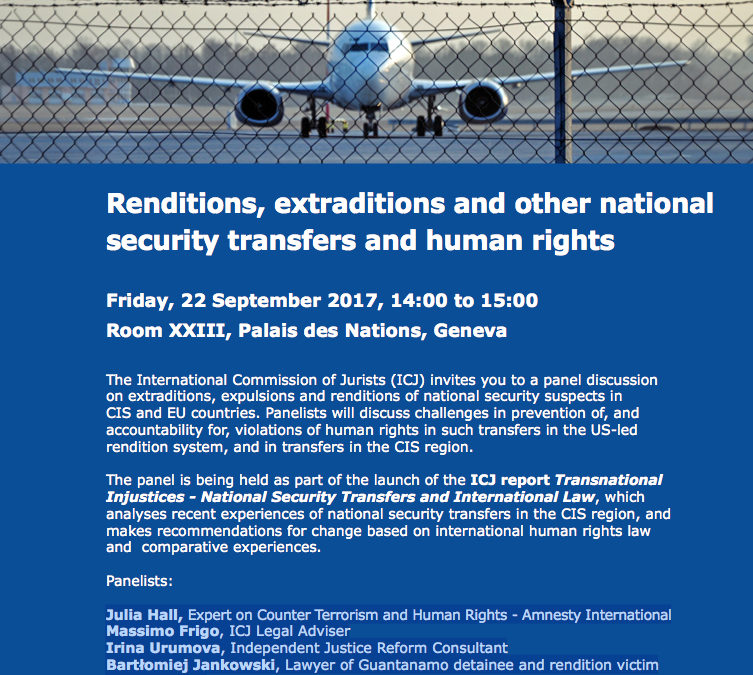
At a side event to the UN Human Rights Council on 22 September, the ICJ will discuss challenges in prevention of, and accountability for, violations of human rights in the US-led rendition system, and in the CIS region.
The event will address as well the challenges of extraditions, expulsions and renditions of national security suspects in CIS and EU countries.
The panel discussion is being held as part of the launch of the ICJ report Transnational Injustices – National Security Transfers and International Law, which analyses recent experiences of national security transfers in the CIS region, and makes recommendations for change based on international human rights law and comparative experiences.
The event will take place at the UN Human Rights Council in Geneva on Friday 22 September at 14:00 – 15:00 at Room no. XXIII.
Panelists:
- Julia Hall, Expert on Counter Terrorism and Human Rights – Amnesty International
- Bartłomiej Jankowski, Lawyer of Guantanamo detainee and rendition victim Abu Zubaydah
- Massimo Frigo, ICJ Legal Adviser
- Irina Urumova, Independent Justice Reform Consultant
Copies of the report in English will be available for the persons attending the meeting.
A flyer for this event is available in PDF format by clicking here.
For more information, contact massimo.frigo(a)icj.org and/or un(a)icj.org