Mar 31, 2014 | News
The indictment of General Pervez Musharraf on charges of treason marks a milestone for Pakistan’s judiciary, which must ensure his trial fully complies with international standards, the ICJ said in a briefing paper released today.
“General Musharraf’s treason trial is unprecedented in Pakistan’s political and legal history,” said Sam Zarifi, ICJ’s Asia Director. “This is an opportunity for Pakistan’s judiciary to demonstrate that no-one is above the law and that everyone accused of an offence has the right to a trial that is, and is seen to be, impartial, independent and expeditious.”
In its briefing paper, the ICJ highlights the legal framework and political context of the high treason trial against Pakistan’s former president and army general, Pervez Musharraf, in a Question and Answer format.
The Pakistan Government has established a special court to try General Musharraf for high treason on charges relating to his allegedly unconstitutional imposition of emergency rule and unlawful dismissal of judges on 3 November 2007. Under the law, high treason is punishable by death or life imprisonment.
On Monday, 31 March, Pervez Musharraf was formally indicted on five charges. He pleaded not guilty on all charges.
“This trial marks the first time a senior Pakistani military figure could be held to account for trampling on the rule of law and human rights in the country,” Zarifi said. “General Musharraf should be facing a proper trial for the many human rights violations that took place during his rule and under his command. But this case is at least a start.”
The lead-up to the trial has been marked by confusion, including erroneous reports last week suggesting that Justice Faisal Arab had quit the three-member special court, a move that could possibly have aborted the trial.
There have been many hurdles in the proceedings so far, including General Musharraf’s health, security threats, and concerns about whether he can be guaranteed a fair trial.
Many in Pakistan are celebrating the trial as a victory of rule of law, but others have expressed reservations about the selective nature of the proceedings: General Musharraf is only being tried for imposition of emergency rule on 3 November 2007, not for the military coup through which he usurped power in October 1999.
There are also serious allegations that widespread gross violations of human rights, including enforced disappearances, extrajudicial killings and torture, were carried out by the security forces while General Musharraf was the head of State and the military, yet no case has been instituted in relation to these gross violations of human rights thus far.
“Every effort must be taken to ensure that General Musharraf’s rights as an accused are protected and that the trial complies with Pakistani and international fair trial standards. If convicted of high treason he should be sentenced to life imprisonment, rather than the death penalty.”
The ICJ considers the death penalty in all cases to constitute a violation of the right to life and the right not to be subjected to cruel, inhuman or degrading punishment.
To read the full text of the ICJ Briefing Paper, click on the following PDF file
icj pakistan – musharraf – Q&A
Contacts:
Sam Zarifi, ICJ Asia Pacific Regional Director (Bangkok), t: +66 807819002; email: sam.zarifi(a)icj.org
Reema Omer, ICJ International Legal Advisor for Pakistan (London), t: +447889565691; email: reema.omer(a)icj.org

Mar 18, 2014 | News
The arbitrary arrest and detention of prominent human rights defenders is an attempt to silence criticism and divert the spotlight from ongoing abuses, leading global and Asian human rights monitors said today in a joint statement.
The statement was issued by Amnesty International, Forum Asia, Human Rights Watch, the International Crisis Group, and the International Commission of Jurists.
Ruki Fernando of the Colombo-based INFORM and Father Praveen Mahesan, a Catholic priest, were arrested in Kilinochchi on March 16, and are believed to be detained without formal charges under Sri Lanka’s notoriously draconian Prevention of Terrorism Act (PTA).
“The Sri Lankan authorities need to release Fernando and Father Praveen, and end the ongoing state harassment of human rights defenders,” said David Griffiths, Amnesty International’s deputy director for Asia Pacific. “How can the international community take Sri Lanka’s claims to respect rights seriously when rights defenders continue to face intimidation and criminal charges for demanding accountability and human rights protection?”
The police Terrorism Investigation Division (TID) detained and questioned Ruki Fernando and Father Praveen after they sought to ensure the welfare of 13-year-old Balendran Vithushaini, who had been ordered into probationary care following the arrest of her mother, Balendran Jeyakumari, on March 13. Both mother and daughter are active opponents of enforced disappearances in Sri Lanka and have been prominently featured in international media coverage of demonstrations by families of the disappeared, most recently in Jaffna in November 2013 during a visit by British Prime Minister David Cameron.
Fernando and Father Praveen were questioned separately in two different buildings for more than three hours by several TID officers. Lawyers acting on their behalf were given contradictory information about the arrests and the reasons for their detention. The most recent information is that Fernando and Father Praveen have been taken to police Terrorism Investigation Division headquarters in Colombo, and their lawyers are still seeking access to them.
Fernando and Father Praveen have not been charged to date, but according to Sri Lankan Police spokesperson Senior Superintendent Ajith Rohana, they will be charged with “attempting to create instability among communities” and “allegedly promoting separatism” under the Prevention of Terrorism Act.
The PTA has been widely criticized by Sri Lankan civil society, international monitoring organizations, and United Nations bodies. In its report, Authority without Accountability: The Crisis of Impunity in Sri Lanka, the International Commission of Jurists documents how provisions of the PTA have resulted in arbitrary detention, contravened suspects’ right to a fair trial and due process, and facilitated torture and other ill-treatment and enforced disappearances
The human rights groups said that the arrests are particularly disturbing since a resolution on Sri Lanka’s failure to address accountability is under discussion and will be voted on soon at the ongoing Human Rights Council (UNHRC) sessions in Geneva. The international community has long called for Sri Lanka to take meaningful steps to end its culture of impunity.
“This ongoing campaign of reprisals against those speaking out against human rights violations shows the extent of the government’s impunity,” said Sam Zarifi, Asia director at the International Commission of Jurists. “The international community, through its voting at the Human Rights Council, must judge Sri Lanka not by its promises, but by its actions.”
In spite of two prior resolutions by the UNHRC in 2012 and 2013, Sri Lanka has taken no measurable steps towards ensuring justice for the victims of its civil war, and has instead launched an aggressive campaign against those who advocate for accountability. Human rights defenders, activists, journalists, and civil society members who are critical of the government have regularly been threatened and harassed. Those who have an international profile, such as Fernando, face particular government hostility.
“Sri Lankan authorities systematically clamp down on those who seek to reach out to the international community, especially around significant events such as the Human Rights Council sessions or the Commonwealth Heads of Government Meeting,” said Evelyn Balais-Serrano, the executive director of Forum-Asia. “Instead of protecting human rights defenders, the latest arrests show the Sri Lankan government is stepping up its aggressive stance towards those seeking justice and answers.”
The arrests also call into question the Sri Lankan government’s stated commitment to improving respect for human rights since the end of the armed conflict with the Liberation Tigers of Tamil Eelam in 2009, the groups said.
“Arresting peaceful activists known for their work with victims of rights violations from all ethnic communities is not a way to build trust and restore relationships damaged by the war,” said Jonathan Prentice, the International Crisis Group’s chief policy officer. “If sustainable peace is to be more than an illusion, the rights of Sri Lanka’s victims and human rights defenders to speak freely and safely must be protected.”
The organizations stressed that Fernando and Father Praveen should be given full rights while they remain in detention. Under international law, including the International Covenant on Civil and Political Rights, to which Sri Lanka is a state party, people deprived of their liberty must be promptly informed of the reasons for their detention, be given prompt and regular access to lawyers, and be promptly brought before a judge or judicial officer.
“Human Rights Council members should demand the immediate release of Fernando and Father Praveen and be clear that this will not deter them from adopting a necessary resolution on Sri Lanka,” said Brad Adams, Asia director at Human Rights Watch. “The arrest of these human rights defenders shows just how important it is for the international community to stand up for human rights in Sri Lanka.”
Signed by:
- Amnesty International
- FORUM-ASIA
- International Commission of Jurists
- International Crisis Group
- Human Rights Watch
For more information, please contact:
In London, for Amnesty International
In Bangkok, for International Commission of Jurists, Sam Zarifi: +66-857-200-723; orsam.zarifi@icj.org
In Bangkok, for International Commission of Jurists, Sheila Varadan: +66-857-200-723; or sheila.varadan@icj.org
Feb 24, 2014 | Events, Training modules
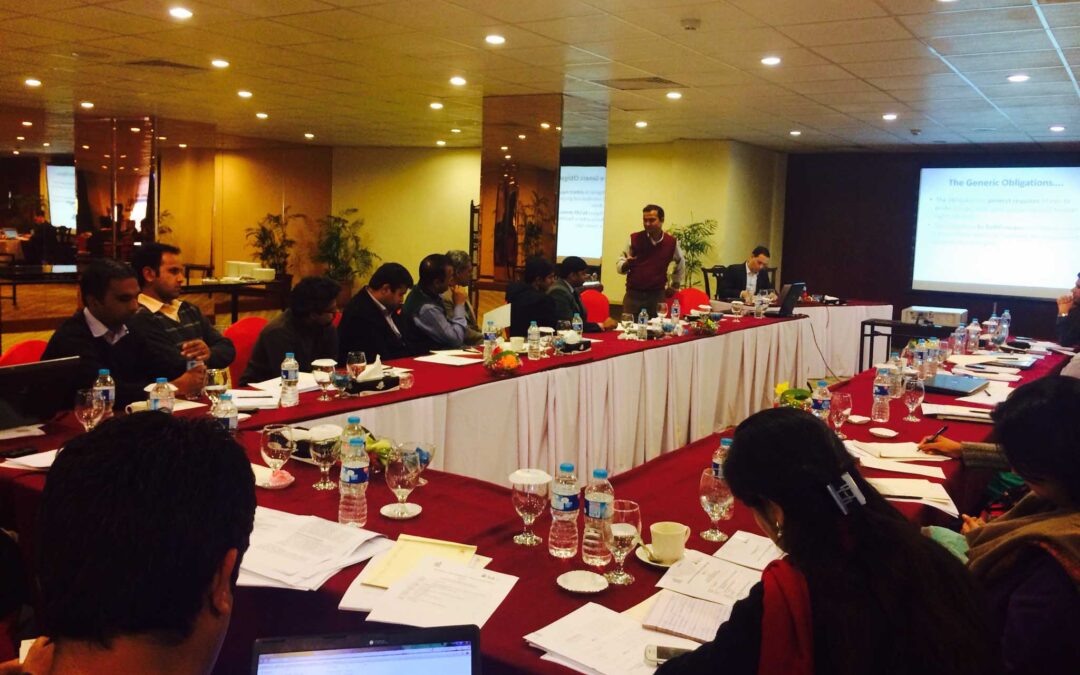
In partnership with the Human Rights Commission of Pakistan (HRCP), the ICJ conducted two-day workshops on NGO engagement with the United Nations, held in Pakistan on 18-19 and 21-22 February 2014.
The workshops, held in Lahore and Islamabad, focused on enhancing the meaningful participation of national NGOs with the UN human rights system. Participants included representatives from civil society working on a wide range of human rights issues, including enforced disappearances, education, violence against women and child rights.
Drawing from experiences of ICJ staff and participants, the workshops considered how international advocacy and engagement with the UN can benefit NGOs and addressed:
- The nature of international human rights law;
- State obligations under international human rights law;
- The UN human rights system;
- The Universal Periodic Review mechanism;
- The UN Special Procedures and the making of individual complaints to them;
- The UN Treaty Bodies, individual complaints and periodic reporting; and
- Documenting human rights violations.
Background materials on the Universal Periodic Review: (ENG) and (URDU)
Background materials on the UN Special Procedures: (ENG) and (URDU)
Background materials on the core functions of the UN Treaty Bodies: (ENG) and (URDU)
BAckground materials on periodic reporting to the UN Treaty Bodies: (ENG) and (URDU)
Feb 17, 2014 | News
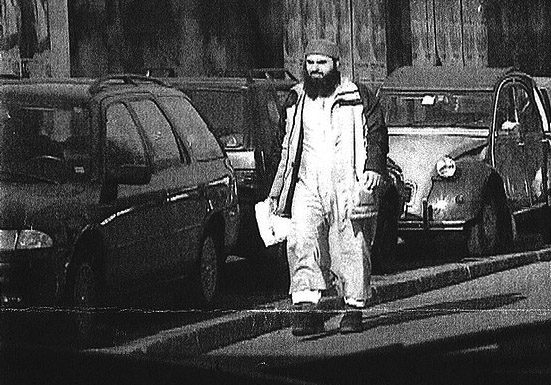
The ICJ today expressed concern at a ruling of the Italian Constitutional Court which denies full accountability of Italian officials in the case of the 2003 unlawful rendition, enforced disappearance and torture of Osama Mustafa Hassan Nasr, also known as Abu Omar.
In a ruling making no mention of the international human rights law obligations of Italy, the Court agreed with the contention of the Italian Government that it may protect from disclosure and use in court what it considers to be “secrets of state” even if to do so would prevent the revelation of the truth about serious crimes and human rights violations and the holding of those responsible to account.
The Court ruled that, under the Italian Constitution and the law on secrets of state, it is the sole prerogative of the President of the Council of Ministers, exercising “a wide discretionary power”, to establish the width of application of the secret of state doctrine.
The Court affirmed that such decisions cannot be questioned by ordinary courts.
A number of Italian and United States intelligence agents, including the former Director of the Italian Military Secret Service, Nicolò Pollari, had been found guilty of criminal offences in connection with the rendition.
The Constitutional Court’s ruling is likely to effectively annul the convictions of the top Italian secret agents involved in the rendition.
“This ruling constitutes a serious blow to the fight against impunity for some of the most serious crimes under international law”, said Massimo Frigo, Legal Adviser for the Europe Programme. “It disregards fundamental pillars of international human rights law, including the right to truth and the duty to investigate, prosecute and ensure accountability for gross violations of human rights”.
“The doctrine of “secret of state” must never be used as a means to cover up responsibility for crimes under international law or gross violations of human rights,” Frigo added. “The United States, which is primarily responsible, deplorably has abdicated its responsibility to meaningfully investigate and hold officials to account for gross human rights violations in its rendition and secret detention programme. Italy, by contrast, had been the only country in which the courts had imposed convictions for the US-led renditions. After this judgment, there is a real risk that the Italian complicity in this crime will never be fully ascertained and accounted for.”
The ICJ is concerned at reports that time limits for the conclusion of criminal proceedings in this case could expire in two months, despite the fact that, under international standards, limitation periods should not be imposed in respect of serious of crimes such as torture and enforced disappearance.
The expiry may foreclose any further investigation or criminal trial on Italian involvement in this rendition, which should occur irrespective the obstacles caused by the secret of state doctrine.
The ICJ is particularly concerned that successive Italian governments since 2007 have either proposed or refused to withdraw government applications before the Constitutional Court affirming that the executive prerogative on secret of state takes precedence over the fight against impunity.
The ICJ considers that the law and practice regarding the “secret of state” must be reformed to be into compliance with Italy’s duty to investigate crimes under international law and gross human rights violations.
While States may protected a limited amount of information when strictly necessary for legitimate national security purposes, they may not do so with respect to information concerning gross violations of human rights.
Background
Hassan Mustafa Osama Nasr, also known as Abu Omar, was been kidnapped in 2003 in the streets of Milan by CIA operatives and subject to rendition to Egypt where he had been subject to enforced disappearance, arbitrary detention and torture.
The case of Abu Omar was one of at least 136 known cases in the rendition and secret detention carried out since 2001 by the United States, with the participation of some 54 other States, which typically involved multiple human rights violations, including torture and ill-treatment, enforced disappearance, and arbitrary detention.
The Constitutional Court judgment effectively reversed the ruling of the Court of Cassation that ordered the reopening of the trial against the former Director of the Italian Military Secret Service, Nicolò Pollari, his deputy, Marci Mancini, and other Italian military secret services operatives for their alleged complicity in the operation.
The Court of Cassation had held that the doctrine of “secret of state”, which barred their conviction, would not apply to them, because the Italian secret services have no authority to conduct such illegal operations and they had therefore effectively acted in private capacity.
Following that judgment, the Court of Appeal convicted, among others, for complicity in the kidnapping Nicolò Pollari to ten years of imprisonment and Marco Mancini to nine years.
The Court of Cassation upheld in absentia the convictions and sentences of 23 US agents involved for the offence of kidnapping.
On 5 April 2013, the President of the Italian Republic, Giorgio Napolitano, granted a pardon for US Colonel Joseph L. Romano III, who had been convicted by Italian courts of the offence of complicity with the US in kidnapping for his role in the rendition of the Milan cleric Abu Omar in 2003.
Contact:
Massimo Frigo, Legal Adviser, ICJ Europe Programme, massimo.frigo(a)icj.org

Nov 29, 2013 | Advocacy, Non-legal submissions
The ICJ’s Director of the International Law and Protection Programmes, Alex Conte, today delivered the keynote address at the launch of the OSCE manual on Human Rights in Counter-Terrorism Investigations.
Responding to the challenges faced by some OSCE participating States in operationalizing human rights when conducting counter-terrorism investigations, the OSCE Office for Democratic Institutions and Human Rights (ODIHR) and the OSCE Secretariat’s Transnational Threats Department / Strategic Police Matters Unit jointly developed a manual on Human Rights in Counter-Terrorism Investigations. The manual adopts an operational approach to different phases of counter-terrorism investigations and linking them to relevant human rights standards.
The keynote address focussed on the link between human rights protection and effective counter-terrorism practices; and on how human rights are themselves useful tools to successfully prevent and counter terrorism. It identified five law, policy and practical reasons that human rights compliance is required and/or contributes to the prevention and countering of terrorism:
- Human rights compliance while countering terrorism is an international obligation, recalling that States’ right and duty to combat terrorism is part of international and regional human rights law stemming from the duty of States to protect individuals under their jurisdiction from interference with their enjoyment of human rights, including the rights to life and security;
- Human rights compliance at the investigative stage of counter-terrorism cases means that there will be an exponentially greater chance that the precious resources dedicated to terrorist investigations will result in the admissibility of evidence;
- Human rights compliance at the investigative and pre-trial stages of counter-terrorism cases (considering the impact of prolonged detention without trial or without charge) gives rise to a greater prospect of achieving a sound conviction;
- Bringing perpetrators of terrorist acts to justice through effective (i.e. human rights-compliant) investigation and prosecution contributes to the realisation for victims of terrorism of their rights to truth and reparation; and
- Human rights compliance not only assists the short-term objectives of effective counter-terrorism investigations and prosecutions, but is also the essential basis for a sustainable, long-term approach to the countering of terrorism by avoiding further conditions conducive to the spread of terrorism.
ICJ-OSCE-ManualOnHumanRightsInCounterTerrorismInvestigations-LaunchEvent-KeynoteAddress-NonlegalSubmission-2013 (download keynote address in PDF)
OSCE_HRCT_Manual (download manual on Human Rights in Counter-Terrorism Investigations in PDF)