Nov 28, 2018 | News
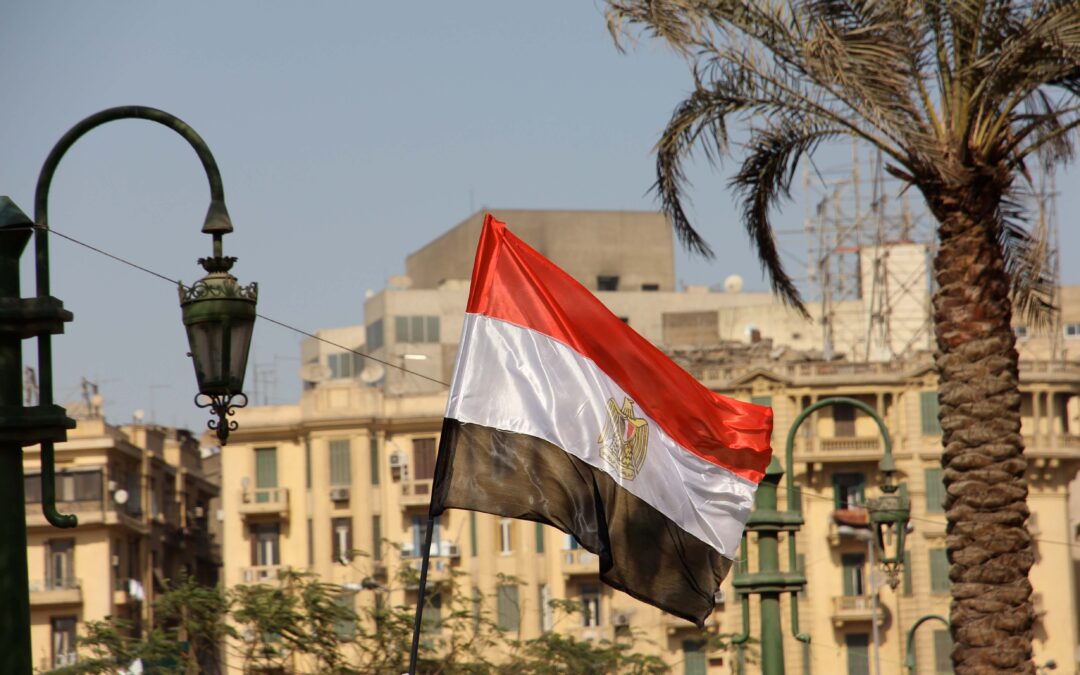
The Egyptian authorities must drop the charges against nine detainees arrested on 1 November 2018 and immediately and unconditionally release them and at least 31 others arrested and in some cases “disappeared” since late October 2018, or otherwise charge them with a recognizable crime consistent with international law, the ICJ said today.
Those arrested in the present sweeps include human rights defenders (HRDs), lawyers, and political activists and persons otherwise providing support to political detainees. Reports indicate that at least some of those detained are connected to the Muslim Brotherhood. The ICJ is concerned that many if not all of these detainees are being held solely for political reasons.
On Wednesday 21 November, nine detainees held since 1 November 2018—Hoda Abdel Moneim, Mohamed Abu Hurayra, Bahaa Auda, Aisha Al Shater, Ahmed El Hodeiby, Mohamed El Hodeiby, Somaya Nassef, Marwa Madbouly and Ibrahim Atta—were interrogated by the State Security Prosecution, who ordered they be held in pre-trial detention for 15 days.
According to information available to the ICJ, the prosecution charged the nine with joining and funding a terrorist organization and incitement to harm the national economy under Egypt’s Counter-Terrorism Law No. 94/2015 (Case No. 1552/ 2018).
Lawyers representing the detainees were not permitted to access the case files, nor were they allowed to speak with the defendants in private. One of the detainees interrogated on 21 November was also interrogated on 19 November 2018 without the presence of a lawyer. It is unclear when the State Security Prosecution ordered their pre-trial detention.
At least three other detainees also appear to have been interrogated on 24 November 2018, including Ahmed Saad, Ahmed Ma’touk and Sahar Hathout. No information is known about whether an order for their pre-trial detention has been issued.
“These arbitrary arrests and trumped up charges are yet another example of the relentless assault by the military and government on the exercise of the rights to freedom of expression and association and to take part in political activity,” said Said Benarbia, ICJ’s MENA Programme Director. “Targeting anyone having any connection to opposition groups under the government’s ‘war on terrorism’ erodes the rule of law in Egypt, undermines human rights, and means there’s now very little, if any, room to carry out human rights work.”
According to public reports, at least 31 others were arrested by Egyptian authorities in raids in late October or early November 2018. Despite repeated calls on the authorities to provide information regarding their location, their whereabouts remain unknown, raising serious concerns for their health and safety. After human rights lawyer Hoda Abdel Moneim—one of the nine now charged—was held incommunicado for 21 days, her family issued a statement expressing concern about her “dire [physical and psychological] health condition.”
It is well established that the Egyptian authorities engage in the widespread and systematic use of torture. Although Egypt’s Constitution, Criminal Procedure Code and Penal Code require that detainees be held in official places of detention with judicial oversight and prohibit torture and other mistreatment, these safeguards have proven ineffective in practice.
The United Nations Committee Against Torture previously reported on the torture of hundreds of people disappeared by the Egyptian authorities. The ICJ is concerned about the high probability that these detainees have been tortured.
“The authorities should unconditionally and immediately release those arrested solely for exercising their human rights and fundamental freedoms, bring any others immediately before a judge to review whether there is any lawful basis for their detention and for any charges brought, and ensure that all those deprived of their liberty are protected against torture and other ill-treatment,” said Said Benarbia.
Contact:
Said Benarbia, Director of the ICJ Middle East and North Africa Programme, t: +41-22-979-3817; e: said.benarbia(a)icj.org
Background
Among those arrested in late October and early November 2018 were human rights lawyer and former spokesperson of the ECRF, Mohammed Abu Hureira, and his wife, Aisha al-Shater, daughter of imprisoned deputy chairman of the Muslim Brotherhood, Khairat al-Shater, as well as human rights lawyer Hoda Abdelmoniem, a former member of the National Council for Human Rights, who was arrested at her home after it was raided without warrant. At least eight of the 40 arrested are women. Reports from local human rights lawyers and organizations suggest that the number of persons arrested and arbitrarily detained could be higher.
The arrests are part of Egypt’s orchestrated crackdown on human rights work, in which human rights defenders and critics are arbitrarily arrested and detained, subjected to enforced disappearance, prosecuted in unfair trials, and sometimes sentenced to death. Two other members of the ECRF, including its Executive Director, were arrested in March 2018 and forcibly disappeared in September after an Egyptian Court ordered their release. Following the latest arrests, the ECRF—which documents enforced disappearances and Egypt’s increasing application of the death penalty—suspended its operations in protest.
On 10 September 2018, the Cairo Criminal Court convicted 739 defendants for their participation in the Raba’a Al Adaweyya square protests in August 2013 after a grossly unfair trial, sentencing 75 defendants to death and 658 defendants to life or five to 15 years’ imprisonment.
On 24 April 2018, following an unfair trial, the Cairo military court convicted former judge and former head of the Central Auditing Authority, Hisham Geneina, to five years in prison for “publishing false information harmful to the national security.”
The arrests place Egypt in breach of its international legal obligations, including under the International Convention on Civil and Political Rights (ICCPR). Article 9 of the ICCPR protects freedom from arbitrary arrest and detention and imposes an obligation on States to ensure a number of protections in respect of detention.
These include the requirement that detainees be brought promptly before a judge so their detention can be reviewed; have the right independently to challenge the lawfulness of their detention; and have the right to access legal counsel. Article 14 of the ICCPR also requires states to ensure detainees have access to legal counsel. Judicial oversight of detention is particularly necessary to protect detainees from torture and cruel, inhumane and degrading treatment.
Articles 19, 22 and 25 of the ICCPR also protect the rights to freedom of expression, to freedom of association and to participate in public affairs. Articles 5-8 of the United Nations Declaration on Human Rights Defenders similarly protects such rights exercised by HRDs and Article 12 requires states to protect HRDs from violence, threats, retaliation, de facto or de jure adverse discrimination, pressure or any other arbitrary action for the lawful exercise of such rights.
Under Egyptian Law, Article 56 of the Constitution and Articles 41-42 of the Criminal Procedure Code require that detainees be held in official places of detention and subject to judicial supervision, including judicial power to inspect places of detention and review each detainee’s case. Articles 51-52 and 55 of the Constitution, Article 40 of the Criminal Procedure Code and Article 126 of the Penal Code prohibit torture and other mistreatment.
In June 2018, the ICJ expressed its concerns about Egypt’s repeated renewals of the State of Emergency since April 2017, and the use of the state of emergency to suppress the activities of and persecute students, human rights defenders, political activists, union members and those suspected of opposing the government.
Egypt-November Arrests-News-Web Story-2018-ARA (PDF in Arabic)
Sep 13, 2018 | Advocacy, Non-legal submissions
The ICJ prepared an oral statement on procedural safeguards and civil society’s action to prevent arbitrary detention and enforced disappearance, for the interactive dialogue with the UN Working Groups on Arbitrary Detention and on Enforced and Involuntary Disappearances.
Although the statement could not ultimately be read out due to the limited time for civil society statements at the Human Rights Council, the text can found here:
“Mr President, Chairpersons of the Working Groups,
The International Commission of Jurists (ICJ) welcomes the focus of the report of the Working Group on Arbitrary Detention on “Linkages between arbitrary detention and instances of torture and ill- treatment”.
The ICJ shares the view of the Working Group that “safeguards … to prevent” torture and ill-treatment minimize and prevent “instances of arbitrary detention” (A/HRC/39/45, para. 59, and the view that “Judicial oversight of detention is a fundamental safeguard of personal liberty ” (A/HRC/39/45, para. 60).
The ICJ further welcomes the interim report of the Working Group on Enforced and Involuntary Disappearances on effective investigations (A/HRC/39/46), including the finding that “relatives of the disappeared have proven to be essential in the context of investigations and should have the right to know the truth … .” (para. 65)
The ICJ however stresses that these standards are not always upheld by States in their policies and actions.
For example, in Turkey, judicial review of detention is carried out by Judgeships of the Peace whose independence is highly questionable.
Finally, with regard to enforced disappearances, the ICJ is very concerned by the actions of Turkish authorities prohibiting the Saturday Mothers to hold their weekly protests in Galatasaray Square (Istanbul) in memory of their disappeared, in breach of their right to freedom of assembly.
Events of this kind seriously weaken the procedural safeguards and the action of civil society to protect and promote the prohibition of arbitrary detention and ensure accountability against enforced disappearances.
The ICJ urges the Council to address these worrying developments.
I thank you.”
HRC39-OralStatement-WGADWGEID-2018-draft-ENG (download the statement)
Sep 3, 2018 | News
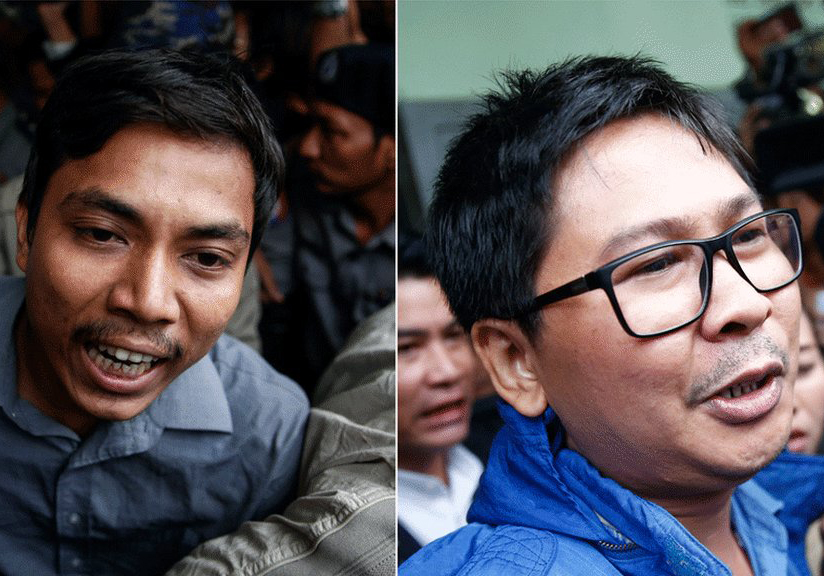
The Yangon District Court’s decision today to sentence Reuters journalists Wa Lone and Kyaw Soe Oo to seven years’ imprisonment for violating the Official Secrets Act deals a massive blow to human rights and the rule of law in Myanmar, said the ICJ.
“The Court’s decision effectively punishes these two courageous journalists for exposing human rights violations, following a grossly unfair trial,” said Frederick Rawski, Asia Pacific Director for the ICJ.
“The decision is a miscarriage of justice that inflicts needless suffering on them and their families, threatens freedom of expression, damages Myanmar’s global standing, and undermines its justice institutions all at once,” he added.
The ICJ has monitored the case since the journalists’ initial detention in December 2017.
As previously noted by the ICJ, the detention and trial has violated numerous basic fair trial guarantees.
The prosecutors had a duty to drop charges and the judge should have dismissed the case given the lack of evidence and the unlawfulness of detention because of fair trail rights violations.
“The case is emblematic of how the justice system ends up reinforcing rather than challenging military impunity,” said Rawski.
“The result undermines government claims that it can deliver accountability for human rights violations on its own, and does nothing to build trust that justice system can act independently and impartially after emerging from decades of military rule,” he added.
Members of security forces generally enjoy impunity for the perpetration of human rights violations, including for crimes under international law.
The ICJ has previously reported that victims and their families, as well as journalists, often face retaliation for publicizing human rights violations by the military.
Wa Lone and Kyaw Soe Oo were arrested in December 2017, and held incommunicado for nearly two weeks, before being charged under the colonial-era Official Secrets Act for allegedly possessing documents related to the operations of security forces in northern Rakhine State, during “clearance operations.”
The two reporters had been reporting on human rights violations in Rakhine State, including the killing of Rohingya by the military in Inn Dinn Village.
In a report issued just last week, the UN Independent International Fact Finding Mission found that security forces had perpetrated crimes under international law during these operations, including crimes against humanity and possibly the crime of genocide.
The detention and prosecution of anyone, including journalists, based solely on the collection and publication of evidence relevant to serious human rights violations, is a violation of international law and standards on freedom of expression, the right to participation in public affairs and on the role of human rights defenders.
Legal options remaining for the journalists include appealing of today’s decision, and requesting a Presidential amnesty.
Jul 24, 2018 | Advocacy, Analysis briefs, News
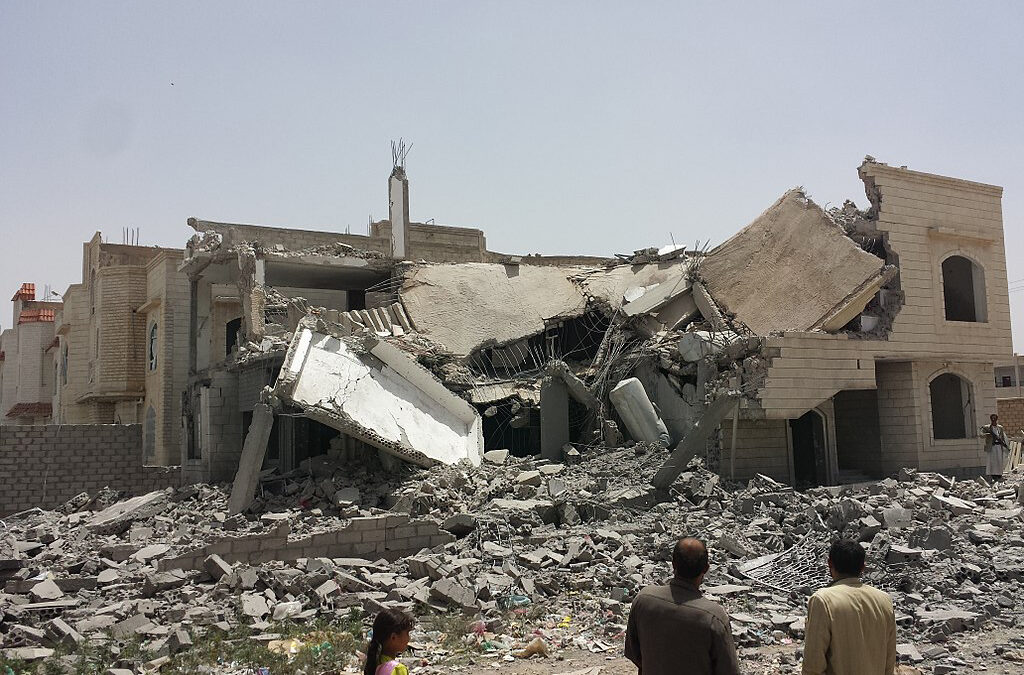
In a briefing paper published today, the ICJ called on the parties to the conflict in Yemen to take immediate and effective measures to ensure the protection of the civilian population, including against human rights abuses and international humanitarian law violations.
Serious violations of international humanitarian law committed in Yemen include direct and indiscriminate attacks against civilians and the impediment of access to humanitarian relief of the civilian population.
Gross human rights violations and abuses include widespread instances of arbitrary arrest and detention, torture and ill-treatment, and enforced disappearances.
The ICJ has called for persons responsible for such violations to be held to account.
“All parties to the conflict in Yemen have acted in blatant disregard of the most basic rules of international humanitarian law and human rights law,” said Said Benarbia, ICJ MENA Director.
“The top priority is to end these violations and in particular to protect the civilian population,” he added.
In its briefing paper, the ICJ analyses international law violations committed in the conduct of hostilities and against persons deprived of their liberty.
The Saudi Arabia-led coalition and the Houthis are allegedly responsible for direct, indiscriminate or disproportionate attacks against civilians and civilian objects, including local markets, food storage sites, water installations and medical facilities.
The United Arab Emirates, the internationally recognized government of Yemen and the Houthis have allegedly engaged in arbitrary arrest and detention, torture and ill-treatment, and enforced disappearances.
The ICJ briefing paper also examines the potential legal implications of the blockade imposed by the Saudi Arabia-led coalition on Yemen and the sieges laid by the Houthis against several towns and localities, which impede the civilian population to access humanitarian relief.
The ICJ briefing paper further assesses the potential responsibility of third States for transferring arms to the parties to the conflict.
Under numerous instruments, including the Arms Trade Treaty, States are prohibited from selling arms to the parties to an armed conflict whenever a risk exists that the end-user could commit international law violations.
Arms transfers may even engage the exporting States’ international responsibility for aiding or assisting in the commission of such violations.
“Victims must have access to effective legal remedies and be provided with adequate reparation,” Benarbia said.
“The international community must state loud and clear that impunity is not an option. The Security Council should refer the situation in Yemen to the International Criminal Court and third States should consider, where feasible, the exercise of universal jurisdiction to prosecute relevant crimes under international law,” he added.
Contact
Vito Todeschini, Associate Legal Adviser, ICJ Middle East and North Africa Programme, t: +216-71-962-287; e: vito.todeschini(a)icj.org
Said Benarbia, Director of the ICJ Middle East and North Africa Programme, t: +41-22-979-3817; e: said.benarbia(a)icj.org
Yemen-War briefing-News-web story-2018-ENG (full story with background information, English, PDF)
Yemen-War impact on populations-Advocacy-Analysis Brief-2018-ENG (Analysis Brief in English, PDF)
Yemen-War briefing-News-web story-2018-ARA (full story with background information, Arabic, PDF)
Yemen-War impact on populations-Advocacy-Analysis Brief-2018-ARA (Analysis Brief in Arabic, PDF)
Jul 5, 2018 | Advocacy, Non-legal submissions
The ICJ today joined 91 other NGOs in calling on the UN Human Rights Council to act in response to the downward spiral for human rights in Venezuela.
The joint statement was delivered on behalf of the group by Human Rights Watch during a general debate (check against delivery).
“Spiralling downwards with no end in sight”: That’s how a group of UN Special Procedures, including the Special Rapporteurs on health, adequate housing, extreme poverty and food categorized Venezuela in January of this year. This is also the title of a report released by the OHCHR on June 22, which paints a devastating picture of arbitrary detentions and extrajudicial killings coupled with a severe shortage of food and basic medicines.
One Venezuelan mother interviewed by OHCHR said: “I have a little baby that cries and cries because I can´t feed her. The baby’s milk formula costs 3 million Bolivars and my husband only makes 1.2 million a month. (…) My neighbours told me that if I don’t vote for the Government they will take the food, the cash bonus and my house from me. They control the electoral authority, so they know for which party you vote.”
The UN Human Rights Council can no longer look away. Venezuela has spiralled into a human rights and humanitarian crisis that demands urgent action. The crackdown on dissent continues. The population has lost an average of 11 kilos in 2017. Most Venezuelans go to bed hungry, and according to the UNHCR, more than 1.5 million Venezuelans have fled the country, for reasons including political persecution, violence, and the ongoing humanitarian crisis. As a result, a 2,000 percent increase in asylum applications has been recorded across Latin America since 2014, and hundreds of thousands remain in an irregular situation, which increases their vulnerability.
Today’s joint statement delivered by Peru on behalf of 53 States adds to the chorus of international concern. The Human Rights Council also needs to step up and address the human rights violations suffered by the Venezuelan people at the hands of a member of this Council. We encourage continued reporting by the High Commissioner, and hope that today’s joint statement paves the way for the international investigation that the High Commissioner has called for and which is so desperately needed.
Acceso a la Justicia
Acción Solidaria
ACCSI Acción Ciudadana Contra el SIDA
Action for Solidarity
African Centre for Democracy and Human Rights Studies
ALAPLAF
Ana Belloso
ASOADNA
Asociación Civil Fuerza, Unión, Justicia, Solidaridad y Paz (FUNPAZ)
Aula Abierta
Canada Venezuela Democracy Forum
Cátedra de Derechos Humanos de la Universidad Centrooccidental Lisandro Alvarado
Center for Justice and International Law
Centro de Acción y Defensa por los Derechos Humanos – Cadef
centro de Derechos Humanos de la Universidad Metropolitana (CDH-UNIMET)
Centro de Derechos Humanos, Universidad Católica Andrés Bello
Centro de Documentación en Derechos Humanos “Segundo Montes Mozo S.J.” (CSMM)
Centro de Formación para la Democracia (CFD Venezuela)
Centro de Justicia y Paz – CEPAZ
Centro de Promoción y Defensa de los Derechos Sexuales y Reproductivos – PROMSEX
Centro para la Paz y los DDHH de la Universidad Central de Venezuela
Centro para la Paz y los DDHH Universidad Central de Venezuela
Centro Regional de derechos Humanos y Justicia de Genero: Corporación Humanas
Cisfem
CIVICUS
Civilis Derechos Humanos
Clínica Jurídica de Migrantes y Refugiados de la Universidad Diego Portales
Codevida
Comisión de Derechos Humanos de la Facultad de Ciencias Jurídicas y Políticas de la Universidad del Zulia
Comisión de Derechos Humanos de la Federación de Colegios de Abogados de Venezuela del Estado Tachira
Comisión para los Derechos Humanos del estado Zulia, Codhez
Comisión para los Derechos Humanos y la Ciudadanía (CODEHCIU)
COMITE POR UNA RADIOTELEVISIÓN DE SERVICIO PÚBLICO
Conectas Direitos Humanos
Convite AC
Coordinadora Nacional de Derechos Humanos
Defensa y Justicia Carabobo
Defiende venezuela
Dejusticia
Epikeia, Observatorio Universitario de Derechos Humanos
Espacio Público
EXCUBITUS derechos humanos en educacion
FADNNA
Federación interamericana de Abogados capitulo Venezuela seccional Anzoategui
Foro Penal
Franciscans International
Fundacion Aguaclara
Fundación Espacio Abierto
FUNDACION ETNICA INTEGRAL
Fundación Niños, Niñas y Adolescentes
Fundación para el Debido Proceso (DPLF)
Fundamujer
Humano Derecho Radio Estacion
Human Rights Watch
Iniciativa Por Venezuela
Institute on Race, Equality and Human Rights
International Commission of Jurists
International Movement Against All Forms of Discrimination and Racism (IMADR)
International Service for Human Rights
Ipys Venezuela
Juventud Unida en Acción
Laboratorio de Paz
Madres de Soacha (Colombia)
María Estrella de la Mañana
Maria Eugenia
Misión Scalabriniana Ecuador
Monitor Social A.C. (Venezuela-Edo. Nva Esparta)
Movimiento Vinotinto
Mulier
Observatorio de Derechos Humanos de la Universidad de Los Andes
Observatorio Venezolano de Conflictividad Social (OVCS)
Observatorio Venezolano de la Salud
Organización StopVIH
PADF Honduras
Padres organizados de Venezuela
Paz y Esperanza
Pedro Luis Echeverria
PEDRO NIKKEN
Prepara Familia
Promoción Educación y Defensa en DDHH (PROMEDEHUM)
Revista SIC del Centro Gumilla
Robert F Kennedy Human Rights
Seguridad en Democracia (SEDEM)
Sin Fronteras IAP
Sinergia, Red Venezolana de Organizaciones de la Sociedad Civil
Thais Parra
Transparencia Venezuela
UCV
Una Ventana a la Libertad
Unión Afirmativa de Venezuela
Union Vecinal para la Participación Ciudadana A.C
West African Human Rights Defenders Network
World Organisation Against Torture (OMCT)