Jun 28, 2018 | News
On 24-25 June, ICJ Commissioners from the Latin America region came together in Bogotá, Colombia, to consider and enhance ICJ strategies to combat past and resurging trends in extrajudicial executions and enforced disappearances in the region.
The meeting was the first of its kind to bring together ICJ Commissioners on a regional basis: Carlos Ayala (Venezuela); Miguel Carbonell (Mexico); Gustavo Gallón (Colombia); Roberto Garretón (Chile); Juan Mendez (Argentina); Victor Rodriguez Rescia (Costa Rica); Alejandro Salinas Rivera (Chile); Mónica Pinto (Argentina); Belisário dos Santos Júnior (Brazil); and Wilder Tayler (Uruguay).
The meeting was followed by a preparatory mission (involving two Commissioners and the ICJ’s legal representative in Colombia) on the transitional justice mechanisms envisaged under the Havana Agreement, with a particular emphasis on the jurisdiction and operation of the ‘Special Jurisdiction for Peace’. A full high-level mission will follow in September, at which time the ICJ intends to identify minimum benchmarks for the effective operation and sustainable impact of those mechanisms.
In all regions of the world, recourse to enforced disappearances and extrajudicial killings continues; victims and their families (the overwhelming majority of whom are women, children and indigenous peoples from rural areas dominated by poverty and social and political exclusion, as well as trade unionists and human rights defenders) struggle to obtain prompt and effective remedies and reparation; and perpetrators enjoy impunity through inadequate or improper laws, ineffective institutional frameworks, selective recourse to accountability mechanisms and/or political interference in the functioning of those mechanisms.
The meeting confirmed that these challenges are particularly evident in Latin America, where there has been a resurgence in recourse to enforced disappearances and extrajudicial killings in countries throughout the region and where violations of the past have in very many cases been inadequately addressed. By way of example:
- In Brazil, official statistics from 2016 attest to the occurrence of 62,000 violent deaths and potentially up to 22,000 enforced disappearances each year.
- 45 years after the coup d’état in Chile, about 800 people have been convicted and sentenced to imprisonment, but those figures belie the extensive occurrence and levels of responsibility for gross violations of human rights that occurred.
- In Colombia, more than 70,000 cases of enforced disappearance were documented by the Attorney General for the period 1970-2015 and there is general consensus that the number of missing persons likely exceeds 100,000. The wide and persistent extent of extrajudicial killings has been noted by UN and Inter-American experts and bodies as well as the Office of the Prosecutor of the International Criminal Court.
- In Guatemala, only 34 convictions for conduct involving conflict-era violations have been secured, despite the fact that the internal armed conflict of 1960-1996 involved massive and systematic human rights violations. Impunity has undermined redress and accountability and severely weakened the prevention of violations, with the National Civil Police having recorded more than 25,000 people ‘disappeared’ in 2003-2014, more than half of which were women.
- Peru’s internal armed conflict of 1980-2000 resulted in more than 69,000 people killed and ‘disappeared’, but less than 100 convictions have been secured under the judicial subsystem established in 2004 that specializes in accountability for gross human rights violations.
- In Venezuela, civil society reports at least 12,000 real or perceived political opponents having been arbitrarily detained between January 2014 and April 2018; and almost 6,000 alleged extrajudicial killings between 2012 and 2016.
In all the countries from which the Commissioners originate, several common factors were identified:
- The intrinsic risks to continuation of and lack of redress and accountability for gross human rights violations posed by executive action that undermines the rule of law;
- Also inherent to the rule of law, the critical need for independent and impartial judicial mechanisms and individual judges and lawyers to allow for transitional justice, in particular for victims and their families to access effective remedies and reparation and for the holding to account of perpetrators;
- A high level of correspondence between impunity for gross human rights violations and the corruption of public officials;
- The increased, and in some cases extensive, recourse to arbitrary and detention, which in many cases precede and allow for the occurrence of extrajudicial executions and enforced disappearances;
- A similar inter-relationship between enforced disappearances and the occurrence of torture and other forms of ill-treatment;
- The detrimental impact to ensuring accountability for violations of the past when omitting non-State and paramilitary actors from transitional justice processes; and
- The increase in highly conservative (political and popular) sentiments and movements within the region and the corresponding need to tailor responses depending on the democratic versus autocratic nature of government and its institutions.
Noting that the ICJ has long sought to combat extrajudicial executions and enforced disappearances, including through the development of UN and regional instruments and standards and through its action in Latin America and the globe, the ICJ’s Commissioners urged the ICJ to continue and expand its engagement. Noting also the increasing call by local civil society actors for support and intervention by the ICJ, the meeting considered the organization’s role in seeking redress and accountability for, and prevention of, gross violations of human rights.
Commissioners reinforced, and commented on the effective parameters of, the ICJ’s strategic and victim-centred approach to address and prevent gross human rights violations, including extrajudicial executions and enforced disappearances. Having regard to the ICJ’s mandate and worldwide network of judges and lawyers, Commissioners emphasized the unique role that the organization has by grounding its work on the transformative role of the law, justice institutions and justice actors.
The particular means by which this role can be achieved by the ICJ were discussed against the background of recent and planned activities in the region and beyond. Commissioners overwhelmingly supported these plans and the Secretariat is now poised to continue implementation of its strategies in its current programmes of work and in the development of future projects.
Jun 24, 2018 | News
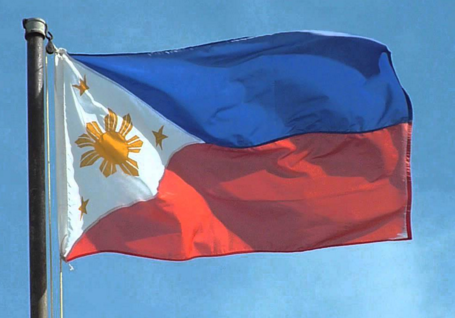
The proposed amendments to the Philippines’ Human Security Act of 2007 (HSA) would, if adopted, give government authorities a license to commit human rights violations, said the ICJ in its submission today to the House of Representatives.
The ICJ strongly urged the House of Representatives to reconsider these proposed amendments and in the interim to allow more time for full consultation and debate on revisions of the law.
In its submission to the House of Representatives’ joint Technical Working Group (TWG) of the Committees of Public Order and Safety and National Defense and Security, the ICJ stressed that certain proposed amendments to the HSA are clearly incompatible with international human rights.
It is also incompatible with laws and standards that prohibit unfettered surveillance power and arbitrary deprivation of the right to liberty and protect the rights to privacy, information, redress, and freedom of opinion and expression.
The ICJ also expressed deep concern that the law also gives military personnel responsibility in countering terrorism, specifically to conduct surveillance on, arrest, and detain persons who are suspected of acts of terrorism.
“The proposed amendments do not address the existing flaws of the HSA. For instance, the definition of acts of terrorism under the HSA is vague and ambiguous and the proposed changes do not in any way remedy that,” said Emerlynne Gil, Senior International Legal Adviser with the ICJ.
The ICJ also pointed out that the proposed amendments are likely to lead to violations of the right to freedom of opinion and expression.
The proposed amendments would also impermissibly lengthen to thirty (30) days the period within which an individual may be detained without judicial warrant.
“This is clearly incompatible with the Philippines international legal obligations and constitutes arbitrary deprivation of liberty,” said Gil.
The ICJ proposes to reduce the detention period to forty-eight (48) hours or less, in compliance with international human rights laws and standards.
“The Philippine government has the undeniable duty to protect people from acts of terrorism committed by non-State actors, but it cannot use as a pretext the serious nature of terrorist acts to avoid its obligations under international human rights law,” Gil added.
Contact:
Emerlynne Gil, Senior International Legal Adviser, t: +662 619 8477 (ext. 206) e: emerlynne.gil(a)icj.org.
Cover Letter ENG (PDF): Philippines-Amendments-to-HSA-Advocacy-Cover Letter-June-2018-ENG
Full Submission ENG (PDF): Philippines-Proposed-Amendments-to-HSA-Advocacy-non-legal-Submission-June-2018-ENG
Jan 15, 2018 | News
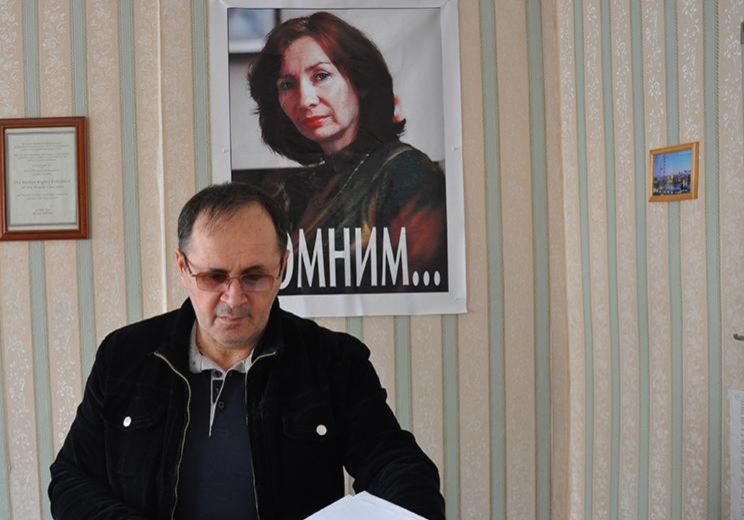
The ICJ is concerned at allegations that the recent arrest and detention of Oyub Titiev, the head of the Chechen branch of the Russian human rights organisation Memorial, were carried out as retaliation for his human rights activity.
The ICJ is particularly concerned at the more recent reports that family members of Oyub Titiev have had to leave Chechnya for security reasons following threats.
The ICJ calls on the Russian federal and local authorities to conduct a prompt, thorough and independent investigation into allegations that criminal charges against Oyub Titiev have been fabricated by police.
Oyub Titiev should be immediately released pending the outcome of this investigation, and measures should be taken to protect his security and that of his family.
On 9 January 2018, at 10.30, according to an official statement of the Ministry of Interior of Chechnya, Oyub Titiev’s car was stopped near Kurchaloy town to check his documents.
During a search of his car, a plastic bag with approximately 180 grams of a substance identified as marijuana was allegedly found.
Titiyev was charged with possession of a large quantity of narcotics under article 228 of the Criminal Code of the Russian Federation. However, he has stated that the narcotics were planted and has filed a complaint with the Prosecutor’s Office to initiate an investigation into these allegations.
Oyub Titiev, the head of Memorial in Chechnya, is one of very few human rights defenders who continue their work in Chechnya despite significant obstacles and threats.
He took over this position following the murder of the former head of Memorial in Chechnya, Natalya Estemirova in 2009.
In accordance with Article 2(a) of the Declaration on Human Rights Defenders (Declaration on the Right and Responsibility of Individuals, Groups and Organs of Society to Promote and Protect Universally Recognized Human Rights and Fundamental Freedoms), human rights defenders have a right to conduct human rights work individually and in association with others.
Under the same Declaration, States have a duty to take all necessary measures to ensure the protection of everyone against any violence, threats, retaliation, adverse discrimination, pressure or any other arbitrary action as a consequence of his or her legitimate activities as a human rights defender.
Threats of violence and the falsification of evidence by public officials constitute crimes under the Russian Criminal Code. Reliance in criminal proceedings on evidence falsely planted by the police or other State actors would violate international human rights law including fair trial guarantees under the UN Covenant on Civil and Political Rights and the European Convention of Human Rights.
Attacks on human rights defenders working in an extremely difficult human rights environment such as that of Chechnya, or attacks on their family members, have a chilling effect on work to defend human rights there. If further such attacks are to be prevented, individuals responsible for them must be brought to justice through a fair procedure, the ICJ stressed.
Dec 18, 2017 | Multimedia items, News, Video clips
Leaders of indigenous communities in Guatemala, seeking to protect their lands and natural resources from the negative impacts of business operations and infrastructure projects, have been charged with alleged criminal offences and in some instances arbitrarily detained.
This response is designed to silence voices of protest and legitimate demands for free, prior and informed consent for infrastructure or other projects in indigenous communities.
The video includes interviews with Ramón Cadena, ICJ Director for Central America, two indigenous traditional leaders, who have been the victims of arbitrary detention, and a women community leader, explaining the impact of the detention on the family and the whole community.
The criminalization of human rights work is a phenomenon whereby community leaders are charged with different criminal activities because of their opposition to a development model based on extractive industries or the privatization of essential social services.
This development model affects the natural resources (water, land and the environment) on indigenous peoples’ territories.
This is a global phenomenon and is particularly acute in Guatemala.
The exploitation of natural resources, such as open-cast mining and the operations of extractive industries in the territories of indigenous peoples, is one of the main reasons which are behind the crackdown on social protest and human rights work.
The different communities that have been affected seek to defend their territories and oppose the different forms of exploitation of the natural resources found on their territories or in the surrounding areas because it can affect the water supply, the land and the environment.
A number of leaders have been killed because of their opposition to these projects.
Some family members of those killed have in turn taken on the task of opposing these projects and they have also been charged with criminal offences.
In Guatemala, there is also an intense social conflict because of the way in which electricity services are delivered.
As a result of the privatization of the service in 1996, the Guatemalan State has granted concessions to national and international companies to provide electricity services.
Over the years, many users have complained about the poor quality and high cost of the services that these private companies provide.
The National Electricity Commission has failed to respect its legal duty to “ensure that the obligations of the concessionaries and contractors are fulfilled and to protect the rights of users,” which many discontented users have demanded.
The social protests concern the three different phases of electricity production: the generation of electricity, involving the construction of hydroelectric dams by multinational companies that impact on indigenous peoples’ territories, the electricity transmission grids, and the electricity services.
Because of this situation, many electricity users have declared that they are in resistance, citing article 45 of the Guatemalan Constitution that states: “It is legitimate for the people to resist in order to protect and defend the rights and guarantees enshrined in the Constitution.”
Acting on this Constitutional protection has led to human rights attacks on many community leaders, lawyers and human rights defenders.
The ICJ supports access to justice for persons who are victims of these human rights violations.
The ICJ supports lawyers who defend these victims of the criminalization of social protest; it carries our trial observations in significant cases; it promotes dialogue between the communities and the relevant State authorities as well as the local Mayors; and in some cases, it supports submissions before the Constitutional Court.

Oct 24, 2017 | News
Today the ICJ expressed its grave concern at the arrest and arbitrary detention of 13 Tanzanian human rights defenders and lawyers on charges that are incompatible with international legal obligations binding on Tanzania. The ICJ has called for their immediate release.
On 17 October 2017 13 human rights defenders, some of whom are lawyers, were arrested and detained in Tanzania after participating in a legal consultation aimed at considering legal challenges to the Tanzanian government’s ban on drop-in centres serving people at risk of HIV and a ban on the importation of water-based lubricants that are an essential HIV prevention tool.
Those 13 human rights defenders are all affiliated with the Initiative for Strategic Litigation in Southern Africa (ISLA) and Tanzanian organisation Community Health Services and Advocacy (CHESA).
Though they have not been charged, they appear to be under investigation for promoting homosexuality and in terms of section 154 of the Penal Code, which prohibits having ‘carnal knowledge of any person against the order of nature’.
To date 12 of the 13 remain in custody. After initially being granted bail by the Tanzanian police services, their bail was revoked without specified reason on 20 October 2017 and the 13 continue to face the real threat of criminal prosecution.
Instead of releasing the detained on bail, on 24 October the Tanzanian police services approached a Tanzanian court seeking an order granting them permission to perform ‘medical tests’ in the form of ‘forced anal tests’.
The police sought to perform these tests on the nine men who remain in detention. These invasive and demeaning tests appear to have been aimed at obtaining evidence for their criminal prosecution for performing sexual acts with other men.
If carried out non-consensually such exams violate the prohibition against torture and cruel, inhuman or degrading treatment.
The 13 charged under archaic colonial-era criminal laws that prohibit ‘carnal knowledge against the order of nature’, and which criminalize consensual sexual conduct between consenting males a sentence of ‘imprisonment for life and … for a term of not less than thirty years’, in contravention of international standards.
The laws, which are inherently abusive under any circumstance, do not even appear to be in any way applicable the 13 persons who were meeting for purposes of HIV prevention and promoting the right to health and the right to life.
The ICJ is concerned that arrests have been undertaken in contravention of rights protected under the Tanzanian Constitution and international law, including the International Covenant on Civil and Political Rights and the African Charter on Human and Peoples Rights, treaties to which Tanzania is party.
The protected rights include freedom of expression, the right to liberty, including freedom from arbitrary deprivation of liberty and the right to equal protection of the law; and the right to non-discrimination.
If they are carried out, any ‘forced anal tests’ would violate the right to be free from torture and cruel, inhuman or degrading treatment or punishment.
In addition, the ICJ has previously denounced such tests as evidentially and medically worthless.
Tanzanian authorities also appear to be attempting to use this prosecution to clamp down on the activities of civil society organizations.
The registration of CHESA has been suspended in what appears to be an attempt to halt its operations.
This amounts to a violation of the right to freedom of association, which is protected by the Tanzanian Constitution, the African Charter and the International Covenant on Civil and Political Rights.
The ICJ urges the authorities to drop the charges against these 13 human rights defenders. Pending revocation or dismissal of the charges, the 12 remaining detainees should in any event be immediately released.
The ICJ condemns the attempts of the Tanzanian police services to perform forced anal tests on male detainees, which constitute ill-treatment under international law, and urges the authorities to immediately desist from this course of action.
Contact:
Arnold Tsunga, ICJ Director of the Africa Regional Programme, t: +27716405926, e: arnold.tsunga(a)icj.org
Tanzania-Statement illegal detention-News-Web Stories-2017-ENG (full statement with additional information, in PDF)