Jul 20, 2017 | News
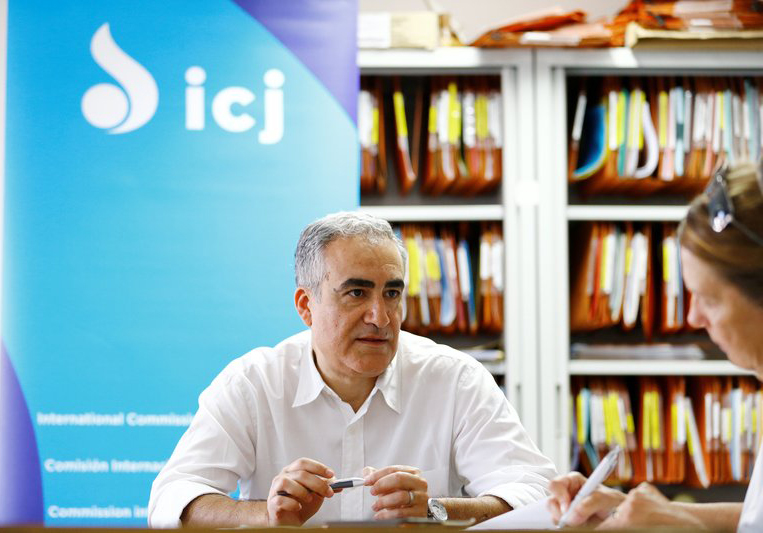
An interview of ICJ Secretary General Sam Zarifi with Reuters journalist Stephanie Nebehay.
GENEVA (Reuters) – Donald Trump is one of a new breed of leaders around the world who seek to use their democratic mandate to undermine the rule of law, the head of a legal and human rights watchdog said on Wednesday.
Branding the U.S. president an “authoritarian populist”, Saman Zia-Zarifi, secretary-general of the Geneva-based International Commission of Jurists (ICJ), compared him to the leaders of Turkey, the Philippines, Hungary and Venezuela.
Zarifi cited as an example Trump’s travel ban on nationals from six Muslim-majority countries, a policy that he called “highly problematic” under the U.S. constitution and international law.
“What is different now is that a certain kind of populism is being used to actually counter the notion of the rule of law,” Zarifi said in an interview at the headquarters of the ICJ, which is composed of 60 eminent judges and lawyers from all regions who seek to protect human rights and the rule of law.
“The new populism has a certain shamelessness about it that is new. It’s not that people are denying that they are violating rights, what they are saying is they can violate rights because somehow they are empowered by the people,” he said.
Zarifi, who took over at the ICJ in April, said the new breed of populists included Turkey’s President Tayyip Erdogan, Venezuela’s Nicolas Maduro, the Philippines’ Rodrigo Duterte, Hungary’s Prime Minister Viktor Orban and Jaroslaw Kaczynski, head of Poland’s ruling party.
“I would say that in the U.S., Trump is an authoritarian populist. He has authoritarian tendencies but he still is facing checks and balances,” Zarifi said. “So he is not a full-blown authoritarian figure.”
The U.S. Supreme Court revised parts of Trump’s executive order banning travellers from Iran, Libya, Somalia, Sudan, Syria and Yemen, a policy Trump says is aimed at tackling terrorism.
“Looking at it again from the point of view of U.S. law – I’m an American lawyer – it seems highly problematic,” said the Iranian-born Zarifi, who moved to the United States as a teenager and holds a law degree from Cornell University.
Supreme Court rulings would be, he said, “a test for the health of the system of checks and balances in the U.S.”
Turkish Judiciary “Politically Compromised”
A crackdown by Erdogan’s government has led to the arrest of 50,000 people and the suspension of 150,000 in the year since a failed military coup in Turkey where the judiciary is “now politically compromised”, Zarifi said.
The Turkish government has said the action is justified by the gravity of the threat to the state from the coup attempt.
On Monday, the state prosecutor asked a court to remand the local Amnesty International director and nine other activists in custody pending trial for membership of a terrorist organisation.
Erdogan was quoted by Turkish media this month as saying they were detained on the basis of intelligence and that the judiciary would make its own decision.
But Zarifi said the judiciary should have thrown the case out.
“The handling of the case highlights the very serious concerns – and alarm in fact at this point – that we have raised about the independence of the judiciary and the legal system in Turkey over the last few years.”
Photo Credit: Reuters / Pierre Albouy
Jan 26, 2017 | News
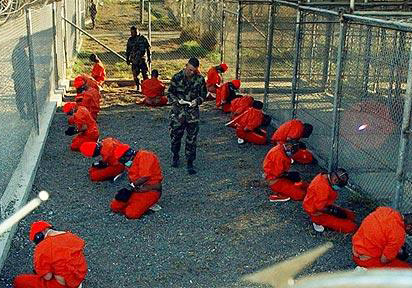
The ICJ deplores comments made last night by the United States President Donald Trump, expressing approval for the practice of torture in counter-terrorism operations.
The ICJ is also alarmed at reports that the US administration is considering resurrecting the most abusive policies and practices during the early 2000s, including prolonged arbitrary detention in CIA-administered secret “black site” facilities, enforced disappearance, and rendition to other countries for torture and ill-treatment.
“These practices of torturing detainees and ‘disappearing’ them in black sites are serious crimes which must never be repeated,” said Ian Seiderman, ICJ Legal and Policy Director.
“Even President Bush, despite his administration’s appalling record, publicly denounced torture as being against the laws and values of the United States,” he added.
Contact:
Ian Seiderman, ICJ Legal and Policy Director, t: +41 22 979 3837 ; e: ian.seiderman(a)icj.org
Background:
During an interview on US television last night, President Trump repeated his support for torture practices such as waterboarding (near-drowning) and declared that “torture works.”
A number of media reports have indicated that the Trump Administration may issue an Executive Order to review “whether to reinitiate a program of interrogation of high-value alien terrorists to be operated outside the United States” and whether the CIA should be in charge of such a programme.
Counter-terrorism abuses during the Bush administration from 2001-08 involving torture, enforced disappearance, secret detention and rendition were widely condemned as unlawful, morally unacceptable, and ineffective, both internationally and in the US, leading to the abandonment of such practices.
A report by the Eminent Jurists Panel of the ICJ on Terrorism, Counter-terrorism and Human Rights, issued in 2009 conducted after a four-year study concluded that “such practices are not a legitimate response to the threat of terrorism. Such practices are not only inconsistent with established principles of international law, and undermine the values on which free and democratic societies are based, but as the lessons of history show, they put the possibility of short term gains from illegal actions, above the more enduring long term harm that they cause.”
The Obama administration definitively abolished the practices of torture and secret detention upon taking office in 2009, although they had already been substantially wound down in the later years of the second Bush administration.
Oct 15, 2016 | News
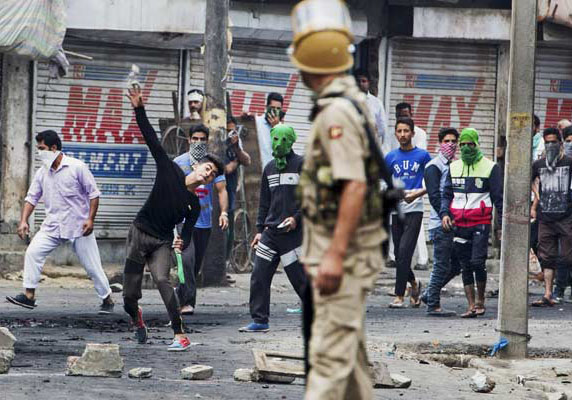
Authorities in Jammu and Kashmir should end the use of the Jammu and Kashmir Public Safety Act (PSA) to arbitrarily detain people, including children, the ICJ, Amnesty International India and Human Rights Watch said today.
The PSA violates international due process standards and should be repealed, the groups said.
“The use of the PSA to detain people, particularly children, violates a range of human rights, and its increasing use in recent weeks undermines the rule of law and further entrenches impunity in Kashmir,” said Sam Zarifi, ICJ Asia Director.
“Police should end the use of the PSA; if people are suspected of committing offences, they should be properly charged and given fair trials,” he added.
The PSA is an administrative detention law that allows detention without charge or trial for up to two years in some cases.
Following an amendment in 2012, the PSA expressly prohibits the detention of anyone under 18.
Between 9 July – when protests and violent clashes broke out in the state following the killing of a leader of the armed group Hizbul Mujahideen – and 6 October, authorities have detained over 400 people, including children, under the PSA, according to media reports.
“The government has a responsibility to address violence during protests, but indefinitely detaining people without charge only adds to the lawlessness,” said Meenakshi Ganguly, South Asia Director, Human Rights Watch. “Detaining children under the PSA is not only unlawful, but could have negative repercussions for years.”
On 16 September, Rayees Ahmad Mir, who is 16 years old according to his school records, was arrested in Baramulla district under ordinary criminal procedure for allegedly throwing stones at security forces.
Two days later, an executive official passed an order to detain him under the PSA, to preclude his release on bail.
The order incorrectly stated that he was 18 years old. Rayees Mir’s family challenged the order before the Jammu and Kashmir High Court, producing documents that proved he was only 16.
On 7 October, the court stated that Rayees Mir should be treated according to juvenile justice rules, as there was prima face evidence that he was a minor, and ordered his transfer to a juvenile home. The PSA detention order has not yet been quashed.
An official at the Kot Bhalwal jail said on 14 October that the prison authorities had not yet transferred Rayees Mir, as they had not received a copy of the court order.
Mir Shafqat Hussain, a lawyer representing many PSA detainees, said: “In a number of cases the families have not been informed about the grounds of detention. Arresting minors and booking them under PSA is definitely going to have an effect on their psyche. From schools and colleges, these boys end up in jails where they will be kept together with adults. It is definitely going to have an adverse effect on them.”
On 18 August, Waheed Ahmed Gojree, who is 16 according to his school records, was arrested in Kupwara district and detained at a police station.
According to his family, the police at first told them he would be released the next day, but then said that he had been detained under the PSA.
He was first taken to a jail in Baramulla, and then to the central jail in Jammu.
An official at the central jail confirmed that he had been detained under the PSA.
The family has not yet received a copy of the detention order, or been formally informed about the grounds of Waheed Gojree’s detention.
The authorities appear to have not taken his age into account before issuing his detention order.
“The central and state governments have spoken about following the principle of insaniyat, or humanity, in dealing with the crisis in Jammu and Kashmir,” said Aakar Patel, Executive Director at Amnesty International India. “But detaining children under the PSA is neither humane nor lawful.”
Amnesty International India, Human Rights Watch and the ICJ believe that anyone detained under the PSA must either be charged promptly with a recognizable criminal offence or prosecuted in a fair trial, or else be released.
Not prosecuting people suspected of committing offences can also violate the human rights of the victims of these offences.
Contact
Sam Zarifi, ICJ Asia & Pacific Regional Director (Bangkok), t: +66 807819002; email: sam.zarifi(a)icj.org
india-joint-statement-psa-news-press-release-2016-eng (full text of statement, in PDF)
Oct 11, 2016 | News
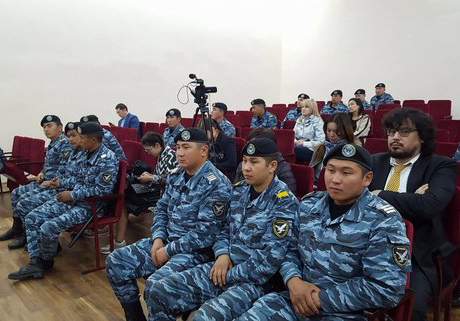
Today, the ICJ observed a hearing in the case of Azimzhan Askarov, a prominent human rights defender in Kyrgyzstan, convicted in 2011 of murder and incitement to ethnic hatred, after an unfair trial, and sentenced to life imprisonment.
Azimzhan Askarov is appealing against his conviction following a decision of the UN Human Rights Committee.
The Chuy Court began the appeal hearing in the case on 4 October, following the findings of the UN Human Rights Committee that Azimzhan Askarov’s arrest, detention and trial violated the International Covenant on Civil and Political Rights (ICCPR), including the prohibition on torture or other ill-treatment, the prohibition on arbitrary detention, and the right to fair trial.
As a result, the Supreme Court ordered a reconsideration of the case earlier this year.
At today’s hearing a witness who was Askarov’s former cellmate confessed that he beat Askarov up in detention, which is the first time that direct testimony about Askarov’s torture or other ill-treatment has been presented to the Court.
Previously such allegations were refuted by the prosecution.
The next hearing is scheduled for 18 October. The ICJ will continue monitoring the case in future hearings.
Contact
Róisín Pillay, e: roisin.pillay(a)icj.org
Dmitry Nurumov, e: dmitry.nurumov(a)icj.org
Background
Azimzhan Askarov, a prominent human rights defender, was convicted of murder and incitement to ethnic hatred and sentenced to life imprisonment in December 2011.
The charges concerned allegations of his participation in a murder of Myktybek Sulayamanov, a police officer, during the 2010 ethnic clashes in the South of Kyrgyzstan.
The ICJ observed the appeal hearing in the case before the Supreme Court on 20 December 2011.
Based on the results of the mission as well as the documents of the case, the ICJ published a detailed report on the arrest, detention and trial of Azimzhan Askarov.
In March 2016, the UN Human Rights Committee issued a decision in regard to Askarov’s complaint and found violations of Articles 7 (freedom from torture), Article 9 (prohibition of arbitrary detention); Article 10 (right to humane treatment in detention), Article 14 (right to a fair trial) of the International Covenant on Civil and Political Rights.
On 12 July 2016, the Supreme Court ordered a further reconsideration of the case on appeal.
The Chuy Regional Court is currently considering the case.
kyrgyzstan-askarov-trial-obs-news-web-story-2016-rus (full story in Russian, PDF)
Sep 23, 2016 | Advocacy, Non-legal submissions
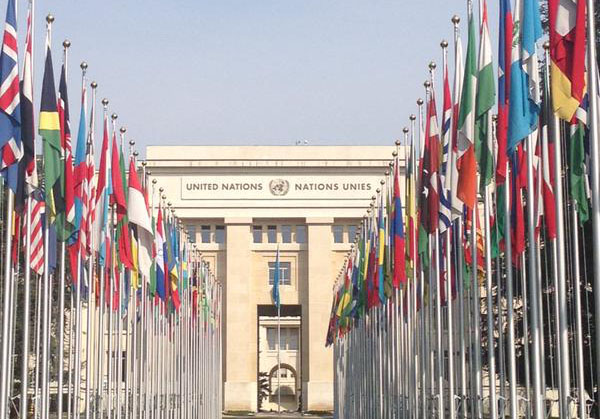
The ICJ, speaking at the UN Human Rights Council, highlighted concerns with criminalization of political gatherings, arbitrary detention, use of military for law enforcement, and trials of civilians before military courts, in Thailand.
The statement was made during discussion of the outcome of the Second Universal Periodic Review (UPR) of Thailand.
While congratulating Thailand on completion of the UPR, the ICJ oral statement continued as follows:
However, the ICJ is disappointed that several key recommendations concerning restrictions of civil and political rights in the country did not enjoy the support of Thailand.
The interim Constitution, put in place by the military government after the May 2014 coup, remains in force. Article 44 gives the government sweeping, unchecked powers inconsistent with the fundamental pillars of the rule of law and human rights.
The military government has issued numerous orders and announcements under the interim Constitution, including some that criminalize political gatherings, allow arbitrary detention for up to seven days without charge, and provide military officers broad powers of law enforcement.
At least 1,811 civilians have faced proceedings in military courts contrary to international law and standards, many merely for exercising their rights to free expression and peaceful assembly.
Thailand did not accept any of the recommendations to remove these restrictions on the rule of law and human rights.
While the ICJ welcomes the Order of 12 September 2016 ending the practice of prosecuting civilians in military courts for crimes committed after that date, approximately 500 civilian cases remain in military courts.
The ICJ is also concerned that in July the government charged three human rights defenders with criminal defamation for raising allegations of torture in the deep South.
The ICJ urges Thailand to accept and implement recommendations relevant to:
- revoking the interim Constitution and all NCPO orders and announcements that are contrary to the rule of law and respect for human rights;
- transferring all pending civilian cases to civilian courts and set aside the convictions of all civilians prosecuted in military courts since the 2014 coup; and
- ending all harassment of human rights defenders in Thailand.
The statement may be downloaded in English and in Thai in PDF here:
thailand-hrc33-upr-advocacy-non-legal submission-2016-eng
thailand-hrc33-upr-advocacy-non-legal-submission-2016-tha