May 30, 2016 | News
The ICJ commends the victims of the former Chadian president Hissene Habre for their relentless pursuit of justice that resulted in Habre’s conviction of crimes against humanity.
Today Hissene Habre (photo) was convicted for the murders, summary executions and torture of over 40,000 people, which were committed during his rule from 1982-1990 until he was deposed by the current president Idriss Deby Itno.
For over two decades victims and survivors groups have been campaigning with human rights organizations for an end to the lack of accountability and impunity that enabled Habre to spend years in exile before prosecution.
Speaking after the handing down of the judgement by the Extraordinary African Chambers, Wilder Tayler, ICJ’s Secretary General, reminded the African Union of the “need to enhance effectiveness of the African Court on Human and Peoples’ Rights to ensure that crimes against humanity can be addressed in a timely way that ensures the provision of remedies to victims of human rights violations.”
Further, Tayler urged other countries that have housed war criminals to reconsider their attitude towards international human rights and criminal law, and to ensure that international jurisdiction and prosecution requirements to end impunity are met.
In conclusion, the Secretary General, expressed his hope that “this event mark the beginning of the end of the African continent being perceived as an epicentre of impunity.”
Contact
Arnold Tsunga, ICJ Regional Director for Africa, t: +27 73 131 8411, e: arnold.tsunga(a)icj.org

Jul 1, 2015 | Advocacy, Open letters
The statement has been endorsed by more than 100 civil society groups, including the ICJ, with representation in more than 25 African states, following Omar al-Bashir’s travel to South Africa from June 13-15.
The declaration raises grave concern over South Africa’s flouting its domestic and international legal obligations in failing to arrest al-Bashir (photo), and applauds the efforts of Southern Africa Litigation Centre, which filed an application before South Africa’s courts to compel al-Bashir’s arrest.
The declaration is a strong testament to support for victims of grave crimes to have access to justice, for the ICC’s efforts to advance justice for crimes committed in Darfur, and for activism to ensure al-Bashir’s surrender to the ICC.
SouthAfrica-Civil Society Declaration on Bashir-Advocacy-Open letters-2015-ENG (full text in PDF)
Oct 1, 2013 | News
The ICJ denounces the death penalty handed down today by the International Crimes Tribunal (ICT) to Salauddin Quader Chowdhury, a member of the Bangladesh Nationalist Party, the main opposition party.
If carried out, the sentence would violate Bangladesh’s international law obligations to protect the right to life and freedom from cruel, inhuman, or degrading punishment, the ICJ states.
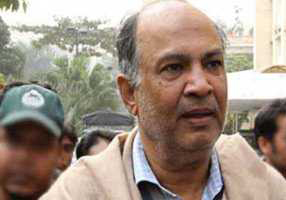
The International Crimes Tribunal convicted Chowdhury (photo) on nine of 23 charges, including murder and genocide, and sentenced him to death.
“The Bangladesh Tribunal is one of very few transitional justice mechanisms that have imposed the death penalty,” said Sam Zarifi, ICJ’s Asia-Pacific Director. “It is unfortunate that Bangladesh seeks to punish human rights violations by committing rights violations itself.”
The ICJ considers the death penalty in all cases to constitute a violation of the right to life and the right not to be subjected to cruel, inhuman or degrading punishment.
This is the seventh verdict delivered by the International Crimes Tribunal. Death sentences have been handed out in all but one case.
”Bangladeshi law as well as international human rights standards require that death penalty cases receive a fair and thorough review, so it is crucial that appellate review of these cases proceed properly, without undue political pressure or a timeline established by impending elections in or before January 2014,” Zarifi said.
“Those responsible for the horrific war crimes and crimes against humanity during Bangladesh’s war of liberation in 1971 should be brought to justice in processes that are fair, and seen to be fair, instead of being subjected to vengeance,” he added.
Contact
Sam Zarifi, ICJ Asia-Pacific Regional Director, (Bangkok), t:+66 807819002; email: sam.zarifi(a)icj.org
May 21, 2013 | News
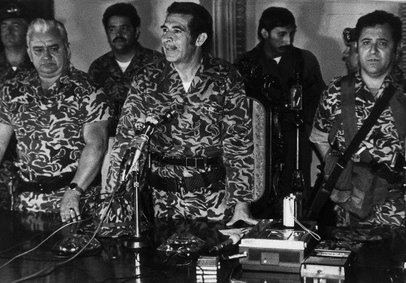
El fallo emitido por la Corte de Constitucionalidad constituye un retroceso en la búsqueda de Justicia en Guatemala por las graves violaciones a los derechos humanos cometidas durante el conflicto armado interno, dijó la CIJ.
Es importante recordar que ya en diciembre de 2007, dos de los actuales magistrados de la Corte de Constitucionalidad también otorgaron un amparo al militar retirado General Ríos Montt, evitando su extradición a España. El día de ayer, la CC vuelve a amparar al militar retirado, esta vez para afectar gravemente el derecho de acceso a la justicia de las víctimas del Pueblo Ixil y provocar más impunidad en Guatemala.
Con este fallo, la Corte de Constitucionalidad envía un mensaje equivocado a la población guatemalteca y le da más poder a los victimarios. Sin embargo, la CIJ reconoce que tanto el Magistrado Chacón como la Magistrada Porras, emitieron un voto disidente, apartándose así de la decisión mayoritaria de los magistrados Molina Barreto, Maldonado Aguirre y Pérez Aguilera.
El amparo que la Corte de Constitucionalidad otorgó el día de ayer, lejos de respaldar la justicia, avala las acciones del abogado defensor Francisco García Gudiel, quien faltó a la ética profesional al aceptar la defensa de Ríos Montt, aún sabiendo que la Ley del Organismo Judicial en su artículo 201 literal a) le prohibía “actuar en los juicios en que el juez tuviere que excusarse o pudiera ser recusado a causa de la intervención del profesional.”
Ramón Cadena, Director de la Comisión Internacional de Juristas para Centroamérica expresó: «Nuevamente la Corte de Constitucionalidad está provocando el incumplimiento de la obligación internacional del Estado de Guatemala de juzgar y castigar a los responsables de crímenes gravísimos como el genocidio, crímenes de guerra y crímenes de lesa humanidad. Con dicho fallo, las víctimas del Pueblo Ixil han sido burladas y su derecho de acceso a la justicia ha sido nuevamente negado.»
Otros artículos:
La CIJ expresa su preocupación ante la posibilidad de que juicio por Genocidio y Delito contra los Deberes de Humanidad sea anulado
La CIJ celebra triunfo de la justicia sobre la impunidad
NOTE:
You can find a comprehensive background on the Rios Montt trial in English here

Mar 18, 2013 | News
The ICJ strongly condemns today’s suicide attack on the Peshawar court complex in Pakistan.
“An independent judiciary, free from violence, threats of violence or intimidation is a basic precondition to a functioning democracy under the rule of law,” said Alex Conte, Director of ICJ’s International Law and Protection Programmes.
“The suicide attack drives home the failure of the Pakistani government to fulfill its obligation to protect the right to personal security of the millions of people living in northwest Pakistan who have to face the daily threat of suicide bombings or unlawful killings,” said Sam Zarifi, ICJ’s Asia & Pacific Regional Director.
Under the United Nations Basic Principles on the Independence of Judges, the State must take steps to protect the judiciary from threats, violence or any other interference from any quarter for any reason.
Under international law, notably the International Covenant on Civil and Political Rights, Pakistan must take active steps to ensure the safety of all persons within its territories.
Under the Beijing Statement of Principles on the Independence of the Judiciary in the LAWASIA Region, the executive authorities must at all times ensure the security and physical protection of judges and their families.
“Insurgent groups in northwest Pakistan have a long record of human rights abuses, including the use of suicide bombers to commit unlawful killings,” Zarifi added. “If this bombing was perpetrated by militants as part of a widespread or systematic attack against civilians, it constitutes a crime against humanity and must be treated as such.”
Earlier today, two suicide bombers detonated heavy explosives inside a Peshawar courthouse killing four people and injuring thirty others, including lawyers, police officers and civilians.
One of the bombers detonated the explosives in the courtroom of Judge Kulsoom Nawaz.
The Peshawar courthouse complex was attacked in November 2009, killing 19 people.
CONTACTS:
Laurens Hueting, ICJ Associate Legal Adviser, Centre for the Independence of Judges and Lawyers (Geneva), t: +41 229793848, email: laurens.hueting(a)icj.org
Sam Zarifi, ICJ Asia-Pacific Regional Director, (Bangkok); t:+66 807819002; email: sam.zarifi(a)icj.org
Sheila Varadan, ICJ Legal Advisor, South Asia Programme (Bangkok), t: +66 857200723; email: sheila.varadan(a)icj.org