Mar 26, 2021 | News
In a joint communication to five United Nations Special Procedures, the ICJ and its partners urged the mandate holders to call on the Tunisian authorities to immediately stop hampering the transitional justice process.
The organizations expressed their concern at the ongoing attempts to undermine the transitional justice process and accountability efforts for past gross human rights violations.
“The Tunisian transitional justice process has been under serious attack since its inception in 2013. Today, the ICJ and its partners are urging the United Nations Special Procedures to take urgent action to deter such attacks, demand justice for the victims and secure accountability for the perpetrators,” said the Director of ICJ’s Middle East and North Africa Programme, Said Benarbia.
The joint communication highlights the following areas of concern:
- The recent political initiatives to dismantle the transitional justice process;
- The incessant attacks against the Truth and Dignity Commission (Instance Verité et Dignité, IVD) and its 2018 final report’s findings;
- The lack of support to the Specialized Criminal Chambers (SCC) and the numerous obstacles that risk to severely impair access to justice and effective remedies for victims of gross human rights violations.
The communication is addressed to the following United Nations Special Procedures:
- The Special Rapporteur on the promotion of truth, justice, reparation and guarantees of non-recurrence;
- The Special Rapporteur on torture and other cruel, inhuman or degrading treatment or punishment;
- The Special Rapporteur on the independence of judges and lawyers;
- The Working Group on Arbitrary Detention; and
- The Working Group on Enforced or Involuntary Disappearances.
The communication was submitted jointly by the ICJ along with:
- The World Organisation Against Torture (OMCT)
- The Ligue tunisienne des droits de l’homme (LTDH)
- The Forum Tunisien pour les Droits Economiques et Sociaux (FTDES)
- Avocats Sans Frontières (ASF)
- The Association of Tunisian Magistrates (AMT)
- Al Bawsla
- International Alert
- The Association KARAMA
- The Association INSAF pour les anciens militaires
- No Peace Without Justice
- The Organisation Contre la Torture en Tunisie (OCTT)
- The Organisation Dhekra we Wafa, pour le martyr de la liberté Nabil Barakati
- The Coalition Tunisienne pour la Dignité et la Réhabilitation
- The Association Tunisienne pour la Défense des Libertés Individuelles
- The Association des Femmes Tunisiennes pour la Recherche sur le Développement
- The Association Internationale pour le Soutien aux Prisonniers Politiques
- The Réseau tunisien de la justice transitionnelle
Contact
Valentina Cadelo, Legal Adviser, ICJ Middle East and North Africa Programme, e: valentina.cadelo(a)icj.org
Asser Khattab, Research and Communications’ Officer, ICJ Middle East and North Africa Programme, e: asser.khattab(a)icj.org
Download
Tunisia-Special-Procedures-Joint-Submission-2021 (PDF, in French)
Mar 1, 2021 | Advocacy, News
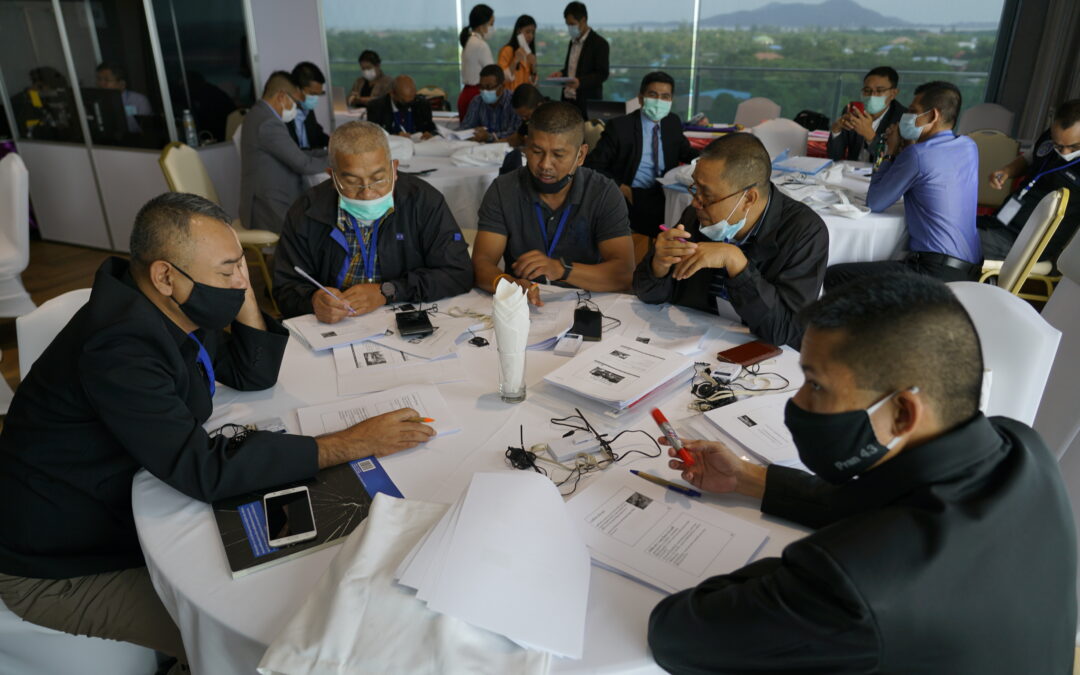
Between December 2020 and February 2021, the ICJ co-hosted a series of workshops for government authorities, medical professionals and lawyers in the southern border provinces of Thailand on how to conduct investigations into alleged unlawful killings and enforced disappearances.
Thailand’s southern border provinces of Pattani, Yala, Narathiwat and four districts of Songkhla have been affected by a longstanding ethno-nationalist insurgency, which has involved conflict between certain Malay groups and Thai military and security forces. Special security laws have been enacted and applied to the deep south. Over recent years, there are reports of widespread human rights violations, including violations of due process and fair trial rights, torture, ill-treatment while in custody, arbitrary detention and extrajudicial killings continue to emerge. Investigations into these allegations, prosecutions of perpetrators and provision of remedies and reparations to victims remain slow.
The first workshop was organized between 21 and 22 December 2020 in Songkhla province for authorities from Thailand’s southern border provinces. The event focused on how investigations into unlawful deaths should be conducted in accordance with international human rights law and standards, with a particular focus on the revised Minnesota Protocol (2016), which the ICJ assisted in producing.
The workshop was co-hosted with Thailand’s Ministry of Justice, the Embassy of New Zealand in Bangkok, and the United Nations Office of the High Commissioner for Human Rights (OHCHR). The participants included 48 judges, public prosecutors, police investigators, representatives of the Ministry of Justice’s Department of Special Investigation (DSI), the National Anti-Corruption Commission (NACC), the Narcotics Control Board (ONCB) and observers from the Internal Security Operations Command (ISOC) Region 4 Forward.
The second workshop was organized on 23 and 24 December 2020 in Pattani province for medical professionals in the same region. The event introduced participants to the international human rights law and standards governing the effective investigation and documentation of torture and other ill- treatment, including the revised Minnesota Protocol (2016) and the Istanbul Protocol (1999), and emphasized the important role of medical professionals in the documentation of torture.
The workshop was co-hosted with Thailand’s Ministry of Justice and the OHCHR. The participants included 28 medical professionals from district and military hospitals and detention centres.
Between January and February 2021, the ICJ also developed training videos for defence lawyers and civil society representatives in the southern border provinces. The videos focused on the use of forensic evidence in cases of alleged unlawful killings and how international human rights law and standards, particularly the revised Minnesota Protocol (2016) and ICJ’s Practitioners’ Guide No. 14, can assist defence lawyers when preparing for criminal proceedings and challenging the forensic evidence of prosecution witnesses.
The project was jointly implemented with the OHCHR, Cross-Cultural Foundation, Muslim Attorney Centre Foundation and the Embassy of New Zealand in Bangkok. Participants included 21 defence lawyers and civil society representatives from Thailand’s southern border provinces.
Speakers at the three workshops included:
- Amornrat Lekvichai, Thailand’s Institute of Forensic Science;
- Badar Fafukh, Human Rights Officer, OHCHR Regional Office for South-East Asia;
- Duangsamorn Chudeechan, Thailand’s Institute of Forensic Science;
- Duarte Nuno Vieira, Full Professor, Faculty of Medicine, University of Coimbra and Chairman of the Scientific Advisory Board of the International Criminal Court;
- Gisle Kvanvig, Head of UN Police Secretariat, Norwegian Center for Human Rights;
- Howard Varney, Senior Programme Advisor, International Center for Transitional Justice;
- Ivar Fahsing, Expert on investigation and Human Rights, Norwegian Center of Human Rights;
- Porntip Rojanasunan, member of the Expert Advisory Panel of the revision of the Minnesota Protocol;
- Sanhawan Srisod, ICJ Associate Legal Adviser;
- Stephen Cordner, Professor Emeritus, Department of Forensic Medicine, Monash University and editor of the Forensic Science sections of the 2016 Minnesota Protocol;
- Steve Wood, Senior Liaison Officer and Regional Coordinator, New Zealand Police National HQ;
- Stuart Casey-Maslen, Honorary Professor, Faculty of Law, University of Pretoria and Research Coordinator of the Minnesota Protocol;
- Thomas Wenzel, Full Professor, Faculty of Medicine, University of Vienna; and
- Vitit Muntarbhorn, Professor Emeritus, Faculty of Law, Chulalongkorn University and Former ICJ Commissioner.
The workshops are part of the ICJ’s ongoing efforts under the Global Accountability Initiative to ensure the domestic implementation of international law and standards on the investigation of potentially unlawful deaths and enforced disappearances.
In Thailand, since 2017, the ICJ has held several national and regional-level workshops on the same topics with justice sector actors, defence lawyers and civil society representatives.
Contact
Sanhawan Srisod, ICJ Associate Legal Adviser, Asia & the Pacific Programme, e: sanhawan.srisod(a)icj.org
Kingsley Abbott, ICJ Director, Global Redress and Accountability; e: kingsley.abbott(a)icj.org
See also
Thailand: launch of the revised Minnesota Protocol
Aug 30, 2020 | News, Publications, Reports, Thematic reports
The ICJ marked the International Day of the Victims of Enforced Disappearances today by releasing a baseline study (in Spanish) which identifies key obstacles to accountability for serious human right violations in Colombia.
“The report finds that although Colombia has a comprehensive legal framework aimed at providing accountability for serious human rights violations, victims still face many challenges in obtaining access to justice,” said Kingsley Abbott, Coordinator of the ICJ’s Global Accountability Initiative.
“A robust domestic legal framework is important, but without effective Government implementation at every level full accountability for these violations will remain out of reach,” added Abbott.
Among other challenges, some victims still encounter difficulties in participating in criminal proceedings or obtaining information about investigations and prosecutions of those alleged to be responsible for violations.
The study recommends steps Colombia should take to improve the implementation of the domestic legal framework, including:
- raising the awareness of civil servants, including judicial employees, of victims’ rights and the appropriate legal mechanisms employed to search for “disappeared” persons;
- improving coordination between the State’s institutions, including the Search Unit for Persons Presumed Disappeared in the context and by Reason of the Armed conflict, the Special Jurisdiction for Peace, and the Office of the Attorney General; and
- ensuring that the investigation and prosecution of enforced disappearances and extrajudicial killings take place within the civilian rather than the military justice system.
The study also stresses the importance of Colombia recognizing the competence of the UN Committee on Enforced Disappearances (CED) to receive and consider individual communications. Considering the high levels of impunity, the recognition has been requested by Colombian civil society organizations and victims to improve the protection and guarantee of rights of victims of enforced disappearances.
The baseline study has been produced as part of the ICJ’s regional project addressing justice for extrajudicial killings and enforced disappearances in Colombia, Guatemala and Peru, sponsored by the European Union.
The baseline study is available in Spanish.
Background
The ICJ has long been monitoring laws, policies and practices concerning the investigation and prosecution of serious human rights violations and abuses in Colombia, including enforced disappearances and extrajudicial killings, as part of its efforts to promote accountability, justice and the rule of law around the world.
Enforced disappearances and extrajudicial killings are among the most prevalent human rights violations committed in Colombia, particularly in the context of the ongoing internal armed conflict. In Latin America, Colombia has one of the highest figures of people who have been subject to enforced disappearance or unlawfully killed.
The project is implemented under the ICJ’s Global Accountability Initiative which has also produced baseline studies for Eswatini, Nepal, Myanmar, Venezuela, Cambodia, Tajikistan and Tunisia.
Contacts
Kingsley Abbott, Coordinator of the Global Accountability Initiative, e: kingsley.abbott(a)icj.org
Carolina Villadiego, Legal and Policy Adviser, Latin America, and Regional Coordinator of the Project, e: carolina.villadiego(a)icj.org
Rocío Quintero M, Legal Adviser, Latin America, e: rocio.quintero(a)icj.org
Download
Colombia-GRA-Baseline-Study-Publications-Reports-Thematic-reports-2020-SPA (full report, in Spanish, PDF)
Aug 17, 2020 | Advocacy, News
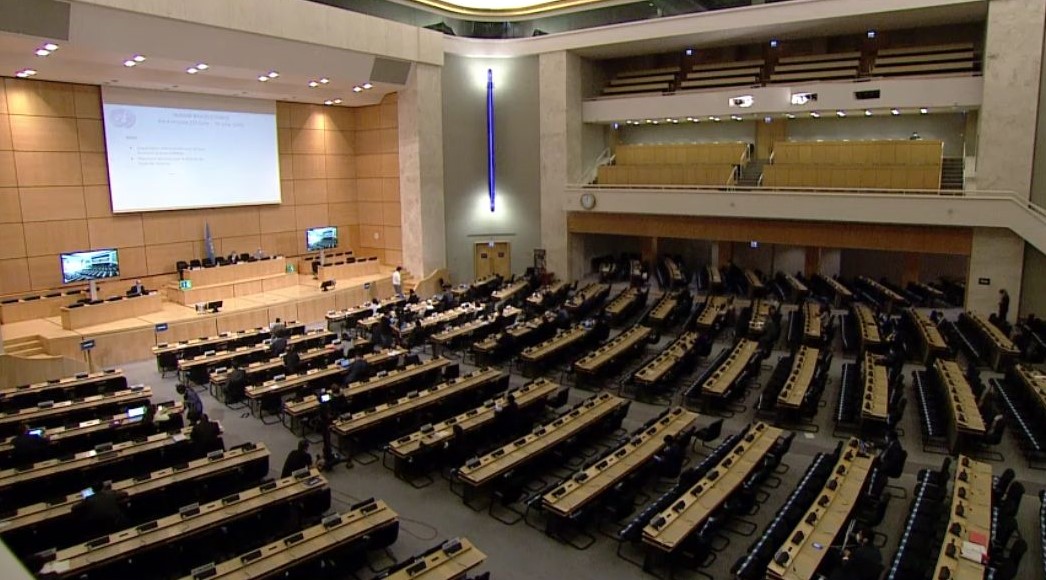
Today, the ICJ joined 83 other human rights organizations to call the United Nations Human Rights Council to renew and strengthen the mandate of the Independent International Fact-Finding Mission (FFM) on Venezuela in its upcoming session in September, and to ensure it has adequate resources to continue its critical work.
The ICJ considers that the lack of judicial independence in the country, recently addressed by the High Commissioner and documented by ICJ during several years, presents a major obstacle to victims seeking to access effective remedies and reparation for gross human rights violations in the country. There has also been near complete impunity for those responsible for such violations. The lack of effective accountability makes the work of the FFM indispensable
Last year at its 42nd session, UN Human Rights Council established the Independent International Fact-Finding Mission with a mandate to investigate extrajudicial executions, enforced disappearances, arbitrary detentions and torture and other cruel, inhuman or degrading treatment since 2014.
The Council expressed “grave concern at the alarming situation of human rights in the Bolivarian Republic of Venezuela, which includes patterns of violations directly and indirectly affecting all human rights (…) in the context of the ongoing political, economic, social and humanitarian crisis.”
The FFM’s first report is expected to be presented at the Council’s next session scheduled for 14 September to 6 October.
The NGO joint statement stressed that the report “will mark an important first step on the path to accountability in Venezuela through the documentation of the participation of those suspected of criminal responsibility. It is critical that the Human Rights Council respond meaningfully to the findings and recommendations in the report”.
The ICJ notes that the COVID-19 pandemic has engendered further stresses on the human rights situation. The United Nations Office for the Coordination of Humanitarian Affairs (OCHA) reported in July 2020 that an “assessment of water, hygiene and sanitation (WASH) conditions in 17 hospitals conducted by PAHO/WHO in 2019 found that 88.3 per cent of the assessed hospitals present a high risk that hygiene and sanitary conditions pose a health risk to patients and staff; the rest face a medium risk.”
The joint statement is available here.
Dec 15, 2019 | News
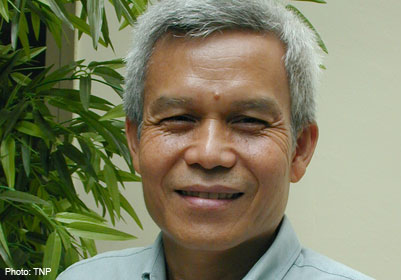
On 15 December 2019, the ICJ joined 87 organizations and 11 individuals in a statement urging the Lao and Thai governments to investigate apparent cases of enforced disappearance and demanding that the Lao government finally reveal Sombath Somphone’s whereabouts and ensure justice for him and his family.
The statement was issued on the seventh anniversary of the disappearance of Lao civil society leader Sombath Somphone and called particularly for the establishment of an independent and impartial investigative body tasked with determining Sombath’s fate and whereabouts without delay, considering the Lao police’s protracted failure to effectively investigate his case. The new body should have the authority to seek and receive international technical assistance in order to conduct a professional, independent, impartial, and effective investigation in accordance with international standards.
Sombath Somphone was last seen at a police checkpoint on a busy street in Vientiane on the evening of 15 December 2012. Footage from a CCTV camera showed that Sombath’s vehicle was stopped at the police checkpoint and that, within minutes, unknown individuals forced him into another vehicle and drove him away in the presence of police officers. CCTV footage also showed an unknown individual driving Sombath’s vehicle away from the city center. The presence of police officers at Sombath’s abduction and their failure to intervene strongly indicates state agents’ participation in Sombath’s disappearance.
Lao authorities have repeatedly claimed they have been investigating Sombath’s enforced disappearance but have failed to disclose any new findings to the public since 8 June 2013. They have met with Sombath’s wife, Ng Shui Meng, only twice since January 2013 – the last time in December 2017. No substantive information about the investigation has been shared by the police with the family, indicating that, for all intents and purposes, the police investigation has been de facto suspended.
The joint statement called on both Lao and Thai governments to promptly and impartial investigate all cases of suspected enforced disappearance in Laos and Thailand in line with international legal standards with a view towards determining the fate and whereabouts of apparent victims.
These include the cases of Od Sayavong, a Lao refugee living in Thailand who has been missing since 26 August 2019, and the cases of Ittiphon Sukpaen, Wuthipong Kachathamakul, Surachai Danwattananusorn, Chatcharn Buppawan and Kraidej Luelert, five Thai critics of the monarchy and the Thai government living in exile in Laos, who went missing between June 2016 and December 2018.
The statement further urged the Lao and Thai governments to promptly ratify the International Convention for the Protection of All Persons from Enforced Disappearance, which Laos and Thailand signed in September 2008 and January 2012 respectively; to incorporate the Convention’s provisions into their domestic legal frameworks, implementing it in practice; and to recognize the competence of the Committee on Enforced Disappearances to receive and consider communications from or on behalf of victims or other States parties.
The full statement is available here.
Contact
Frederick Rawski, ICJ Asia and the Pacific Director, e: frederick.rawski(a)icj.org