Mar 27, 2018 | Advocacy, Non-legal submissions
On 27 March 2018, the ICJ, Thai Lawyers for Human Rights (TLHR) and Cross Cultural Foundation (CrCF) made a joint follow-up submission to the UN Human Rights Committee on Thailand’s implementation of the Committee’s prioritized recommendations.
On 23 March 2017, during its 119th Session, the Human Rights Committee adopted its concluding observations on the second periodic report of Thailand under article 40 of the International Covenant of Civil and Political Rights (ICCPR).
Pursuant to its rules of procedure, the Committee requested Thailand to provide a follow up report on its implementation of the Committee’s recommendations made in paragraphs 8 (constitution and legal framework) 22 (extrajudicial killings, enforced disappearances and torture) and 34 (conditions of detention) of its concluding observations by 23 March 2018. To date, the Thai authorities are yet to file their follow-up report with the Committee.
In their joint submission to the Human Rights Committee, the ICJ, TLHR and CrCF detailed their concerns in relation to Thailand’s failure to implement the Committee’s recommendations in paragraphs 8 and 22 of its concluding observations. The three organizations’ submission focuses on their concerns arising from the following:
Constitution and legal framework
- Orders by the Head of the National Council for Peace and Order (‘HNCPO’); and
- Escalation in use of HNCPO Order No. 3/2558 to restrict fundamental freedoms.
Extrajudicial killings, enforced disappearances and torture
- Allegations of widespread use of torture and other ill-treatment;
- Incommunicado detention;
- Southern Border Provinces; and
- Threats and reprisals against persons working to bring to light cases of alleged torture, ill–treatment and enforced disappearance.
Read also
ICJ and Thai Lawyers for Human Rights, Joint submission to the UN Human Rights Committee, 13 February 2017
Contact
Kingsley Abbott, ICJ Senior International Legal Adviser for Southeast Asia, e: kingsley.abbott(a)icj.org
Thailand_Joint-Follow-up-Human-Rights-Committee-Submission-march-2018 (Full submission in ENG, PDF)
Thailand-Follow up HRC-Advocacy-Non legal submission-2018-THA (Thai version, in PDF)
Mar 20, 2018 | News
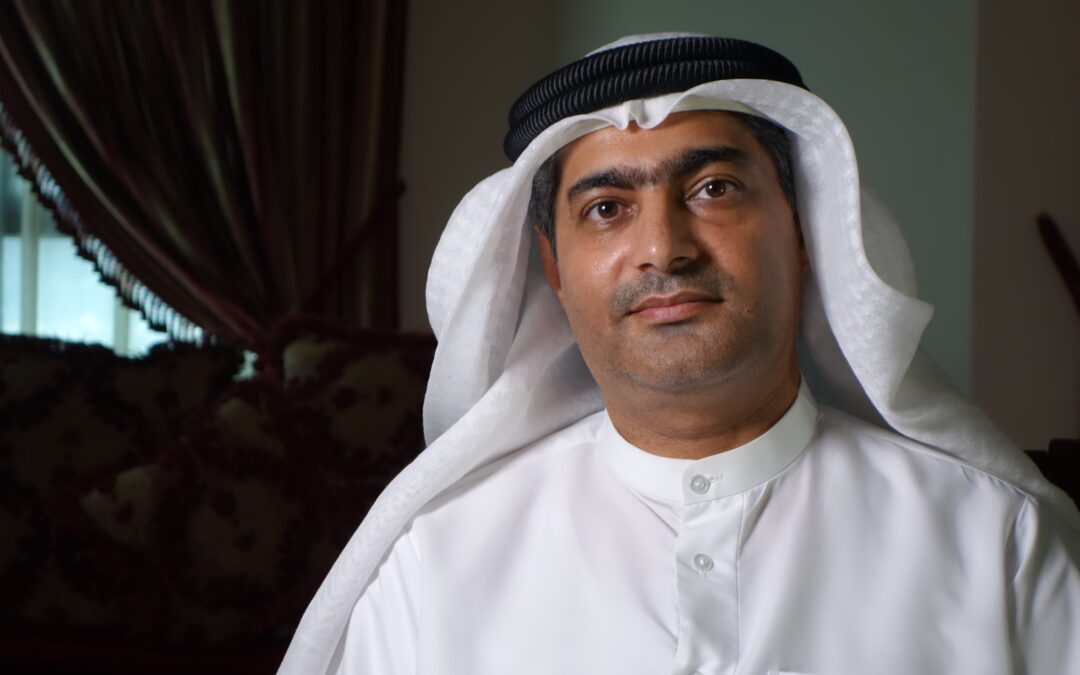
The authorities in the United Arab Emirates (UAE) should reveal the whereabouts of prominent human rights defender and citizen-journalist Ahmed Mansoor and release him immediately and unconditionally, two dozen human rights organizations, including the ICJ, said today.
Ahmed Mansoor is being held for his peaceful human rights work.
20 March 2018 marks one year since security forces arbitrarily arrested Mansoor, winner of the Martin Ennals Award for Human Rights Defenders in 2015, at his home in Ajman.
The UAE authorities have continued to detain him in an unknown location, despite condemnation from UN human rights experts and independent human rights organizations.
“The authorities have subjected Ahmed Mansoor to enforced disappearance since his wife last saw him in September 2017. They must reveal his whereabouts to his family and grant him immediate access to them and to a lawyer of his choosing,” said Khalid Ibrahim, Executive Director of the Gulf Centre for Human Rights (GCHR).
Following his arrest, the authorities announced that he is facing speech-related charges that include using social media websites to “publish false information that harms national unity.”
On 28 March 2017, a group of UN human rights experts called on the UAE government to release Mansoor immediately, describing his arrest as “a direct attack on the legitimate work of human rights defenders in the UAE.”
They said that they feared his arrest “may constitute an act of reprisal for his engagement with UN human rights mechanisms, for the views he expressed on social media, including Twitter, as well as for being an active member of human rights organizations.”
“Mansoor’s arbitrary detention is a violation of his right to freedom of expression and opinion. The UAE authorities must drop all charges against him and release him immediately,” said Carles Torner, Executive Director of PEN International.
Since his arrest, Mansoor has not been allowed to make telephone calls to his family and has been allowed only two short visits with his wife, on 3 April and 17 September 2017, both under strict supervision.
He was brought from an unknown place of detention to the State Security Prosecutor’s office in Abu Dhabi for both visits.
The authorities have refused to inform his family about his place of detention and have ignored their requests for further visits.
In February 2018, a group of international human rights organizations commissioned two lawyers from Ireland to travel to Abu Dhabi to seek access to Mansoor.
The UAE authorities gave the lawyers conflicting information about Mansoor’s whereabouts.
The Interior Ministry, the official body responsible for prisons and prisoners, denied any knowledge of his whereabouts and referred the lawyers to the police.
The police also said they had no information about his whereabouts. The lawyers also visited Al-Wathba Prison in Abu Dhabi following statements made by the authorities after Mansoor’s arrest, which suggested that he was being held there.
However, the prison authorities told the lawyers that there was nobody matching Mansoor’s description in prison.
“Pending his release, Mansoor must be granted immediate and regular access to his family, as well as to a lawyer of his choosing,” said Sima Watling, UAE Researcher at Amnesty International’s Middle East Regional Office.
UAE-one-year-Ahmed-Mansoor-remain-unknown-2018-ENG (Full text in PDF)
Mar 6, 2018 | News
The ICJ today welcomed the first referral of allegations of gross human rights violations to the recently constituted Specialized Criminal Chambers (SCC) at the Tribunal of First Instance of Gabés.
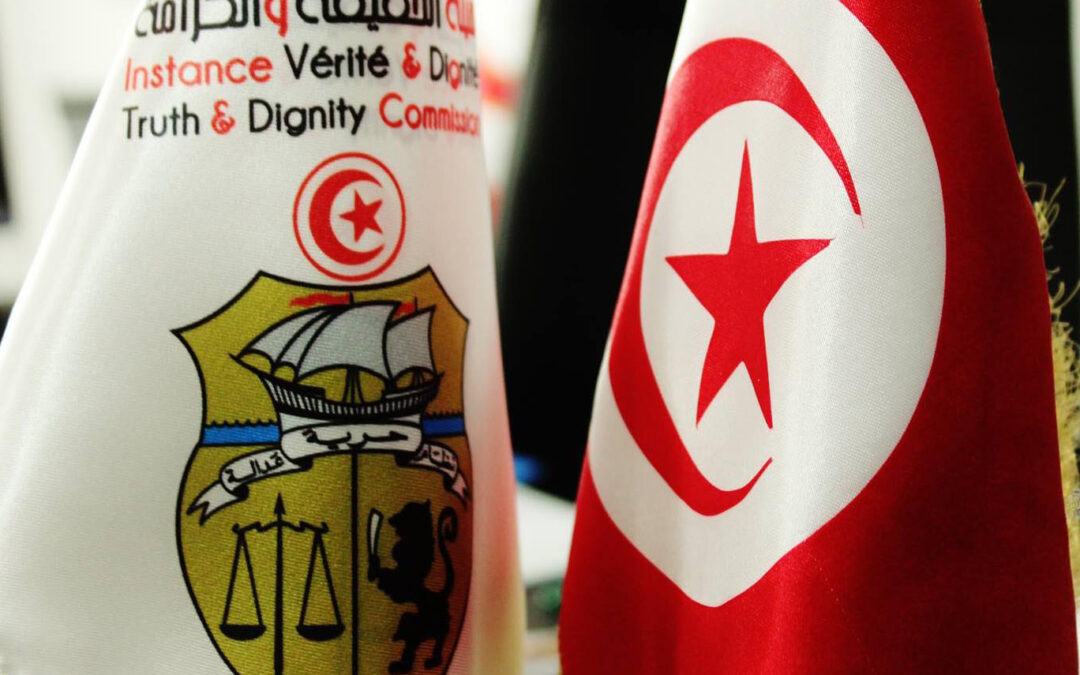
On 2 March 2018, the Truth and Dignity Commission (“Instance Vérité et Dignité”, IVD) transferred a case concerning 14 suspects and the crime of enforced disappearance to the SCC, established to bring justice and accountability for the legacy of serious human violations allegedly committed in Tunisia from 1 July 1955 to 31 December 2013.
“The IVD’s decision is an important first step in the process of ensuring accountability and dismantling the structural impunity that has prevailed over cases of gross violations of human rights in Tunisia,” said Said Benarbia, Director of the ICJ Middle East and North Africa Programme.
“We call on the responsible Tunisian authorities to fully support this process and remove the obstacles that continue to impede the IVD’s work, including by ensuring its full, rapid and unimpeded access to archives and to information related to the conduct of police and security forces under the former regime,” he added.
The ICJ also reiterated its previous call on the Tunisian authorities to remove the legal and practical obstacles that may hinder the SCC’s capacity to deliver justice effectively.
In two memos addressing the jurisdiction and the procedures to be applied by the SCC, the ICJ identified such obstacles and formulated recommendations for amendments and reform.
“The Government must reform the legal framework and procedures to be applied by the SCC so that they can effectively exercise their jurisdiction, establish the truth about past violations, hold those responsible to account, and deliver meaningful justice and reparation for victims,” Benarbia said.
Contact
Said Benarbia, Director of the ICJ Middle East and North Africa Programme, t: +41 798783546, e: said.benarbia(a)icj.org
Background
The SCC were formally established by Decree No. 2014-2887 of 8 August 2014 and have been set up within the Tribunals of First Instance of thirteen Courts of Appeal.
Under article 8 of the 2013 Transitional Justice Law, the SCC have jurisdiction over cases related to gross violations of human rights, as defined in international treaties applicable to Tunisia and in the provisions of the 2013 Law, involving “murder, rape and other forms of sexual violence, torture, enforced disappearances, and death penalty without fair trial guarantees”.
The 2013 Law attributes a leading role to the IVD with respect to how cases are brought before the SCC. According to article 42 of the 2013 Law, the IVD refers to the Office of the Public Prosecutor (OPP) “cases where gross human rights violations are proven”. As of 15 June 2016, the deadline for victims to submit files, the IVD has received over 60000 cases.
Tunisia-SSC disappearances-News-2018-ARA (full story in Arabic, PDF)