Feb 12, 2019 | News
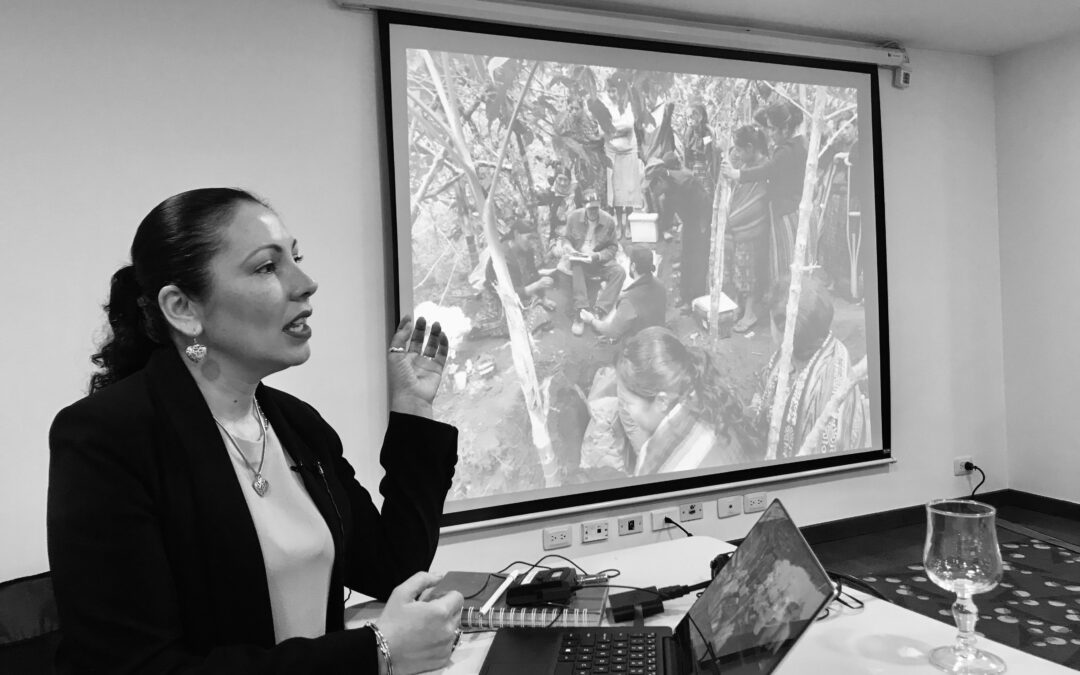
Today in Bogotá, Colombia, ICJ and its partners launched a new 30-month project under the ICJ’s Global Accountability Initiative entitled, Promoting justice for extrajudicial killings and enforced disappearances in Colombia, Guatemala and Peru.
The aim of the project is to promote the accountability of perpetrators and access to effective remedies and reparation for victims and their families in cases of extrajudicial killings and enforced disappearances in Colombia, Guatemala and Peru – and Latin America more broadly – through effective, accountable and inclusive laws, institutions and practices that also reduce the risk of future violations
The ICJ’s partners include the Asociacion de Familiares de Detenidos-Desaparecidos de Guatemala (FAMDEGUA), Asociación Red de defensores y defensoras de derechos humanos (dhColombia), Equipo Argentino de Antropología Forense (EAAF), Equipo Peruano de Antropología Forense (EPAF), Fundación de Antropología Forense de Guatemala (FAFG), and the Instituto de Defensa Legal (IDL).
Christof Heyns, Director of the Institute for International and Comparative Law in Africa and Professor of Human Rights Law at the University of Pretoria – and a former Special Rapporteur on extrajudicial, summary or arbitrary executions – also joins the project as special adviser.
In carrying out the project the ICJ will conduct general studies on obstacles to impunity in Colombia, Guatemala and Peru, as well as specific documentation of emblematic cases of serious human rights violations. The ICJ will also produce a practitioners’ guide for use by civil society, victims and their representatives on the investigation and prosecution of potentially unlawful death, and a regional guide for forensic experts on the investigation and prosecution of potentially unlawful death. In connection with the project the IJC intends to conduct strategic litigation, trial observations and capacity building activities involving judges, prosecutors, investigators, lawyers, civil society, victim groups and forensic experts.
The project is supported by the EU European Instrument for Democracy and Human Rights (EIDHR).
Contacts:
Kingsley Abbott, Senior Legal Adviser & Coordinator of the ICJ’s Global Accountability Initiative, email: kingsley.abbott(a)icj.org
Rocío Quintero, Legal Adviser, Latin America, email: rocio.quintero(a)icj.org
Oct 1, 2018 | News
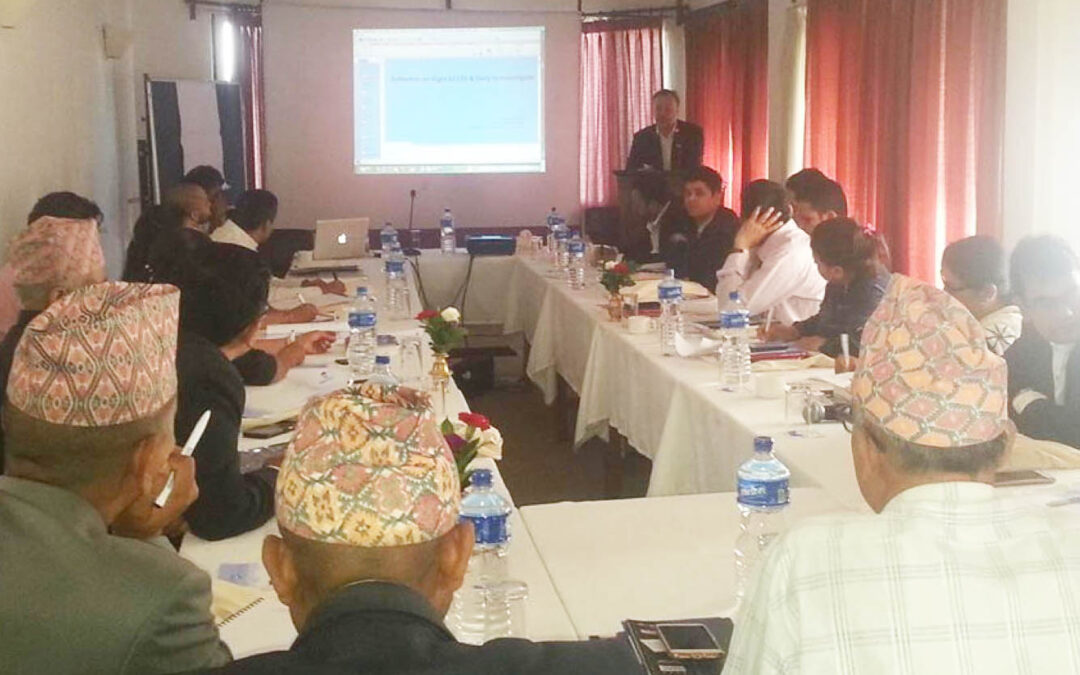
From 29 to 30 September 2018, the ICJ convened a 2nd two-day workshop on application of international law and standards, remarkably focusing on the Minnesota protocol, with special reference to investigation of alleged unlawful killings and enforced disappearances for public prosecutors of Nepal.
The workshop was organized by the ICJ South Asia office and took place as part of the ICJ’s Global Redress and Accountability Initiative, “increasing the knowledge and capacity of lawyers, prosecutors and investigators to deal with challenges of impunity and access to redress.”
The participants of the workshop included 18 public prosecutors working in District Government Office in Kathmandu, Lalitpur, Bhaktapur and Kavrepalanchok, Nepal.
The event started with opening remarks by the Attorney General of Nepal and former minister of Law and Justice, Agni Kharel.
In the opening remarks, Agni Kharel highlighted both commitments made and efforts by the Nepal government in order to protect and promote human rights as well as justice for victims of human rights violations.
Expressing pleasure on the theme of the workshop, he also said the public prosecutors will be benefited as well as be competent to use the knowledge and learning from the workshop in their works.
Senior Legal Consultant of the ICJ Nepal – Govinda Bandi, one of the experts of the workshop and speaker of the opening ceremony, highlighted the objectives of the workshop.
Kingsley Abbott, Senior International Legal Adviser at the ICJ, presented an overview of the relevant international human rights legal framework that applies to the investigation of alleged killing and enforced disappearances.
He further presented an introduction and overview of the revised Minnesota Protocol on the Investigation of Potentially Unlawful Death (2016) and ICJ practitioners Guide no. 9. Both instruments were core materials used at the workshop.
Other speakers included Govinda Bandi, Senior Legal Consultant at the ICJ, who presented on the relevance of the Minnesota protocol in investigating on alleged unlawful killing and enforced disappearances.
Prof. Dr. Hariwar Wasti, Medico-legal expert at the IOM Department of Forensic Medicine of Government of Nepal, presented a power point presentation on the role of forensics in the investigation of gross human rights violations with reference to the Minnesota Protocol.
The workshop focused on investigation techniques of alleged unlawful killings highlighting the significance of public prosecutors in Nepal.
It was also focused on collection and preserving the security of evidences and potential use of the evidences for victims’ right to justice and reparation.
The workshop also covered medico-legal documentation techniques of crime scene and dead wearing tie body, collection of DNA evidence, and drafting of autopsy reports and crime file management.
It was also discussed and outlined some approaches of using the Minnesota protocol in Nepal in the final session of the workshop.
This workshop followed the national workshop the ICJ hosted between 13 to 14 July 2018 in Dhulikhel, Nepal on the investigation of alleged unlawful deaths and enforced disappearances for more than 20 human rights lawyers from diverse regions of Nepal.
Sep 18, 2018 | Advocacy, Non-legal submissions
The ICJ today put the spotlight on serious threats to the rule of law in Hungary, Poland and Turkey, speaking at the UN Human Rights Council in Geneva.The statement, made during general debate on situations that require the Council’s attention, read as follows:
“The International Commission of Jurists (ICJ) would like to bring to the Council’s attention the serious threats to the rule of law in Hungary, Poland and Turkey.
In Poland, the Government has adopted legislation to arbitrarily force into involuntary “retirement” one third of its Supreme Court Justices, delivering a fatal blow to the independence of the judiciary, already strained by past reforms.
In Hungary, multiple legal reforms have weakened judicial independence and effectively criminalized the activities of certain human rights NGOs and curtailed their financing.
Finally, in Turkey, consolidation of emergency measures in ordinary law, regressive constitutional reforms, and the mass dismissal of judges and prosecutors have removed essential protection for the independent functioning of the judiciary.
The ICJ is further concerned by the protest ban against the Saturday Mothers to hold weekly protests in memory of their disappeared family members, in breach of their right to freedom of assembly.
The ICJ is alarmed at the escalation of such threats to the very basic tenets of the rule of law in Europe, without specific action being taken by this Council to address them.
The ICJ urges the Council to give attention to these developments, which indeed form part of a broader global attack on the rule of law,[1] and to keep under observation the human rights situation in these countries.”
[1] See ICJ, “The Rule of Law under Global Threat” (statement in general debate on the oral update of the High Commissioner), 11 September 2018: https://www.icj.org/hrc39-gd2-hc/
Aug 30, 2018 | News
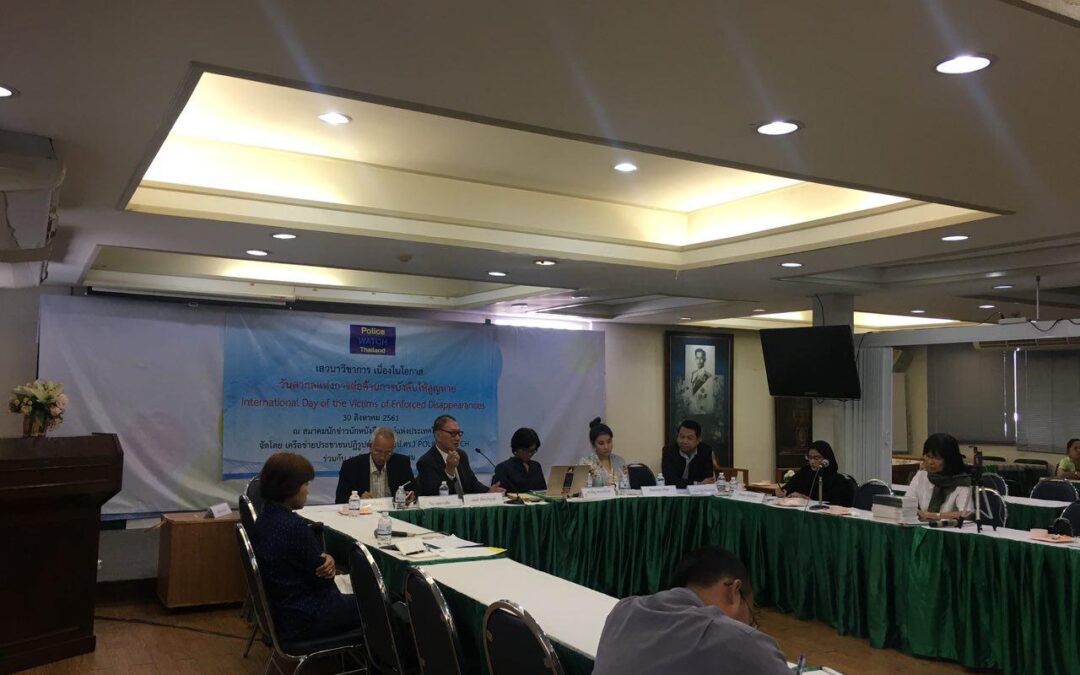
The ICJ participated in a panel discussion to commemorate International Day of the Victims of Enforced Disappearances, organized by Police Watch Thailand and Cross Cultural Foundation.
The discussion was held at the premises of the Thai Journalists’ Association.
The event began with opening remarks by Surapong Kongchantuk, Chairperson of the Cross Cultural Foundation, who called on the Thai Government to ratify the International Convention for the Protection of All Persons from Enforced Disappearance (ICPPED) and for the existing Draft Prevention and Suppression of Torture and Enforced Disappearance Act (‘Draft Act’) to come into force without undue delay.
He also emphasized that perpetrators of the crime of enforced disappearance needed to be brought to justice, and victims and relatives of victims of enforced disappearance must be provided with effective remedies and reparation.
A panel discussion followed the opening remarks, moderated by Pornpen Khongkachonkiet, Director of Cross Cultural Foundation. Panelists included Sanhawan Srisod, ICJ’s National Legal Adviser, Veera Somkomkid, from People Anti-Corruption Network, Pol.Col. Wirut Sirisawadibuth, Columnist and police reform activist, and Adul Kiewboribon, Chair of a committee of persons whose relatives disappeared during May 1992 protests against the government of General Suchinda Kraprayoon.
In her remarks, Sanhawan Srisod expressed concern at the absence of domestic legislation making torture and enforced disappearance specific crimes in Thai law and gaps in the existing Draft Act.
She also called for prompt, independent, impartial and effective investigations into the fate and whereabouts of disappeared persons consistent with international law and standards.
Human Rights Commissioner, and wife of disappeared lawyer and human rights defender Somchai Neelapaijit, Angkhana Neelapaijit, made closing remarks for the event.
The panel discussion followed a forum the ICJ co-hosted in March this year, commemorating the 14th year anniversary of the enforced disappearance of Somchai Neelapaijit, which also raised awareness about amendments to the Draft Act.
During the forum, the ICJ raised concerns about the independence of the ‘Committee managing complaints of torture and enforced disappearance cases’, which was established in May 2017, and expressed the need for further clarification on the legal framework – domestic and/or international – that will ground the Committee’s operation.
Background
The International Day of the Victims of Enforced Disappearances falls on 30 August every year.
Thailand is bound by international legal obligations under the International Covenant on Civil and Political Rights (ICCPR) and Convention against Torture and Other Cruel, Inhuman or Degrading Treatment or Punishment (CAT) – both of which it has acceded to – to investigate, prosecute, punish and provide remedies and reparation for the crimes of torture, other acts of ill-treatment, and enforced disappearance.
However, Thailand has not enacted domestic legislation recognizing enforced disappearance as a criminal offence. Thailand is also yet to ratify the ICPPED, despite signing the Convention in January 2012.
Thailand’s Ministry of Justice concluded a second round of public consultation on the Draft Act and is now reportedly in the process of evaluating the results of the consultation.
On 30 August 2017, 23 November 2017 and 12 March 2018, civil society organizations, including the ICJ, Amnesty International and Human Rights Watch, sent open letters to the Government, including to Thailand’s Minister of Justice, outlining amendments that would be necessary to bring the Draft Act in line with Thailand’s international human rights obligations.
In the absence of domestic legislation criminalizing torture and enforced disappearance, on 23 May 2017, a ‘Committee managing complaints for torture and enforced disappearance cases’ was established by the Prime Minister, pursuant to Prime Minister’s Office Order No. 131/2560 (2017).
The Committee, chaired by the Minister of Justice, consists of 15 officials drawn from different ministries,including the Ministry of Defence, the Royal Thai Police and the Internal Security Operations Command (ISOC).
Jul 26, 2018 | News
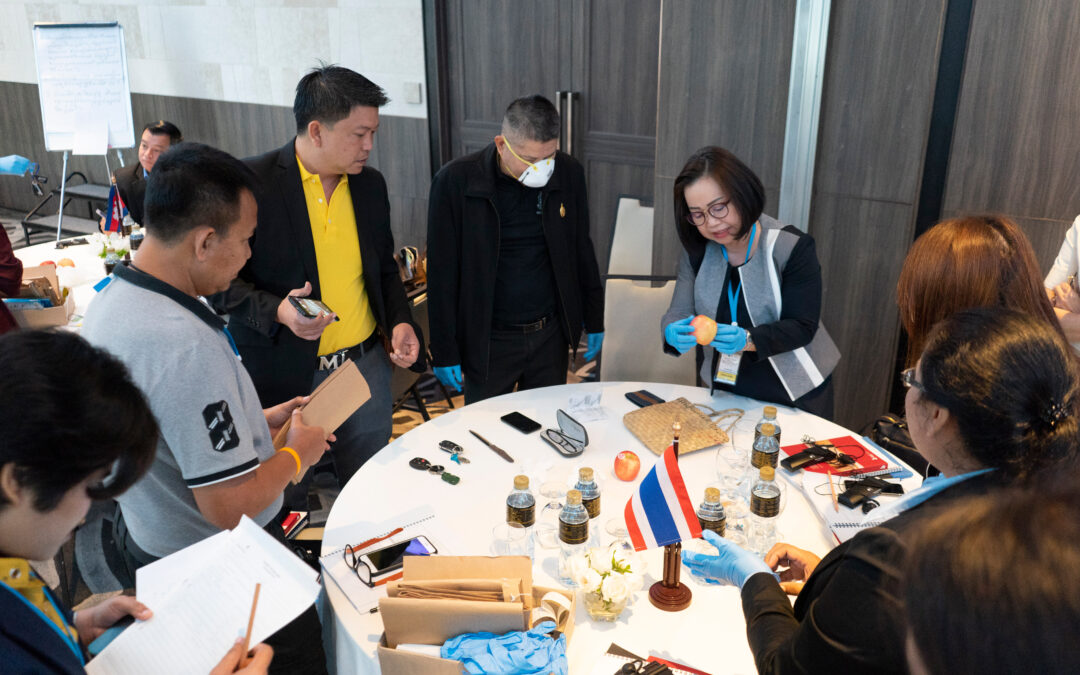
From 24 to 26 July 2018, the ICJ co-hosted a workshop for authorities from Thailand, Cambodia, and Myanmar.
The theme of the workshop was on conducting investigations of potentially unlawful deaths and enforced disappearance in accordance with international human rights law and standards.
The workshop was co-hosted with Thailand’s Ministry of Justice, the United Nations Office of the High Commissioner for Human Rights (OHCHR) and the New Zealand Embassy in Bangkok.
The participants included 25 criminal investigators, public prosecutors and representatives of the Cambodian Ministry of Justice and the Thai Ministry of Justice.
The event commenced with opening remarks by James Andersen, Deputy Head of Mission, Embassy of New Zealand in Bangkok; Aim-orn Siangyai, Deputy Director General of Thailand’s Rights and Liberties Protection Department, Ministry of Justice; Frederick Rawski, Asia Pacific Regional Director, ICJ; and Shivani Verma, Human Rights Officer, OHCHR Regional Office for South-East Asia.
Kingsley Abbott, Senior Legal Adviser at the ICJ, gave a summary of the international human rights legal framework that applies to the investigation of unlawful deaths and enforced disappearance.
He then provided an outline of the revised Minnesota Protocol on the Investigation of Potentially Unlawful Death (2016), which was launched in Thailand on 25 May 2017 and which formed the core of the materials used at the workshop.
Other speakers included Glenn Williams, Detective Inspector, Field Crime Manager, New Zealand Police National Headquarters, who addressed the investigation process including crime scene management; Sean Buckley, International Investigator, who addressed witness interviews; Shivani Verma of the Office of the High Commissioner for Human Rights who addressed Witness Protection; and Dr. Pornthip Rojanasunan, Adviser of Thailand’s Central Institute of Forensic Science (CIFS), who addressed the issue of forensic pathology.
This workshop followed three workshops the ICJ co-hosted between 5 to 8 December 2017 and 30 May to 1 June 2018 in Thailand on the investigation of potentially unlawful deaths and enforced disappearance for lawyers from Thailand and India, academics and State authorities from Thailand, Cambodia, Myanmar and Nepal.
Contact
Kingsley Abbott, Senior International Legal Adviser, ICJ Asia Pacific Regional Office, t: +66 94 470 1345, e: kingsley.abbott(a)icj.org