Jul 6, 2018 | Advocacy, News, Non-legal submissions
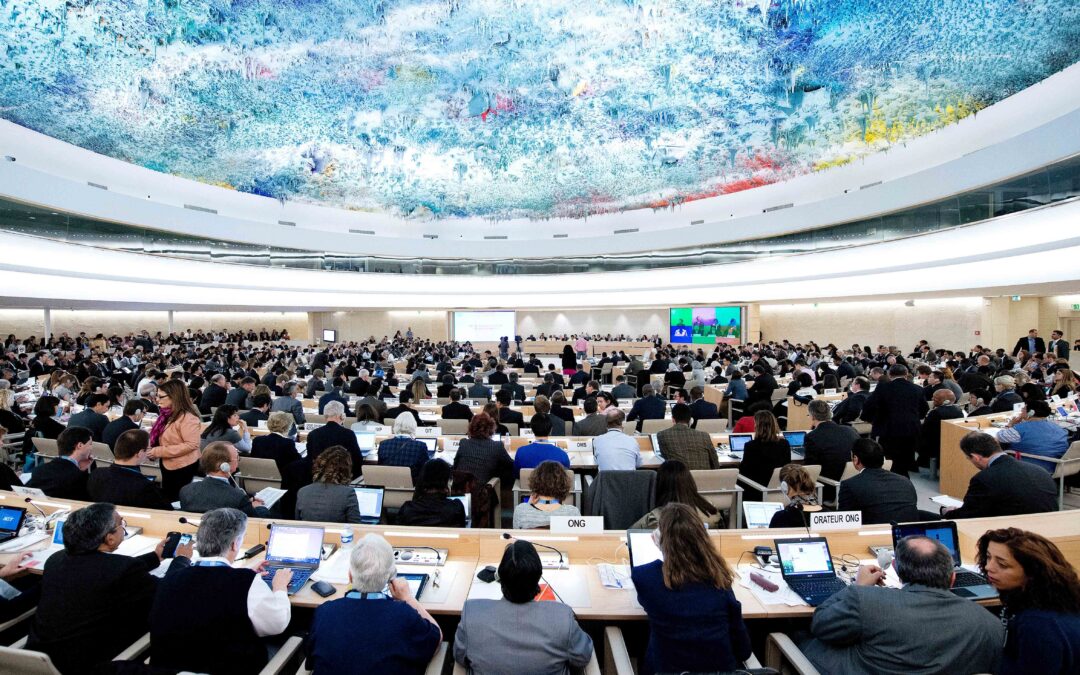
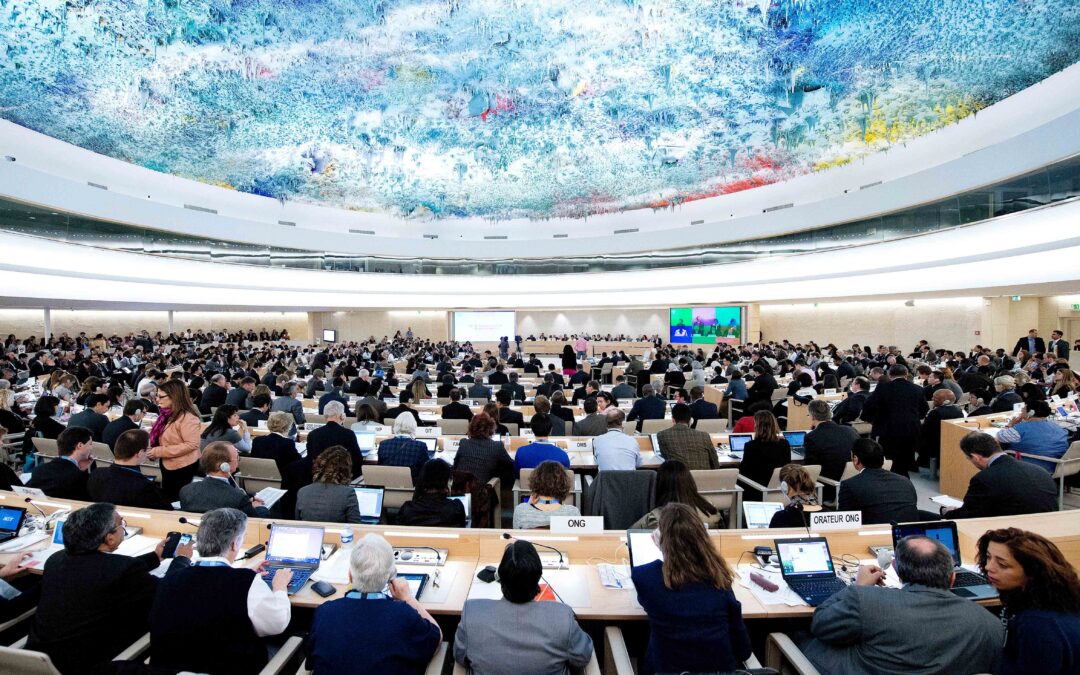
The ICJ today joined other NGOs in highlighting key outcomes of the 38th ordinary session of the UN Human Rights Council.
The statement, delivered by International Service for Human Rights (ISHR) at the end of the session, read as follows (text in italics was not read aloud due to the limited time available):
“Our organisations welcome the adoption of the resolutions on civil society space, peaceful protest, on violence against women and girls and on discrimination against women and girls and the Council’s rejection of attempts to impede progress on protecting civic space, peaceful protest and the rights to sexual and reproductive health.
On civil society space, the resolution recognizes the essential contribution that civil society makes to international and regional organisations and provides guidance to States and organisations on improving their engagement with civil society. On peaceful protest, it sets out in greater detail how international law and standards protect rights related to protests.
On violence against women and on discrimination against women, we consider that ensuring sexual and reproductive health and rights are vital in efforts to combat violence and discrimination against women, online and offline, as well as to ensure targeted and specific remedies to victims. We appreciate that the work of women human rights defenders towards this is recognised.
We consider the adoption of the resolution on the contribution of the Council to the prevention of human rights violations as an important opportunity to advance substantive consideration on strengthening the Council’s ability to deliver on its prevention mandate.
Following challenging negotiations, we welcome the adoption by consensus of the resolution on human rights and the Internet, reaffirming that the same rights that people have offline must also be protected online, and calling on States to tackle digital divides between and within countries, emphasising the importance of tools for anonymity and encryption for the enjoyment of human rights online, in particular for journalists, and condemning once more all measures that prevent or disrupt access to information online.
We welcome continued Council attention to Eritrea‘s abysmal human rights record. This year’s resolution, while streamlined, extends expert monitoring of, and reporting on, the country and outlines a way forward for both engagement and human rights reform. We urge Eritrea to engage in long-overdue meaningful cooperation.
We welcome the renewal of the mandate of the Special Rapporteur on Belarus under item 4 with an increased vote – as it is still the only independent international mechanism to effectively monitor human rights violations in Belarus – while remaining concerned over a narrative to shift the mandate to item 10 in the absence of any systemic change in Belarus.
We welcome the consensus resolution on the DRC, putting in place continued monitoring and follow up on the expert’s recommendations on the Kasais. However, given violations and abuses throughout several regions in the country, occurring against the backdrop of an ongoing political crisis, delayed elections, and the brutal quashing of dissent, we urge the Council to promptly move towards putting in place a country-wide mechanism that can respond to events on the ground as they emerge.
We welcome the strong resolution on Syria, which condemns violations and abuses by all parties, and appropriately addresses concerns raised by the COI about the use of chemical weapons, sexual and gender-based violence, and the need to address situations of detainees and disappearances. The Council cannot stay silent in the face of continued atrocities as the conflict continues unabated into its seventh year.
We welcome the joint statements delivered this session on Cambodia, the Philippines, and Venezuela. We urge Council members and observers to work towards increased collective action to urgently address the dire human rights situations in these countries.
On the Philippines, we emphasise that the Council should establish an independent international investigation into extrajudicial killings in the ‘war on drugs’ and mandate the OHCHR to report on the human rights situation and on moves toward authoritarianism.
The joint statement on Cambodia represents a glimmer of hope after the Council’s failure to take meaningful action against clear sabotage of democratic space ahead of elections. Close scrutiny of the human rights situation before, during and after the elections is paramount and the Council must take immediate action on current and future human rights violations in this regard.
We welcome the joint statement delivered by Luxembourg calling on the HRC President to provide oral updates on cases of alleged intimidation or reprisal, including actions taken, at the start of the Item 5 general debate of each Council session and also provide States concerned with the opportunity to respond.
Finally, the new Council member to replace the United States of America should demonstrate a principled commitment to human rights, to multilateralism and to addressing country situations of concern by applying objective criteria.
Signatories:
- Asian Forum for Human Rights and Development (FORUM-ASIA)
- The Association for Progressive Communications
- The Center for Reproductive Rights (CRR)
- CIVICUS: World Alliance for Citizen Participation
- DefendDefenders (the East and Horn of Africa Human Rights Defenders Project)
- Human Rights House Foundation (HRHF)
- International Commission of Jurists (ICJ)
- The International Lesbian, Gay, Bisexual, Trans and Intersex Association (ILGA)
- International Service for Human Rights (ISHR)
Jul 4, 2018 | News
Today the ICJ called on Thai prosecutorial authorities to immediately end the prosecution of five persons associated with academic activities in Chiang Mai. The five have been made subject to prosecution solely for exercising their rights to free expression and assembly.
Those subject to prosecution include Pakawadee Veerapatpong, an independent writer and translator; Chaipong Samnieng, a PhD candidate at Chiang Mai University; Nontawat Machai, an undergraduate student at Chiang Mai University; Teeramon Bua-ngam, a Masters student at Chiang Mai University and news editor; and Dr. Chayan Vaddhanaphuti, a Professor at Chiang Mai University.
The ICJ also called for the revocation or amendment of all laws, orders and announcements inconsistent with Thailand’s international human rights obligations.
Today, the Region V Public Prosecutor in Chiang Mai province formally notified the five individuals that they would be prosecuted for violating HNCPO Order No. 3/2558 (2015) (‘HNCPO Order 3’) for merely expressing their opinions at an academic forum at Chiang Mai University in July 2017.
HNCPO Order 3 prohibits the gathering of five or more persons for political purposes, carrying a penalty of imprisonment not exceeding six months and/or a fine not exceeding 10,000 Baht.
“The ongoing and abusive use of HNCPO Order 3 to stifle free expression in Thailand remains indefensible and an obstacle to the full restoration of the rule of law in Thailand,” said Kingsley Abbott, Senior Legal Adviser at the ICJ.
“The decision to indict these five individuals is clearly in breach of Thailand’s international human rights obligations and should be reversed immediately together with the termination of the proceedings and the revocation of HNCPO Order 3,” he added.
The Public Prosecutor’s decision to indict the five was made against a backdrop of recently increasing repression of fundamental freedoms in the country.
This year alone, at least 132 persons were reportedly charged under HNCPO Order 3 in 10 cases and six incidents in connection with a movement calling for elections to be held this year.
Twenty-seven of these individuals were also charged with a sedition-like offence, which carries a maximum penalty of seven years’ imprisonment.
Since the military coup of 22 May 2014, at least 378 persons have been reportedly charged in relation to 50 cases of violating the ban on political gatherings of five or more persons according to a report launched on 22 June 2018 by leading Thai NGO, Thai Lawyers for Human Rights (TLHR).
In March and June 2018, at the Human Rights Council, the ICJ called on Thailand to revoke or amend all laws, orders and announcements that are contrary to the rule of law and human rights protections.
“Four years have passed since the military coup resulting in numerous unjustifiable restrictions on fundamental freedoms – it is long past time for Thailand to undertake reform necessary to prevent the legal system from being misused to harass individuals who merely exercise their human rights,” said Abbott.
Contact
Kingsley Abbott, ICJ Senior International Legal Adviser, email: kingsley.abbott@icj.org
Background
The Region V Public Prosecutor’s decision in Chiang Mai province follows charges filed against the individuals by a military officer in 2017.
Pakawadee Veerapatpong, Chaipong Samnieng and Nontawat Machai had allegedly held up three A4-sized messages which read “an academic forum is not a military barracks” at the academic conference.
Teeramon Bua-ngam had reportedly taken a picture of himself standing next to the messages and posted the same on social media.
Dr. Chayan Vaddhanaphuti had reportedly watched the display of the messages without asking for them to be removed, despite being an organizer of the conference.
Thailand is a State party to the International Covenant on Civil and Political Rights (ICCPR). Articles 19, 21 and 22 of the ICCPR guarantee the rights to freedom of opinion and expression, freedom of peaceful assembly and freedom of association.
Since the military coup, the ICJ has expressed its concern about the use of a new legal framework and pre-existing laws to clamp down on the rights to freedom of expression, association and assembly, including criminal defamation (Articles 326-328 of the Thai Criminal Code), the Computer-Related Crime Act B.E.2550 (2007), a sedition-like offence (Article 116 of the Thai Criminal Code), and HNCPO Order 3.
Read also
ICJ and TLHR Joint Submission to the UN Human Rights Committee, 13 February 2017
ICJ and TLHR Joint Follow-up Submission to the Human Rights Committee, 27 March 2018
Thailand-Academics indicted-News-Web Story-2018-THA (story in Thai, PDF)
Jun 27, 2018 | Advocacy, Non-legal submissions
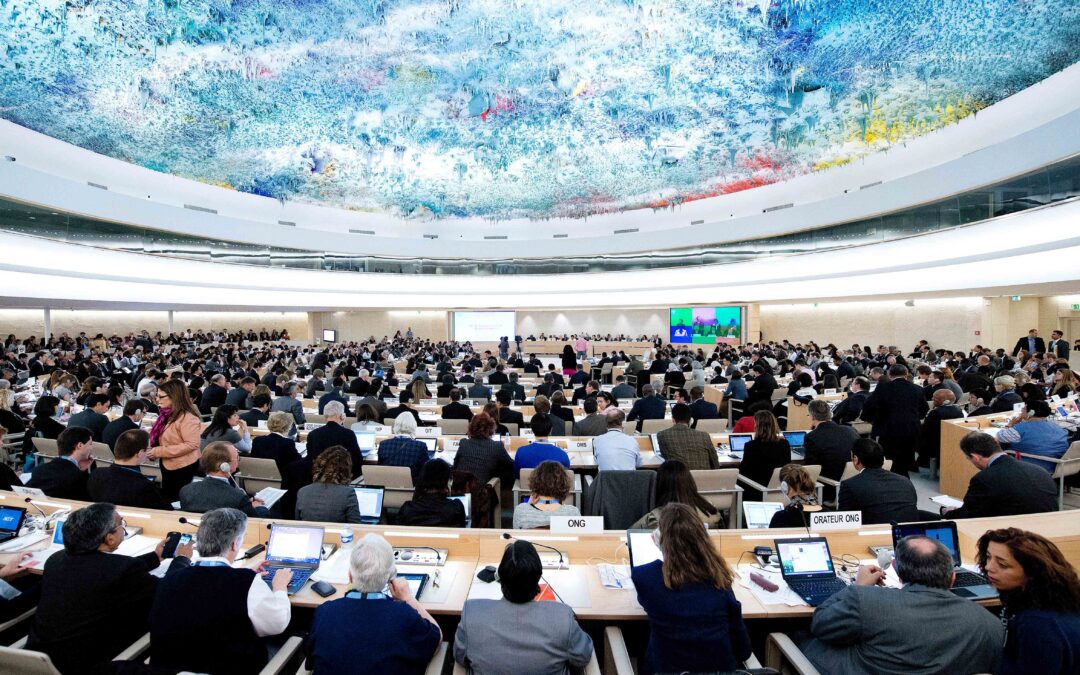
At the UN, the ICJ today highlighted the deteriorating situation for human rights and rule of law in Cambodia.
The statement came during a general debate at the UN Human Rights Council, on human rights situations that require the Council’s attention. It read as follows:
“Mr. President,
A State rapidly moving in an authoritarian direction, with widespread and deepening repression of human rights, whose civil society cannot even speak openly at this Council for fear of reprisals, should be discussed as a situation requiring the Council’s attention under item 4, and not merely a matter of technical assistance and capacity-building under item 10. An urgent example is Cambodia.
The continuing human rights and rule of law crisis orchestrated by the ruling party has deeply compromised national elections scheduled for 29 July.
Authorities continue to abuse the legal system to repress civil society, independent media, the political opposition, and increasingly, ordinary individuals.
The Government has threatened prosecution of any person calling for a boycott of the highly compromised elections. It has established a working group to monitor and control all information on websites and social media. Ordinary people are being arrested, charged and detained under a new lèse-majesté law.
Repression of civil society and independent media continues – with the sale of the last independent English-language newspaper to an owner allegedly linked to the Government, and judicial investigation of civil society members in criminal proceedings against detained opposition leader, Kem Sokha.
The Council and its members must respond more effectively to the ongoing crisis in Cambodia, particularly in the few weeks remaining before the election.
Thank you, Mr. President.”
The delegation of the Cambodian government exercised its right of reply at the end of the debate. Its statement is available here: UN_HRC38-Cambodia-Reply-2018
Jun 22, 2018 | Advocacy, Non-legal submissions
The ICJ today issued a statement on online violence against women and girls.
The statement was issued on the occasion of an interactive dialogue at the UN Human Rights Council, with the UN Working Group on discrimination against women. The ICJ was unable to read the statement due to the limited time provided for NGO statements. The statement is as follows:
“International Commission of Jurists (ICJ) welcomes the Report of the Special Rapporteur focusing on online violence against women and girls.
This is timely considering the noted rise in incidents of women being attacked online for expressing their opinions. In many countries, women political dissenters and women human rights defenders, who express their views through social media, face backlash from the subjects of their criticisms and their supporters. They are persecuted and are threatened with sexual and physical violence. Many of the attacks against them clearly embody harmful gender stereotypes.
The ICJ notes that these harmful stereotypes exist in many countries around the world and they hinder women from accessing justice. Unfortunately, technology and social media play a role in spreading and proliferating these harmful gender stereotypes.
The ICJ continues to assist in strengthening the capacities of formal justice actors such as judges to help women access justice and to eliminate gender stereotypes. In 2016, the ICJ engaged with judges from the Philippines, Thailand, Timor Leste, and Indonesia when they developed and adopted the Bangkok General Guidance for Judges in Applying a Gender Perspective.
The ICJ joins the Special Rapporteur’s recommendation for States to provide training for all justice actors, including judges, to ensure their ability to bring perpetrators of cases of online and ICT-facilitated violence to justice. The ICJ offers the General Guidance as a tool for justice actors to consider evidence in these cases without resorting to gender stereotypes and to decide cases based on the principle of equality under international human rights standards.
The ICJ shall persist in its work to enable women to access justice and to eliminate gender-based violence and discrimination.”
Jun 20, 2018 | Advocacy, Non-legal submissions
At the UN the ICJ today addressed abuse of laws in Southeast Asia to restrict freedom of expression.The statement was made in an interactive dialogue with the UN Special Rapporteur on Freedom of Expression, at the UN Human Rights Council in Geneva. It read as follows:
“The ICJ welcomes the report of the Special Rapporteur on Freedom of Expression (A/HRC/38/35), on online expression. Such concerns are reflected in the continued weaponization of laws to criminalize and unduly restrict freedom of expression in Southeast Asia. Increasingly, laws are misused to harass and intimidate civil society, journalists, politicians and ordinary individuals.
For example, in Cambodia, three persons were arrested – two charged and detained in May, and one reportedly arrested this past weekend – for sharing content on Facebook in alleged violation of a recent lèse majesté law. Another man was similarly detained, and a woman extradited from Thailand to Cambodia and imprisoned, for Facebook posts deemed critical of the government. An inter-ministerial order signed last month now allows government agencies to monitor and censor information on websites and social media.
Another example is Vietnam, where as well-known bloggers remain in jail, last week lawmakers adopted a cybersecurity law that will compel companies to store users’ data in-country, pass personal data to government authorities, and censor information online when directed to do so by the government.
A further example is Thailand, where this year alone at least 132 people were charged for “illegal assembly” after protesting for elections to be held – 27 were also charged with a sedition-like offence carrying a maximum penalty of seven years’ imprisonment. Last week, arrest warrants were reportedly issued alleging dissemination of false information on Facebook, which may lead to charges under the Computer Crimes Act carrying a maximum penalty of five years’ imprisonment, despite international standards precluding imprisonment as an appropriate penalty.
The ICJ urges all States to implement the recommendations in the report of the Special Rapporteur, and to ensure the right to freedom of expression by revoking or amending all laws, orders, policies or other actions which unjustifiably restrict this fundamental freedom.”