Mar 7, 2017 | News
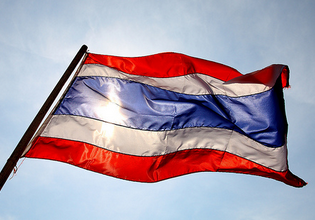
The ICJ welcomes Thailand’s decision to drop spurious criminal defamation complaints against three prominent human rights defenders who had raised allegations of torture by security forces in Thailand’s restive deep South.
“It’s good news that the Thai military has dropped these unfounded complaints, but these charges should never have been brought. Thailand should now ensure the allegations of torture and ill-treatment are independently and effectively investigated,” said Sam Zarifi, the ICJ’s Asia Director.
“Thailand should also work to repair the considerable damage that was caused to alleged victims of torture and civil society who have been intimidated into silence by the prosecutions,” Zarifi continued.
On 10 February 2016, three Thai organizations, the Cross Cultural Foundation (CrCF), Duay Jai Group (Hearty Support Group), and the Patani Human Rights Organization (HAP), issued a report that documented 54 cases of alleged torture and ill-treatment by the Thai security forces in the deep South since 2004.
In response, the Internal Security Operations Command (ISOC) brought criminal defamation complaints against the three co-editors, Ms. Pornpen Khongkachonkiet (Director of the CrCF), Mr. Somchai Homlaor (Senior legal advisor to CrCF and Hearty Support Group), and Ms. Anchana Heemmina (founder and Director of the Hearty Support Group).
On 26 July 2016, the Thai police charged the three human rights defenders with criminal defamation by means of publication under Article 326 and 328 of the Penal Code, and importing false information to a computer system under Article 14 (1) of the Computer-Related Crime Act B.E. 2550 (2007).
The ICJ has been concerned by the abuse of criminal laws, including the already problematic criminal defamation law, as a means of effectively silencing human rights defenders.
“Thailand should now drop other outstanding criminal complaints against human rights defenders, including the complaint of sedition made against human rights lawyer Sirikan Charoensiri, and ensure that they are protected from retaliation,” Zarifi said. “We look forward to the ISOC following through on its commitment to working with civil society to end torture and ill-treatment and bring any perpetrators to justice.”
Background
On 7 March 2017, the ISOC 4 Forward Command – created to resolve the situation in the deep South – and the three human rights defenders, held a joint press conference.
The ISOC 4 Forward Command announced the ISOC will drop the complaints, citing the need for authorities and NGOs to work together collaboratively to address alleged human rights violations. ISOC 4 Forward Command also announced the establishment of a “joint fact-finding committee” which will be made up of officials and NGOs to look into allegations of human rights violations and to explore preventative measures.
The dropping of the charges occurs against the backdrop of the National Legislative Assembly (NLA) referring a draft law criminalizing torture and enforced disappearance back to the Cabinet, effectively delaying its passage indefinitely, despite Thailand’s repeated assurances on the international stage that it will pass the law in the near future.
On 13 and 14 March 2017, the UN Human Rights Committee will review Thailand’s compliance with the International Covenant on Civil and Political Rights (ICCPR), to which it is a State Party.
In a joint submission to the Committee, the ICJ and Thai Lawyers for Human Rights (TLHR) called for an end to the legal harassment of human rights defenders and for all allegations of torture, ill-treatment and enforced disappearance to be independently, impartially, and effectively investigated.
Further reading
https://www.icj.org/thailand-stop-use-of-defamation-charges-against-human-rights-defenders-seeking-accountability-for-torture/
https://www.icj.org/thailand-immediately-withdraw-criminal-complaints-against-human-rights-defenders/
Contact
Kingsley Abbott, Senior International Legal Adviser for Southeast Asia, ICJ, email: kingsley.abbott(a)icj.org or mobile: +66 94 470 1345
Thailand-HRD dropped charges-news-2017-THA (Statement in Thai, PDF)
Feb 28, 2017 | News
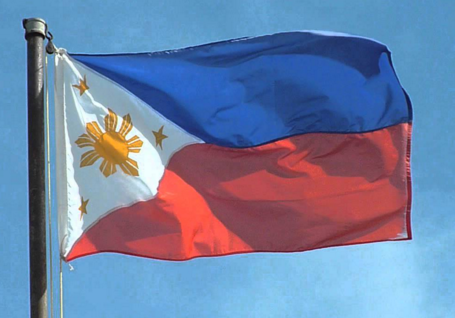
The ICJ condemns the arrest and detention of Senator Leila De Lima and calls for her immediate release.
The ICJ believes that the charges brought against Senator De Lima are fabricated and thus considers her prosecution to be politically motivated and amounting to judicial persecution.
Senator De Lima is a staunch critic of President Rodrigo Duterte.
“This is clearly meant to silence for good a vocal critic of President Rodrigo Duterte,” said Sam Zarifi, ICJ’s Regional Director for Asia and the Pacific.
In August 2016, Senator De Lima led an investigation by the Senate Committee on Justice and Human Rights into hundreds of cases of extrajudicial killings occurring after President Duterte assumed power.
On 19 September 2016, however, she was removed by her colleagues from her position as chairperson of the said committee due to their concerns towards her “continuous efforts to destroy the President”.
Weeks before her removal, on 25 August 2016, President Duterte had accused Senator De Lima of running a drug trafficking ring inside New Bilibid Prison during her stint as Justice Secretary.
Subsequently, on 20 September 2016, led by the President’s allies in the Congress, the House Committee on Justice began a probe into these allegations against De Lima and in turn, on 17 February 2017, the Department of Justice filed three charges against her under the Comprehensive Dangerous Drugs Act of 2002 (Republic Act 9165): Section 5 specifically with “trading” in illegal drugs, Section 26(b), and Section 28. If found guilty, she may face the penalty or a prison sentence ranging between twelve years to life imprisonment.
Senator De Lima was then arrested on 23 February 2017.
“If the government really wants to defeat the illegal drug trade, there should be more prosecutions before domestic courts. We do not see this, however. We only see active persecution of those who are critical of the President’s ‘war on drugs’,” Zarifi added.
The ICJ also noted with profound concern the statements of officials from the Philippine government, including the Secretary of Justice, alluding to the Senator’s guilt which – apart from being inconsistent with the right to the presumption of innocence – constitute additional evidence that the charges against her are a blatant attempt not only to silence her for good but also to discredit her in the eyes of the public.
The right to presumption of innocence is an absolute right. According to the UN Human Rights Committee, public authorities and officials have a duty to restrain from prejudging the outcome of a trial, by refraining from making public statements appearing to affirm the guilt of the accused.
The ICJ believes that public authorities and officials, including prosecutors, may inform the public about criminal investigations or charges but should not express a view as to the guilt of any defendant.
The ICJ calls on the Philippine government to immediately release Senator De Lima and immediately stop any further acts of harassment against her and other public critics of the government.
Contact
Emerlynne Gil, ICJ’s Senior International Legal Adviser for Southeast Asia, t: +66 2 619 8477 ext. 206 or +66 840923575 ; e: emerlynne.gil(a)icj.org
Feb 13, 2017 | Advocacy, Non-legal submissions
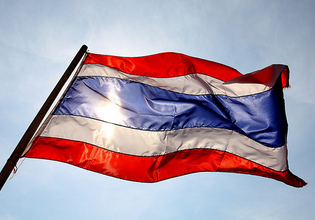
The ICJ and Thai Lawyers for Human Rights (TLHR) have made a submission to the UN Human Rights Committee in view of its forthcoming review of the implementation of the International Covenant on Civil and Political Rights by Thailand.
In their submission, the ICJ and TLHR have brought to the Committee’s attention their concerns in relation to the following issues:
- Constitutional and legal framework within which the Covenant is implemented;
- States of emergency;
- Right to life and prohibition of torture and cruel, inhuman or degrading treatment or punishment;
- Right to liberty and security of the person, treatment of persons deprived of their liberty, right to a fair trial and independence of judiciary; and
- Freedoms of expression and association and right to peaceful assembly.
Thailand-ICCPR Submission ICJ-TLHR-Advocacy-Non legal submissions-2017-ENG (Full text in PDF)
Thailand-ICCPR Submission ICJ-TLHR-Advocacy-Non legal submissions-2017-THA (Thai version, in PDF)

Nov 30, 2016 | Advocacy, News, Non-legal submissions
European Union Member States must ensure that a new effort to standardise counterterrorism laws does not undermine fundamental freedoms and the rule of law, a group of international human rights organisations said today.
Amnesty International, the European Network Against Racism (ENAR), European Digital Rights (EDRi), the Fundamental Rights European Experts (FREE) Group, Human Rights Watch (HRW), the International Commission of Jurists (ICJ) and the Open Society Foundations (OSF) are warning that the overly broad language of the new EU Directive on Combating Terrorism could lead to criminalising public protests and other peaceful acts, to the suppression of the exercise of freedom of expression protected under international law, including expression of dissenting political views and to other unjustified limitations on human rights. The directive’s punitive measures also pose the risk of being disproportionately applied and implemented in a manner that discriminates against specific ethnic and religious communities.
The groups call on EU Member States to ensure that implementation of the directive in national law includes additional safeguards to guarantee compliance with regional and international human rights obligations. These safeguards are especially important to ensure that any new laws passed, which will remain in place for years to come, cannot be used abusively by any government, including any that may be tempted to sacrifice human rights and due process in the name of pursuing security.
‘States must effectively address the threat of terrorism. But the EU has rushed to agree a vaguely worded counterterrorism law that endangers fundamental rights and freedoms,’ said Róisín Pillay, Europe Programme Director at the ICJ. ‘Time and again we’ve seen governments adopt abusive counterterrorism laws without assessing their effectiveness, and then implement them in ways that divide and alienate communities. We worry this directive will reinforce this trend and leaves too much leeway for governments to misuse the directive to violate rights.”
The groups also noted that the legislative process for adopting this directive lacked transparency and opportunity for critical debate. There was no impact assessment of the proposal, negotiations moved forward without parliamentary-wide review of the text, and the proposal was rushed through behind closed doors and without any meaningful consultation of civil society.
Despite the inclusion of a general human rights safeguarding clause and repeated caution from our organisations the final text fails to fully protect human rights within the EU:
• The directive repeats the EU’s already overly broad definition of ‘terrorism,’ which permits states to criminalise, as terrorism, public protests or other peaceful acts that they deem ’seriously destabilise the fundamental political, constitutional, economic or social structures of a country or an international organisation.’
• Significantly, the directive requires states to criminalise a series of preparatory acts that may have a minimal or no direct link to a violent act of terrorism, and may never result in one being committed. For example the offences of participating in a terrorist group, travelling or receiving training for terrorist purposed are not adequately defined. Unless these broadly outlined offences are subject to careful drafting and strong safeguards in national law, they are likely to lead to violations of rights, including the right to liberty and freedoms of expression, association, and movement.
• The directive criminalises the public distribution of messages, including messages that ‘glorify’ terrorist acts, if the distribution is intentional and causes a danger that a terrorist offence may be committed. However, such a low threshold likely to lead to abuse if not limited as the UN recommends ‘to incitement that is directly causally responsible for increasing the actual likelihood of an attack’. The directive should have incorporated this language to avoid unjustified interference with freedom of expression.
We welcome the directive’s protection of activities of recognised humanitarian organisations. However we remain concerned that the protection does not expressly extend to all individuals providing medical or other life-saving activities that international humanitarian law (IHL) protects during times of armed conflict.
States should take the directive as an opportunity to reassess their counterterrorism laws, policies and practices and engage with civil society and other stakeholders. We welcome the European Commission’s commitment to formally include civil society organisations in their activities to support transposition of the directive.
Contact:
Roisin Pillay, ICJ Europe Director, at roisin.pillay(a)icj.org or +32 2 734 84 46
eu-press-release-flawed-counterterrorism-directive-2016-eng (download the statement)
Nov 25, 2016 | Advocacy
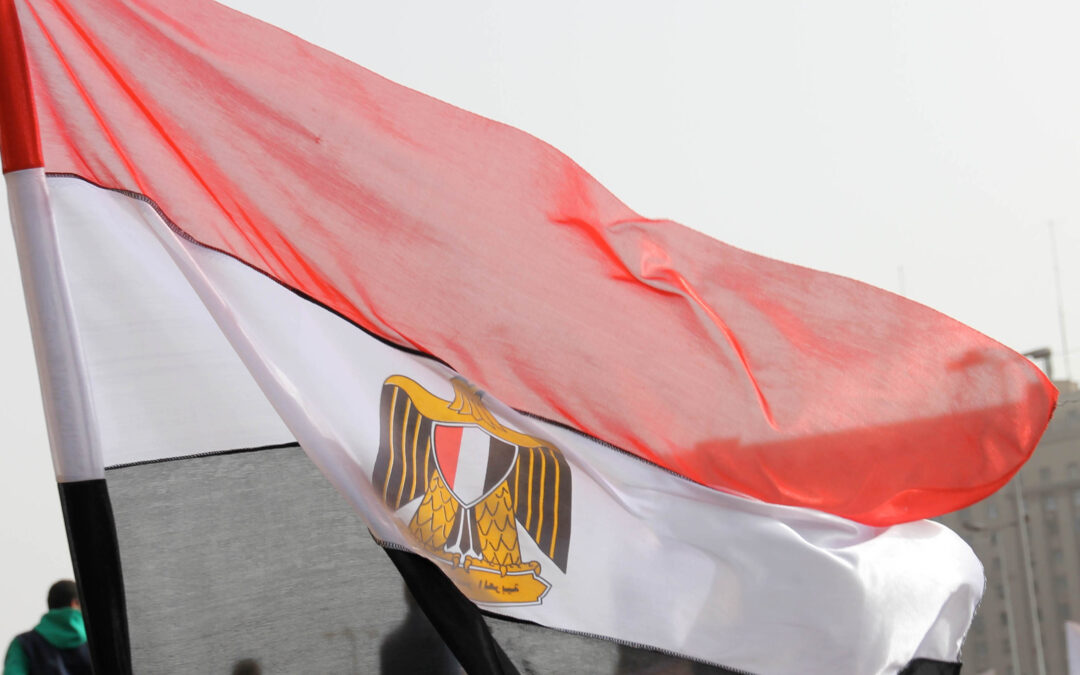
The ICJ today joined a group of 60 organizations condemning a new law that would further repress civil society organizations and human rights advocacy in the country, and calling on the Government to stop efforts to silence civil society.The NGO statement follows urgent warnings from the UN Special Rapporteurs on Freedom of Association, on Freedom of Expression, and on Human Rights Defenders that, if implemented, the law would “devastate” civil society in the country.
The full NGO statement can be downloaded in PDF format here: egypt-ngolaw-openletter-2016