Jun 22, 2017 | News
Pakistani authorities need to ensure a prompt, impartial and effective investigation into a barrage of assaults and threats against lawyers in the premises of the Lahore High Court, the ICJ, Human Rights Watch and Amnesty International said today.
The Government needs to defend the rule of law and prosecute those responsible for any criminal conduct.
On 20 June, during proceedings of a case involving the alleged abduction and subsequent “disappearance” of a 26-year old woman and her two-year old son, supporters of the accused, a prominent lawyer, physically assaulted the complainant’s counsel Shabbir Hussain and Usama Malik, and made abusive remarks and threats against another member of the complainant’s legal team, Noor Ejaz Chaudhry.
The attackers were mostly lawyers and members of the local bar association.
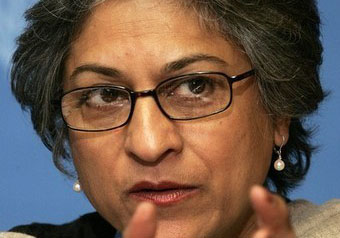
The attackers also made abusive and threatening remarks against Asma Jahangir (photo), a notable human rights lawyer, Honorary Commissioner of the ICJ, and former President of the Supreme Court Bar Association.
Asma Jahangir was not present in the court but was represented by her legal team comprising of Shabbir Hussain, Usama Malik, Mian Liaquat Ali and Noor Ejaz Chaudhry.
“The legal profession is one of the pillars of the administration of justice. It is deeply worrying that instead of discharging their responsibility to uphold the rule of law, certain lawyers would resort to threats and violence in a clear attempt to obstruct justice,” said Ian Seiderman, ICJ’s Legal and Policy Director.
Under international standards, including the UN Basic Principles on the Role of Lawyers, Pakistan has an obligation to ensure that lawyers are able to perform all of their professional functions without intimidation, hindrance, harassment or improper interference.
Where lawyers are threatened as a result of discharging their functions, authorities must ensure they are adequately safeguarded.
“Lawyers must be able to go to court without fearing violent assaults and abuse,” Brad Adams, Asia director at Human Rights Watch said. “That such assaults take place with increasing frequency in Pakistan and without accountability represents a serious failure of the Pakistani authorities to ensure rule of law.”
It is the responsibility of the bar councils and associations to ensure that allegations of professional misconduct against their members are promptly, independently and impartially investigated, and if lawyers are found in breach of their codes of conduct after a fair hearing, disciplinary action is taken against them.
Any disciplinary action must be subject to an independent judicial review.
Threatening and assaulting opposing counsel is not just against the law, but also in breach of lawyers’ professional code of ethics,” said David Griffiths, Amnesty International’s Senior Adviser on South Asia. “The respective Bar Councils must take notice of the allegations, and use this condemnable incident as an opportunity to tackle the culture of impunity which impacts even the legal profession in Pakistan.”
Background
In May 2017, Bilquis Zareena filed a habeas corpus petition in the Lahore High Court for the recovery of her daughter Ayesha and grandson Alyan Ali, who have allegedly been missing since November 2016.
According to Bilquis Zareena, her daughter had secretly been married to Maqsood Buttar, a prominent lawyer and member of the Pakistan Bar Council, the highest regulatory body for lawyers in the country.
Bilquis Zareena claims her daughter and grandson’s lives could be in danger as Maqsood Buttar had previously threatened and even attempted to kill Ayesha.
The next hearing in the case is on Friday, 23 June 2017.
Contact:
Ian Seiderman, ICJ Legal and Policy Director, e: ian.seiderman(a)icj.org
Reema Omer, ICJ International Legal Adviser (South Asia), e: reema.omer(a)icj.org
Jun 20, 2017 | News
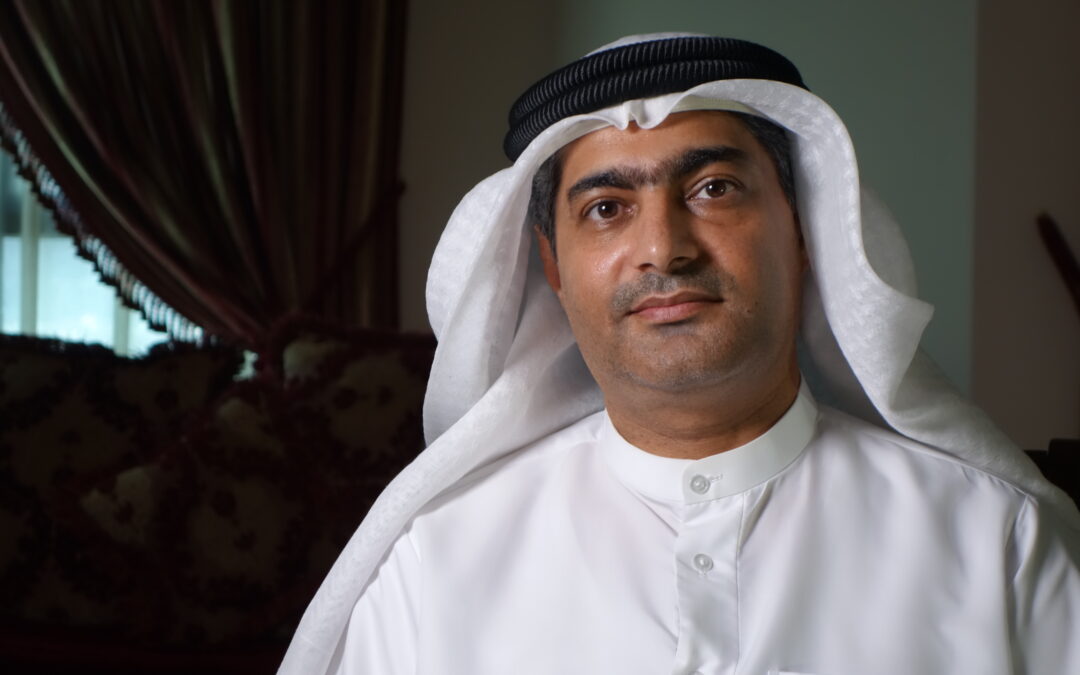
The Martin Ennals Foundation and the ten human rights organizations that make up the jury of the Martin Ennals Award for Human Rights Defenders (MEA), including the ICJ, today renewed their appeal to the UAE government to release immediately and unconditionally Ahmed Mansoor.
Ahmed Mansoor is the last remaining human rights defender in the UAE who had previously been able to criticize the authorities publicly, they say.
Ahmed Mansoor received the Martin Ennals Award for Human Rights Defenders in 2015.
Three months ago today, in the pre-dawn hours of 20 March about a dozen security officers arrested Ahmed Mansoor at his home in Ajman, about 150 kilometres northeast of Abu Dhabi, the capital of the UAE.
“We urge the UAE government to end the incomprehensible three-month imprisonment of Ahmed Mansoor. This is really about the UAE failing to respect basic principles of justice,” said Dick Oosting, Chairperson of the MEA Board.
“The purported case against Ahmed Mansoor beggars belief. States have the duty to bring to justice those whom they suspect of having committed criminal offenses,” he added.
“Yet what is clear is that the UAE authorities have arbitrarily deprived him of liberty and taken him away from his family for peacefully exercising his human right to freedom of expression. The three-month lapse and total lack of transparency indicates, likewise, that the authorities merely wanted to silence him,” he further said.
On 20 March, the UAE authorities stated that Ahmed Mansoor was accused of using social media websites, including to “publish false and misleading information that harm national unity and social harmony and damage the country’s reputation,” under the UAE’s repressive 2012 Cybercrime Law, which authorities have used to imprison numerous human rights activists and which provides for long prison sentences and severe financial penalties.
On 28 March, a group of United Nations human rights experts called on the UAE government to release him immediately, describing his arrest as “a direct attack on the legitimate work of human rights defenders in the UAE.” They expressed their fear that his arrest “may constitute an act of reprisal for his engagement with UN human rights mechanisms, for the views he expressed on social media, including Twitter, as well as for being an active member of organizations such as the Gulf Centre for Human Rights, and an active supporter of others, including Human Rights Watch.”
The next day, the UAE authorities responded directly to the statement, disputing the allegation that Ahmed Mansoor’s detention was arbitrary, and stating that he “has the freedom to hire a lawyer and that his family has full access to the place of confinement and is allowed to visit him.”
The government has detained Ahmed Mansoor in Abu Dhabi.
It is too far from his home for regular visits from his family, who have only been able to see him once in the last three months.
The authorities appear determined to isolate Ahmed Mansoor from his own family.
Despite government assertions that he is able to do so, it appears that he has not been able to appoint an independent lawyer of his own choosing.
This is a necessary component of the right to a fair trial.
The right to see a lawyer is a basic right of anyone detained as outlined in article 16 of the Arab Charter on Human Rights, which the UAE has ratified.
The ten human rights organizations that make up the jury of the Martin Ennals Award for Human Rights Defenders reiterate their call to the UAE authorities to release Ahmed Mansoor immediately and unconditionally, since the charges against him relate solely to his human rights work and his right to freedom of expression.
In the meantime, he should be granted immediate and regular access to his family and a lawyer of his choosing. The UAE must end their harassment of human rights defenders and critics of the authorities.
Signatories
Organizations forming the jury of the Martin Ennals Award:
Agency for Diakonia and Development, Germany
Amnesty International
FIDH
Front Line Defenders
Human Rights First
Human Rights Watch
International Commission of Jurists
International Service for Human Rights
HURIDOCS
World Organisation Against Torture (OMCT)
Apr 20, 2017 | News
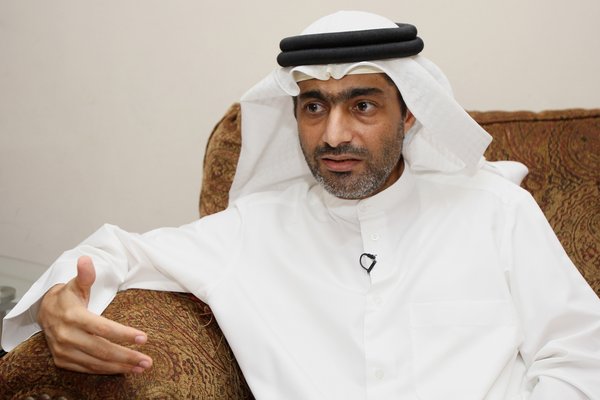
Authorities in the United Arab Emirates should immediately release Ahmed Mansoor, an award-winning human rights defender who is facing charges that violate his right to freedom of expression, a coalition of 18 human rights organizations, including the ICJ, said today, one month after his arrest.
Mansoor, who received the prestigious Martin Ennals Award for Human Rights Defenders in 2015, has been in detention since March 20, 2017 facing speech-related charges that include using social media websites to “publish false information that harms national unity.”
On March 28, a group of United Nations (UN) human rights experts called on the UAE government to release him immediately, describing his arrest as “a direct attack on the legitimate work of human rights defenders in the UAE.”
“Ahmed Mansoor has an unimpeachable record as a defender of rights and freedoms, and every day he remains in prison will constitute a black mark on the UAE’s human rights record,” said the organizations.
Mansoor was arrested at his home in Ajman in the pre-dawn hours of March 20.
Security officers conducted an extensive search and took away all of the family’s mobile phones and laptops, including those belonging to his young children.
His family had no information on his whereabouts until authorities issued an official statement on March 29, saying he was in detention in the Central Prison in Abu Dhabi.
The signatories understand that Mansoor’s family have been allowed only one short supervised visit with him which took place two weeks after his arrest on April 3, when authorities moved him from where he was being held, believed to be a detention facility adjacent to Al-Wathba Prison, to a prosecutor’s office in Abu Dhabi.
Informed sources told rights groups that Mansoor is being held in solitary confinement and has not spoken to a lawyer.
The UAE’s official news agency, WAM, said on March 20 that Mansoor had been arrested on the orders of the Public Prosecution for Cybercrimes and detained pending further investigation.
It said that he is accused of using social media websites to: “publish false information and rumors;” “promote [a] sectarian and hate-incited agenda;” and “publish false and misleading information that harm national unity and social harmony and damage the country’s reputation.”
The statement classified these as “cybercrimes,” indicating that the charges against him may be based on alleged violations of the UAE’s repressive 2012 cybercrime law, which authorities have used to imprison numerous activists and which provides for long prison sentences and severe financial penalties.
In the weeks leading up to his arrest, Mansoor had called for the release of Osama al-Najjar, who remains in prison, despite having completed a three-year prison sentence on charges related to his peaceful activities on Twitter.
Mansoor had also criticized the prosecution of Dr. Nasser bin-Ghaith, a prominent academic and economist, who was sentenced to 10 years in prison on March 29, for charges that included speech-related offenses, including peaceful criticism of the UAE and Egyptian authorities.
Mansoor had also used his Twitter account to draw attention to human rights violations across the region, including in Egypt and those committed by the Saudi-led coalition in Yemen.
He had also signed a joint letter with other activists in the region calling on leaders at the Arab Summit in Jordan at the end of March to release political prisoners in their countries.
“Ahmed has worked tirelessly, at great personal cost to himself, to advocate for human rights in the UAE and the wider region. He should be immediately released and the authorities should end their harassment of him once and for all,” the organizations added.
Signatories
ARTICLE 19
Amnesty International
Arabic Network for Human Rights Information
CIVICUS
FIDH, under the Observatory for the Protection of Human Rights Defenders
Front Line Defenders
Gulf Centre for Human Rights
Human Rights First
Human Rights Watch
Index on Censorship
International Commission of Jurists
International Service for Human Rights
Martin Ennals Foundation
PEN International
Reporters Without Borders (RSF)
Scholars at Risk
Vigilance for Democracy and the Civic State, Tunisia
World Organisation Against Torture (OMCT), under the Observatory for the Protection of Human Rights Defenders
UAE-Joint statement AMansoor-News-Press releases-2017-ENG (full statement in English, PDF)
Mar 21, 2017 | News
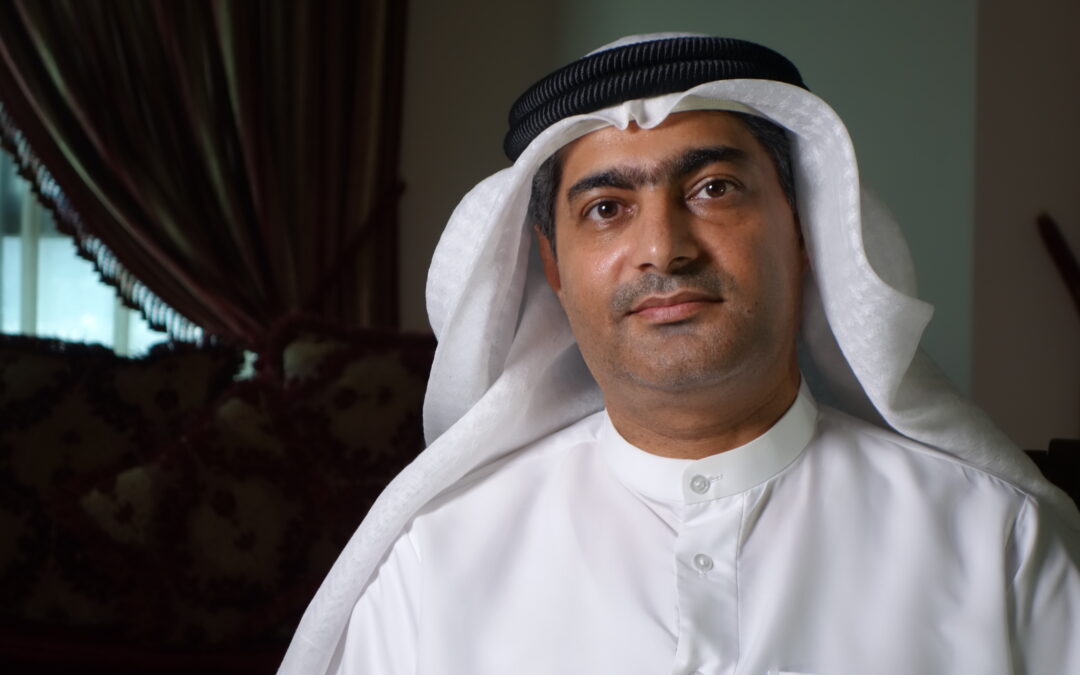
The ICJ today called on the Untied Arab Emirates (UAE)’ authorities to immediately release Ahmed Mansoor, the 2015 Laureate of the Martin Ennals Award for Human Rights Defenders, and to ensure that he is not subjected to any form of ill-treatment as long as he remains detained.
On 20 March 2017, security officials raided the apartment where Ahmed Mansoor and his family resides and confiscated electronic devices. They took Ahmed Mansoor away at around 3:15AM local time. His present whereabouts remain unknown.
The authorities have not informed his family members of the reasons for his arrest, the authority that ordered such arrest, or the location to which he was taken.
The ICJ calls upon the UAE authorities to disclose, as a matter of urgency, Ahmed Mansoor’s place of detention and provide full information about his fate and whereabouts.
International law requires that detainees be held in officially recognized places of detention and that no one is held secretly in detention, whether in officially recognized detention facilities or elsewhere.
The ICJ fears that the arrest and secret detention of Ahmed Mansoor is likely related to his human rights work, protected under international law.
His activities involve the exercise of his right to the freedom of expression, including his use of social media to criticize attacks on human rights defenders in the UAE.
“Arbitrarily detaining Ahmed Mansoor and subjecting him to secret detention exemplifies the lengths to which the UAE authorities are prepared to go in their relentless campaign to suppress peaceful human rights work and to reduce to silence all those perceived to be critical of the authorities,” said Said Benarbia, Director of the ICJ Middle East and North Africa Programme.
“The UAE authorities must comply with their obligations under international law and release immediately and unconditionally all those individuals detained or imprisoned solely for peacefully exercising their rights to freedom of expression and association,” he added.
Mansor’s arrest and secret detention comes amidst a continuing crackdown on individuals calling for peaceful political reform.
Many of them were subjected to serious human rights violations, including torture and other-ill-treatment, arbitrary detention and enforced disappearances.
The ICJ has previously documented such cases.
Contact:
Said Benarbia, ICJ Director of the Middle East and North Africa Programme, t: 41 22 979 38 17, e: said.benarbia(a)icj.org
Background
Ahmed Mansoor is a highly prominent human rights defender in the UAE and well known in the Arab region and around the world.
He has regularly monitored and raised awareness about cases of serious human rights violations in the UAE, including cases arbitrary detention, torture and other ill-treatment, enforced disappearances and violations of fair trial rights.
Since 2006, has faced repeated intimidation and harassment, including imprisonment in 2011 after being convicted of “insulting officials” and sentenced to three years’ in prison, although he was released after eight months.
Since being jailed in 2011, he has been denied a passport and banned from travelling.
Mar 7, 2017 | News
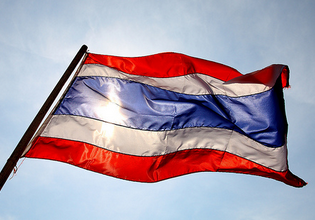
The ICJ welcomes Thailand’s decision to drop spurious criminal defamation complaints against three prominent human rights defenders who had raised allegations of torture by security forces in Thailand’s restive deep South.
“It’s good news that the Thai military has dropped these unfounded complaints, but these charges should never have been brought. Thailand should now ensure the allegations of torture and ill-treatment are independently and effectively investigated,” said Sam Zarifi, the ICJ’s Asia Director.
“Thailand should also work to repair the considerable damage that was caused to alleged victims of torture and civil society who have been intimidated into silence by the prosecutions,” Zarifi continued.
On 10 February 2016, three Thai organizations, the Cross Cultural Foundation (CrCF), Duay Jai Group (Hearty Support Group), and the Patani Human Rights Organization (HAP), issued a report that documented 54 cases of alleged torture and ill-treatment by the Thai security forces in the deep South since 2004.
In response, the Internal Security Operations Command (ISOC) brought criminal defamation complaints against the three co-editors, Ms. Pornpen Khongkachonkiet (Director of the CrCF), Mr. Somchai Homlaor (Senior legal advisor to CrCF and Hearty Support Group), and Ms. Anchana Heemmina (founder and Director of the Hearty Support Group).
On 26 July 2016, the Thai police charged the three human rights defenders with criminal defamation by means of publication under Article 326 and 328 of the Penal Code, and importing false information to a computer system under Article 14 (1) of the Computer-Related Crime Act B.E. 2550 (2007).
The ICJ has been concerned by the abuse of criminal laws, including the already problematic criminal defamation law, as a means of effectively silencing human rights defenders.
“Thailand should now drop other outstanding criminal complaints against human rights defenders, including the complaint of sedition made against human rights lawyer Sirikan Charoensiri, and ensure that they are protected from retaliation,” Zarifi said. “We look forward to the ISOC following through on its commitment to working with civil society to end torture and ill-treatment and bring any perpetrators to justice.”
Background
On 7 March 2017, the ISOC 4 Forward Command – created to resolve the situation in the deep South – and the three human rights defenders, held a joint press conference.
The ISOC 4 Forward Command announced the ISOC will drop the complaints, citing the need for authorities and NGOs to work together collaboratively to address alleged human rights violations. ISOC 4 Forward Command also announced the establishment of a “joint fact-finding committee” which will be made up of officials and NGOs to look into allegations of human rights violations and to explore preventative measures.
The dropping of the charges occurs against the backdrop of the National Legislative Assembly (NLA) referring a draft law criminalizing torture and enforced disappearance back to the Cabinet, effectively delaying its passage indefinitely, despite Thailand’s repeated assurances on the international stage that it will pass the law in the near future.
On 13 and 14 March 2017, the UN Human Rights Committee will review Thailand’s compliance with the International Covenant on Civil and Political Rights (ICCPR), to which it is a State Party.
In a joint submission to the Committee, the ICJ and Thai Lawyers for Human Rights (TLHR) called for an end to the legal harassment of human rights defenders and for all allegations of torture, ill-treatment and enforced disappearance to be independently, impartially, and effectively investigated.
Further reading
https://www.icj.org/thailand-stop-use-of-defamation-charges-against-human-rights-defenders-seeking-accountability-for-torture/
https://www.icj.org/thailand-immediately-withdraw-criminal-complaints-against-human-rights-defenders/
Contact
Kingsley Abbott, Senior International Legal Adviser for Southeast Asia, ICJ, email: kingsley.abbott(a)icj.org or mobile: +66 94 470 1345
Thailand-HRD dropped charges-news-2017-THA (Statement in Thai, PDF)