Mar 7, 2017 | News
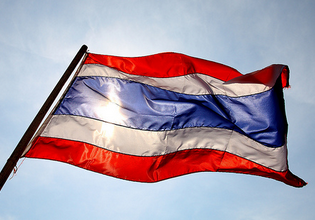
The ICJ welcomes Thailand’s decision to drop spurious criminal defamation complaints against three prominent human rights defenders who had raised allegations of torture by security forces in Thailand’s restive deep South.
“It’s good news that the Thai military has dropped these unfounded complaints, but these charges should never have been brought. Thailand should now ensure the allegations of torture and ill-treatment are independently and effectively investigated,” said Sam Zarifi, the ICJ’s Asia Director.
“Thailand should also work to repair the considerable damage that was caused to alleged victims of torture and civil society who have been intimidated into silence by the prosecutions,” Zarifi continued.
On 10 February 2016, three Thai organizations, the Cross Cultural Foundation (CrCF), Duay Jai Group (Hearty Support Group), and the Patani Human Rights Organization (HAP), issued a report that documented 54 cases of alleged torture and ill-treatment by the Thai security forces in the deep South since 2004.
In response, the Internal Security Operations Command (ISOC) brought criminal defamation complaints against the three co-editors, Ms. Pornpen Khongkachonkiet (Director of the CrCF), Mr. Somchai Homlaor (Senior legal advisor to CrCF and Hearty Support Group), and Ms. Anchana Heemmina (founder and Director of the Hearty Support Group).
On 26 July 2016, the Thai police charged the three human rights defenders with criminal defamation by means of publication under Article 326 and 328 of the Penal Code, and importing false information to a computer system under Article 14 (1) of the Computer-Related Crime Act B.E. 2550 (2007).
The ICJ has been concerned by the abuse of criminal laws, including the already problematic criminal defamation law, as a means of effectively silencing human rights defenders.
“Thailand should now drop other outstanding criminal complaints against human rights defenders, including the complaint of sedition made against human rights lawyer Sirikan Charoensiri, and ensure that they are protected from retaliation,” Zarifi said. “We look forward to the ISOC following through on its commitment to working with civil society to end torture and ill-treatment and bring any perpetrators to justice.”
Background
On 7 March 2017, the ISOC 4 Forward Command – created to resolve the situation in the deep South – and the three human rights defenders, held a joint press conference.
The ISOC 4 Forward Command announced the ISOC will drop the complaints, citing the need for authorities and NGOs to work together collaboratively to address alleged human rights violations. ISOC 4 Forward Command also announced the establishment of a “joint fact-finding committee” which will be made up of officials and NGOs to look into allegations of human rights violations and to explore preventative measures.
The dropping of the charges occurs against the backdrop of the National Legislative Assembly (NLA) referring a draft law criminalizing torture and enforced disappearance back to the Cabinet, effectively delaying its passage indefinitely, despite Thailand’s repeated assurances on the international stage that it will pass the law in the near future.
On 13 and 14 March 2017, the UN Human Rights Committee will review Thailand’s compliance with the International Covenant on Civil and Political Rights (ICCPR), to which it is a State Party.
In a joint submission to the Committee, the ICJ and Thai Lawyers for Human Rights (TLHR) called for an end to the legal harassment of human rights defenders and for all allegations of torture, ill-treatment and enforced disappearance to be independently, impartially, and effectively investigated.
Further reading
https://www.icj.org/thailand-stop-use-of-defamation-charges-against-human-rights-defenders-seeking-accountability-for-torture/
https://www.icj.org/thailand-immediately-withdraw-criminal-complaints-against-human-rights-defenders/
Contact
Kingsley Abbott, Senior International Legal Adviser for Southeast Asia, ICJ, email: kingsley.abbott(a)icj.org or mobile: +66 94 470 1345
Thailand-HRD dropped charges-news-2017-THA (Statement in Thai, PDF)

Feb 28, 2017 | News
The ICJ condemns the arrest and detention of Senator Leila De Lima and calls for her immediate release.
The ICJ believes that the charges brought against Senator De Lima are fabricated and thus considers her prosecution to be politically motivated and amounting to judicial persecution.
Senator De Lima is a staunch critic of President Rodrigo Duterte.
“This is clearly meant to silence for good a vocal critic of President Rodrigo Duterte,” said Sam Zarifi, ICJ’s Regional Director for Asia and the Pacific.
In August 2016, Senator De Lima led an investigation by the Senate Committee on Justice and Human Rights into hundreds of cases of extrajudicial killings occurring after President Duterte assumed power.
On 19 September 2016, however, she was removed by her colleagues from her position as chairperson of the said committee due to their concerns towards her “continuous efforts to destroy the President”.
Weeks before her removal, on 25 August 2016, President Duterte had accused Senator De Lima of running a drug trafficking ring inside New Bilibid Prison during her stint as Justice Secretary.
Subsequently, on 20 September 2016, led by the President’s allies in the Congress, the House Committee on Justice began a probe into these allegations against De Lima and in turn, on 17 February 2017, the Department of Justice filed three charges against her under the Comprehensive Dangerous Drugs Act of 2002 (Republic Act 9165): Section 5 specifically with “trading” in illegal drugs, Section 26(b), and Section 28. If found guilty, she may face the penalty or a prison sentence ranging between twelve years to life imprisonment.
Senator De Lima was then arrested on 23 February 2017.
“If the government really wants to defeat the illegal drug trade, there should be more prosecutions before domestic courts. We do not see this, however. We only see active persecution of those who are critical of the President’s ‘war on drugs’,” Zarifi added.
The ICJ also noted with profound concern the statements of officials from the Philippine government, including the Secretary of Justice, alluding to the Senator’s guilt which – apart from being inconsistent with the right to the presumption of innocence – constitute additional evidence that the charges against her are a blatant attempt not only to silence her for good but also to discredit her in the eyes of the public.
The right to presumption of innocence is an absolute right. According to the UN Human Rights Committee, public authorities and officials have a duty to restrain from prejudging the outcome of a trial, by refraining from making public statements appearing to affirm the guilt of the accused.
The ICJ believes that public authorities and officials, including prosecutors, may inform the public about criminal investigations or charges but should not express a view as to the guilt of any defendant.
The ICJ calls on the Philippine government to immediately release Senator De Lima and immediately stop any further acts of harassment against her and other public critics of the government.
Contact
Emerlynne Gil, ICJ’s Senior International Legal Adviser for Southeast Asia, t: +66 2 619 8477 ext. 206 or +66 840923575 ; e: emerlynne.gil(a)icj.org

Feb 7, 2017 | News
Cambodian authorities should immediately drop the politically motivated criminal investigation of human rights defenders Am Sam-at and Chan Puthisak, the ICJ, Amnesty International and Human Rights Watch said today.
Cambodian officials have accused Sam-at, a respected human rights monitor at the Cambodian League for the Promotion and Defense of Human Rights (LICADHO) for nearly 20 years, and Puthisak, a land rights activist from Boeung Kak Lake and former prisoner of conscience, of instigating violence at a 10 October 2016 demonstration.
Para-police forces, who are regularly used to suppress demonstrations, violently dispersed what had been a peaceful protest in Phnom Penh.
When Puthisak attempted to prevent para-police from confiscating a drum that was being used by a demonstrator, four or five para-police attacked him, repeatedly beating him on the head with their fists, according to a video of the incident.
When Sam-at tried to stop the assault, the para-police attacked him, also beating him on the head. Both men sustained injuries that needed medical attention.
“The investigation of Sam-at and Puthisak by the Cambodian authorities is a typically absurd and undisguised case of judicial harassment,” said Champa Patel, Southeast Asia and Pacific Director at Amnesty International.
“As usual, unnecessary and excessive use of force by the para-police goes unpunished, and those who work to promote and protect human rights find themselves subject to criminal proceedings.”
On 4 November, two members of the para-police filed a complaint with the Phnom Penh Court of First Instance, alleging that they were injured during the dispersal of the demonstration.
The authorities are investigating Sam-at and Puthisak for instigating intentional violence, under Articles 27 and 217 of Cambodia’s Criminal Code, which carry penalties of up to three years in prison.
Both men are due for questioning on 8 February by Phnom Penh Court of First Instance Deputy Prosecutor Ngin Pich.
There has been no indication that complaints filed against para-police by Sam-at and Puthisak after the incident on 10 October 2016 are being investigated.
The 10 October demonstration involved approximately 150 participants peacefully calling for respect for housing and land rights in Freedom Park, an area designated for demonstrations.
The protestors were marching on a street adjacent to the park when the incident took place.
Videos of the incident establish that the demonstration was peaceful and that Sam-at was wearing a blue human rights monitor vest when the para-police attacked him.
The case investigation of the two falls within a wider pattern of judicial intimidation in Cambodia.
There are currently as many as 26 human rights and political activists in prison on charges which have all the hallmarks of being politically motivated.
This includes 14 political activists who were jailed following a demonstration in July 2014, when para-police violently clashed with participants.
No efforts have been reported of the authorities’ efforts to bring to justice the para-police responsible for the unlawful use of force.
“The case against Sam-at and Puthisak is part of an extensive effort by the Cambodian authorities to discredit the legitimate work of human rights organisations and to make clear the threat of prison for everyone working to promote and protect rights in the country,” said, Phil Robertson, Asia Deputy Director at Human Rights Watch.
“This campaign of intimidation against rights advocates has to stop now.”
Para-police, often referred to as “district security guards,” are auxiliary security forces that are regularly used to violently suppress demonstrations in Cambodia.
No single legal document sets out the rules governing their functions and powers. Rather, their legal basis and the rules governing their activities are set out in a confusing combination of government statements and policies, and by instructions from the Ministry of Interior.
They work in tandem with police, under the authority of district governors.
“The Cambodian government should be commending people like Sam-at and Puthisak for their work to promote and protect human rights rather than trying to intimidate them,” said Kingsley Abbott, Senior International Legal Advisor at the ICJ.
“The case should be immediately and formally closed and a genuine investigation initiated into wrongful use of force by the para-police.”
Oct 25, 2016 | Advocacy
The ICJ, Amnesty International, FIDH, Fortify Rights and Lawyers’ Rights Watch Canada urge Thailand’s National Legislative Assembly (NLA) to reject currently proposed amendments to the 2007 Computer-Related Crime Act (CCA).
The full text of their statement can be dowloaded here:
thailand-cca-amendments-advocacy-2016-eng (in PDF)
thailand-cca-amendments-advocacy-2016-tha (Thai, in PDF)

Oct 13, 2016 | News
The ICJ expressed disappointment in the adjournment of Asia bibi’s blasphemy appeal and urged the Supreme Court to set a new hearing date as soon as possible.
“Asia bibi has been on death row for six years under a bad law that has been improperly applied,” said Sam Zarifi, ICJ’s Asia Director. “The Supreme Court has previously held that people accused of blasphemy in Pakistan ‘suffer beyond proportion or repair’ – such delays in proceedings are one reason why.”
The hearing was adjourned because Justice Iqbal Hameed-ur-Rahman, one of the three judges to hear the case, recused himself from the bench on the day of the hearing, reportedly because of a “conflict of interest”.
“The date and bench for the hearing had been fixed nearly a week ago – it is difficult to understand why Justice Hameed-ur-Rahman’s decision to recuse himself was announced only at the hearing, with no alternative arrangements having been made,” added Zarifi.
Justice Hameed-ur-Rahman’s recusal is related to Salmaan Taseer’s murder case.
In 2011, Salmaan Taseer, the former Governor of Punjab, was killed by his bodyguard, Mumtaz Qadri.
Qadri claimed he killed Taseer for questioning the merits of the blasphemy proceedings against Asia bibi and calling for reform of the blasphemy laws to prevent their misuse.
Mumtaz Qadri was convicted and sentenced to death for the killing in October 2011.
Qadri challenged the conviction and sentence before the Islamabad High Court, where Justice Hameed-ur-Rahman was one of the two judges who admitted his appeal for hearing.
Extremist Islamist groups have frequently held demonstrations calling for Asia bibi to be hanged.
A day before the Supreme Court was scheduled to hear Asia bibi’s appeal, an Islamist group publicly threatened it would take to the streets if Asia bibi was acquitted.
Asia bibi’s lawyer, Saif-ul-Malook, has also stated he has received threats for pursuing her case.
Under Pakistani and international standards, judges have a right and a duty to decide cases before them according to the law, free from fear of reprisals.
Governments must also ensure that lawyers are able to perform all of their professional functions without intimidation, hindrance, harassment or improper interference from any person.
In a report published last year, the ICJ documented a pattern of threats and violence in blasphemy cases in Pakistan.
Judges who hear blasphemy cases are often harassed and threatened by those who demand that the suspect be convicted.
Some judges have reported receiving letters and phone calls warning them of attacks against themselves and their families if defendants in blasphemy cases are acquitted.
Where hearings are public, courtrooms are often packed with hostile crowds, chanting slogans against the accused. Often, these crowds are linked to violent Islamist groups.
The Government should take notice of this pattern of threats and reprisals and ensure the judges and lawyers in Asia bibi’s case are given adequate security to perform their duties independently and impartially, said the ICJ.
Contact:
Sam Zarifi, ICJ Asia Pacific Regional Director (Bangkok), t: +66 807819002; e: sam.zarifi(a)icj.org
Reema Omer, ICJ International Legal Adviser for Pakistan (London), t: +44 7889565691; e: reema.omer(a)icj.org
Additional Information
Asia Noreen (Asia bibi) has been on death row since 2010, when a trial court convicted her of “defaming the Prophet Muhammad” and sentenced her to death. The Lahore High Court upheld her conviction and confirmed her death sentence in 2014.
In a briefing paper published on Wednesday, the ICJ assessed the fair trial violations in Asia bibi’s trial and appellate hearing.
The ICJ found glaring omissions both in the appraisal of evidence as well as the application of laws that brought her conviction into question.