Aug 27, 2018 | News
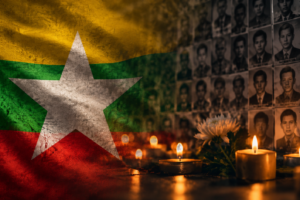
The ICJ today joined other International Non-Government Organizations operating in Myanmar in a statement marking one year since the commencement of military ‘clearance operations’ that caused the exodus of around 700,000 Rohingyas into neighbouring Bangladesh.
The statement reads:
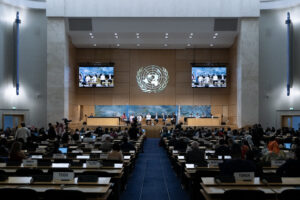
As the UN Security Council meets in New York to mark one year since nearly 700,000 Rohingya refugees fled to neighboring Bangladesh, International Non-Governmental Organizations (INGOs) working in Myanmar say 600,000 Rohingya still left in Myanmar face daily discrimination and human rights abuses, making conditions unsafe for refugees to return.
INGOs urge the Security Council to use the one-year anniversary as an opportunity to step up pressure on the government of Myanmar to take action on three critical areas: addressing the root causes of the crisis in Rakhine State; ensuring accountability for human rights violations and improving humanitarian access.
Discriminatory policies mean that Rohingya communities in Rakhine State continue to lack citizenship and face restrictions on their freedom of movement, impeding their ability to go to school, seek medical care, find jobs or visit friends and family.
128,000 Rohingya and other Muslim communities remain trapped in closed camps in central Rakhine for the sixth year since the intercommunal violence of 2012.
Although some steps have been taken to relocate camp residents to new sites, the displaced communities have not been adequately consulted, are unable to return to their original homes, or another location of their choice, and continue to lack freedom of movement, access to jobs and services, thus further entrenching their confinement and segregation.
At the same time, a full and independent international investigation into human rights violations – sexual violence, killings, beatings and destruction of homes and properties – that caused refugees to flee has not happened and the perpetrators who facilitated these abuses have not been brought to justice.
The rights violations committed in Rakhine State are part of a pattern of ongoing military abuses against ethnic minorities throughout Myanmar, including in Kachin State, Shan State and the southeast of the country.
Humanitarian organizations working throughout Rakhine State continue to face serious restrictions on their access to affected communities and bureaucratic and administrative barriers hamper their ability to carry out their daily work.
In northern Rakhine, from where the majority of refugees in Bangladesh fled, full humanitarian access for most organizations has not been restored more than one year since restrictions were first put in place.
Although a Memorandum of Understanding was signed between UNHCR, UNDP and the Government of Myanmar in June with a view to enabling both agencies to resume operations in northern Rakhine, they still await full, unfettered access, and have not yet been able to begin the work of supporting affected communities and monitoring conditions.
The recommendations of the Kofi Annan-led Advisory Commission on Rakhine, published one year ago, provide the best roadmap for addressing the root causes of the crisis in Rakhine State, improving the lives of all communities and creating the conditions for an inclusive, fair and prosperous society for all the people in Rakhine.
INGOs welcome the progress made by the Government of Myanmar in implementing some of the recommendations, including those related to improving development and infrastructure, such as building new roads, schools, and hospitals, but conclude that not enough progress has been made in addressing structural human rights issues or in creating an environment where all communities can benefit from these developments without discrimination.
Without citizenship rights and freedom of movement, Rohingya communities in Rakhine State cannot equally benefit from improved development and refugees in Bangladesh will not feel safe to return.
INGOs call on the UN Security Council to set time-bound and measurable targets for the Government of Myanmar to make meaningful progress in all three of these areas and to hold regular public meetings on the crisis.
Specifically, the Security Council should call on the Government of Myanmar to implement the recommendations of the Advisory Commission in their entirety, including addressing structural problems of discrimination, restrictions on movement and denial of citizenship faced by Rohingya communities.
Implementation of the Advisory Commission recommendations also requires listening to the perspectives of all ethnic groups in Rakhine in an effort to break down the divisions that have pitted communities against each other.
Second, the Security Council should request the government of Myanmar to grant full and unfettered access for humanitarian organizations to all parts of Rakhine State as well as full access for independent media and journalists.
And finally, it should step up efforts with the government of Myanmar to allow independent human rights investigators full and unimpeded access to investigate human rights abuses, gather untampered evidence and refer cases to an international tribunal.
The Security Council must send a strong message to the Government of Myanmar to end impunity and prevent future violations.
Unless these measures are implemented, the international community risks perpetuating impunity and cementing segregation in Rakhine State for decades to come.
Myanmar-RohingyaJointNGOstatement-News-webstory-2018-ENG (full story in PDF)
Mar 14, 2018 | News
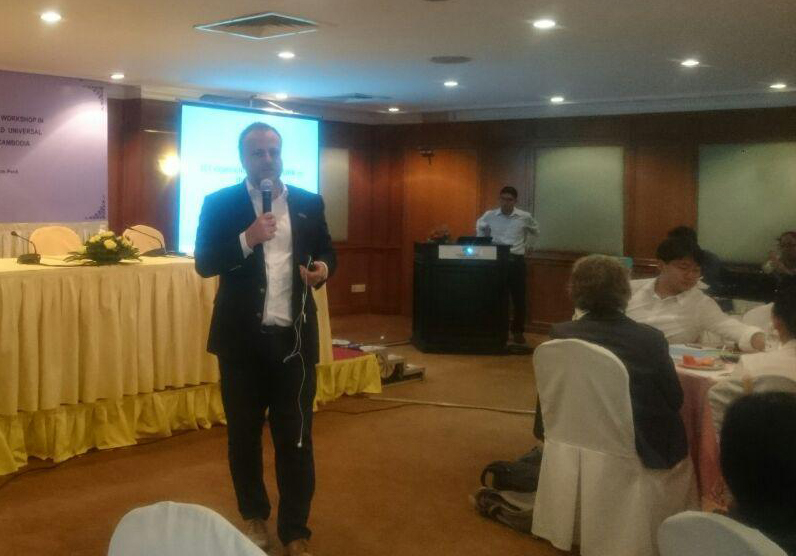
On 12 and 13 March 2018, the ICJ participated in and presented at a workshop for Cambodian civil society on the Universal Periodic Review (UPR).
The workshop was organized by the Cambodian Center for Human Rights (CCHR), UPR Info and the Cambodia Country Office of the United Nations Office of the High Commissioner for Human Rights (OHCHR).
This workshop aimed to prepare participants ahead of the deadline for civil society submissions to the UPR in July 2018.
The Royal Government of Cambodia (RGC) will undergo the third cycle of its UPR in January 2019.
The objectives of the workshop were to:
- 1. Introduce the UPR to newcomers, identifying where the UPR fits within the UN’s human rights framework and demonstrating how civil society organizations (CSOs) can utilize the UPR to further their human rights objectives;
- 2. Share experiences of national stakeholders in the UPR process and discuss developments since the second cycle and priorities for the third cycle;
- 3. Learn from the experiences of CSOs in the region on developing UPR CSO submissions;
- 4. Provide technical training regarding the drafting of UPR CSO submissions;
- 5. Establish thematic groups to begin developing joint submissions and establish a timeline for the drafting process.
On 12 March 2018, Kingsley Abbott, Senior International Legal Adviser for Southeast Asia for the ICJ, delivered a presentation on submissions drafting and advocacy techniques for the UPR and also spoke about the experiences of CSOs in Thailand in developing UPR CSO submissions.
Contact
Kingsley Abbott, ICJ Senior International Legal Adviser for Southeast Asia, e: kingsley.abbott(a)icj.org
Mar 13, 2018 | News
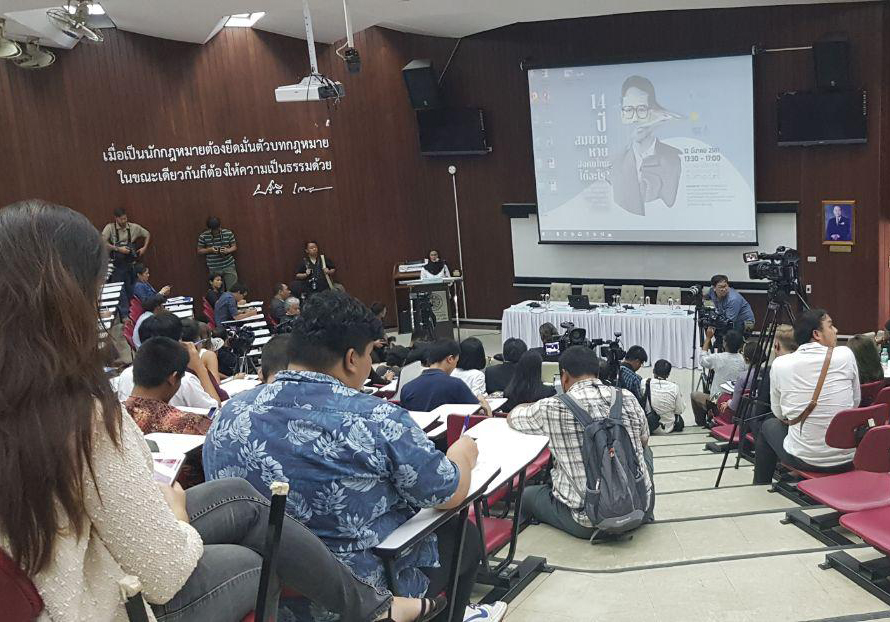
On 12 March 2018, the ICJ co-hosted the forum “14 Years after Somchai’s Disappearance, What Have We Learned?” to commemorate the 14th anniversary of the enforced disappearance of prominent lawyer and human rights defender Somchai Neelapaijit.
The forum was held at the Faculty of Law in Thammasat University’s Tha Pra Chan campus.
More than 80 participants attended the event, including alleged torture victims, family victims of torture and enforced disappearance, students, lecturers, lawyers, civil society organizations, diplomats, members of the Thai authorities and media.
The objectives of the forum were to (i) mark the 14th anniversary of the enforced disappearance of Somchai Neelapaijit and the lack of progress in the investigation (ii) raise awareness and discuss the latest amendments to the Draft Prevention and Suppression of Torture and Enforced Disappearances Act (‘Draft Act’) and its deficiencies; and (iii) discuss the newly constituted Committee managing complaints of torture and enforced disappearance, which was established by the Prime Minister on 23 May 2017.
Opening remarks were delivered by Angkhana Neelapaijit, wife of Somchai Neelapaijit, and Laurent Meillan, OHCHR’s Deputy Regional Representative.
Sanhawan Srisod, the ICJ’s National Legal Advisor, spoke during the first panel discussion on recent amendments to the Draft Act, which was moderated by Poonsuk Poonsukcharoen from Thai Lawyers for Human Rights (TLHR) and also included the following panelists:
- Nongporn Rungpetchwong, Human Rights Expert, Rights and Liberties Protection Department, Ministry of Justice
- Assistant Professor Dr. Ronnakorn Bunmee, Faculty of Law, Thammasat University
- Somchai Homlaor, Lawyer and Senior Advisor to Cross Cultural Foundation (CrCF)
The second panel discussion on the roles and duties of the Committee Managing Complaints for Torture and Enforced Disappearance Cases was moderated by. Yingcheep Atchanont from Internet Law Reform Dialogue (iLaw) and included the following speakers:
- Manunpan Rattanacharoen, Office of Foreign Affairs and International Crimes, Department of Special Investigation (DSI), Ministry of Justice
- Professor Narong Jaihan, Chair, Sub-committee on Prevention of Torture and Enforced Disappearance Cases
- Angkhana Neelapaijit, Family of “disappeared” person
- Isma-ae Tae, Alleged victim of torture and ill-treatment
During the event, the ICJ also highlighted its open letter to Thailand’s Minister of Justice, dated 12 March 2018, on the recent amendments to the Draft Act, which sets out concerns that the recent amendments would, if adopted, fail to bring the law into compliance with Thailand’s international human rights obligations.
The forum was co-organized with the Neelapaijit family, Thammasart University’s Faculty of Law, Amnesty International Thailand, Cross Cultural Foundation (CrCF), together with the United Nations’ Office of the High Commissioner for Human Rights (OHCHR) Regional Office for South East Asia.
Read also
ICJ and Amnesty International, Open letter to Thailand’s Minister of Justice on the amendments to the Draft Prevention and Suppression of Torture and Enforced Disappearances Act, 12 March 2018
English
Thai
ICJ and Thai Lawyers for Human Rights, Joint submission to the UN Committee against Torture, 29 January 2018
ICJ and Amnesty International, Recommendations to Thailand’s Ministry of Justice on the Draft Prevention and Suppression of Torture and Enforced Disappearances Act, 23 November 2017
To mark the 10-year anniversary of Somchai Neelapaijit’s ‘disappearance’, the ICJ released a report documenting the tortuous legal history of the case, Ten Years Without Truth: Somchai Neelapaijit and Enforced Disappearances in Thailand, 7 March 2014
Contact
Kingsley Abbott, ICJ Senior International Legal Adviser for Southeast Asia, e: kingsley.abbott(a)icj.org
Thailand-Amendments-to-Prevention-and-Suppression-of-Torture-2018-ENG (Full text in ENG, PDF)
Thailand-Amendments-to-Prevention-Suppression-of-Torture-2018-THA (Full text in THA, PDF)
Feb 13, 2018 | News
The Egyptian government has trampled over even the minimum requirements for free and fair elections for the planned March 26-28, 2018 vote for president, the ICJ and thirteen international and regional rights organizations said today.
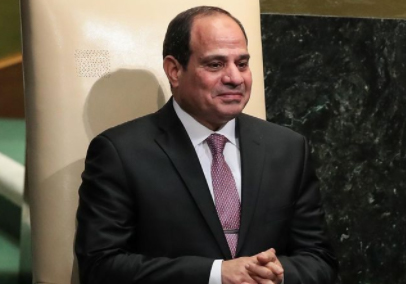
The government of President Abdel Fattah al-Sisi (photo) has relentlessly stifled basic freedoms and arrested potential candidates and rounded up their supporters.
“Egypt’s allies should speak out publicly now to denounce these farcical elections, rather than continue with largely unquestioning support for a government presiding over the country’s worst human rights crisis in decades,” the groups said.
The United States, European Union, and European states, which provide substantial financial assistance to the Egyptian government, should consistently integrate human rights into their relations with Egypt.
These countries should halt all security assistance that could be used in internal repression and focus aid on ensuring concrete improvements to protect basic rights.
The repression in advance of Egypt’s presidential election is a substantial escalation in a political environment that denies people’s rights to political participation and to freedom of expression, association, and peaceful assembly.
The Egyptian authorities should immediately release all those arrested for joining political campaigns or stating their intention to run as presidential candidates in the elections, the groups said.
The authorities have successively eliminated key challengers who announced their intention to run for president. They have arrested two potential candidates, retired Lt. Gen. Sami Anan and Col. Ahmed Konsowa.
A third potential candidate, Ahmed Shafik, a former prime minister and air force commander, apparently was placed under undeclared house arrest in a hotel until he withdrew from the race.
Two other key potential candidates, the human rights lawyer Khaled Ali and a former parliament member, Mohamed Anwar al-Sadat, backtracked on formally registering, citing the repressive environment, concerns over the safety of their supporters, and government manipulation.
The only current candidate running against al-Sisi is Mousa Mostafa Mousa, the leader of the Al-Ghad Party, which supports the government. He registered his candidacy on January 29, the last possible day, after efforts from pro-government parliament members to convince him to run.
Until the day before he registered his candidacy, he was a member of a campaign supporting al-Sisi for a second term. In this context, the right of every citizen to freely stand and vote in elections that reflect the free expression of the will of the electors appears meaningless.
These government actions are in contravention to Egypt’s Constitution and a clear violation of its international obligations and commitments, including the International Covenant on Civil and Political Rights (ICCPR), the African Charter on Human and Peoples’ Rights (ACHPR), and the 2002 African Union Declaration on the Principles Governing Democratic Elections in Africa. Article 25 of the ICCPR and Article III of the African Union declaration link political participation, as a voter and as a candidate, to the freedoms of assembly, expression, and association.
An EU handbook for elections observations, detailing standards of fair elections, says that these are rights “without which it [elections] cannot be meaningfully exercised.”
The current atmosphere of retaliation against dissenting voices and the increasing crackdown against human rights defenders and independent rights organizations have made effective monitoring of the elections extremely difficult for domestic and foreign organizations.
Media reports have said that the number of organizations that were granted permission to monitor the elections was 44 percent fewer than in the last presidential election in 2014 and that the number of requests, in general, has gone down.
Several opposition parties called for boycotting the elections. A day later al-Sisi threatened to use force, including the army, against those who undermine “Egypt’s stability and security.”
On February 6, the Prosecutor-General’s Office ordered an investigation against 13 of the leading opposition figures who called for a boycott, accusing them of calling for “overthrowing the ruling regime.”
“Seven years after Egypt’s 2011 uprising, the government has made a mockery of the basic rights for which protesters fought,” the groups said. “Egypt’s government claims to be in a ‘democratic transition’ but move further away with every election.”
Contact
Said Benarbia, Director of ICJ’s Middle East and North Africa Programme, t: +41-22-979-3817 ; e: said.benarbia(a)icj.org.
Signatories
Cairo Institute for Human Rights Studies
CIVICUS “World Alliance for Citizen Participation”
CNCD-11.11.11
EuroMed Rights “The Euro-Mediterranean Human Rights Network”
Human Rights First
Human Rights Watch
International Commission of Jurists
International Federation for Human Rights (FIDH)
International Service for Human Rights
Project on Middle East Democracy
Reporters Without Borders (RSF)
Robert F. Kennedy Human Rights
Solidar
World Organisation Against Torture (OMCT)
Egypt-Presidential vote neither free nor fair-Presse release-2018-ENG (Full Press release in English, PDF)
Egypte-Election présidentielle dans un contexte ni libre ni équitable-Communiqué de presse-2018-FRA (Full Press release in French, PDF)
Egypt-Presidential vote neither free nor fair-Presse release-2018-ARA (Full Press Release in Arabic, PDF)
Dec 20, 2017 | News
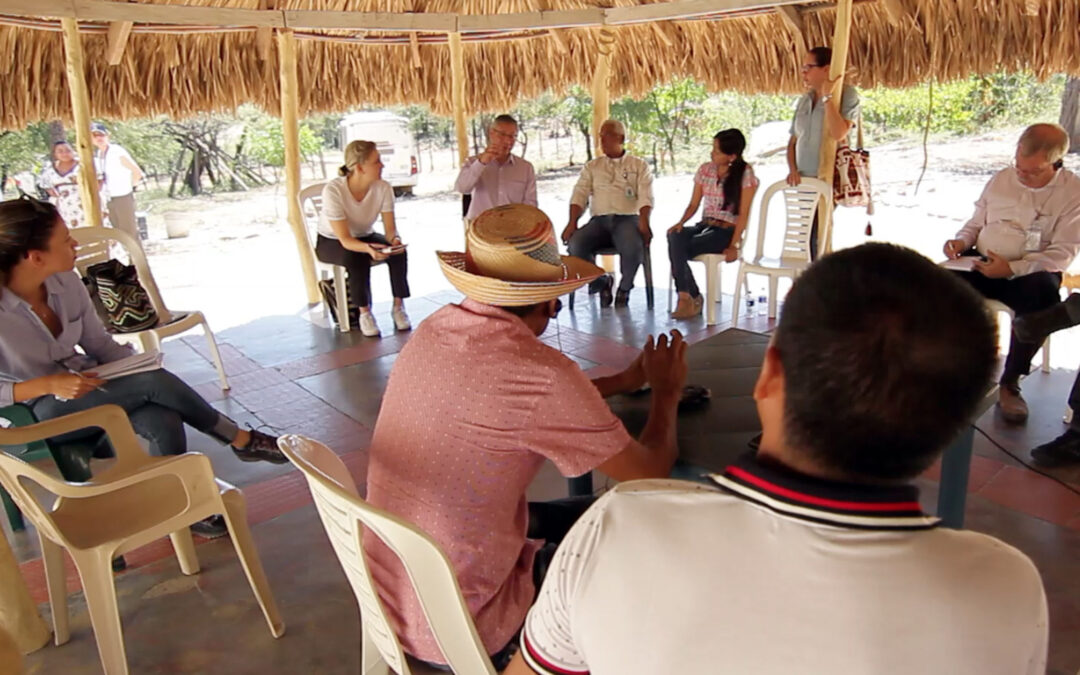
From 9-13 December, a delegation from the ICJ visited the company Carbones del Cerrejón LLC (El Cerrejón) to analyse the operation and effectiveness of its grievance mechanism.
The company, owned by Glencore plc, Anglo American and BHP Billiton, is located in the department of La Guajira, Colombia. The visit took place within the framework of the ICJ’s initiative on the effectiveness of grievance mechanisms established by companies to remedy negative impacts and human rights abuses.
The ICJ appreciated the collaboration of the Institute of Studies for Development and Peace (INDEPAZ) in the organization and facilitation of the visit.
It also acknowledges and thanks the company Carbones del Cerrejón for the welcome and all the facilities provided to the mission as well as the information shared with the delegation.
The ICJ also thanks the communities of Afro-descendants, peasants and indigenous Wayuu who welcomed and spoke with it.
This statement contains preliminary views and recommendations from the delegation regarding the company’s grievance system and the context in which it operates.
Subsequently, the ICJ will prepare a full report and will use this evaluation in the context of a general evaluation and recommendations on operational level grievance mechanisms.
The objective of the mission was to learn about and analyse the operation of the grievance mechanism established by the company and to evaluate in a preliminary way its effectiveness.
Cerrejón is one of the companies in the coal mining sector that started the process of establishing grievance and / or complaint mechanisms early.
Between 2009 and 2011 it was part of five pilot projects carried out by a team of the Special Representative of the UN Secretary General on business and human rights.
Contextualize the mechanism: Coal mining in La Guajira
La Guajira – province of Colombia on the border with Venezuela – besides its natural beauty and the friendliness of its people surprises visitors by the sharp contrast it presents between the great wealth generated by the extraction of coal and the poverty prevalent among its population.
The majority percentage of the population of La Guajira is made up of indigenous Wayuu populations and Afro-descendant communities, who generally live in poverty.
There is a lack of water and of employment opportunities or economic activities that are not linked to the operations of El Cerrejón, which accentuates the apparent dependence of the regional economy on the extractive activity of coal and raises doubts and questions about sustainability of the regional economy sitting on these bases in the short, medium and long term.
The information received by the delegation of the ICJ points to corruption as one of the main factors that influence and determine the lack of better health and education services, infrastructure and economic investment in the region by the State.
Corruption is more visible among the political class. Senior officials of the regional government were or are currently being prosecuted for corruption and murder.
La Guajira has had eight different governors in five years, which is a destabilizing and paralyzing factor in a highly centralized political system of government.
In this context, although considerable efforts are made by various actors, including El Cerrejón, distrust among the population is significant.
El Cerrejón, which operates in La Guajira, is one of the largest open-pit coal mining operations in the world and has an integrated operation that includes the extraction of coal, its transport by private railroad to Puerto Bolivar (150 kilometers away) and its cargo and transportation to consumer countries.
About 40 percent of the coal exported by Colombia goes to European markets. El Cerrejón is presented as an example of responsible mining both in the Colombian coal mining region and in the world and it has recently developed a series of social responsibility policies, including a due diligence process in the field of human rights.
The ICJ was informed that the experience and lessons learned from the grievance mechanism have influenced the design of these policies.
Colombia-Cerrejon-grievance-assessment-News-2018-ENG (Full text in PDF)
Watch the video (in Spanish):