Sep 12, 2017 | Advocacy, Non-legal submissions
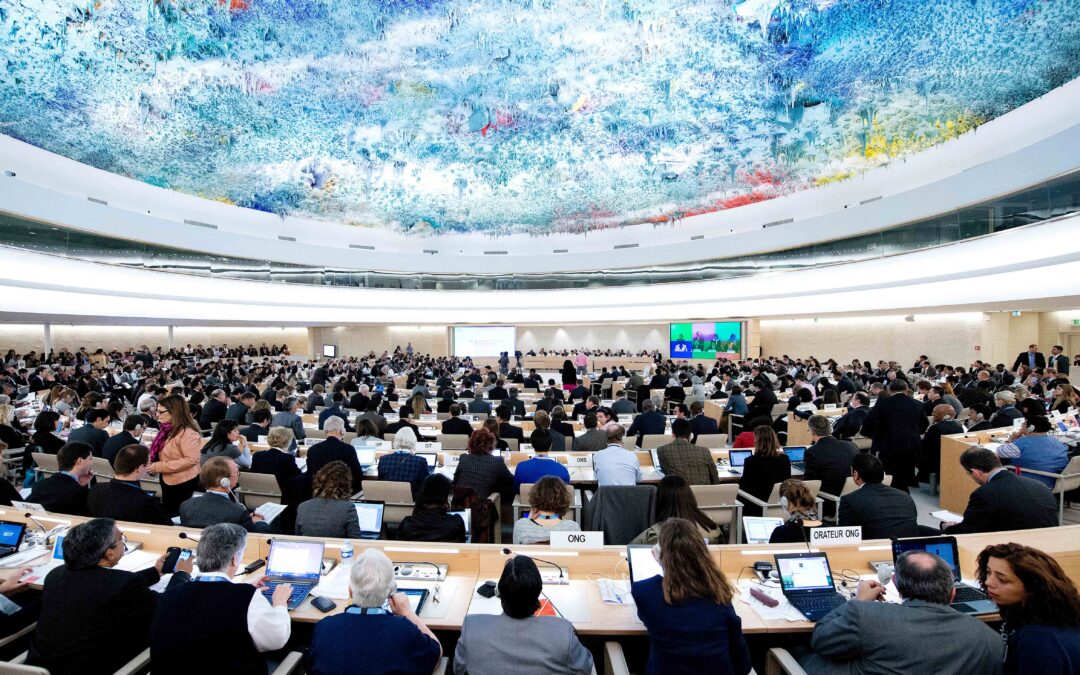
The ICJ today made an oral statement to the UN Human Rights Council, on the crisis for human rights and the rule of law in Venezuela.
The statement was made in general debate under item 2 on the oral update delivered by the High Commissioner for Human Rights.
The ICJ statement read as follows:
“The ICJ welcomes the efforts of the High Commissioner and his Office to document and draw attention to the situation in Venezuela, including through the report published on 30 August. As the High Commissioner highlighted, the situation only continues to worsen and the ICJ fully supports his call for the Council to establish an international investigation into human rights violations in Venezuela.
The deep human rights crisis and the breakdown of the rule of law in Venezuela is undoubtedly the most worrying situation in the American hemisphere.
Arbitrary detentions, extrajudicial and arbitrary executions, military trials of civilians and persecutions and harassments of opponents, dissidents and human rights defenders have become systematic and widespread practices.
The combined action of the Supreme Court of Justice, the Government and the National Constituent Assembly has destroyed the rule of law, suppressing the separation of powers, delivering a fatal blow to the Legislative, and seriously undermining independence and impartiality of the Judiciary.
The 1999 Constitution has de facto ceased to be in force and the road to arbitrary exercise of power has begun.
The ICJ considers that it is imperative that the Human Rights Council take action on this serious situation.”
The High Commissioner, in his oral update on 11 September, had stated as follows in relation to Venezuela:
“Last month my Office issued a report on Venezuela, highlighting excessive use of force by security officers, and multiple other human rights violations, in the context of anti-Government protests. There is a very real danger that tensions will further escalate, with the Government crushing democratic institutions and critical voices – including through criminal proceedings against opposition leaders, recourse to arbitrary detentions, excessive use of force, and ill-treatment of detainees, which in some cases amounts to torture. Venezuela is a Member State of this Council, and as such has a particular duty to “uphold the highest standards in the promotion and protection of human rights”, in the words of Resolution 60/251. My investigation suggests the possibility that crimes against humanity may have been committed, which can only be confirmed by a subsequent criminal investigation. While I support the concept of a national Truth and Reconciliation Commission, the current mechanism is inadequate. I therefore urge that it be reconfigured with the support and involvement of the international community. I also urge this Council to establish an international investigation into the human rights violations in Venezuela.”
The ICJ also launched today a new report on Venezuela, and convened a side event to discuss the need for action by the Human Rights Council.
Sep 29, 2015 | Events, News
From 30 September to 1 October 2015, the Asian Forum for Human Rights and Development (FORUM-ASIA), International Commission of Jurists (ICJ), and Boat People SOS (BPSOS) will jointly organize a conference in Bangkok.
The regional conference will discuss pressing concerns on the promotion and protection of freedom of religion or belief.
The UN Special Rapporteur on Freedom on Religion or Belief, Mr. Heiner Bielefeldt, will be joined by approximately 60-70 human rights defenders, members of religious groups, rights groups, UN agencies and representatives from the ASEAN Intergovernmental Commission on Human Rights, ASEAN Commission on the Promotion and Protection of Rights of Women and Children, National Human Rights Institutions and other government agencies.
The event will provide a multi-stakeholder platform to discuss key emerging issues, distinct and shared challenges faced by various Southeast Asian religious groups and advocates of religious freedom, identify advocacy strategies and best practices to overcome these obstacles, and to strengthen cooperation between the different stakeholders important in promoting freedom of religion or belief in Southeast Asia.
The event will also be an opportunity for participants to have a better understanding of the mandate of the UN Special Rapporteur on freedom of religion or belief.
Some of the key topics expected to be discussed include state control and regulation of religion, extreme interpretations of religion, and how freedom of religion together with other human rights are complementary or mutually reinforcing.
Upon the completion of the conference, the Special Rapporteur will hold a press briefing at the Foreign Correspondents’ Club of Thailand (FCCT) at 7.30pm on 1 October 2015 to provide an overview of the status of freedom of religion or belief in Southeast Asia and how this right could be better protected and promoted.

Jul 7, 2015 | Advocacy
The ICJ and 15 other NGOs participating in the first session of the OEIWG to elaborate a treaty on business and human rights highlighted that in principle all conduct by all types of business enterprises, whether local or transnational, shall be addressed in the legally binding instrument.
The footnote in the preamble should not be interpreted as limiting in any way the scope of possible discussions in the Open Ended Intergovernmental Working Group (OEIWG) or any analysis or recommendations that may be reported back to the Council on a future treaty.
Business enterprises that do not have any or any significant transnational operations no doubt are capable of and in many instances have been responsible for human rights abuses no less serious in scale or severity than those of transnational businesses.
The people whose human rights are abused directly or indirectly by businesses are unlikely to distinguish whether the business enterprise that causes them harm has transnational ownership or operations; nor are affected people likely to excuse abuses they suffer from a “local” business simply because the entity lacks a transnational element.
From the point of view of those whose human rights are affected by business activities, the key consideration is not the formal character of the business entity, but instead the their practical access to effective remedy and reparation for the harm they have suffered.
If a treaty is going to take the view and needs of those adversely affected by business activity as a central concern, it must address all business enterprises that can potentially carry out abuses and not only on those with transnational links.
The statement can be downloaded here: Joint Oral Statement on Scope v.2
May 20, 2014 | News
Thai authorities should revoke the declaration of Martial Law throughout the country and restore media freedom, the International Commission of Jurists said today.
May 14, 2014 | Events, News, Position papers
The ICJ today called on the Pakistan Senate to reject a Bill that would grant the military and law enforcement authorities sweeping powers to detain individuals, in contravention of international human rights standards.