May 15, 2019 | News
The ICJ today condemned a series of the acts of violence directed against the Muslim community in the aftermath of the Easter attacks on 21 April in Sri Lanka directed at churches and other places.
In the most recent attacks on 13 May, at least one person was killed in anti-Muslim mob violence in Nattandiya. In addition, various attacks have resulted in the looting and destruction of mosques, Muslim-owned businesses and houses in several parts of the island including Negombo, Chilaw, Kurunegala and Gampaha.
The ICJ called upon the State authorities to conduct independent, impartial and effective investigations into the attacks and bring all perpetrators to justice in line with international standards. Furthermore, the ICJ urges the Government of Sri Lanka to send a clear public message that acts of violence against any religious minorities are not tolerated.
“Attacks perpetrated against religious minorities are more likely to occur in a climate of impunity” said Fredrick Rawski, ICJ’s Regional Director for Asia and the Pacific. “The fact that Sri Lanka has a history of serious violations of human rights of religious minorities makes it even more urgent that the Government act to safeguard the human rights of all persons and take immediate measures to protect members of religious minorities from further violence.”
Delayed action or inaction on the part of law enforcement authorities during and in the immediate aftermath of the attacks has further exacerbated the situation. Given the recurring patterns of mob violence against religious minorities in Sri Lanka, a handful of arrests will not suffice. It must be followed up by independent and impartial investigations and, where warranted, prosecutions as part of an effective preventive strategy to counter such collectively organized violence.
Under international human rights law, including the International Covenant on Civil and Political Rights, to which Sri Lanka is a party, States have a duty to protect freedom of religion, which includes persons from religious minorities against abuses committed against them by any person or group.
The Government of Sri Lanka must take appropriate security measures in response to the worst terror attack in recent years. However, it must ensure that the volatile situation is not made worse by inaction to prevent anti-Muslim violence and vigilantism. Moreover, the State must ensure that any counter-terrorism measure is adopted and implemented in line with its international human rights law obligations and does not explicitly or implicitly target a particular community.
Apr 25, 2019 | News
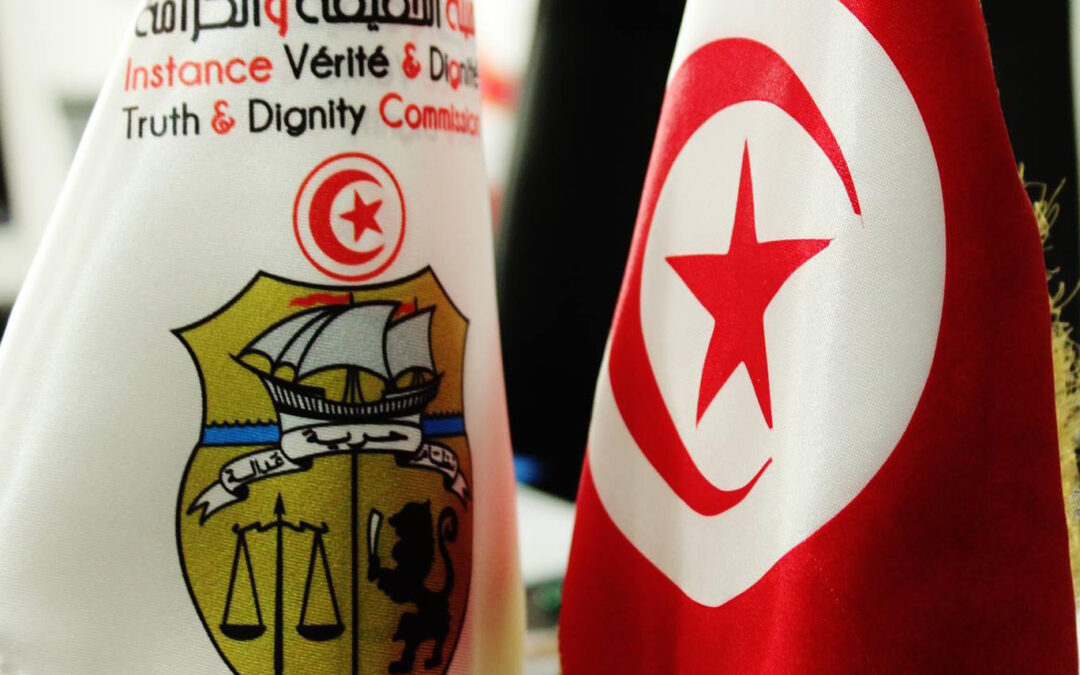
The statement alerts the public of the danger of a bill which dismantles the specialized criminal chambers in Tunisia and replaces them with an institution which would guarantee impunity for those who committed gross violations of human rights in Tunisia between 1955 and 2013.
The statement has been signed by the ICJ as well as other members of the Coalition for Transitional Justice
The statement can be downloaded here:
Link to French Version
Link to Arabic Version
Apr 25, 2019 | Nouvelles
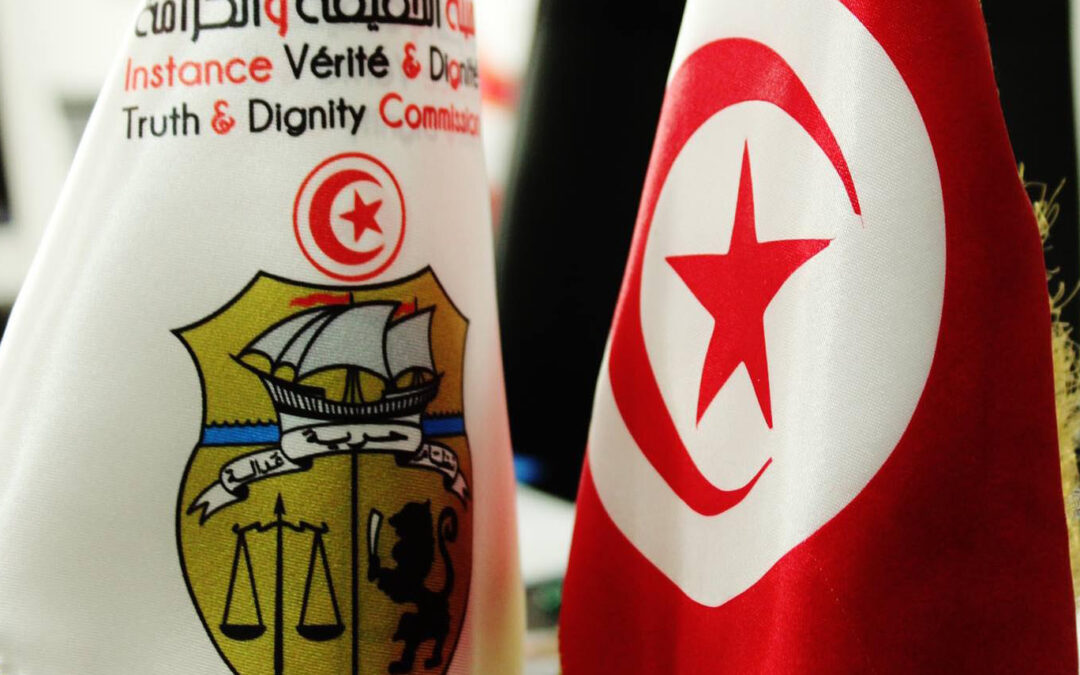
Le communiqué alerte l’opinion publique sur le danger d’une proposition de loi visant à démanteler les chambres criminelles spécialisées en Tunisie et à les remplacer par une institution qui garantirait l’impunité pour les personnes ayant commis des violations flagrantes des droits humains en Tunisie entre 1955 et 2013.
Le communiqué a été signé par la Commission Internationale de Juristes avec d’autres organisations membres de la Coalition pour la justice transitionnelle.
Le manifeste peut être téléchargé ici:
Version française
Version arabe
Apr 10, 2019 | News
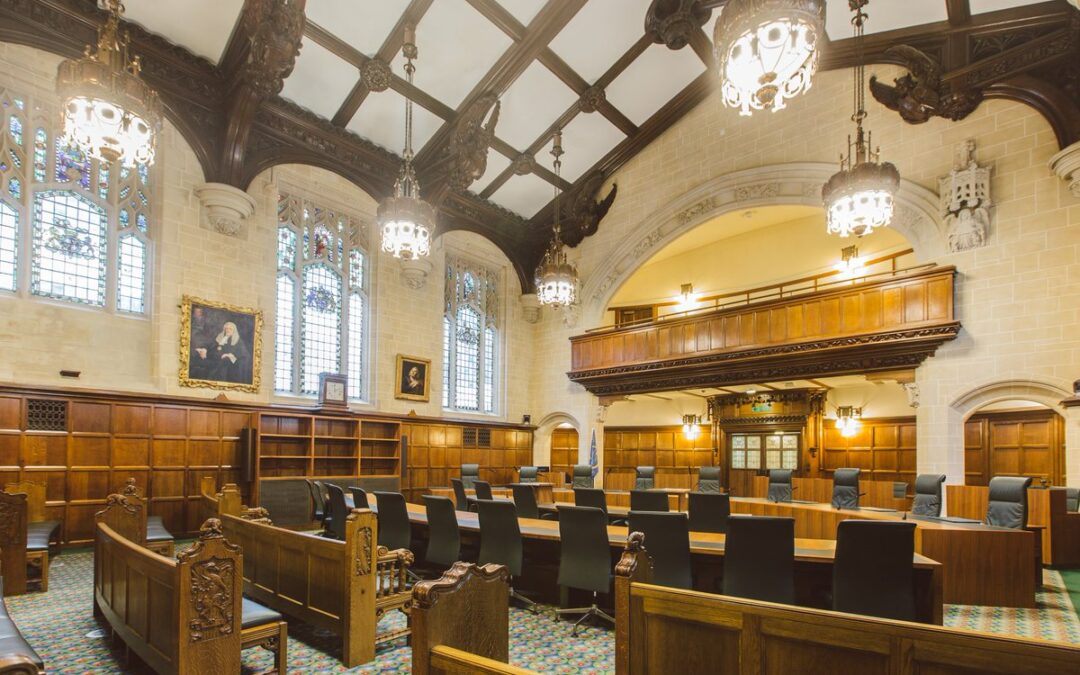
Today, the ICJ and the CORE Coalition welcomed the decision of the United Kingdom Supreme Court to allow a complaint to proceed against Vedanta Resources Plc and its Zambian subsidiary Konkola Copper Mines (KCM), alleging serious harm from extraction activities in Zambia.
The damage to health and livelihood was allegedly caused to local communities living in the Chingola District by the discharge of toxic waste from the Nchanga Mine operated by KCM.
The companies challenged the jurisdiction of the UK courts to hear the complaint for negligence and breach of statutory duty, saying there was no case against them arguable in a UK court and, in relation to KCM, that Zambia was the proper forum where any case would have to be heard.
The judgment, confirming the decision of lower courts, dismissed the appeal by the companies, allowing the case to now proceed to trial on the merits. The ICJ and CORE Coalition acted as interveners in the case.
“Today’s Supreme Court decision will make it possible for the Zambian claimants to find justice, even so long after events took place,” said ICJ Senior Legal Adviser Carlos Lopez.
“The ruling makes clear that, from available evidence at this stage, it is arguable in trial that a parent company like Vendanta owes a duty of care in relation to people living in the vicinity of their subsidiaries and this decision will have important implications to similar cases concerning parent company duties around the world,” said Lopez.
Although access to justice for alleged victims harm from subsidiaries of parent companies has been elusive, the UK Supreme Court clarified that the principles applicable to these cases were “not novel at all.”
“Many other victims face insurmountable hurdles in their efforts to hold companies to account. The case is a reminder of the urgent need for legislation to require companies to take action to prevent human rights abuses, and to make it easier to hold them to account when they fail to do so,” said Marilyn Croser, Director of CORE.
The judgment regarded published material in which Vedanta fairly asserted assumption of responsibility for the maintenance of proper standards of environmental control over activities of its subsidiaries. The Court said that this was “sufficient on their own to show that it is well arguable that a sufficient level of intervention by Vedanta in the conduct of operations at the Mine may be demonstrable at trial.”
Today’s Supreme Court judgment also made clear that Zambian courts could not be necessarily relied on to address claims against KCM and that there was a real risk that the claimants would not obtain “substantial justice” in Zambia.
Contact:
Marilyn Croser, Director CORE Coalition, t: + 44 203 752 5712
Carlos Lopez, Senior Legal Adviser, ICJ, t: + 41 22 9793816

Apr 2, 2019 | News
The ICJ raised serious human rights concerns following the announcement by the Government of Brunei of the third phase of implementation of the 2013 Syariah Penal Code with its entering into force on 3 April 2019.
This week, the Syariah Penal Code will come into full effect, which means the imposition of horrific punishments – including the severing of limbs, whipping, and stoning to death – on those found to have committed acts such as rape, adultery, sodomy, and to have engaged in extramarital sexual relations.
“There are no circumstances under which punishments such as stoning, amputation or public flogging are acceptable under international law,” said Frederick Rawski, ICJ’s Regional Director for Asia and the Pacific.
“They are blatant violations of the prohibition on all forms of torture and other cruel, inhuman or degrading treatment or punishment,” he added.
Stoning, amputation and public flogging are contrary to the commitment that Brunei made when it became a party to the Convention on the Elimination of All Forms of Discrimination against Women (CEDAW), including its obligations to take all necessary measures to eliminate all forms of discrimination against women.
Those punishments also violate the Convention on the Rights to the Child (CRC) to which Brunei is a party.
The ICJ also notes that consensual sexual activities, such as sodomy, adultery and other extramarital and premarital sexual relations, as much as consensual same-sex sexual conduct, do not constitute recognizably criminal offences under international human rights law and standards and should therefore not be criminalized at all.
The UN Special Rapporteur on Torture has stated that “any form of corporal punishment is contrary to the prohibition of torture and other cruel, inhuman or degrading treatment or punishment”, and cannot be considered a “lawful sanction” under international law.
When Brunei’s Syariah Penal Code was adopted in October 2013, the ICJ condemned it for violating international human rights law and standards.
The Syariah Penal Code will also effectively reintroduce the death penalty, which has generally been viewed as having been de facto abolished, as it has not been imposed since 1957.
“The re-introduction of the use of the death penalty in the Syariah Penal Code is out of step with the global trend towards the abolition of capital punishment and the establishment of a moratorium on executions,” said Rawski.
In addition, the ICJ is concerned about the disproportionate and discriminatory impact of the Code on women and girls and on lesbian, gay, bisexual and transgender individuals in the country.
Although the 2013 Syariah Penal Code states that the penalty of stoning to death applies regardless of whether the offender is male or female, women face a greater risk of being convicted and sentenced to death because they are more likely to be found guilty of adultery or of otherwise having engaged in extramarital sexual relations.
“In addition to imposing penalties that are in clear violation of international law, the underlying ‘offenses’ are themselves discriminatory,” said Rawski.
“The Code is particularly regressive coming at a time when other Commonwealth countries are taking steps to de-criminalize same-sex consensual relations, and end discrimination and violence against women,” he added.
The ICJ strongly urges the Government of Brunei to withdraw the 2013 Syariah Penal Code, and take steps to ensure that its laws comply with international law and standards, consistent with Brunei’s obligations under international human rights instruments, including the CEDAW and the CRC.
Contact:
Emerlynne Gil, ICJ Senior International Legal Adviser, t: +66 840923575, e: emerlynne.gil(a)icj.org
Additional information:
On 17 December 2018, the UN General Assembly adopted a resolution calling for a global moratorium on the death penalty, with the support of a 120 countries.
According to the Office of the High Commissioner for Human Rights more than 160 UN member countries have either abolished the death penalty or introduced a moratorium on its use in law or practice.
The ICJ considers the imposition of the death penalty to be a violation of the right to life and the prohibition of torture and other cruel, inhuman or degrading treatment or punishment.