Mar 12, 2019 | Events, News
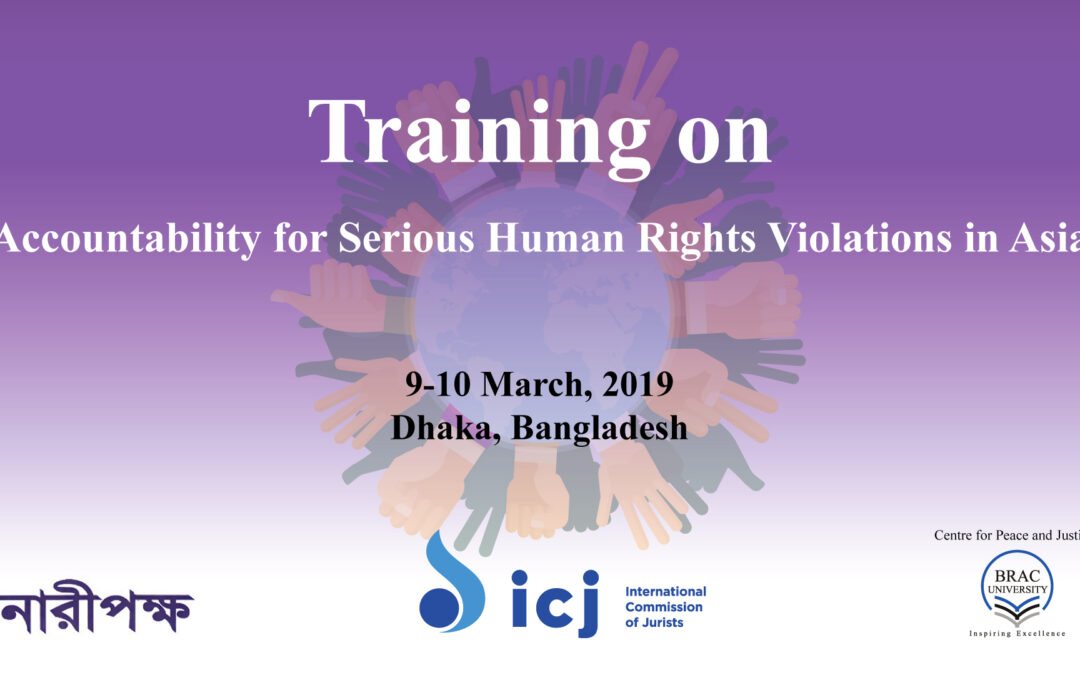
The ICJ convened a two-day workshop from 9th to 10th March 2019 in Dhaka, Bangladesh to discuss applicable international legal mechanisms designed to achieve accountability for serious human rights violations in Asia.
Bangladesh-based non-government organizations the Centre for Peace and Justice and Naripokkho co-hosted the event with the ICJ, with a representative of AJAR (Asia Justice and Rights) also joining. Twenty Bangladeshi lawyers, activists and academics attended the event.
Legal advisers from the ICJ provided an overview of the Independent Investigative Mechanism for Myanmar (IIMM), currently being established following a UN Human Rights Council resolution in September 2018.
They also discussed the structure and procedures of the International Criminal Court (ICC), whose prosecutors are currently conducting a preliminary examination into the deportation of Rohingyas from Myanmar into Bangladesh. Unlike Myanmar, Bangladesh is a State Party to the Rome Statute of the ICC, and its pre-trial chamber has indicated the Court has jurisdiction over crimes listed in the Rome Stature were one element, or part of a crime, was committed inside the territory of Bangladesh.
AJAR’s co-founder provided an overview of transitional justice processes, drawing upon international and regional experiences of truth-seeking, prosecutions, reparations and reforms to guarantee non-repetition of human rights violations.
Two of the ICJ’s legal advisers also travelled to Cox’s Bazar, Bangladesh, where they met relevant stakeholders to discuss the situation of Rohingya refugees from Myanmar, and to share information about accountability mechanisms, including about expected timelines, outcomes and limitations.
The activity is part of the ICJ’s global work on promoting accountability and redress for gross human rights violations to facilitate justice and deter repetition.
Contact: Kingsley Abbott, ICJ Senior Legal Advisor for Global Redress and Accountability e: kingsley.abbott@icj.org
Mar 1, 2019 | News
On 28 February and 1 March, the ICJ met with senior officials of the Myanmar Police Force (MPF) and the Union Attorney General’s Office (UAGO) in Nay Pyi Taw.
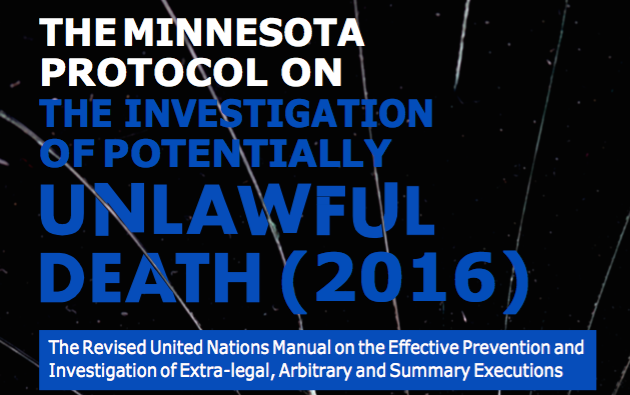
The purpose of these talks was to promote the conduct of effective investigations into potentially unlawful deaths and enforced disappearance in accordance with international human rights law and standards, particularly the Minnesota Protocol on the Investigation of Potentially Unlawful Deaths (“Minnesota Protocol”).
Under customary international law, the right to life, and the right to be free from torture and other ill treatment, is not to be restricted even during an armed conflict or declared public emergency. All States are obliged to investigate, prosecute and punish acts that constitute violations of the right to life, and to provide effective remedies and reparations to victims.
Published by the United Nations Office of the High Commissioner for Human Rights, the Minnesota Protocol provides guidance to authorities on investigating acts amounting to human rights violations, including when State actors may have been involved. Drawing upon international law and standards, including in relation to the rights of victims and their families, the Protocol includes detailed guidelines on crime scene investigation, interviews, exhumations and autopsies.
Since December 2017, the ICJ has co-hosted four regional workshops in Thailand focused on this topic. Attendees have included lawyers, academics and State authorities from Thailand, Cambodia, Nepal, India and Myanmar.
Frederick Rawski, Director for Asia and the Pacific, Sean Bain, Legal Adviser, and Ja Seng Ing, Legal Researcher, composed the ICJ delegation in Myanmar’s capital.
Frederick Rawski proposed opportunities to continue these discussions on international standards into investigative procedures and processes. The ICJ Team also provided updates about related activities undertaken regionally and in Myanmar.
The ICJ has worked with the UAGO since 2014 to provide assistance on prosecutorial independence and human rights in the context of Myanmar’s broader democratic and legal reforms. This was the third meeting with the MPF over the last twelve months to discuss the conduct of investigations inline with international human rights law and standards.
Members of UAGO and MPF received copies of the Minnesota Protocol and indicated these would be shared with officials involved in the conduct of investigations or in setting the standards for them under national law in Myanmar.
Feb 28, 2019 | Advocacy, News
The ICJ made a submission to Mr. Léo Heller, the United Nations Special Rapporteur (Special Rapporteur) on the human rights to water and sanitation, in response to a call for submission in advance of the Special Rapporteur’s 2019 Human Rights Council Report on the human rights to water and sanitation in spheres of life beyond the households, in particular in public spaces.
The ICJ’s submission focuses on the status and the impact of inadequate access to water and sanitation on lesbian, gay, bisexual, transgender and queer individuals (LGBTQ), and more specifically on transgender persons and non-binary persons, in India.
ICJ’s submission draws on its ongoing work on the human rights of LGBTQ persons in India, where from 2017 to date, the ICJ has studied LGBTQ persons’ access to and enjoyment of economic, social, and cultural rights, focusing on access to adequate housing, decent work, and public spaces and services including water and sanitation. The goal is to reveal, address, and reduce discriminatory treatment against LBGTQ persons in accessing economic, social and cultural rights as a result of discriminatory laws and practice through advocacy with the Indian State and with the United Nations.
Read the full submission here.
Feb 12, 2019 | News
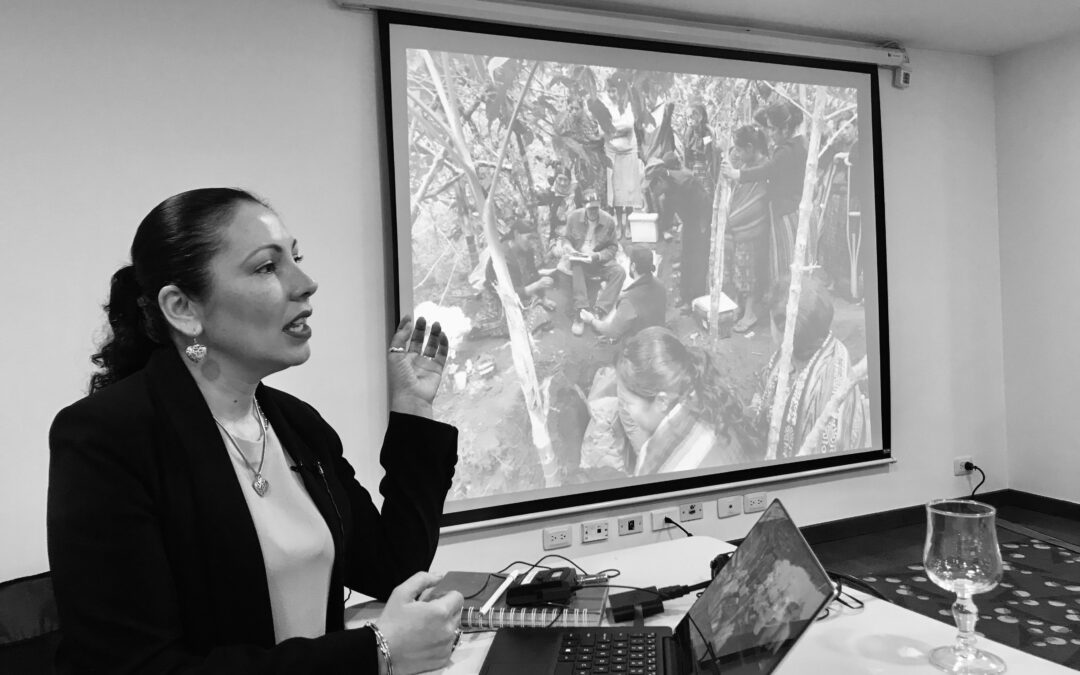
Today in Bogotá, Colombia, ICJ and its partners launched a new 30-month project under the ICJ’s Global Accountability Initiative entitled, Promoting justice for extrajudicial killings and enforced disappearances in Colombia, Guatemala and Peru.
The aim of the project is to promote the accountability of perpetrators and access to effective remedies and reparation for victims and their families in cases of extrajudicial killings and enforced disappearances in Colombia, Guatemala and Peru – and Latin America more broadly – through effective, accountable and inclusive laws, institutions and practices that also reduce the risk of future violations
The ICJ’s partners include the Asociacion de Familiares de Detenidos-Desaparecidos de Guatemala (FAMDEGUA), Asociación Red de defensores y defensoras de derechos humanos (dhColombia), Equipo Argentino de Antropología Forense (EAAF), Equipo Peruano de Antropología Forense (EPAF), Fundación de Antropología Forense de Guatemala (FAFG), and the Instituto de Defensa Legal (IDL).
Christof Heyns, Director of the Institute for International and Comparative Law in Africa and Professor of Human Rights Law at the University of Pretoria – and a former Special Rapporteur on extrajudicial, summary or arbitrary executions – also joins the project as special adviser.
In carrying out the project the ICJ will conduct general studies on obstacles to impunity in Colombia, Guatemala and Peru, as well as specific documentation of emblematic cases of serious human rights violations. The ICJ will also produce a practitioners’ guide for use by civil society, victims and their representatives on the investigation and prosecution of potentially unlawful death, and a regional guide for forensic experts on the investigation and prosecution of potentially unlawful death. In connection with the project the IJC intends to conduct strategic litigation, trial observations and capacity building activities involving judges, prosecutors, investigators, lawyers, civil society, victim groups and forensic experts.
The project is supported by the EU European Instrument for Democracy and Human Rights (EIDHR).
Contacts:
Kingsley Abbott, Senior Legal Adviser & Coordinator of the ICJ’s Global Accountability Initiative, email: kingsley.abbott(a)icj.org
Rocío Quintero, Legal Adviser, Latin America, email: rocio.quintero(a)icj.org
Jan 3, 2019 | Advocacy, News, Non-legal submissions
On 30 December 2018, the ICJ and the International Service for Human Rights (ISHR) jointly submitted a communication to the Committee on the Elimination of Discrimination against Women (CEDAW Committee) directed against Thailand.
They did this as a State Party to the Optional Protocol to the UN Convention on the Elimination of All Forms of Discrimination against Women (the CEDAW Convention) on behalf and with the consent of Angkhana Neelapaijit, regarding the alleged enforced disappearance of her husband, Somchai Neelapaijit.
Somchai Neelapaijit, a prominent lawyer and human rights defender, disappeared after being stopped on a road in Bangkok on 12 March 2004 and pulled from his car by a group of men. He has not been seen since. More than 14 years after his alleged enforced disappearance, Somchai’s fate and whereabouts remain unknown.
Prior to his disappearance, Somchai had been defending clients from Thailand’s southern border provinces and had been doing extensive work to advocate for the rights of persons accused of terrorism, and to highlight the treatment of Malay-Muslims in the region.
The joint communication by ICJ and ISHR to the CEDAW Committee submits that Thailand has breached Articles 2(b)(c)(f), 5(a)(b), 15(1) and 16(1)(c)(d) of the CEDAW Convention, which relate to the rights of women to substantive equality and protection from all forms of discrimination, including in all matters relating to marriage and family relations, as well as to their right to an effective remedy for violations of the abovementioned provisions.
The communication further highlights the impact of enforced disappearance on family members of a disappeared person, noting its disproportionate impact on wives and female relatives, as most cases of enforced disappearance in Thailand involve male victims.
In addition to the CEDAW Convention and its Optional Protocol, Thailand is a party to a number of other international human rights instruments, including the International Covenant on Civil and Political Rights and the Convention against Torture and Other Cruel, Inhuman or Degrading Treatment or Punishment. In January 2012, Thailand also signed the International Convention for the Protection of All Persons from Enforced Disappearance (ICPPED), thereby committing itself to refrain from acts that would defeat the object and purpose of that treaty, namely the prevention and prohibition of the crime of enforced disappearance.
The ICJ has consistently called upon the Thai authorities to comply with their obligations under international human rights law to independently, impartially and effectively investigate the case of Somchai Neelapaijit and all other reported cases of enforced disappearance, and provide the families of the victims in such cases with access to effective remedies and reparations, including regular updates on the status of the investigations.
The ICJ has also submitted recommendations to the Thai authorities on the current Draft Prevention and Suppression of Torture and Enforced Disappearances Act, highlighting the crucial need for a domestic law to define and criminalize enforced disappearance and torture in line with Thailand’s international obligations.
Thailand-Communication to CEDAW-Advocacy-2019-ENG (full submission, in PDF)
Contact
Livio Zilli, ICJ Senior Legal Adviser & UN Representative, email: livio.zilli(a)icj.org
Read also
Thailand: ICJ submits recommendations on draft law on torture and enforced disappearance amendments
Thailand: ICJ marks 14th year anniversary of the enforced disappearance of Somchai Neelapaijit’
Thailand: ICJ, Amnesty advise changes to proposed legislation on torture and enforced disappearances
Thailand: pass legislation criminalizing enforced disappearance, torture without further delay
On the 10th anniversary of Somchai Neelapaijit’s alleged disappearance, the ICJ released a report ‘Ten Years Without Truth: Somchai Neelapaijit and Enforced Disappearances in Thailand’ documenting the legal history of the case.