Aug 14, 2015 | News
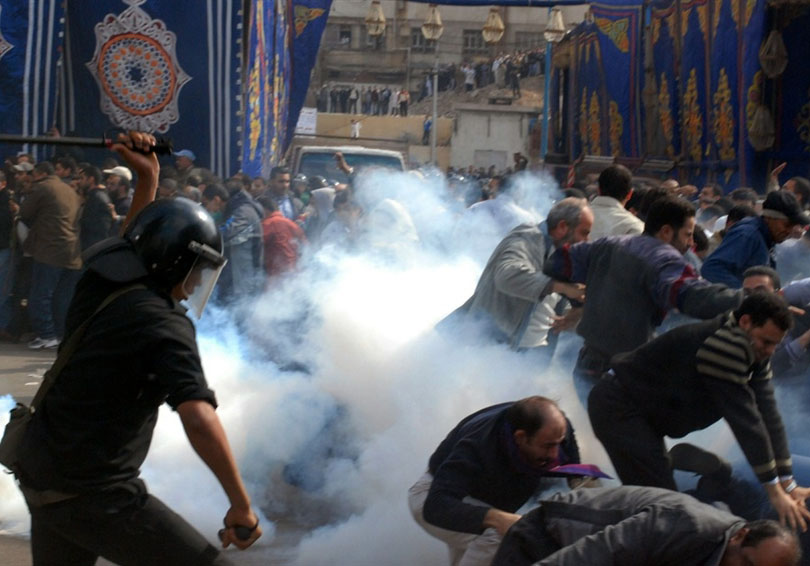
Today, on the second anniversary of the killing by the armed and security forces of more than 1,000 individuals during the dispersal of the Rabaa’ Al-Adawyia and Al Nahda Square sit-ins, the ICJ calls on the Egyptian authorities to end its policy of impunity for serious human rights violations.
The authorities must conduct thorough, effective, independent and impartial investigations into protestor deaths with a view to holding to account all those responsible for unlawful killings and other human rights violations committed in the course of the demonstrations, the ICJ says.
“It is a measure of the total disregard for victims’ rights and the absolute impunity of the armed and security services that in the two years that have passed, no effective investigations in line with international standards have taken place and not a single person has been brought to justice for the mass killings of protestors,” said Said Benarbia, Director of the ICJ’s Middle East and North Africa Programme.
“The victims of human rights violations and their family members have been left without any effective remedies or reparation, including an acknowledgment by the Egyptian authorities of their responsibility for the hundreds of killings and injuries that day,” he added.
Although fact-finding initiatives were conducted by Egypt’s quasi-governmental National Human Rights Council and by a government-appointed commission, the ICJ considers these investigations to be deeply flawed and ineffective.
The ICJ says both had inadequate access to first hand or physical evidence from the scene, because they did not begin their work until weeks or months after the events took place; lacked the ability to compel State authorities to testify and provide evidence; failed to document the full extent of human rights violations that took place; and neither led to any form of criminal investigation, much less prosecution of those responsible for these violations.
Further, while the government-appointed commission found that over 700 people had been killed during the Rabaa’ and Nahda dispersals, the shambolic report it issued dedicated just 9 pages to these two dispersals, concluding summarily and without substantiation that the police had been justified in violently dispersing the protest and blaming primarily the organizers of the sit-ins as well as the protestors for the high death toll.
There are credible allegations that in dispersing these demonstrations the armed and security forces unlawfully resorted to excessive and disproportionate use of force, the ICJ adds.
“By turning a blind eye to gross human rights violations committed by the armed and security forces, and by shielding their members from any form of criminal accountability, the Egyptian authorities are fostering the structural impunity that prevails in Egypt instead of combatting it,” said Benarbia.
“To meet their obligations under international law, the authorities must dismantle such policies and practices and establish the truth about the sit-ins’ dispersal,” he added.
Under international law lethal force may never be used unless strictly necessary to protect life.
States are obliged to provide access to an effective remedy and reparation to victims of human right violations.
They are also required to conduct prompt, thorough and impartial investigations, with a view to holding criminally accountable persons responsible for serious human rights violations, particularly those involving a denial of the right to life.
Contact:
Alice Goodenough, Legal Adviser of the ICJ Middle East and North Africa Programme, t: +44 7815 570 834; e: alice.goodenough(a)icj.org
Nader Diab, Associate Legal Adviser of the ICJ Middle East and North Africa Programme, t: +41 229 793 804; e: nader.diab(a)icj.org
Egypt-Impunity Rabaa Sq-News-Press releases-2015-ARA (full text in pdf, ARABIC)
Jul 22, 2015 | News
Ante los procesos penales que ha iniciado la Comisión internacional contra la Impunidad en Guatemala (CICIG) en el país, la CIJ expresa su absoluto apoyo al Comisionado de la CICIG Iván Velásquez por la batalla que está librando por la depuración del Estado de Guatemala y contra la corrupción.
Todos los casos develados por la CICIG están demostrando los niveles de impunidad existentes, debido a la persistencia de diferentes estructurales criminales, que cuentan con participación de altos funcionarios de Gobierno.
La CIJ lamenta que un partido político esté promoviendo acciones en contra de la CICIG y manifestaciones de diversa índole, para desestabilizar al país y evitar que sus miembros y candidatos sean investigados.
La CIJ se permite recordar que los actos de corrupción afectan seriamente la vida de toda la población guatemalteca, el uso adecuado de los recursos públicos en beneficio de las mayorías y corroe los cimientos básicos del Estado de derecho.
Ramón Cadena, Director de la CIJ para Centro América, declaró: “Hacemos un llamado a todos los partidos políticos, para que apoyen la gestión de la CICIG y faciliten toda la información que coadyuve a las investigaciones que la CICIG está llevando a cabo para erradicar la corrupción en el país.”
Jul 22, 2015 | News
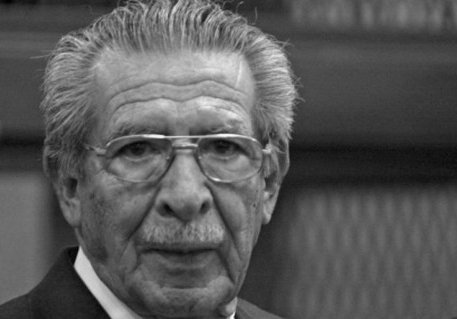
El genocidio perpetrado contra población Ixil de Guatemala será debatido en el segundo juicio seguido en contra del ex Presidente de facto Efraín Ríos Montt y el ex Director de inteligencia José Mauricio Rodríguez Sánchez.
El juicio está por reiniciarse el 23 de julio. Lamentablemente, este segundo juicio ya se ha visto afectado por diferentes hechos, que a continuación describimos.
La recusación de la jueza Presidenta del Tribunal B de Mayor Riesgo, debido a la redacción de su tesis doctoral sobre el delito de Genocidio, no debió de haber sido aceptada por no existir una causa razonable, ya que dicho trabajo de tesis se relaciona con su formación académica especializada en justicia de transición.
Posteriormente, la jueza fue sustituida por un juez que ha evidenciado relaciones de amistad a través de las redes sociales con uno de los abogados defensores del acusado Ríos Montt (photo).
Nuevamente la defensa busca que por lo menos un juez “amigo” integre el tribunal. A ello se suma el hecho de que recientemente el Instituto Nacional de Ciencias Forenses (INACIF) emitió un informe que hace referencia al supuesto problema de salud física y mental del acusado Ríos Montt.
La CIJ de la manera más enérgica expresa que estos actos son parte de una estrategia que tiene como propósito eludir la acción de la justicia.
La CIJ considera que ello constituye una violación al derecho de las víctimas al acceso a la justicia y contra el derecho a un juicio justo, libre de intromisiones de todo actor externo.
La CIJ se permite recordar al Poder Judicial que el combate a la impunidad de acuerdo con los estándares internacionales la justicia debe obedecer a tres imperativos: juzgar y sancionar a los responsables de graves crímenes, como el genocidio; satisfacer el derecho de las víctimas a conocer lo sucedido y obtener reparación integral; y fortalecer la independencia de las autoridades judiciales.
El supuesto problema de salud física y mental del acusado Ríos Montt podría ser solo una simulación, para evitar que sea nuevamente llevado a juicio.
Al respecto, la CIJ denuncia las acciones violatorias del debido proceso realizadas una vez más, por la jueza Carol Patricia Flores, quien ordenó se le practicasen exámenes médicos a Ríos Montt, para averiguar acerca de su estado de salud físico y mental.
Esta orden de la jueza Flores es ilegal, debido a que el proceso ya se encontraba a cargo del tribunal de Sentencia Penal B de Mayor Riesgo y ella carecía de competencia para ordenar tal medida.
La CIJ insta a los jueces a ejercer su poder de contralores del proceso penal, rechazando todos los actos de litigio de mala fe que sean promovidos por la defensa de los procesados.
Se requiere que los jueces a cargo del juicio se encuentren libres de toda presión externa que pueda intimidarlos en su función.
Para garantizar su independencia deben contar con el apoyo de la Corte Suprema de Justicia, quien debe velar por su seguridad y por el desarrollo del proceso en un marco de respeto.
Ramón Cadena, Director de la CIJ para Centro América, expresó: “Otra vez estamos ante una serie de medidas dilatorias, que demuestran que existen jueces que se prestan a promover la impunidad de graves violaciones a los derechos humanos.”

Jun 11, 2015 | News
Durante los días 8 y 11 de Junio una misión de la CIJ ha visitado Uruguay para discutir con autoridades, víctimas y la sociedad civil el estado de la lucha contra la impunidad para las violaciones de los derechos humanos cometidas durante el periodo dictatorial.
Mar 31, 2015 | News
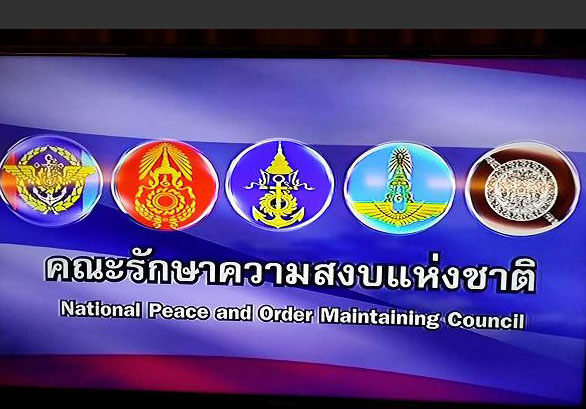
Thailand must lift martial law and return the country to civilian rule, instead of invoking arbitrary powers under Article 44 of the country’s interim constitution, said the ICJ today.
Today, Prime Minister and head of the ruling National Council for Peace and Order (NCPO), General Prayut Chan-o-cha, announced that he had submitted a revocation of the Martial Law, imposed nationwide on 20 May 2014, to King Bhumibol Adulyadej.
Gen. Prayut stated that in place of Martial Law, he would invoke Article 44 of the Interim Constitution, which effectively gives him the authority to rule without any legal restrictions or accountability.
“Ending Martial Law is a necessary step, but replacing it with Article 44 does not address the serious violations of Thailand’s obligations under international human rights law. Article 44 of the Interim Constitution is drafted so broadly that it could give the head of the junta even greater powers than Martial law,” said Wilder Tayler, Secretary General of the ICJ. “Article 44 would allow the head of the NCPO to issue any orders he wishes under the pretext of strengthening public unity and national security, and also deems any such order to be legal and constitutional, removing any possibility of judicial oversight.”
Article 44 of the interim Constitution gives the NCPO power to give any order deemed necessary for “…the benefit of reform in any field and to strengthen public unity and harmony, or for the prevention, disruption or suppression of any act which undermines public peace and order or national security, the Monarchy, national economics or administration of State affairs …,” and provides that any such order “…is deemed to be legal, constitutional and conclusive…”
“Article 44 violates the fundamental pillars of the rule of law and human rights, including equality, accountability, and predictability. Article 44 could potentially allow for arbitrary rule by the head of the NCPO, so using it would not be a real improvement over the Martial Law, which at least has been in existence since 1914, and has a degree of clarity to its scope and application,” said Tayler.
“The NCPO should revoke Martial Law and also explicitly commit itself to observing Thailand’s international obligations, which means avoiding any use of Article 44,” he added.
International law strictly regulates attempts by governments to suspend or restrict protection for human rights on grounds of emergency.
Such “derogations” are permissible under Article 4 of the International Covenant on Civil and Political Rights (ICCPR), to which Thailand is a State Party, only “in time of public emergency which threatens the life of the nation”.
“The situation in Thailand does not meet the extremely high threshold required for derogating from international human rights law,” said Tayler. “Thai authorities have repeatedly promised a rapid return to the rule of law and respect for human rights in the country, but replacing Martial Law with rule by Article 44 doesn’t suggest an improvement for the rule of law or respect for human rights.”
Thailand-Martial Law-Article 44-News-Press release-2015-THA (Thai version, full text in PDF)