Nov 17, 2015 | News
La CIJ demanda a las autoridades guatemaltecas terminar con la impunidad que rodea el caso Siekavizza.
La CIJ ante la impunidad prevaleciente en el caso Siekavizza expresa:
El llamado “caso Siekavizza” constituye un caso paradigmático de femicidio supuestamente cometido por el esposo de la víctima Cristina Siekavizza, el 16 de julio de 2011. El cuerpo de la víctima no ha aparecido hasta ahora.
- Por las circunstancias que rodean este caso la CIJ ha solicitado reiteradamente que éste sea conocido por la Comisión Internacional contra la Impunidad en Guatemala (CICIG); no solo porque el principal sospechoso es hijo de una ex Presidenta de la Corte Suprema de Justicia, sino porque existen elementos suficientes para considerar que puede haber existido una conjura criminal para mantener el caso en la impunidad.
- Desde que se dieron los hechos tan deplorables, el Sistema de Justicia de Guatemala mostró ineficiencia y falta de voluntad política para esclarecer los hechos y llevar ante la justicia al o a los supuestos responsables. Las autoridades estatales no adoptaron las medidas necesarias para llevar a cabo una investigación eficiente y rápida.
- Lo anterior permitió que se afectara la escena del crimen y que el presunto responsable se refugiara en otro país y escapara a la justicia.
- Los cuatro años de impunidad que lleva el caso, han provocado un profundo pesar a los familiares de Cristina Siekavizza a quienes en su momento, el Estado deberá resarcir los daños causados.
- Este es tan solo uno de los miles de casos criminales que se mantienen en la impunidad frente a la pasividad de las autoridades correspondientes. En general la justicia en Guatemala sigue seriamente afectada por altos índices de impunidad.
Wilder Tayler, Secretario General de la Comisión Internacional de Juristas con sede en Ginebra, Suiza expresó: “Seguiremos observando el desarrollo de este caso; hacemos un enérgico llamado a todos los operadores de justicia involucrados, para que pongan el más riguroso empeño para permitir esclarecer un crimen tan grave. La impunidad que rodea el caso debe superarse cuanto antes.”
Oct 26, 2015 | News
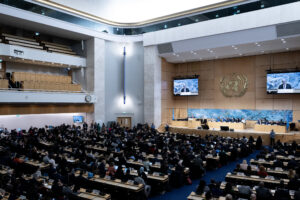
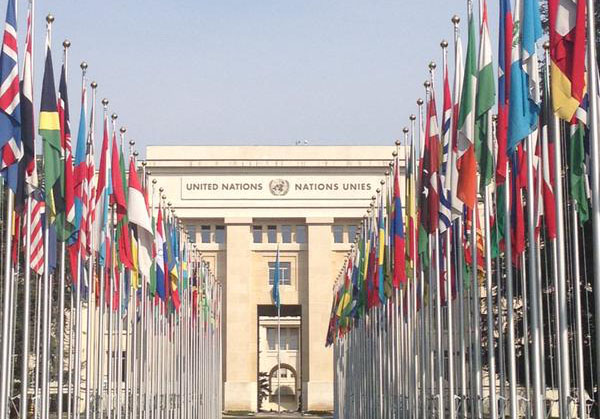
Myanmar’s human rights record for the past four and a half years will be under scrutiny at the United Nations (UN) Human Rights Council (HRC), as the country goes up for its Universal Periodic Review (UPR) review on 6 November 2015.
Myanmar will be assessed on developments based on information provided by the government, UN human rights experts, institutions and treaty bodies; and stakeholders including Non-Governmental Organizations (NGOs).
The eleventh round of Pre-Sessions to discuss the human rights situations in Myanmar was held on 8 October 2015 and was organized by UPR-Info.
The event brought together various permanent missions and various Myanmar civil society organizations (CSOs) that presented their respective UPR recommendations.
This event also provided NGOs, including the ICJ, with an opportunity to contribute to the UPR process by informing several delegations at once about specific, actionable recommendations to the government to effectively address human rights violations and provide redress.
In its UPR stakeholder submission, the ICJ drew the attention of the HRC Working Group on the UPR, and that of the HRC itself, to the ICJ’s concerns about the independence of the judiciary and legal profession, the lack of legislation adequately protecting human rights and the environment, discriminatory laws targeting women and minorities, and the writ of habeas corpus in Myanmar.
The Office of the Commissioner for Human Rights referred to these issues in its summary to the HRC Working group on the UPR.
UPR discussions in Geneva led by NGOs reiterated that despite reforms, significant human rights challenges remain in Myanmar. These include, but are not limited to, the following:
- During its first UPR in 2011, Myanmar had supported recommendations to consider signing and ratifying core human rights treaties, but has made no significant progress;
- A recent parliament veto reserves the 25% of the seats in the legislative bodies for the military, thus continuing military impunity and preserving their hold over any constitutional or legislative amendment;
- The Myanmar National Human Rights Commission suffers from low credibility due to its lack of autonomy from the government and failure to investigate egregious human rights violations;
- The package of “race and religion protection” laws comes at a time of increasing ethnic and religious tension, and discriminates on grounds of gender and religion. Discrimination against religious minorities has led to mass displacement, deaths and rights violations;
- Lesbian, Gay, Bisexual and Transgender rights are routinely violated;
- The Environmental Conservation Law allowed government departments and private business abroad exemptions from environmental protection obligations;
- Judicial independence is compromised as judges in some instances still render decisions based on orders coming from military and the government.
Contact:
Vani Sathisan, ICJ International Legal Adviser, Myanmar, t: +95-09250800301; e: vani.sathisan(a)icj.org
The ICJ’s UPR stakeholder submission for Myanmar can be found here
The OHCHR summary to the UN Working Group for the UPR can be found here
Oct 12, 2015 | News
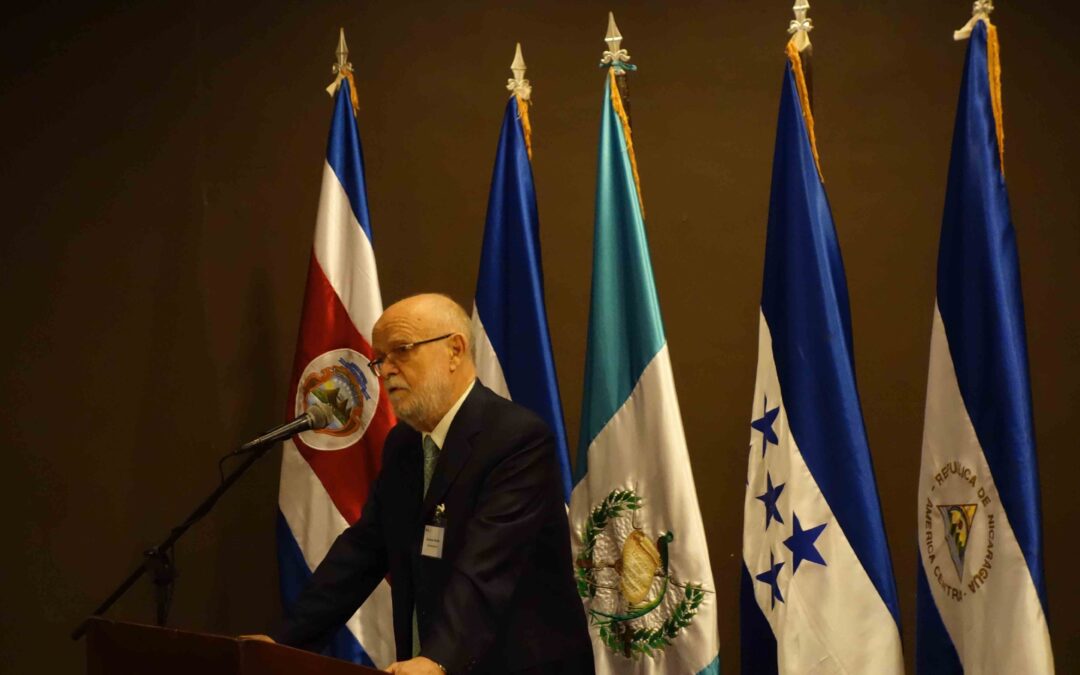
In coordination with the Norwegian Judges’ Association and the Guatemalan Mayan Bar Association, the ICJ inaugurated today a two-day Conference in Guatemala City.
The Conference was inaugurated by Jan Gerhard Lassen (the Norwegian Ambassador for Guatemala), Josué Baquiax Baquiax (President of the Supreme Court ), ICJ Commissioner José Antonio Martín Pallín and Director of the ICJ in Central America, Ramón Cadena.
The main topics of discussion were the need to strengthen the judicial career, and associationism.
Guatemala currently has only one formal judge´s association, which was identified by the speakers at the Conference as not consistently acting in the best interests of independent judges, necessitating the creation of an alternative association.
In terms of the judicial career, judges from around the region discussed the changes necessary to the law in Guatemala to ensure that judges are protected from undue pressures coming from outside, and within the judiciary.
The Conference concludes tomorrow with a public forum which will showcase the results of two forthcoming ICJ studies on judicial independence and specialized justice.
Sep 21, 2015 | Advocacy, Non-legal submissions
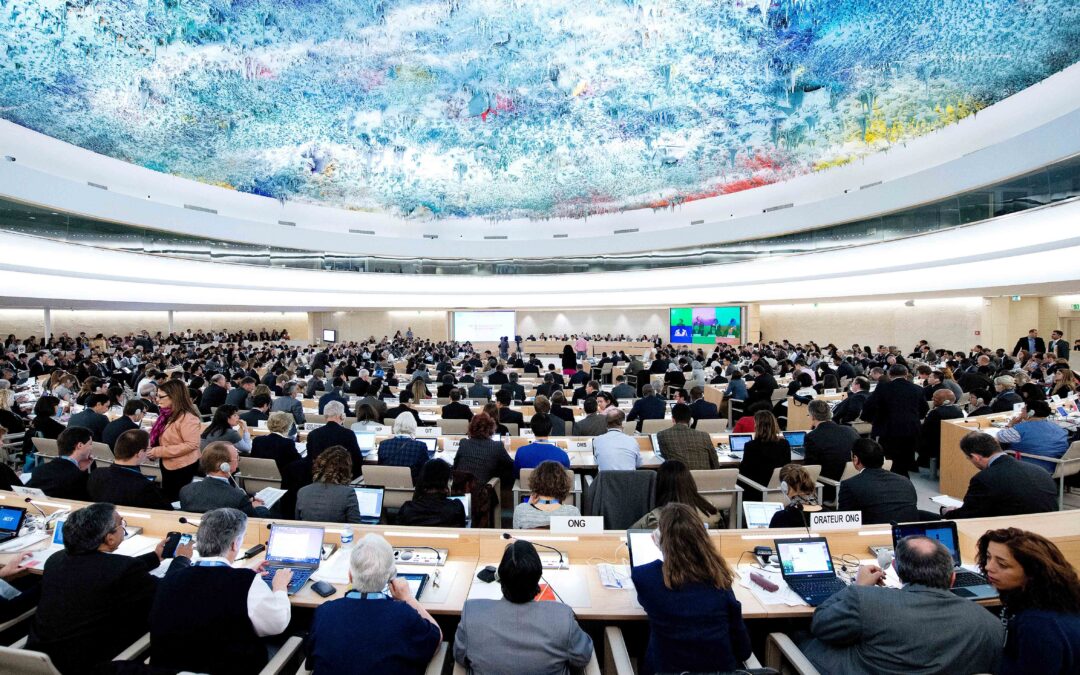
The ICJ today delivered an oral statement at the UN Human Rights Council during the Interactive Dialogue with the Commission of Inquiry on the Syrian Arab Republic concerning accountability and other measures to address the Syrian conflict.
In the statement the ICJ called upon the UN Human Rights Council and the Security Council to respond to the findings of the 10th report of the Syria Commission of Inquiry, including with a view to ensuring accountability for the serious violations of international law.
The ICJ also called upon all states to comply with their obligations under international law vis-à-vis the Syrian conflict, including by searching for all those responsible for international crimes committed in this conflict and bringing them before their own courts, and by protecting the rights of Syrian refugees and abiding by the principle of non-refoulement.
The full statement may be downloaded in PDF format, here: Syria-UN-HRC30-OralStatement-Advocay-non legal submission-2015-ENG
Aug 17, 2015 | News
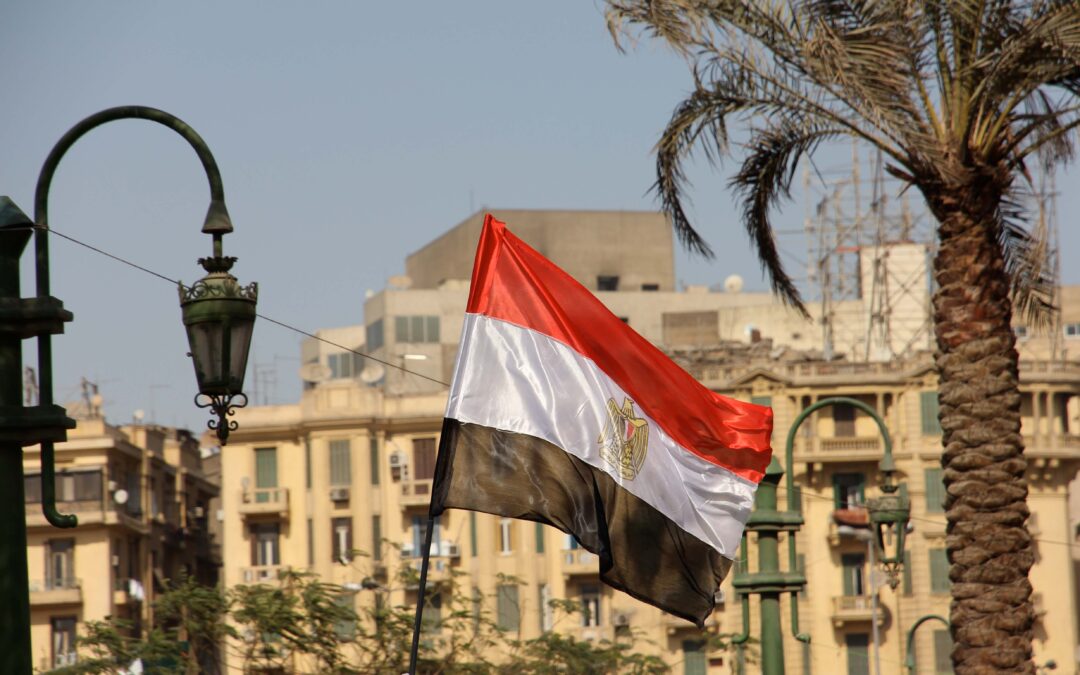
The ICJ today condemned the promulgation of the Counter-Terrorism Law by the Egyptian President, Abdel Fattah el-Sisi, as a new, repressive move that would erode the rule of law and brush aside fundamental legal and human rights guarantees.
Calls to revise the draft Counter-Terrorism Law by the ICJ and other international and national human rights organizations and stakeholders, including Egypt’s quasi-governmental National Human Rights Council, were disregarded.
“The promulgation of the Counter-Terrorism Law by President el-Sisi expands the list of repressive laws and decrees that aim to stifle dissent and the exercise of fundamental freedoms,” said Said Benarbia, Director of the ICJ’s Middle East and North Africa Programme.
“Egypt’s authorities must ensure the law is not used as a tool of repression and, to this end, comprehensively revise it so that it fully complies with international human rights law and standards,” he added.
In a position paper published on 9 July, the ICJ detailed how the law is inconsistent with, and in numerous ways violates, Egypt’s obligations under international law, including those relating to the right to life, the right to liberty and not to be subjected to arbitrary detention, the right to privacy, and fair trial rights.
Further, the law gives state officials broad immunity from criminal responsibility for the use of force in the course of their duties, including the use of lethal force when it is not strictly necessary to protect lives, grants sweeping surveillance and detention powers to prosecutors, entrenches terrorism circuits within the court system (which have in the past frequently involved fair trial violations), and grants the President far-reaching, discretionary powers to “take the necessary measures” to maintain public security, where there is a “danger of terrorist crimes.”
Contact:
Alice Goodenough, Legal Adviser, ICJ Middle East and North Africa Programme, t: +44 7815 570 834; e: alice.goodenough(a)icj.org
Nader Diab, Associate Legal Adviser, ICJ Middle East and North Africa Programme, t: +41 229 793 804; e: nader.diab(a)icj.org
Egypt-Counter-Terrorism Law Promulgated-News-Press releases-2015-ARA (full text in pdf, ARABIC)