Mar 25, 2015 | Advocacy, Non-legal submissions
La Comisión Colombiana de Juristas afiliada a la Comisión Internacional de Juristas resaltan el valioso aporte de la Oficina del Alto Comisionado durante estos 18 años en Colombia.
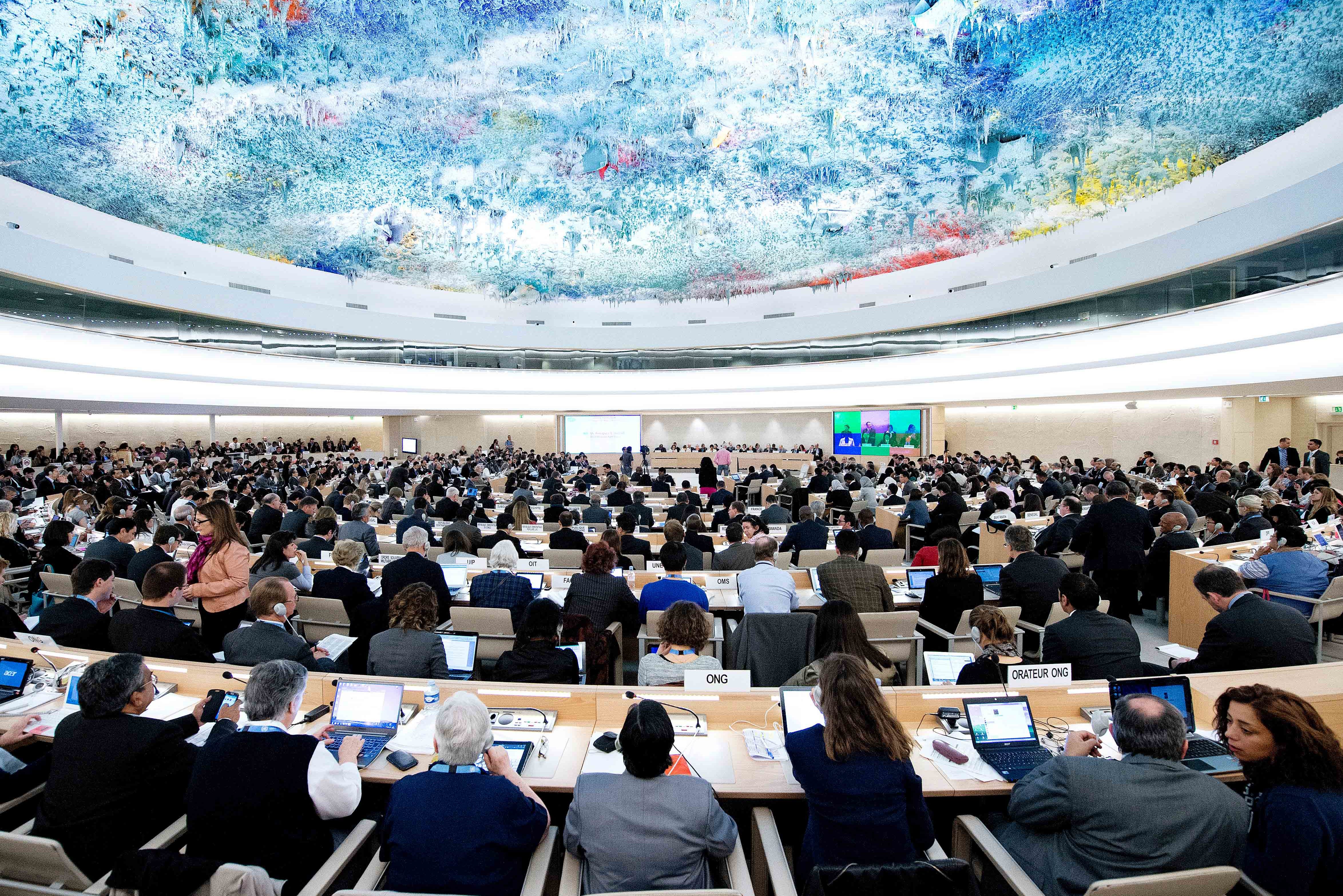
25° período de sesiones, Consejo de Derechos Humanos de Naciones Unidas
Tema 2 de la agenda, Informe anual de la Alta Comisionada de las Naciones Unidas para los Derechos Humanos sobre la situación de derechos humanos en Colombia (A/HRC/28/3/Add.3)
Situación de derechos humanos en Colombia
25 de marzo de 2015
Señor Presidente:
La Comisión Colombiana de Juristas afiliada a la Comisión Internacional de Juristas resaltan el valioso aporte de la Oficina del Alto Comisionado durante estos 18 años en Colombia: tiene oficinas en varias regiones y trabaja con comunidades afectadas por el conflicto armado; ha contribuido “a cambios positivos a través de su observación, incidencia, declaraciones públicas, buenos oficios y cooperación técnica”; “[h]a presentado informes periódicos a entidades gubernamentales; ha actuado como garante en conflictos (…); ha interactuado a diario con el Estado y la sociedad civil para encontrar soluciones a los desafíos de derechos humanos (…); y ha contribuido al fortalecimiento de las instituciones” (párrafo 2).
Pese a ciertos avances en derechos humanos, el Informe anual resalta los retos en materia de implementación, falta de voluntad política para aceptar la responsabilidad por violaciones del pasado1, desigualdades económicas y “un acceso asimétrico a los derechos y a los servicios públicos” (párrafo 14). Además, Colombia todavía actúa en contra de sus obligaciones internacionales, como sucede con el derecho a la consulta previa (párrafo 26) o la ampliación de la justicia militar (párrafo 60). Adicionalmente, Colombia no recibe procedimientos especiales desde 2010, aunque cuenta con una invitación permanente y seis mandatos han solicitado visita2.
Después de 18 años invertidos en el país, la Oficina sigue siendo los ojos de la comunidad internacional para derechos humanos, y el acompañante o asesor del Estado en el diseño de sus políticas (párrafos 16, 29, 34, 60).
Según el Informe, el Gobierno y las FARC-EP han logrado avances sin precedentes para poner fin al conflicto armado (párrafo 6). Si “[l]a perspectiva de una salida negociada al conflicto (…) y el crecimiento económico proporcionan una oportunidad única para ampliar la presencia del Estado, hacer frente a la desigualdad y mejorar la situación de los derechos humanos” (párrafo 19), indiscutiblemente la Oficina del Alto Comisionado en Colombia es una inversión clave, y no es de corto plazo.
Gracias señor Presidente.
1 El párrafo 58 dice: “El rechazo de responsabilidades por parte de las fuerzas armadas y de sus superiores políticos perpetúa la impunidad, socava la legitimidad institucional y erosiona el estado de derecho”.
2 Colombia cuenta con una invitación permanente a los procedimientos especiales de la ONU desde el 17 de marzo de 2003. Sin embargo, desde inicios de 2012 no ha aceptado ninguna visita, aunque los mandatos sobre extrema pobreza, personas internamente desplazadas, violencia contra la mujer, afrodescendientes, mercenarios y alimentación han solicitado visitar el país.

Mar 20, 2015 | Advocacy, Non-legal submissions
Today, the ICJ made a submission to the Universal Periodic Review of Nepal.
The submission brings to the attention of the members of the Human Rights Council’s Working Group issues concerning:
- The establishment of credible transitional justice mechanisms;
- The need to reform Nepali criminal law to ensure that certain serious crimes under international law are fully criminalized domestically;
- The on-going need to address the countless incidents of sexual violence committed during the armed conflict;
- The need to take steps to end impunity; and,
- The right to an effective remedy.
Nepal-UPR-Advocacy-2015-ENG

Mar 12, 2015 | News
Thailand must live up to its repeated promises to bring justice to the case of Somchai Neelapaijit, who was forcibly disappeared eleven years ago today, said the ICJ.
In multiple statements since Somchai Neelapaijit was abducted on a street in central Bangkok, the Royal Thai Government has pledged to resolve the case.
Before the United Nations Human Rights Council in May 2008, the Royal Thai Government pledged “to do its utmost and leave no stone unturned in order to bring to justice the case of Mr Somchai.”
In April 2014, Thailand gave assurances to the UN Committee that monitors the implementation of the Convention Against Torture in Geneva that the Department of Special Investigations (DSI) was continuing to investigate Somchai Neelapaijit’s case without any interference.
“Despite the passage of eleven years, Thai authorities have not carried out a comprehensive investigation or exhausted the possible sources of evidence,” said Sam Zarifi, ICJ’s Regional Director for Asia and the Pacific. “What is required is the DSI’s real and determined effort to identify the perpetrators and bring them to justice.”
Thailand signed, but has not yet ratified, the Convention Against Enforced Disappearance in January 2012.
Pending the ratification, Thailand must desist from any acts that would defeat the objective and purpose of the Convention, which among other things places an obligation on State Parties to make enforced disappearance a criminal offence, to thoroughly and impartially investigate cases, bring those responsible to justice and treat family members of a ‘disappeared’ person as victims in their own right.
Promisingly, the Ministry of Justice is in the process of drafting a Torture and Enforced Disappearance Prevention and Suppression Bill, which, in its current form, defines and criminalizes enforced disappearance and torture in Thailand.
“This new law must ensure there is no statute of limitations on enforced disappearance, which is not only a serious human rights violation but also a crime under international law,” added Zarifi. “Somchai’s fate and whereabouts remain unresolved, and his family continue to demand truth and justice from the authorities.”
To mark the 10-year anniversary of Somchai Neelapaijit’s “disappearance”, the ICJ released a report Ten Years Without Truth: Somchai Neelapaijit and Enforced Disappearances in Thailand, in which it documented the tortuous legal history of the case.
The report highlighted several key problems, such as poor use of forensic evidence, failure to follow and develop leads, unduly restrictive interpretation of national and international law, and above all, a lack of political will to resolve a case that remains emblematic of the culture of impunity in Thailand.
Contact
Sam Zarifi, ICJ Asia-Pacific Regional Director, (Bangkok), t:+66 807819002, e-mail: sam.zarifi(a)icj.org
Sep 26, 2014 | News
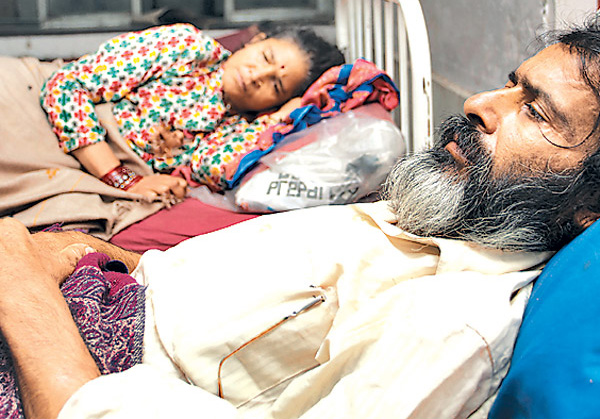
The government of Nepal has failed for over a decade to deliver justice for the killing of Krishna Prasad Adhikari. In protest his father, Nanda Prasad Adhikari, died on September 22, 2014, after over 300 days on hunger strike, the ICJ and Human Rights Watch said today.
Nanda Prasad Adhikari and his wife, Ganga Maya Adhikari (photo), began their hunger strike on October 23, 2013, to protest the failure of successive Nepali governments to ensure a credible investigation of the killing in 2004 of their son, allegedly by members of the United Communist Party of Nepal–Maoists (UCPN-M).
The ICJ and Human Rights Watch call on the Nepali government to protect the human rights of Ganga Maya Adhikari, who is reported to be in critical but stable condition in Kathmandu’s Bir Hospital. She continues to refuse food even after her husband’s death.
“Nanda Prasad Adhikari made the ultimate sacrifice in the pursuit of justice for his son, but it should never have come to this sad moment,” said Sam Zarifi, ICJ’s Regional Director for Asia and the Pacific. “The Adhikari couple symbolize the thousands of people in Nepal who demand justice for the violations and abuses they suffered at the hands of the government’s armed forces as well as the Maoists.”
Despite several promises by the government, there has been little movement towards accountability for Krishna Adhikari’s death.
In September 2013, after initial protests by the Adhikari couple, Nepali authorities announced that they would follow the Supreme Court’s directive to investigate the killing.
One year later, in April 2014, the Chitwan District Attorney filed charges against 13 people allegedly involved in the killing of Krishna Prasad Adhikari.
But when two men were arrested and produced in court, UCPN-M leaders protested, with leader Babu Ram Bhattarai saying publicly that if Parsuram Poudel, one of the accused, could be arrested, the government should arrest Bhattarai as well.
After three days of protests and threats by the UCPN-M, the Chitwan District Court granted bail to the two suspects. The case is still pending in court.
Throughout this period, the Adhikaris continued their hunger strike, pointing out serious flaws and shortcomings in the investigation carried out by Nepali authorities.
“Nepali politicians should stop making empty promises and investigate all allegations of human rights abuses and violations during the conflict,” said Brad Adams, Asia director for Human Rights Watch. “Nanda Prasad Adhikari’s death highlights Nepal’s flawed attempts at reconciliation and redress for conflict-era crimes, and looks like a desire to sweep all wartime injustice under the rug.”
The Comprehensive Peace Accord (CPA) that ended the conflict in 2006 explicitly recognizes Nepal’s obligations under international human rights law without reservation.
The CPA is unequivocal about the need to investigate and prosecute human rights violations in line with Nepal’s laws.
A promised Truth and Reconciliation Commission remains stalled, and the draft legislation to promulgate it is deeply flawed.
The ICJ and Human Rights Watch call on Nepali authorities to continue investigations and prosecutions for Krishna Adhikari’s death, as well as hundreds of unresolved cases of enforced disappearances and extrajudicial executions.
Contact:
Sam Zarifi, ICJ’s Regional Director for Asia and the Pacific, t +66-807-819-002 (mobile); e: sam.zarifi(a)icj.org