May 11, 2021 | News
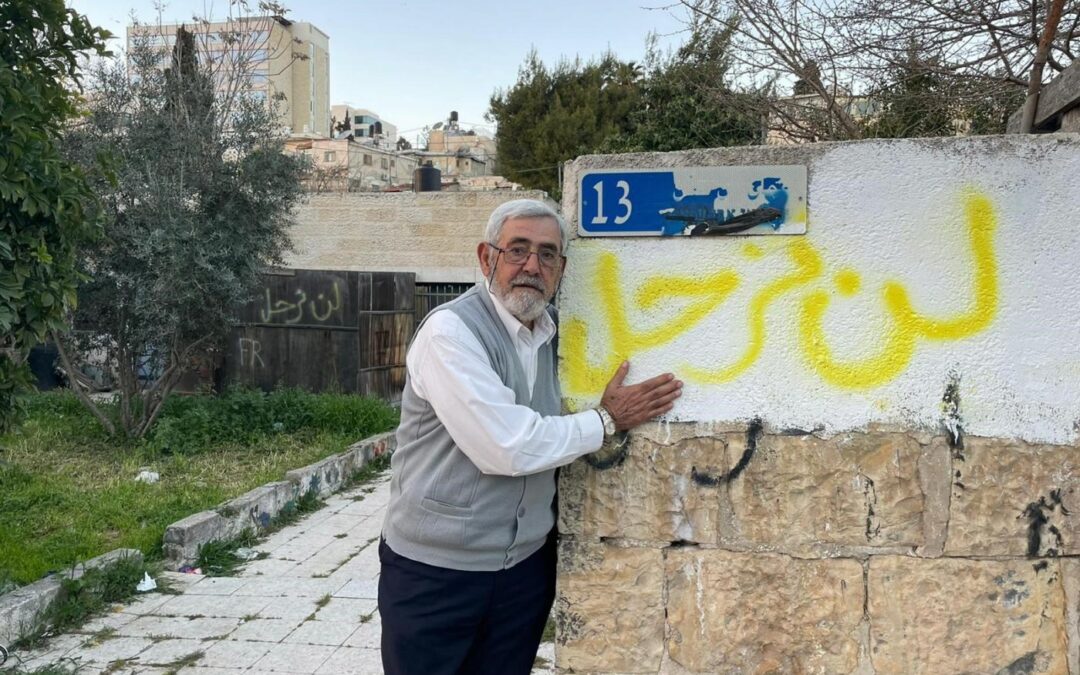
The International Criminal Court (ICC) must immediately investigate the forced eviction of Palestinian families and residents in Sheikh Jarrah and other neighbourhoods in East Jerusalem, as well as any indiscriminate and disproportionate attacks against civilians in the Gaza Strip, the ICJ said today.
The investigation must establish whether any serious violation of international humanitarian law, such as indiscriminate or disproportionate attacks against civilians, the forced deportation of Palestinians and the transfer of Israeli settlers into occupied East Jerusalem, as well as the extensive destruction and appropriation of property, have taken place in Sheikh Jarrah and in Gaza. Following the opening of an investigation by the ICC Office of the Prosecutor, if warranted, Israeli officials should be prosecuted for such crimes to ensure accountability. As confirmed by the ICC Pre-Trial Chamber I, the Court’s territorial jurisdiction “extends to the territories occupied by Israel since 1967, namely Gaza and the West Bank, including East Jerusalem.”
Evictions against Palestinians in Sheikh Jarrah were ordered by the Jerusalem District Court following legal proceedings initiated by Israeli settlers organizations under Israeli law. The Supreme Court was due to rule on 10 May 2021 on challenges against evictions brought by Palestinian families, yet, it decided to postpone the hearing at the request of Israel’s Attorney-General.
“Evictions in Sheikh Jarrah are part of a cynical campaign by the Israeli authorities to purge occupied East Jerusalem from its Palestinian civilian population,” said Said Benarbia, the ICJ MENA Director.
The ICC must also ensure accountability for unlawful attacks targeting civilians and civilian objects in connection to the hostilities between Israel and Palestinian armed groups in Gaza. Since 2007, Israel has imposed a full closure on Gaza, which has resulted in a major humanitarian crisis, and has led to significant escalation of hostilities in 2008-09, 2012 and 2014, where thousands of Palestinians have been killed and injured. On 10 May 2021, Hamas started firing rockets against Israel following a crackdown on Palestinian worshippers in the al Aqsa compound in Jerusalem. In response, Israel has carried out multiple airstrikes in Gaza, which have reportedly caused the death of at least 24 people, including nine children. All parties to the conflict are prohibited from conducting indiscriminate and disproportionate attacks, which may amount to war crimes under the Rome Statute.
“The ICC must ensure that all those responsible for ordering and carrying out these attacks be held criminally accountable,” Benarbia added.
Since April 2021, Palestinians peacefully demonstrating against the evictions in Sheikh Jarrah, a decades-long legal battle, have been subjected to violence by Israeli settlers and Israeli security forces. Earlier this year, the Jerusalem District Court ordered that several Palestinian families be evicted from the neighborhood. According the UN Office of the High Commissioner for Human Rights, “at least 218 Palestinian households in East Jerusalem, including the families in Sheikh Jarrah, have eviction cases filed against them”, and overall “970 people, including 424 children, [are] at risk of displacement.”
As part of the Israeli crackdown on Palestinians, Israeli security forces have also been firing tear gas and employing other less-lethal weapons against people praying at the Al Aqsa mosque in Jerusalem purportedly in crowd-control operations. According to the Palestinian Red Crescent, more than 200 demonstrators have been injured as a result of the use of such less-lethal weapons.
Israeli forces have also been preventing gatherings of Palestinians at Damascus Gate in East Jerusalem during the night hours of the month of Ramadan when many Muslims gather for prayer and breaking of the fast at sunset, and have responded with excessive force to the ensuing demonstrations.
Israel has a duty to respect the right to peaceful assembly and freedom of religion of Palestinians in East Jerusalem. Israel’s use of excessive force against Palestinian demonstrators and the crackdown on Palestinian worshippers violate its obligations under international human rights law
“Israeli authorities must respect and ensure the right of Palestinians to protest and challenge decades of prolonged unlawful occupation and related abusive practices, and immediately end the use of disproportionate and unlawful force to disperse protesters”, Benarbia said.
Contact
Said Benarbia, Director, ICJ Middle East and North Africa Programme, t: +41-22-979-3817; e: said.benarbia(a)icj.org
Asser Khattab, Research and Communications Officer, ICJ Middle East and North Africa Programme, e: asser.khattab(a)icj.org
You can read this press release in Arabic here or download a PDF version of it in English here.
Mar 22, 2021 | Advocacy, Non-legal submissions
The ICJ joined today seven other organisation in a statement before the UN Human Rights Council expressing concern at the systematic human rights violation and the persistent impunity in the Philippines and calling for more accountability.
The joint statement delivered by FORUM ASIA reads as follows:
“Madam President,
Nearly six months since its adoption, Human Rights Council resolution 45/33 offering technical assistance to the Philippines has proven to be utterly insufficient to address the systematic human rights violations and persistent impunity documented in the High Commissioner’s report. The Philippine Government’s policies and actions since the Resolution’s adoption have been completely at odds with the commitments outlined in it.
Extrajudicial killings in the so-called ‘war on drugs’ have continued. To date, the Government has made no tangible progress towards accountability against those most responsible for such killings. In December 2020, the Office of the Prosecutor of the ICC found that there is “reasonable basis to believe that the crimes against humanity” of murder, torture, the infliction of serious physical injury and mental harm, and other inhumane acts were committed between at least 1 July 2016 and 16 March 2019.
Human rights defenders pursuing legitimate work, especially those who advocate for international accountability, including lawyers, continue to be attacked and accused of belonging to terrorist groups. Rights defenders continue to be arrested and jailed. The draconian Anti-terrorism Act, passed last year, exacerbates risks to defenders. The killing of nine human rights defenders and activists on 7 March, two days after President Duterte ordered the police and military to “finish off” and “kill” those purported to be “communist rebels”, illustrates clearly the persistent killings and attacks faced by activists and defenders. It is very clear that no amount of technical assistance or capacity building will end the killings as the President and top government officials continue to incite murder and violence as official policy.
In this context, it is imperative that the Council set up an international accountability mechanism to end the cycle of violence and impunity in the Philippines.
Thank you.”
The statement was endorsed by:
- Amnesty International
- Asian Forum for Human Rights and Development (FORUM-ASIA)
- CIVICUS: World Alliance for Citizen Participation
- Human Rigths Watch
- International Commission of Jurists (ICJ)
- International Federation for Human Rights (FIDH)
- Philippines Alliance of Human Rights Advocates (PAHRA)
- World Organisation Against Torture (OMCT)
Contact:
Massimo Frigo, ICJ UN Representative, e: massimo.frigo(a)icj.org, t: +41797499949
Mar 12, 2021 | News
Non-governmental organizations (NGOs) from around the world expressed their strong support today for a joint declaration by UN member states condemning the human rights situation in Egypt which was delivered at the UN Human Rights Council.
In the declaration governments expressed “deep concern” for widespread human rights violations committed with impunity by the Egyptian authorities.
The joint declaration, signed by 31 states and delivered by Finland at the Council’s 46th session highlighted “restrictions on freedom of expression and the right to peaceful assembly, the constrained space for civil society and political opposition.” It also condemned the use of counter-terrorism laws to punish peaceful critics.
“The March 12 declaration ends years of a lack of collective action at the UN Human Rights Council on Egypt, despite the sharply deteriorating human rights situation in the country,” said Bahey Hassan, Director of the Cairo Institute for Human Rights Studies. “Countries should continue to make it clear to the Egyptian government that it will no longer have a carte blanche to arbitrarily imprison, torture or violate the right to life or unlawfully kill people.”
More than 100 NGOs from around the world wrote to UN member states in early 2021, warning that the Egyptian government is attempting to “annihilate” human rights organizations and eradicate the human rights movement in the country through sustained, widespread, and systematic attacks.
The organizations had asked UN member states to adopt a resolution establishing a monitoring and reporting mechanism on Egypt. The declaration delivered on March 12 is a significant step and should be followed up by concrete action toward achieving this goal, the organizations said. The declaration was on the Council’s agenda under Item 4, which provides a space to raise concerns about grave and systematic human rights violations, including country-specific situations.
The last joint declaration on the human rights situation in Egypt at the Human Rights Council was delivered by Iceland and co-signed by 26 countries in March 2014.
Since that time the human rights situation in Egypt has deteriorated dramatically. The Egyptian authorities have virtually obliterated almost all space for free expression, peaceful assembly, and association. Under President Abdel Fattah al-Sisi’s rule security forces, with the complicity of prosecutors and judges, have arrested, detained or prosecuted thousands, including hundreds of human rights defenders, religious minorities’ rights activists, peaceful protesters, journalists, academics, artists, politicians and lawyers.
Many have been forcibly disappeared, tortured or otherwise ill-treated, and detained for months or years in inhumane conditions without trial. Those detained are regularly held on the basis of unfounded terrorism-related charges. If referred to trial individuals are often convicted in grossly unfair proceedings before military courts and through mass trials. Many have been sentenced to death and executed after unfair trials that have relied on statements likely obtained through torture. The authorities have also used morality and debauchery laws to arrest and detain women influencers, sexual violence survivors and witnesses, and LGBTI individuals and activists.
The UN Working Group on Arbitrary Detention has found that arbitrary detention is a systematic problem in Egypt. The UN Committee against Torture said in 2017 following an inquiry on Egypt that the facts gathered by the committee “lead to the inescapable conclusion that torture is a systematic practice in Egypt.”
“Today’s declaration sends a clear message to the Egyptian authorities that the world will no longer turn a blind eye to their relentless campaign to crush peaceful dissent. The authorities must take urgent action to comply with their obligations under international law, starting by releasing the thousands of men and women arbitrarily detained, protecting those in custody from torture and other ill-treatment, and ending the crackdown on peaceful activism, ” said Kevin Whelan, Amnesty International representative to the UN in Geneva.
In the March 12 joint declaration governments called for “accountability and an immediate end of impunity” for abuses. Governments also called on Egypt to cease “abuses of due process,” the excessive use of “extended pre-trial detention,” and “the practice of adding detainees to new cases with similar charges after the legal limit for pre-trial detention has expired.”
Governments that have joined the declaration, led by Finland, include: Australia, Austria, Belgium, Bosnia and Herzegovina, Bulgaria, Canada, Costa Rica, Czech Republic, Denmark, Estonia, France, Germany, Iceland, Ireland, Italy, Latvia, Liechtenstein, Lithuania, Luxembourg, Montenegro, the Netherlands, New Zealand, North Macedonia, Norway, Slovenia, Spain, Sweden, Switzerland, the United Kingdom, and the United States of America. Other governments can join the declaration until two weeks after the end of the current Human Rights Council session.
“Bringing the human rights situation in Egypt to the attention of the Human Rights Council and properly addressing these abuses is of fundamental importance to ensure Egypt’s long-term stability and the dignity of its people,” said John Fisher, Geneva Director at Human Rights Watch.
The Co-signing organizations to this statement include:
Amnesty International, Arab Network for Knowledge and Human Rights (ANKH), Artists at Risk (AR), Association of juridical studies on Immigration (ASGI), The Cairo Institute for Human Rights Studies (CIHRS), le Comité de Vigilance pour la Démocratie en Tunisie, Committee for Justice, Democracy for the Arab World Now (DAWN), DIGNITY – Danish Institute Against Torture, The Egyptian Front for Human Rights, Egyptian Human Rights Forum, EuroMed Rights, The Freedom Initiative, Freedom House, Human Rights Watch (HRW), humanrights.ch, International Federation for Human Rights (FIDH), The International Commission of Jurists (ICJ), International Service for Human Rights (ISHR), MENA Rights Group, Minority Rights Group International, MTÜ Andalus Institute for Tolerance and anti-Violence Studies, The Project on Middle East Democracy (POMED), Réseau des Organisations de la Société Civile pour l’Observation et le Suivi des Elections en Guinée, PEN International, People in Need, Robert F. Kennedy Human Rights, Tunisian Coalition to Abolish the Death Penalty
Download
Press release in English and Arabic.
Q&A in English.
Contact
Said Benarbia, International Commission of Jurists (Geneva) – said.benarbia@icj.org
Jeremie Smith, Cairo Institute for Human Rights Studies (Geneva) – jsmith@cihrs.org
Neil Hicks, Cairo Institute for Human Rights Studies (New York) – nhicks@cihrs.org
John Fisher, Human Rights Watch (Geneva) – fisherj@hrw.org
Amr Magdi, Human Rights Watch (Berlin) – magdia@hrw.org
Kevin Whelan, Amnesty International (Geneva) – kevin.whelan@amnesty.org
Sara Hashash, Amnesty International (London) – Sara.Hashash@amnesty.org
Rasmus Grue, Christensen, DIGNITY – Danish Institute Against Torture – rgc@dignity.dk
Antoine Madelin, International Federation for Human Rights (Paris), amadelin@fidh.org
Mohammed Soltan, The Freedom Initiative – Soltan@thefreedomi.org
Mar 4, 2021 | News
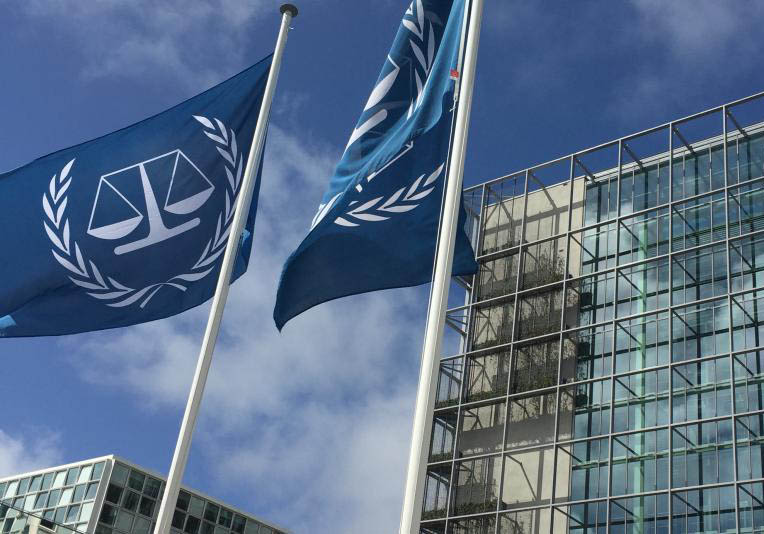
Israeli and Palestinian authorities should immediately grant the International Criminal Court unhindered access to Palestinian territory to investigate alleged crimes under international law committed by all parties to the conflict, the International Commission of Jurists said today.
The International Criminal Court’s prosecutor yesterday announced the initiation of an investigation into “war crimes [that] have been or are being committed in the West Bank, including East Jerusalem, and the Gaza Strip.”
“Israel, the United States and other States must refrain from any efforts undermining the Office of the Prosecutor and the integrity of its investigation,” said Said Bearbia, ICJ’s MENA programme director. “Rather, they should comply with universally recognized norms on the independence and impartiality of judges and prosecutors.”
The ICJ calls on all states and concerned organizations to cooperate fully with and provide any necessary assistance to Office of the Prosecutor in carrying out its investigation.
The Israeli and Palestinian authorities, in particular, should grant the Office of the Prosecutor and its members unhindered access to all Palestinian territory without delay, and allow them to visit sites, meet and speak freely and privately with victims and witnesses, and access any relevant documentation or records.
It is critical that the ICC’s investigators and prosecutors, like any other investigators and prosecutors, should be able to perform their professional functions independently, impartially, diligently and without intimidation, hindrance, harassment or improper interference.
“The ICC investigation offers a unique opportunity to begin addressing the structural impunity that prevails over past and ongoing crimes under international law in Palestine,” Benarbia added. “It’s a crucial initial step in the realization of the victims’ rights to justice, truth and reparations.”
On 5 February 2020, the ICC decided it can assert its jurisdiction over serious crimes alleged to have occurred in the State of Palestine since 13 June 2014.
On 16 March 2020, the ICJ submitted amicus curiae observations in support of the Court’s territorial jurisdiction.
Find the Press Release in Arabic here: PalestineIsrael-PR-ICC-ARA2-2021
Contact:
Said Benarbia, Director, ICJ Middle East and North Africa Programme; t: +41 22 979 3817 e: said.benarbia(a)icj.org
Asser Khattab, Research and Communications Officer, ICJ Middle East and North Africa Programme, asser.khattab@icj.org
Feb 25, 2021 | Advocacy, Non-legal submissions
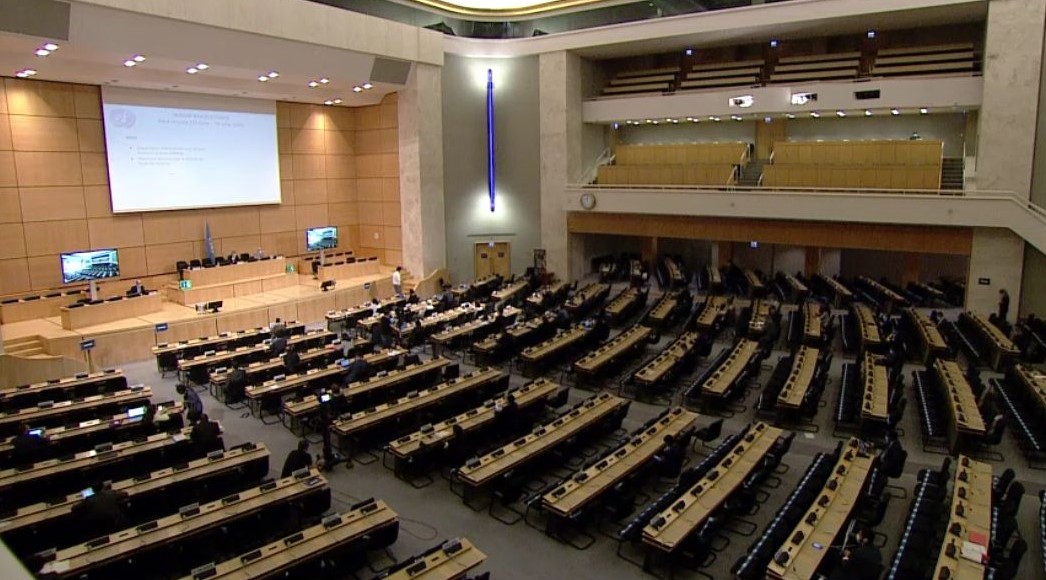
The ICJ today addressed the UN Human Rights Council in the Interactive Dialogue on the Report of the Office of the High Commissioner for Human Rights on Promoting reconciliation, accountability and human rights in Sri Lanka.
The statement reads as follows:
“Madam President,
The ICJ welcomes the comprehensive OHCHR report on Sri Lanka.
We share OHCHR’s observation that domestic initiatives for accountability have repeatedly failed to produce results, ‘more deeply entrenching impunity, and exacerbating victims’ distrust in the system.’ [A/HRC/46/20, pp. 52]
The ICJ has continuously observed that Sri Lanka’s incapacity and unwillingness to pursue accountability for crimes under international law is deep-rooted and longstanding.
The extensive militarization of civilian functions, the reversal of constitutional safeguards, the obstruction of the rare cases of domestic criminal accountability and the deteriorating human rights situation all point to a systemic culture of impunity that will only worsen in the years to come.
Sri Lanka’s failure to establish a hybrid accountability mechanism in the five years since the adoption of Resolution 30/1 demonstrates a complete lack of political will to hold perpetrators accountable. The rights of the victims of human rights violations cannot be ignored any longer.
The ICJ endorses all of OHCHR’s recommendations, particularly the call for international and external accountability processes, whether before the ICC or through the exercise of universal jurisdiction by other States.
We further call for enhanced monitoring and reporting on the ground situation and for the establishment of a mechanism for the collection and preservation of evidence for future prosecution.
Madam High Commissioner, how can OHCHR ensure that the victims’ call for accountability is effectively fulfilled?
I thank you.”
Contact:
Massimo Frigo, ICJ UN Representative, e: massimo.frigo(a)icj.org, t: +41797499949