Feb 25, 2021 | News
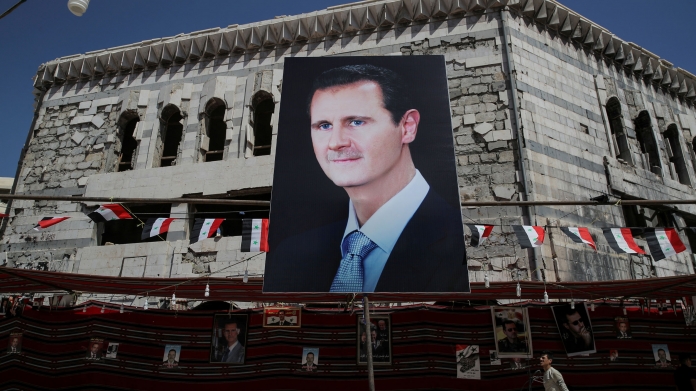
The verdict of the Higher Regional Court in Koblenz, Germany, convicting a former Syrian official of crimes against humanity, is a significant breakthrough in the fight against impunity for the crimes committed in Syria over the last 10 years, the ICJ said today.
“For the first time since the beginning of the Syrian regime’s bloody, rampant and relentless repression, a Syrian official has finally been held to account for his participation in the regime’s crimes,” said Said Benarbia, Director of the ICJ’s MENA Programme. “While this may seem a small token for victims, it is a resounding warning for other Syrian officials that justice may soon catch up with them.”
On 24 February 2021, Eyad A. was found guilty of aiding and abetting crimes against humanity, including torture and arbitrary deprivation of liberty, and sentenced to four and a half years in prison. Among other things, his conviction is related to the detention of at least 30 Syrians after anti-government demonstrations erupted in March 2011.
“This is an important step in the fight for justice for victims and survivors of gross human rights violations in Syria,” said Bernabia.
Eyad A. was prosecuted together with Anwar R., the former director of investigations at Branch 251 — a Syrian intelligence branch in Damascus notorious for subjecting detainees to systematic torture and other ill-treatment.
Anwar R. was charged with supervising the systematic torture of over 4,000 people, which resulted in the death of 58 people between 2011 and his defection in 2012. His trial is still ongoing.
The proceedings against Eyad A. and Anwar R. were conducted under the principle of universal jurisdiction, which allows Germany and other States to prosecute an accused person for serious crimes under international law, even when such crimes have been committed abroad and neither the victims, nor the accused are nationals of that country.
“States must act individually and collectively to fill the accountability gap in Syria,” added Benarbia. “They must support United Nations accountability mechanisms, including the IIIM, and seek out, prosecute and punish those responsible for the atrocities committed in the country.”
Contact
Said Benarbia, Director, ICJ Middle East and North Africa Programme, t: +41-22-979-3817; e: said.benarbia(a)icj.org
Asser Khattab, Research and Communications Officer, ICJ Middle East and North Africa Programme, e: asser.khattab(a)icj.org
Download
Syria-Impunity-Statement-2021-ENG (in English)
Syria-Impunity-Statement-2021-ARA (in Arabic)
Feb 17, 2021 | News
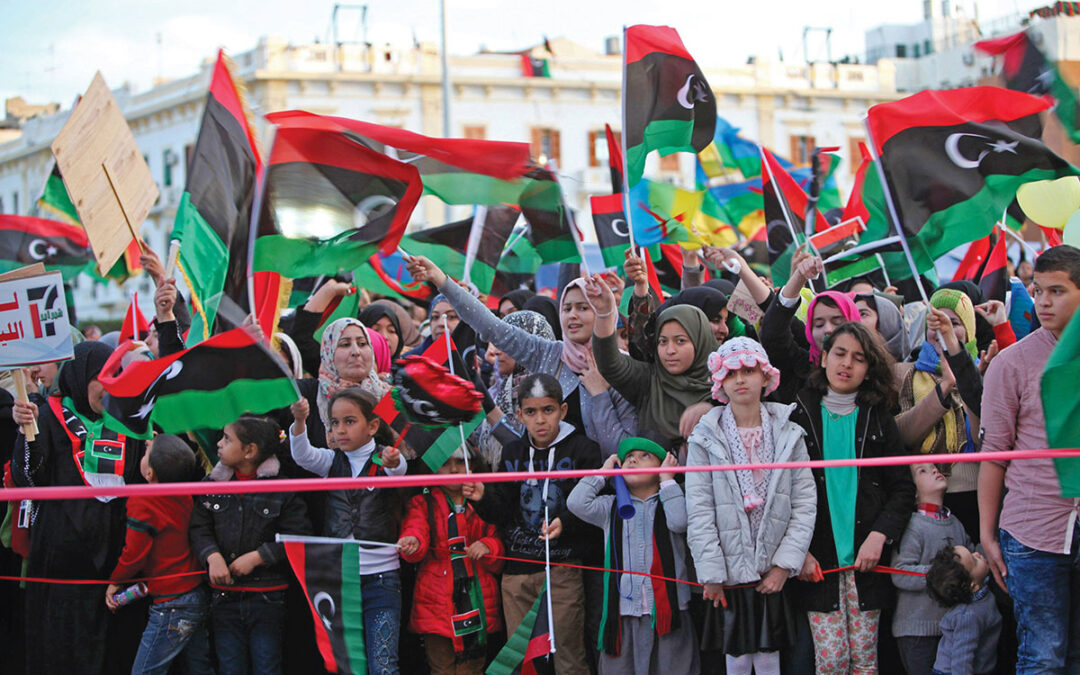
17 February 2021 marks the tenth anniversary of the Libyan revolution.
Back then, protestors had taken to the streets calling for an end to Gadhafi’s authoritarian rule: a regime beset by the commission of widespread and systematic gross human rights violations, including arbitrary arrest and detention; enforced disappearances; torture and other ill-treatment; the oppression of women, minority groups, political dissidents and government critics; and the curtailment of freedom of expression, association and assembly.
Libyans who supported the 2011 revolution hoped it would usher in a nascent democracy and present an opportunity to address the country’s bleak legacy. A decade on, however, the pursuit of justice and accountability remains unfulfilled, and the cycle of impunity unbroken, as a multitude of State actors and armed groups continue to perpetrate crimes under international law, including against thousands of migrants, refugees, asylum seekers and stateless persons.
Attacks against human rights defenders, lawyers and activists, including extrajudicial executions, enforced disappearances and torture, are pervasive, particularly so against women. The post-2011 period has also witnessed an increasingly brutal crackdown on civil society, journalists and bloggers, in addition to the violent suppression of peaceful protests through excessive use of force and arbitrary arrests.
Against a backdrop in which domestic accountability efforts are hindered by cycles of violence, weak and ineffective law enforcement agencies, and by the arbitrary exercise of policing and detention powers by armed groups, international efforts to fight impunity in the country are underway. The Office of the Prosecutor of the International Criminal Court (ICC) is currently investigating some of the crimes under international law committed after 2011, including war crimes committed in the context of armed conflicts. However, certain individuals against whom ICC arrest warrants have been issued, including Mahmoud Al-Werfalli, remain at large.
In June 2020, the UN Human Rights Council established an International Fact-Finding Mission (FFM) tasked with investigating violations and abuses of international human rights law and international humanitarian law committed by both State and non-State actors in Libya since 2016. The FFM’s work will be key in addressing impunity in the country and will complement national efforts to address the accountability vacuum.
The country’s interim executive, selected by the Libyan Political Dialogue Forum on 5 February 2020, and any future elected government must put the peoples’ demands for justice and accountability at the forefront. In particular, the Libyan authorities must commit to implementing a transitional justice process, neglected so far, that could genuinely pursue accountability, and guarantee full participation of victims and the public in the process, and thereby realize the right to truth and reparations of the victims of past and ongoing human rights violations and abuses.
To this end, the International Commission of Jurists and the Defender Center for Human Rights call on the Libyan authorities to:
- Guarantee freedom of assembly, association and expression of all persons, and protect human rights defenders, activists and journalists from reprisals and unwarranted prosecutions;
- Protect all persons from arbitrary arrest and detention, extrajudicial executions, torture and other ill-treatment, and enforced disappearances;
- Effectively investigate and prosecute crimes under international law, and ensure that no amnesty, immunity or statute of limitations apply to such crimes;
- Reform the security sector to ensure effective civilian oversight over security and armed forces;
- Set up a concrete plan to disband and disarm all militias and armed groups;
- Guarantee the independence of the judiciary, the respect of international fair trial standards, and refrain from trying civilians before military tribunals;
- Protect refugees, asylum seekers, stateless persons and migrants in line with international law;
- Ensure that the right to an effective remedy and adequate reparations are granted to victims of human rights violations;
- Cooperate fully with the ICC and support their efforts to obtain custody of any suspects;
- Provide the FFM with full support and access to victims, witnesses and any other interested persons throughout Libya’s territory.
Download
Libya-Impunity-Joint-Statement-2021-ENG (English)
Libya-Impunity-Joint-Statement-2021-ARA (Arabic)
Contact
Said Benarbia, Director, ICJ Middle East and North Africa Programme, t: +41-22-979-3817; e: said.benarbia(a)icj.org
Asser Khattab, Research and Communications’ Officer, ICJ Middle East and North Africa Programme; e: Asser.Khattab(a)icj.org
Jan 23, 2021 | News
The ICJ stated today that a newly appointed Commission of Inquiry tasked to review reports on past human rights and humanitarian law violations was unlikely to bring justice to victims of conflict era atrocities.
On 21 January 2021, Sri Lankan President Gotabaya Rajapaksa appointed a three-member Commission of Inquiry (CoI), headed by sitting Supreme Court Judge A.H.M. Nawaz to assess the findings and recommendations of preceding CoIs and Committees on human rights violations, serious violations of international humanitarian law and other such serious offences.
“Sri Lanka has an appalling track record on accountability in relation to toothless inquiry mechanisms.” said Ian Seiderman, ICJ’s Legal and Policy Director. “the tendency to set up these kinds of processes just ahead of sessions the UN Human Rights Council raises the suspicion that the announcement is targeted to deflect robust action by the Council beginning next month”
Sri Lanka is due to be taken up at the 46th session of the UN Human Rights Council on 24 February 2021, where the UN High Commissioner for Human Rights will present her report on Sri Lanka’s implementation of Council Resolution 30/1.
The decision to set up this COI was first announced in February 2020, by the Minister of Foreign Affairs at the 43rd Session of the UN Human Rights Council when he declared the Government’s withdrawal of support for the process under Resolutions 30/1, 34/1 and 40/1.
The Commission is tasked with the responsibility of identifying the “manner in which the recommendations have been implemented so far in terms of the existing law and what steps need to be taken to implement those recommendations further in line with the present Government policy.” It has been given a six-month mandate.
COIs and similar bodies established by successive Sri Lankan governments have been ineffective and deeply deficient in terms of their mandate, functions and independence. As the ICJ has previously documented, such mechanisms have largely been partisan mechanisms for punishing political opponents or for shielding perpetrators and institutions from responsibility.
The ICJ called upon the UN High Commissioner for Human Rights and the Member States to acknowledge the Sri Lankan Government’s categorical inability and unwillingness to ensure accountability domestically and urges the Council to explore viable international alternatives to ensure justice for victims of gross human rights violations.
Contact
For questions and clarifications, please contact Osama Motiwala, Communications Officer – osama.motiwala(a)icj.org
Jan 20, 2021 | News
Justice for serious human rights violations requires more effective evidence collection and prosecution, said victims and experts, at a conference organized by the Kingdom of the Netherlands and the ICJ, today.
Keynote speakers included the Prosecutor of the International Criminal Court, Fatou Bensouda, UN Assistant Secretary General for Human Rights, Ilze Brands Kehri, and victim representatives from Myanmar and Yemen.
“The quest for global accountability has progressed tremendously since the ICJ began working nearly 70 years ago,” said Sam Zarifi, Secretary General of the ICJ.
“Over the last three decades in particular we have seen increasing efforts to seek justice at the international level as well as through national courts.”
“We now have to ensure these efforts are more coherent and are able to gather and preserve evidence critical for the successful prosecution of crimes under international law,” he added.
The ICJ has dedicated a Global Accountability Initiative to combat impunity and promote redress for serious human rights violations around the world through the entrenchment of the rule of law.
The Initiative works at the national, regional, and global level to facilitate victims’ access to justice.
“All over the world, perpetrators of serious human rights violations still go unpunished,” said Stef Blok, Foreign Minister of the Kingdom of the Netherlands.
“But this climate of impunity cannot be allowed to continue,” he added.
Impunity for serious human rights violations remains a significant challenge for a variety of reasons including when certain countries obstruct the work of the International Criminal Court.
In response, UN Bodies, including the Human Rights Council and General Assembly, are increasingly being called upon to establish innovative accountability mechanisms often with an evidence collection and preservation function.
Examples include Syria, Myanmar and Yemen where the lack of an UN Security Council referral to the International Criminal Court led the UN General Assembly and Human Rights Council to take action.
At the same time, accountability mechanisms have indicated challenges, including failures of political support, lack of international cooperation, and difficulties in securing the necessary resources and staffing in the amount and time required to effectively fulfill their mandates within the mandate period.
Mr Blok opened today’s online event, in which over 30 countries, numerous NGOs and victim’ advocacy groups discussed how best to enhance these various efforts. The event was moderated by Sam Zarifi.
Fatou Bensouda, Prosecutor of the International Criminal Court
Radya Al-Mutawakel, President of the Mwatana Organization for Human Rights
Ambia Perveen, Vice chairperson of the European Rohingya Council
Omar Alshogre, Syrian refugee and human rights activist
The full video of the conference can be viewed here.
Contact
Kingsley Abbott, Director of Global Accountability and International Justice, kingsley.abbott(a)icj.org
Oct 27, 2020 | Agendas, Events, News
The International Commission of Jurists and the Human Rights Joint Platform (IHOP) invite you to a conversation on the past and current situation of the fight against impunity in Turkey with eminent international and Turkish expert.
Registation is on a first come first served basis by writing to: ihop@ihop.org.tr
Join our speakers:
– Juan Mendez, former UN Special Rapporteur on Torture
– Wilder Taylor, Former Secretary-General of ICJ and chair of Uruguary NPM
– Luciano A. Hazan, Member of the UN Working Group on Enforced and Involuntary Disappearance
– Melis Gebeş, Lawyer, Truth Justice and Memory Center:
– Feray Salman, General Coordinator of Human Rights Joint Platform
IHOPICJ-ZoomConference-ImpunityTurkey-Agenda-2020-ENG (download the agenda in English)
IHOPICJ-ZoomConference-ImpunityTurkey-Agenda-2020-TUR (download the agenda in Turkish)
The event is part of the REACT project: implemented jointly by ICJ and IHOP, this project seeks to support the role of civil society actors in turkey in ensuring effective access to justice for the protection of human rights. This project is funded by the European Union. The views expressed in the event do not necessarily reflect the opinion of the EU.