Oct 6, 2020 | News
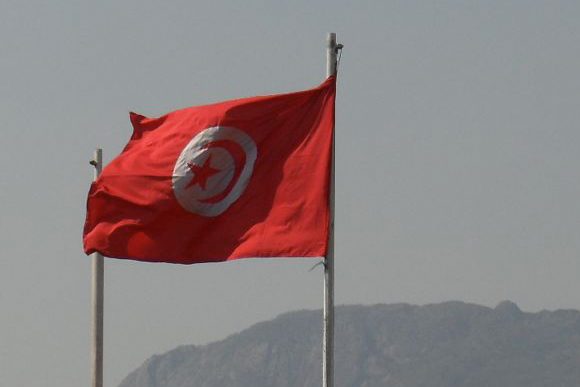
The Tunisian Parliament should amend or reject the revised Draft Organic Law No. 25-2015 on the protection of security forces scheduled for discussion in Parliament today, said the ICJ. The Law if adopted would reinforce impunity for violations committed by security forces and undermine the rule of law and human rights.
The revised Draft Law was approved by the Parliamentary Commission in July 2020, following unsuccessful attempts to adopt it in 2015 and 2017.
Article 7 of the Draft Law provides for the exoneration of security forces from criminal responsibility for using lethal force to repel attacks on a security building, when the force is necessary and proportional to the danger posed to the building. In 2017, the ICJ and other organizations urged Parliament to reject a prior draft which included the same provision.
“More than 10 years after the uprising, Tunisia’s security forces continue to enjoy impunity for decades of serious human rights violations,” said Said Benarbia, the ICJ’s MENA Programme Director.
“The Parliament should adopt all the effective measures at its disposal to end such impunity, not entrench it by allowing the use of lethal force when it’s not strictly necessary to protect lives.”
Article 7 of the Draft Law would preserve the operation of Law No. 69-04, which permits the use of firearms to defend property, “mitigate” a resistance, or stop a vehicle or other form of transport in the context of public meetings, processions, parades, public gatherings, and assemblies. It allows for the use of lethal force to disperse an unlawful gathering where other means of dispersal have failed.
Under international law, including the United Nations Basic Principles on the Use of Force, the intentional use of lethal force must be reasonable, necessary and proportional, and is only permissible if strictly necessary to protect life from an imminent threat to life, not a threat to property.
In the context of non-violent assemblies, the use of force should be avoided and, where unavoidable, restricted to the minimum extent necessary against only those individuals posing an imminent threat of death or serious injury.
The Draft Law appears to preserve an exemption under article 42 of the Criminal Code and Article 46 of Law No. 82-70 on the Statute of Internal Security Forces of 6 August 1982. Article 42 of the Criminal Code provides that a person is not liable for crimes under the Criminal Code, including homicide, if their acts were carried out pursuant to other laws or orders from a competent authority. Article 46 of Law No. 82-70 limits this immunity in relation to orders given to officers of the Internal Security Forces by requiring the orders be given “by their superior in the framework of legality.” Under international law, superior orders cannot serve as a ground of defence to a crime of unlawful killing by a State agent, such as a member of a security force.
“The Tunisian Parliament should reject the Draft Law and conduct a complete review of all laws regulating the conduct of the security forces to ensure they meet standards necessary to protect the population from the excesses demonstrated in the past,” said Kate Vigneswaran, the ICJ’s MENA Programme Senior Legal Adviser.
“Members of the Parliament should send a clear, unequivocal message that the impunity of the security forces can no longer be tolerated.”
Contact:
Said Benarbia, Director, ICJ Middle East and North Africa Programme, t: +41-22-979-3817; e: said.benarbia(a)icj.org
Kate Vigneswaran, Senior Legal Adviser, ICJ Middle East and North Africa Programme, t: +31-62-489-4664; e: kate.vigneswaran(a)icj.org
Tunisia-draft law security forces-News-2020-ARA (story in Arabic, PDF)
Sep 30, 2020 | Events, News
For decades, victims of enforced disappearances and extrajudicial killings in Latin America have been demanding justice, truth, and reparations. Despite these efforts, impunity remains rampant. In some cases, victims have been waiting for justice for over four decades.
As a part of its strategy to promote accountability for serious human rights violations around the world, the ICJ, together with partners, is implementing a regional project to address justice for extrajudicial killings and enforced disappearances in Colombia, Guatemala, and Peru, supported by the European Union.
One of the results of the project has been to support the production of three case dossiers by the ICJ’s local partners.
In Colombia, to illustrate one of the patterns of extrajudicial killings, the Asociación de Red Defensores y Defensoras de Derechos Humanos (dhColombia) produced a document concerning three cases of extrajudicial killings committed during 2006 and 2008.
The report Una práctica sistemática ejecuciones extrajudiciales en el eje cafetero (2006-2008) presents the challenges the victims and their lawyers have faced when seeking responsibility for those crimes.
In Peru, the Instituto de Defensa Legal (IDL) documented the enforced disappearances of university students and professors between 1989 to 1993, at the height of the internal conflict. In the report Los desaparecidos de la Universidad Nacional del Centro IDL describes the difficult legal path victims have faced in order to bring state agents suspected of committing crimes to justice.
In Guatemala, to highlight the manner in which enforced disappearances were committed against rural communities during the internal armed conflict, the Asociación de Familiares de Detenidos-Desaparecidos de Guatemala (Famdegua) wrote about the enforced disappearance of more than 500 people in the region of the Veparaces. In the report Las desapariciones forzadas en la región de las Verapaces the story of five cases is presented.
These three reports contribute towards understanding the prevalence of these violations in Latin America, and the available options to tackle impunity.
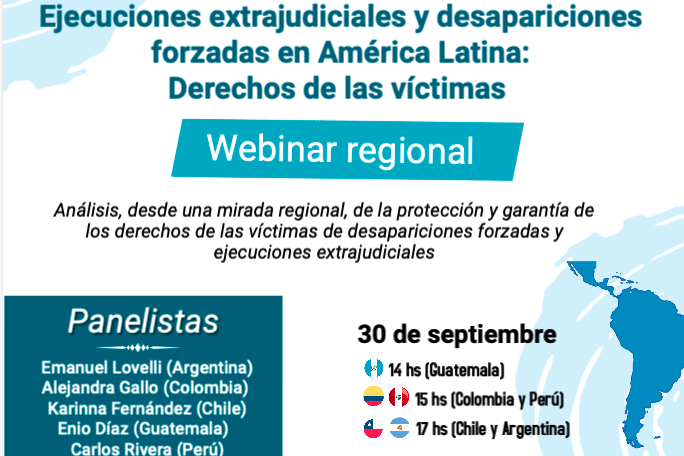
On 30 September 2020, the ICJ will host a regional webinar to discuss the protection and guarantee of the rights of victims of enforced disappearances and extrajudicial executions in Argentina, Colombia, Chile, Guatemala and Peru.
The webinar will be broadcast live on the ICJ’s Facebook page, at 14 hours (Guatemala time)/15 hours (Colombia and Peru time)/ 17 hours (Chile and Argentina time).
Contact
Kingsley Abbott, Coordinator of the Global Accountability Initiative, e: kingsley.abbott@icj.org
Carolina Villadiego Burbano, Legal and Policy Adviser, Latin America and Regional Coordinator of the Project, e: carolina.villadiego@icj.org
Rocío Quintero M, Legal Adviser, Latin America, e: rocio.quintero@icj.org
Sep 25, 2020 | Advocacy, Non-legal submissions
The ICJ has joined other NGOs in urging the UN Human Rights Council to respond effectively to the crisis for human rights in the Philippines.
The joint oral statement was delivered by the World Organization against Torture (OMCT) on behalf of the group of international and Philippino NGOs, during a general debate on country situations. It read as follows:
“Madam President,
I speak on behalf of 35 organisations, deeply concerned by the situation in the Philippines. We urge this Council to respond credibly to the grave findings and recommendations of the recent OHCHR report.
Developments since that report indicate further deterioration, with ongoing incitement to kill by the President, the promotion of an architect of the anti-drug strategy to police chief, the passing of an overbroad anti-terror law ripe for abuse, the conviction of journalist Maria Ressa and shutdown of media network ABS-CBN, the murder of activists and a journalist and a new spike in police killings.
In terms of cooperation, the Philippines refused access to OHCHR in the preparation of the report and continues to bar entry to Special Procedures. The Secretary-General and High Commissioner have raised significant concerns over reprisals. The Government does not acknowledge widespread and systematic killings as a problem, in fact it encourages them and rejects the OHCHR’s findings. Serious violations continue.
The Government’s announced Inter-Agency Panel lacks any transparency and directly involves branches of Government implicated in these abuses. As such, it clearly cannot satisfy international standards of independence,[1] nor can it be seen as credible or safe for victims to engage with.
Madam President,
Our organisations have urged and continue to urge this Council to launch an independent international investigation.
The High Commissioner has clearly asked the Council to renew her mandate to monitor and report on the wider situation, as well as to provide technical cooperation to “implement the report’s recommendations,” and “continue to pursue accountability”. We urge this Council – at absolute minimum – to ensure continued monitoring and reporting on all aspects of the situation as clearly recommended by the High Commissioner. Anything less would not only be an insult to victims and their families, but send a green light to perpetrators that they can continue with impunity, with disastrous consequences on the ground.
Thank you.”
Co-signatories:
- Action Network Human Rights Philippines (AMP)
- Amnesty International
- Article 19
- Child Alert Mindanao
- Children’s Legal Rights and Development Center (CLRDC)
- CIVICUS Alliance
- Coalition Against Summary Executions
- Families of Victims of Involuntary Disappearance (FIND)
- Franciscans International
- Franciscan Sisters of the Immaculate Conception
- Free Legal Assistance Group (FLAG)
- Freedom House
- Harm Reduction International
- Human Rights Watch
- In Defense of Human Rights and Dignity Movement (iDEFEND)
- International Coalition for Human Rights in the Philippines (ICHRP)
- International Commission of Jurists
- International Drug Policy Consortium
- International Federation for Human Rights (FIDH)
- International Service for Human Rights
- Karapatan Alliance Philippines
- Medical Action Group
- National Union of Journalists of the Philippines
- Network Against Killings in the Philippines (NakPhil)
- Partnership Mission for People’s Initiatives (PMPI)
- Philippine Alliance of Human Rights Advocates (PAHRA)
- Philippine Misereor Partnership Inc. (PMPI)
- Philippine Human Rights Information Center
- Salinlahi Alliance for Children’s Concerns
- Swiss Catholic Lenten Fund (SCLF)
- Tambayan
- The Asian Forum for Human Rights and Development (FORUM-ASIA)
- Task Force Detainees of the Philippines
- World Council of Churches
- World Organisation Against Torture (OMCT)
[1] See for instance the UN Principles on the Effective Prevention and Investigation of Extra-legal, Arbitrary and Summary Executions, adopted by the Economic and Social Council in its resolution 1989/65 of 24 May 1989; and Human Rights Committee, General Comment no. 36 on the right to life (article 6).
Sep 24, 2020 | Advocacy, Non-legal submissions
The ICJ today highlighted the continuing impunity in Venezuela, reinforced by lack of judicial independence, at the UN Human Rights Council in Geneva.
Sep 17, 2020 | Advocacy, Non-legal submissions
At the Human Rights Council, the ICJ highlighted deepening impunity for gross human rights violations in Sri Lanka, and the need for a UN investigative mechanism.
The oral statement was made in the interactive dialogue with the UN Special Rapporteur on the promotion of truth, justice, reparation and guarantees of non-recurrence, at which the current Rapporteur presented the report of his predecessor, Pablo de Greiff, on a visit to Sri Lanka in 2017.
The statement read as follows:
“The ICJ welcomes this opportunity to discuss the report of your predecessor’s 2017 visit to Sri Lanka.
We share the report’s assessment that “none of the constituent elements of a transitional justice policy are fully in place.” Indeed, the situation has only further deteriorated since 2017, further entrenching the denial of justice to victims.
Sri Lankan courts remain unable and unwilling to address the impunity of security forces for crimes under international law. We echo the report’s observation ‘in its current state, the criminal justice system in Sri Lanka is inadequate and flawed’.
This will only worsen if the proposed 20th Amendment to the Constitution is passed. The President, himself credibly accused of war crimes and crimes against humanity during his tenure as Defence Secretary from 2005-2015, would have unilateral power to appoint the judges of the superior courts, the Judicial Service Commission, Attorney General and the Inspector General of Police. This would further undermine any independence and impartiality in the already institutionally weakened judiciary.
Given the abject failure of Sri Lanka to implement a credible accountability mechanism, and its ongoing betrayal of the rule of law, the ICJ calls on the Council to establish an international accountability mechanism, and we urge you Mr Special Rapporteur to closely monitor and analyze the country situation in coordination with other mandate holders.
Thank you”