Dec 13, 2012 | News
Following recent attacks against the independence of the judiciary in several Central American countries, the ICJ issued today a strong position statement (in Spanish).
La CIJ ante los últimos acontecimientos que afectan seriamente la independencia de los differentes poderes judiciales en países de la región centroamericana, expresa:
- Durante el año 2012, la CIJ ha constatado que los diferentes gobiernos y autoridades de los países de Centroamérica han realizado actos que afectan seriamente la independencia judicial. En Honduras, el miércoles 12 de diciembre, la Asamblea Legislativa procedió a destituir a cuatro magistrados de la Sala Constitucional de la Corte Suprema de Justicia, sin tener facultades o atribuciones para un acto de esta naturaleza. Esta destitución nos sitúa frente a un escenario similar al del Golpe de Estado de junio de 2009;
- En El Salvador, se han dado hechos similares; durante todo el año 2012, la Asamblea Legislativa y otros grupos del poder político, han pretendido desarticular la Sala Constitucional de la Corte Suprema de dicho país, debido al contenido de sus sentencias; en Costa Rica hace unas semanas, también la Asamblea Legislativa se negó a ratificar en su cargo a un magistrado de la Sala Constitucional de la Corte Suprema de Justicia, alegando que los fallos de dicha sala creaban una “situación de ingobernabilidad” y que ese acto era un “llamado de atención para el resto de los magistrados”, siendo la primera vez que el Organismo Legislativo se negó a ratificar en su cargo un nuevo mandato de un magistrado del alto Tribunal;
- En Guatemala, tanto el Presidente de la Cámara Penal de la Corte Suprema de Justicia como la Fiscal General, vienen siendo objeto de ataques a su independencia por parte de abogados defensores de las personas acusadas, por la función positiva que han cumplido en la lucha contra la impunidad en casos de graves violaciones a los derechos humanos cometidas durante el conflicto armado;
La CIJ considera que todos estos hechos constituyen injerencias y ataques a la independencia del Poder Judicial; tratándose de magistrados de diferentes Cortes Supremas y de una Fiscal General, estos actos evidencian por sí mismos, la precariedad de la garantía de independencia judicial en dichos países. A esta situación, hay que agregar que varios de los países mencionados, carecen de sistemas de carrera judicial y de mecanismos de protección adecuados para garantizar a los funcionarios el ejercicio independiente de la función jurisdiccional; además, en ellos existen fenómenos de impunidad generalizados y de cuerpos ilegales, aparatos clandestinos de seguridad y crimen organizado.
Frente a estos hechos, la CIJ recomienda:
- Que las autoridades estatales concernidas con los hechos arriba mencionados, se abstengan de interferir en el ámbito de la independencia de los poderes judiciales, ya que de lo contrario, estarían incumpliendo sus obligaciones internacionales sobre respeto a la independencia de poderes, establecidas en la Convención Americana sobre Derechos Humanos y en el Pacto Internacional de Derechos Civiles y Políticos;
- Que se tomen las medidas necesarias para asegurar la independencia de jueces, magistrados y fiscales como corresponde en un Estado de Derecho;
- Que los estados relacionados establezcan mecanismos de protección para jueces, magistrados, fiscales y demás operadores de justicia, a fin de salvaguardar su integridad y garantizar el ejercicio de la función jurisdiccional independiente;
- Que los estados concernidos impulsen procesos de creación o fortalecimiento de carreras judiciales de conformidad con los estándares internacionales;
- Que se fortalezcan los poderes judiciales y otras entidades del sector justicia, a fin de lograr la efectiva protección de los derechos humanos incluida la lucha contra la impunidad.
La CIJ continuará cumpliendo con su mandato de promover y garantizar la independencia de jueces, abogados y fiscales; en ese sentido, le dará seguimiento a estas situaciones y continuará observando y proponiendo soluciones a esta problemática.
Para mayor información :
Ramón Cadena Rámila, Director de la Comisión Internacional de Juristas para Centro América, t + 502 30441818

Nov 1, 2012 | News, Publications, Reports
 The Sri Lankan government must immediately cease its assault on the independence of the judiciary, the ICJ said in a new report.
Oct 9, 2012 | Advocacy, Non-legal submissions
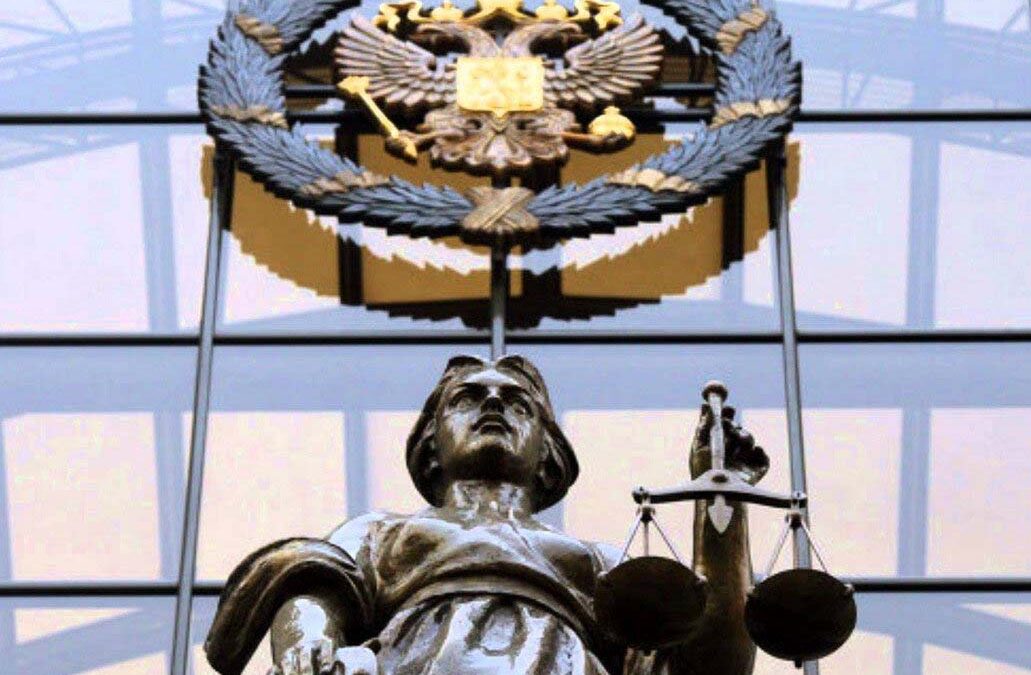
 The ICJ commented on the UPR of the Russian Federation, addressing issues including torture and ill-treatment, impunity, judicial independence, NGO laws and “homosexual propaganda” bans.
The International Commission of Jurists has brought to the attention of the Human Rights Council’s Working Group on the UPR and to the Human Rights Council issues concerning:
- prevention of torture and ill-treatment and other gross human rights violations;
- impunity for gross human rights violations;
- independence of the judiciary; amendments to NGO laws;
- non-refoulement; homosexual propaganda bans; and
- Russia’s engagement with international human rights instruments and mechanisms.
Russia-ICJ comments on UPR-non-legal-submission-2012 (download the ICJ submission)

Oct 6, 2012 | News
The promotion of colonel Raju Basnet is a slap in the face for the victims of Nepal’s protracted civil war, ICJ and other human rights groups said today.
The Nepali cabinet’s decided on October 4, 2012, to promote colonel Raju Basnet to the rank of brigadier general. Human Rights Watch, Amnesty International, and the International Commission of Jurists say the United Nations and the Nepali National Human Rights Commission compiled credible evidence of systematic enforced disappearances and torture at Bhairabnath Battalion headquarters in Kathmandu under the command of the colonel Raju Basnet in 2003.
On the basis of this evidence, in 2007 Nepal’s Supreme Court ordered an independent investigation and prosecution of these human rights violations. That order includes allegations that Basnet personally committed acts of torture.
“Nepal’s cabinet has thrown the entire idea of holding soldiers accountable for abuses out the door,” said Brad Adams, Asia director at Human Rights Watch. “This cynical and reprehensible decision seriously undermines respect for human rights and contradicts Nepal’s assurances to the international community that it would hold those implicated in wartime crimes to account.”
Basnet’s promotion occurred under the leadership of the United Communist Party of Nepal – Maoist (UCPN-M). During the war, the UCPN-M was itself responsible for enforced disappearances, torture, and unlawful killings, and has not had to answer for a single wartime violation, the groups said. Agni Sapkota, a UCPN-M member, was appointed to a cabinet position even as he was under a court-ordered police investigation for his involvement in a 2005 unlawful killing.
“Despite years of promises, the Maoists and the army have shown themselves united in one crucial aspect: contempt for the notion of accountability for criminal acts and victims’ rights to justice, truth, and reparation,” said Polly Truscott, Amnesty International’s South Asia director.
International law applicable in Nepal obligates the government to investigate and prosecute serious violations of international human rights and humanitarian law. Consistent with international legal principles, officials implicated in serious offenses should be removed or suspended pending completion of full investigations, with full respect for their due process rights.
The Nepali Supreme Court in an August decision directed the government to put in place appropriate legislation and guidelines to ensure that security officials are vetted before they are appointed or promoted to high-level positions.
“With the promotion of Basnet, the denial of justice and accountability has essentially turned into government policy,” said Sam Zarifi, Asia director at the International Commission of Jurists. “This decision is basically the current Nepali government saying it does not care about the rule of law, does not care about its own Supreme Court directives, and indeed, does not care about the best interests of its own citizens. This promotion is a signal to all perpetrators that power trumps justice.”
The rights groups called on the international community to urge the Nepali government to revoke its decision.
“Nepali civil society, with support from the UN and the international community, has spent years seeking to promote justice and accountability,” Adams said. “By promoting Col. Basnet, the government has sent a clear signal to the Nepali people and the country’s international supporters that it not committed to these same goals.”
For more information, please contact:
In Kathmandu, for ICJ, Govinda Sharma: +977-985-106-1167
In Bangkok, for ICJ Asia-Pacific, Sam Zarifi: +66-807-819-002