Jun 13, 2017 | News
The ICJ welcomed today the Special Rapporteur’s report on Turkey and his preliminary findings on his visit to the country last November.
The ICJ welcomes and concurs with the finding that the “situation of the judiciary is undermining freedom of opinion and expression”.
Mass dismissals of judges have had a devastating effect on the judiciary’s independence, already weakened by the current state of emergency. Furthermore, we are concerned at the claim by the President that the state of emergency will remain in place until Turkey reaches “peace and prosperity”. Whatever other questions there may be about their validity, maintaining emergency derogations to human rights law instruments for such an open-ended period would clearly not be in line with international law.
The ICJ is also concerned at the constitutional amendments approved on the 16th of April by a referendum. Among other things, the amendments have given powers to the President and the Parliament to appoint all the members of the High Council of Judges and Prosecutors, the body tasked with protecting the independence of these professions.
The judiciary has had in the past an important role in implementing legislation that has severely limited the freedom of journalists to carry out their job.
The independence of the judiciary has now been eroded to its core in Turkey. Without it, there is no effective remedy in the country to protect freedom of opinion and expression.
Further reading: ICJ’s briefing paper Turkey: the Judicial System in Peril
May 5, 2017 | Advocacy, News, Publications
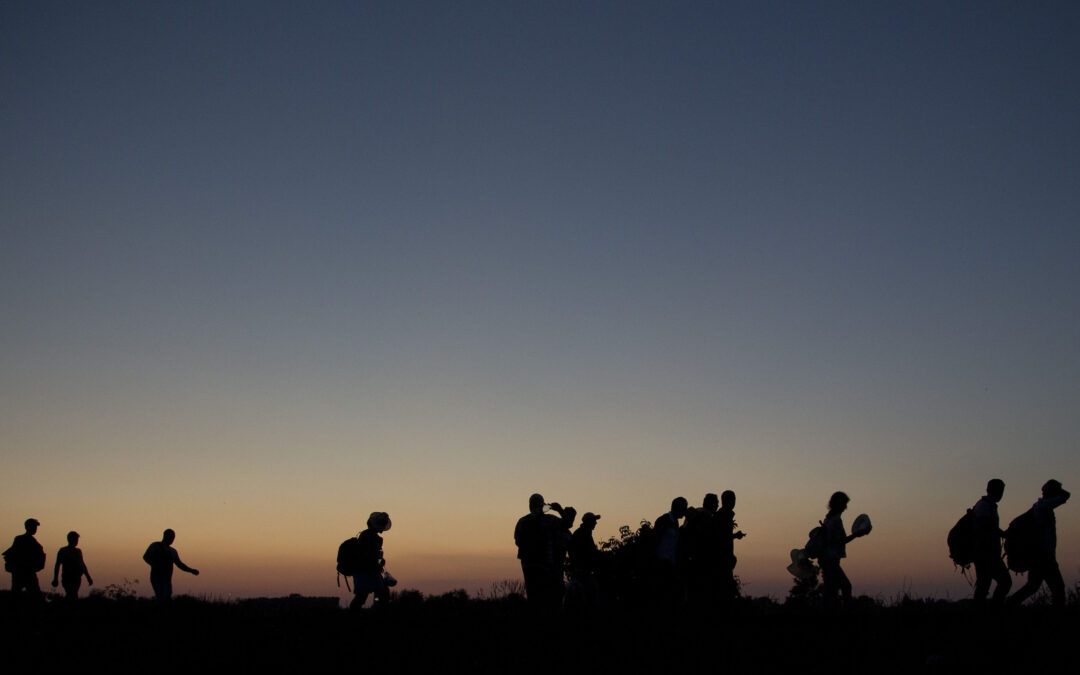
The ICJ has published a set of Principles on the Role of Judges and Lawyers in relation to Refugees and Migrants.
The Principles were developed by the ICJ on the basis of consultations with senior judges, lawyers, and legal scholars working in the field of international refugee and migration law (including at the 2016 Geneva Forum of Judges & Lawyers), as well consultations with States and other stakeholders on a draft version during the March 2017 Human Rights Council session, and other feedback.
The Principles seek to help judges and lawyers, as well as legislators and other government officials, better secure human rights and the rule of law in the context of large movements of refugees and migrants. They are intended to complement existing relevant legal and other international instruments, including the New York Declaration, as well as the Principles and practical guidance on the protection of the human rights of migrants in vulnerable situations within large and/or mixed movements being developed by the OHCHR.
The Principles address the role of judges and lawyers in relation to, among other aspects:
- determinations of entitlement to international protection;
- deprivation of liberty;
- removals;
- effective remedy and access to justice;
- independence, impartiality, and equality before the law;
- conflicts between national and international law.
The Principles, together with commentary, can be downloaded in PDF format by clicking here: ICJ Refugee Migrant Principles 2017.
They are also available in Spanish, French and Arabic.
The ICJ formally launched the published version of the Principles at a side event to the June 2017 session of the Human Rights Council (click here for details), where their importance and utility were recognised by the UN Special Rapporteur on the human rights of migrants, as well as representatives of UNHCR and the OHCHR.
The ICJ had earlier released the final text in connection with the Thematic Session on “Human rights of all migrants” for the UN General Assembly Preparatory Process for the Global Compact for Safe, Orderly and Regular Migration to be held in Geneva 8-9 May 2017, where in an oral statement the ICJ was able to highlight the potential utility of the Principles in the development of the Compact.
The ICJ further promoted consideration of the Principle, in an oral statement to the Human Rights Council.
More information about the process of development of the Principles, including the list of participants to the 2016 Geneva Forum, is available here.
The consultations, preparation and publication of the Principles was made possible with the financial support of the Genève Internationale office of the Republic and Canton of Geneva, for which the ICJ is grateful.
For further information, please contact ICJ Senior Legal Adviser Matt Pollard, matt.pollard(a)icj.org
May 2, 2017 | News
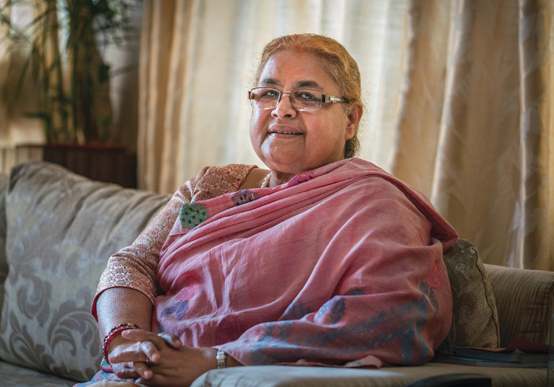
The Nepali legislature should immediately reject the unprecedented motion filed on 30 April 2017 to impeach Chief Justice Sushila Karki because it threatens the independence of the judiciary and the rule of law, said the ICJ today.
“This impeachment motion, the first against a sitting Chief Justice in Nepal’s history, raises very serious concerns about the independence of Nepal’s Supreme Court and the separation of powers in the country,” said Matt Pollard, who heads the ICJ’s Center for the Independence of Judges and Lawyers.
“The impeachment motion seems timed to suspend Chief Justice Karki just as she was scheduled to hear a politically controversial case,” he added.
The impeachment motion comes in the wake of the decision of the full bench of the Supreme Court, chaired by Justice Karki, to revoke the Cabinet’s 12 February decision to appoint a new Inspector General of Nepal Police evidently in violation of existing processes and regulations.
The motion to impeach Chief Justice was sponsored by two ruling parties, Nepali Congress and Nepal Communist Party (Maoist Center), pursuant to Article 101(2) of Nepal’s 2015 Constitution.
This provision allows for an impeachment motion against the chief justice to be moved by one-fourth of the members of the Legislature–Parliament on the grounds of “serious violation of the Constitution and law, his or her incompetence, misbehavior or failure to discharge the duties of his or her office in good faith or serious violation of code of conduct.”
Justice Karki is scheduled to retire on 7 Jun 2017, when she reaches the mandatory retirement age.
“The timing of the impeachment action, so close to the Chief Justice’s scheduled retirement, gives credence to suspicions that it is aimed at preventing her participation in judicial activity during the next few weeks,” Pollard said.
Filing the impeachment motion immediately resulted in the suspension of the Chief Justice from her duties, pursuant to Article 101(6).
“The impeachment process under Article 101 does not comply with international standards on the independence of the judiciary, as the ICJ has pointed out repeatedly in its analysis of the 2015 Constitution,” Pollard added, referring to the ICJ’s Briefing Paper on the Constitutional Draft. “This recent motion starkly demonstrates the problems with the Constitutional provision.”
Nepal’s judiciary, including the Supreme Court, had also recently been criticized by officials in the ruling parties and the military in relation to a number of high profile human rights cases.
“Nepal’s Judiciary has been instrumental protecting human rights, rule of law and enforcement of the Nepal’s obligation under international law,” Pollard said.
“The Nepali judiciary as an institution has strengthened and has gained international respect for its independence, so it should be celebrated and strengthened, instead of being subject to this kind of legislative attack,” he added.
The ICJ calls on the Government of Nepal and ruling parties to withdraw the impeachment motion against the Chief Justice in order to ensure judicial independence and the appropriate separation of powers under the rule of law in the country.
Apr 13, 2017 | News
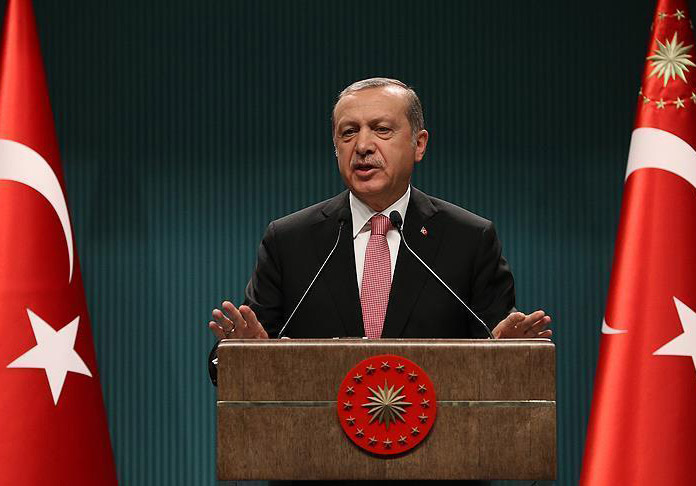
The ICJ today warned that proposed amendments to Turkey’s Constitution to be voted on in the referendum of 16 April could irremediably compromise the independence of the judiciary.
The amendments would introduce significant changes to the institutional framework governing the Turkish judiciary, with far reaching consequences for the separation of powers.
The ICJ is concerned that the proposed constitutional amendments, if approved, would enshrine in Turkish Constitution measures that would be severely damaging the rule of law in Turkey for the long term.
The separation of powers and the independence of the judiciary are fundamental components of the rule of law.
Under the proposals, the President of the Republic would be empowered to appoint six out of thirteen members of the High Council of Judges and Prosecutors, including four ordinary members as well as the Minister of Justice, (who would act as President of the Council) and the Under-Secretary of the Ministry of Justice.
The remaining seven members would be appointed by the National Assembly.
None of the members of the Council would be appointed by judges or public prosecutors.
The High Council of Judges and Prosecutors is the institution entrusted with the appointment, transfer, promotion, discipline and dismissal of judges and public prosecutors in Turkey.
It is the role of such a Council to act as a guardian of judicial independence and to protect the judiciary from interference by the executive and legislative powers.
The proposed Constitutional amendments are clearly contrary to international standards on the independence of the judiciary, which affirm that at least half of the members of a judicial council should be judges elected by their peers.
The amendments, if passed in the forthcoming referendum, would be enacted in a context where judicial independence has already been severely compromised.
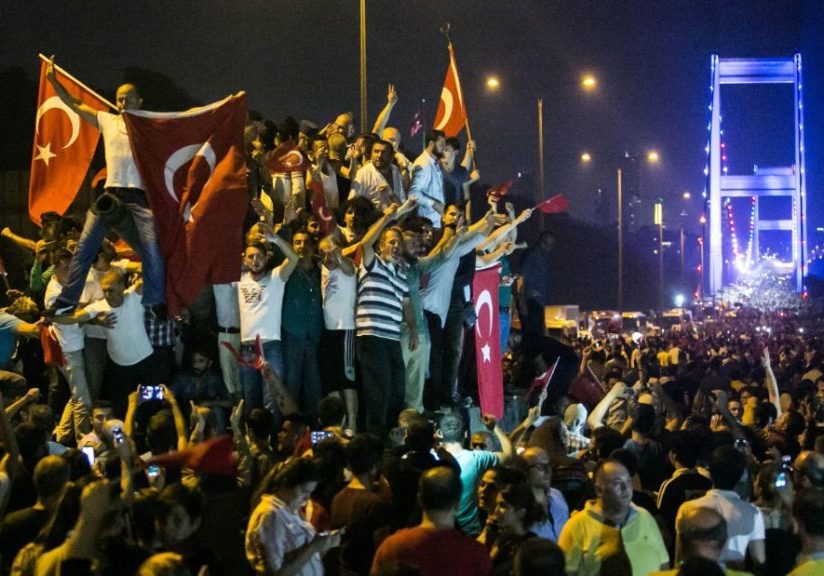
Under the State of Emergency in place since the attempted coup of July 2016, approximately one fifth of the judiciary has been arbitrarily dismissed, and thousands of prosecutors and lawyers have been detained.
As the ICJ has previously highlighted, such measures have had a devastating effect on the independence of the judiciary at every level, compromising the courts’ ability to provide fair trials or an effective remedy for violations of human rights.
The ICJ understands that Turkey faced a serious threat to its democratic institutions in connection with the attempted coup of 15 July 2016.
Nonetheless, it stresses that measures meant to meet this threat must be undertaken within the framework of the rule of law and the country’s human rights obligations.
The ICJ reiterates its call on the Turkish authorities to lift the State of Emergency and the derogations from its international human rights law obligations that it has made as a matter of high priority.
Contact:
Róisín Pillay, ICJ Europe Programme Director, t: +32 2 734 84 46 ; e: roisin.pillay(a)icj.org
Background
An ICJ briefing paper of June 2016, the Turkey: the Judicial System in Peril , raised concern at measures eroding the independence of the judiciary, prosecution, and legal profession in Turkey, with serious consequences for protection of human rights.
The Council of Europe Recommendation CM/Rec(2010)12 of the Committee of Ministers to member states on judges: independence, efficiency and responsibilities, states:
- Not less than half the members of [councils for the judiciary] should be judges chosen by their peers from all levels of the judiciary and with respect for pluralism inside the judiciary.
Under international human rights law Turkey may derogate from certain human rights during a justified state of emergency only to the extent that derogating measures are strictly necessary to meet a current threat to the life of the nation.
Certain human rights, including freedom from torture, the right to life, and certain essential elements of the right to liberty, the right to a fair trial and the right to an effective remedy may never be restricted, even in an emergency situation.
Further guidance on relevant international law and standards can be found in the ICJ Legal Commentary to the Geneva Declaration on Upholding the Rule of Law and the Role of Judges and Lawyers in Times of Crisis.
Mar 30, 2017 | News
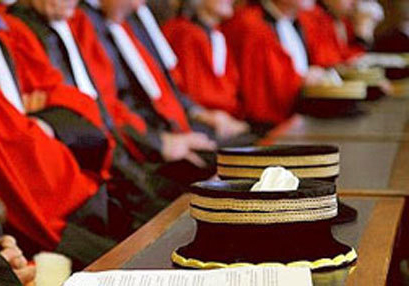
The ICJ today called on the Tunisian President, Beji Caid Essebsi, to refrain from signing into law amendments to the law that regulates the country’s High Judicial Council (HJC). The amendments were adopted on Tuesday 28 March 2017 by the People’s Representatives Assembly.
The ICJ also urged the Head of the Cabinet, Youssef Chahed, to act, as a matter of highest priority, on the nominations by the Instance Provisoire de la Justice Judiciaire (IPJJ) with a view to filling the positions of the First President of the Cassation Court and its General Prosecutor.
The ICJ expressed concern that the amendments revising the country’s 2016 HJC law would weaken the effective functioning of the judiciary and the administration of justice in several respects
- The amendments would strip the IPJJ President of the authority to convene the HJC’s first meeting and instead provide the President of the Parliament with such power. This would constitute an inappropriate interference of the legislative branch into the management of the judiciary in clear violation of the principle of separation of powers and judicial independence.
- The amendments would explicitly exclude any possibility of challenge or judicial review of such action of the President of the Parliament. The ICJ considers that the judiciary must be able to review such decisions to ensure that they are not exercised arbitrarily or outside the law.
- The amendments would also reduce the quorum required for the validity of HJC meetings from one-half to one-third of its members. This could lead to situations where non-judicial members of the HJC have the power to take decisions over the judiciary, in contravention of international standards.
“Instead of using legislative tactics and procedures to weaken the independence and the effective functioning of the HJC, the Tunisian Head of Cabinet should act on the IPJJ’s nominations to fill the positions of the President and the Prosecutor General of the Cassation Court as a matter of urgency, and ensure that until the HJC is properly established, the IPJJ continues to fully exercise its competencies in overseeing and managing the judiciary,” said Said Benarbia, Director of the ICJ Middle-East and North Africa (MENA) Programme.
Indeed, irrespective of the amendments, the ICJ recalls that article 148(8) of the Constitution clearly states that the IPJJ is to carry out its mandate until the seats on the HJC have been filled. This is further affirmed under article 74 of the 2016 HJC Law and article 19 of the 2013 IPJJ Law. Both of these laws make the end of the exercise of the IPJJ’s functions dependent on two conditions, namely that the HJC be fully composed and established.
The ICJ considers that the delay in acting on the IPJJ nominations of senior judges risks undermining the effective functioning of the judiciary, as well as adversely affecting the functioning of other institutions that are essential to upholding the rule of law and protecting human rights in Tunisia. The adopted amendments are no answer to this problem.
“The ongoing crisis is political and not judicial,” Benarbia said.
“Solving it does not require the introduction of legislative amendments that erode the rule of law and judicial independence, but rather the compliance with existing laws and the Constitution,” he added.
Contact
Theo Boutruche, Legal Adviser of the ICJ Middle-East and North Africa Programme, t: +33 6 42837354, e: theo.boutruche(a)icj.org
Background
The amendments were introduced and adopted amid a continuing crisis and functional paralysis of the judiciary that also impact on the effective functioning of other State institutions, including the body in charge of reviewing the conformity of laws with the Constitution.
In particular, two key positions have been left vacant as neither the First President of the Cassation Court, nor its General Prosecutor, have been appointed, and both of these positions also serve as ex officio members of the HJC.
In October 2016, elections were organized to choose the members of the HJC. A swearing-in ceremony before the President of the Republic followed in 14 December 2016, in which not all the HJC Members participated.
In November 2016, the IPJJ proposed candidates including to fill these two positions. Under the Tunisian Law, the Head of the Cabinet must confirm these nominations.
Alternatively, this official may request new nominations from the IPJJ until agreement is reached, as provided for in article 12 and 14 of the IPJJ Law No.13 of 2013. So far, the Head of the Cabinet has failed to act on the IPJJ’s nominations and uncertainty prevails as to whether the HJC has been properly established.
Under the Tunisian Constitution and laws, the President of the Cassation Court is also the President of the Instance Provisoire de Contrôle de la Constitutionnalité des Projets de Loi, the body in charge of assessing the conformity of laws with the Constitution during the transition period.
When established, the HJC will be charged with appointing four members of the Constitutional Court.
Tunisia-Statement new HJC Law-News-Web stories-2017-ARA (full story in Arabic, PDF)