Jul 14, 2015 | News
The Royal Government of Cambodia must immediately end the legal harassment of human rights defender, Ny Chakrya, Head of the Human Rights and Legal Aid Section of the Cambodian Human Rights and Development Association (ADHOC), the ICJ said today.
On 13 July 2015, a Deputy Prosecutor at the Phnom Penh Municipal Court questioned Ny Chakrya for two hours in relation to statements he had made at two press conferences in May 2015.
The summons and questioning were, according to information provided to the ICJ, pursuant to a complaint by an Investigating Judge and another prosecutor.
The proceedings appear to be based on the fact that at the press conferences Ny Chakrya alleged that two clients of ADHOC had been arbitrarily arrested and detained in Siem Reap province and were facing an unfair trial.
“The legal harassment of Ny Chakrya for merely raising allegations of human rights violations is itself a clear violation of human rights,” said Kingsley Abbott, ICJ’s International Legal Adviser.
“Human rights defenders play a vital role in promoting and protecting human rights and the State has a duty to create the conditions for them to be able to carry out their work effectively and without fear of retaliation,” he added.
The International Covenant on Civil and Political Rights (ICCPR), to which Cambodia is a State Party, guarantees the right to freedom of expression; the prohibition of arbitrary arrest or detention and the right to a fair and public hearing by a competent, independent and impartial tribunal established by law; and the right to seek effective remedies for alleged violations of human rights.
The UN Declaration on Human Rights Defenders, adopted by a consensus of States including Cambodia, affirms the right of everyone to peacefully oppose human rights violations.
It reaffirms the prohibition of retaliation, threats and other harassment against anyone who takes peaceful action against human rights violations, both within and beyond the exercise of their professional duties.
It also protects the right of persons to file formal complaints about alleged violations of rights.
The UN Guidelines on the Role of Prosecutors provide that prosecutors have the duty to uphold human rights and that states must ensure they have the power and discretion to fulfill this and other duties. Prosecutors should not proceed with a case they know to be unfounded.
“The complaint against Ny Chakrya was clearly without foundation and he should never have been summoned for questioning in the first place,” Abbott said. “To continue to proceed with this case would be a violation of Ny Chakrya’s rights as a human rights defender.”
The ICJ reiterates its call for the end of the legal harassment of Ny Chakrya and that his case should be closed definitively by whatever means or to whatever extent is available to the Deputy Prosecutor and other state officials.
Background:
According to information provided to the ICJ, on 22 June 2015 the Phnom Penh Municipal Court issued a summons for Ny Chakrya to appear before it for questioning pursuant to a complaint filed by the Investigating Judge and the Deputy Prosecutor of the Siem Reap Provincial Court alleging public defamation (Art. 305 of the Cambodian Criminal Code), acts of slanderous denunciation (Art. 311 of the Cambodian Criminal Code), and the publication of comments to put pressure on the jurisdiction (Art. 522 of the Cambodian Criminal Code).
On 13 July 2015 at the Phnom Penh Municipal Court, the Deputy Prosecutor questioned Ny Chakrya about statements he made at two press conferences organized by ADHOC.
At a press conference on 12 May 2015 in Siem Reap, Ny Chakrya and a lawyer from ADHOC alleged that two clients of ADHOC had been arbitrary arrested and detained in the context of a high profile land dispute in Siem Reap province.
Ny Chakrya alleged that their arrest and detention was a violation of Cambodian law and international human rights law.
At a press conference on 20 May 2015 in Phnom Penh, Ny Chakrya sought to raise public awareness about a complaint that he had filed the same day to the President of the Disciplinary Council of the Supreme Council of Magistracy.
In the complaint, Ny Chakrya alleged that the Deputy Prosecutor and Investigating Judge of the Siem Reap Provincial Court lacked independence and that the two villagers would not receive a fair trial as a result.
On 17 June 2015, the Siem Reap Provincial Court found ADHOC’s clients guilty of inciting a group of villagers to trespass on, use and destroy the property of Community Takhmao Development Agricultural & Industrial, an agricultural development company.
They were sentenced respectively to six months’ and eight months’ imprisonment.
The criminal proceedings arose in the context of a dispute between Community Takhmao Development Agricultural & Industrial and villagers in Chup Romdeng Village in Siem Reap province regarding the alleged illegal clearing of land in Siem Reap province.
Contact:
Kingsley Abbott, ICJ International Legal Adviser, t: +668 4092 3575 ; e: kingsley.abbott(a)icj.org
Jul 13, 2015 | News
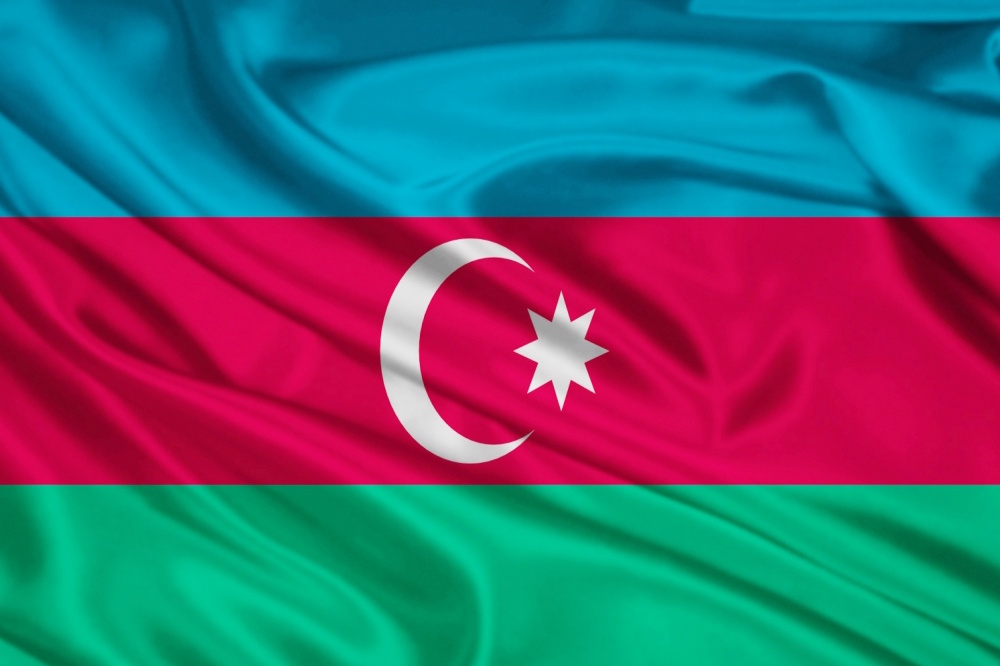
The ICJ expresses concern at the recent decision of the Nizami District Court of Baku to disbar Khalid Baghirov, a prominent lawyer who litigates before national and international jurisdictions including the European Court of Human Rights.
Khalid Baghirov had been accused of the use of improper expressions and inappropriate behaviour, following statements he made in a hearing before Sheki Appeal Court, alleging that the judge in the case was biased.
On 2 February 2015, the ICJ observed the disciplinary hearing in the case of Khalid Baghirov before the Nizami District Court of Baku.
The Court’s decision, on 10 July 2015, follows the disbarment earlier this month of lawyer Alaif Ghasanov, for making a public statement about the conditions of detention of one of his clients, Leyla Yunus, a prominent human rights defender currently held in detention.
There are grounds to believe that Khalid Baghirov’s disbarment is in retaliation for his representation of clients in high profile cases, including prominent human rights defenders.
“Disbarments such as this have a chilling effect on the work of other lawyers, sending a signal that they may be penalized for discharging their functions independently and in accordance with international standards on the role and duties of the legal profession,” said Róisín Pillay, Director of the ICJ Europe Programme.
“Without independent legal representation, those who come before the courts cannot receive a fair trial and the system’s capacity to fairly administer justice under the rule of law is undermined,” she added.
Access to effective and independent legal assistance is an indispensable element of the right to a fair trial, guaranteed under the European Convention on Human Rights and the International Covenant on Civil and Political rights, to which Azerbaijan is a party.
The ICJ affirms that freedom of expression of lawyers constitutes an essential requirement for the proper functioning of the legal profession.
Article 23 of the UN Basic Principles on the Role of Lawyers states that lawyers: “[…] have the right to take part in public discussion of matters concerning the law, the administration of justice and the promotion and protection of human rights and to join or form local, national or international organizations and attend their meetings, without suffering professional restrictions by reason of their lawful action or their membership in a lawful organization.”
The European Court of Human Rights commented in its recent decision in Moris v France that where a lawyer makes statements regarding the functioning the judiciary, a matter of public interest, little room is left for restrictions on such comments which are protected pursuant to the right to freedom of expression.
In particular, the Court held that “[…] a lawyer should be able to draw the public’s attention to potential shortcomings in the justice system; the judiciary may benefit from constructive criticism”.
The ICJ calls on the public authorities of Azerbaijan as well as the Azerbaijan Collegium of Lawyers to ensure that lawyers, including those representing opposition leaders or human rights defenders, are not identified with their clients’ causes and are able to discharge their functions freely without any fear of persecution, harassment or improper interference.
Background:
Khalid Baghirov, an Azerbaijani lawyer, has represented a number of clients in high-profile cases, including Ilgar Mammadov, Leyla and Arif Yunus and Rasul Djafarov.
He has filed over 40 applications to the European Court of Human Rights, thirteen of which are pending communication.
On 17 March, 2014, Sheki Court convicted Ilgar Mammadov, leader of the “Republican Alternative” movement and former presidential candidate, and sentenced him to seven years of imprisonment.
The case was appealed to Sheki Appeal Court, and a hearing in the appeal was held on 12 August 2014.
On 25 September 2014, judge of Sheki Appeal Court Rashid Huseynov filed a complaint (1 (107)-90/2014) before the Collegium of Advocates requesting disciplinary measures against Khalid Baghirov for a breach of the Law of the Republic of Azerbaijan “On Advocates and Advocates’ Activity”, which included a failure to wear “lawyers’ outfit” in the court room, and use of improper expressions and behaviour incompatible with standards of lawyer’s conduct.
According to the complaint, on 12 August 2014, at the appeal hearing of Mammadov’s case by the Sheki Appeal Court, Khalid Baghivov was alleged to have said: “… like a state, like a court… If there were justice in Azerbaijan, neither the judge Rashid Huseynov would make unjust and biased decision, nor the person like him would be a judge”. He allegedly did not wear a lawyer’s gown during the appeal herrings on 12 and 13 August as well as on 3 and 4 September 2014 hearings.
On 19 November 2014, the Disciplinary Commission of the Advocates’ Collegium issued an opinion, finding that the applicant’s speech aimed to defame the State and was in breach of lawyer’s ethical standards.
On 10 December 2014, the Presidium of the Collegium of Lawyers suspended Khalid Baghirov’s practice, stating inter alia as follows: “The fact that advocate Khalid Baghirov stated the expression ‘like a state, like a court’ in the open court session casts a shadow not only on judiciary branch of Azerbaijan, more importantly, on our state that is considered to be holy for each citizen of Azerbaijan. […] Moreover, by using expression ‘If there were justice in Azerbaijan, neither the judge Rashid Huseynov would make unjust and preconceived decision, nor the person like him would be a judge’ Khalid Baghirov humiliated authority of the whole Justice System of Azerbaijan”.
At the same time, the Presidium applied to the Nizami District Court seeking complete termination of his right to practice law.
Contact:
Róisín Pillay, Director, Europe Programme, roisin.pillay(a)icj.org
Temur Shakirov, Legal Adviser, Europe Programme, temur.shakirov(a)icj.org
Jul 8, 2015 | News
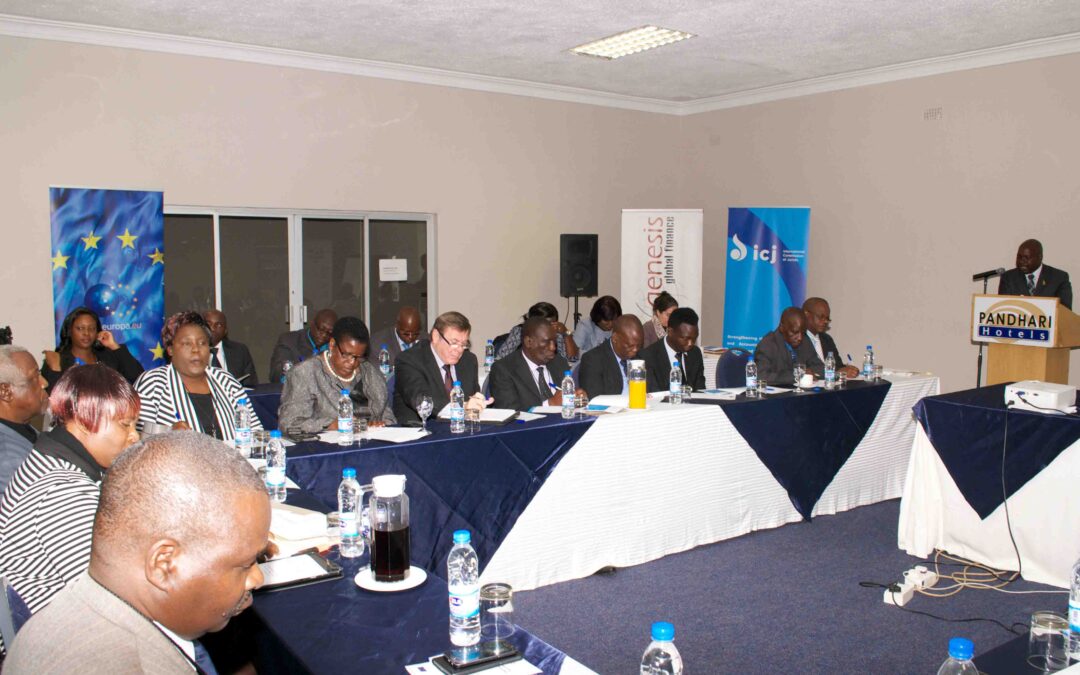
The National Prosecuting Authority (NPA) of Zimbabwe convened its first strategic planning workshop with technical support from the ICJ, under recently launched European Union (EU) funded project to contribute to an improvement in administration of justice in Zimbabwe.
The strategic planning workshop took place in Harare from 6 to 8 July 2015.
The NPA is established under section 259 of the 2013 Constitution as a separate, independent and accountable institution responsible for instituting and undertaking criminal prosecutions on behalf of the State, promoting a just and fair system for all persons approaching the courts and protecting the rights of the arrested and detained persons as provided for by the Constitution.
The strategic plan will allow the NPA to set its vision, objectives and including stakeholders’ expectations as guided by the Constitution and the National Prosecuting Authority Act for the next 5 years.
The NPA held this strategic plan as its first ever strategic stakeholder’s engagement since its establishment under the Constitution in May 2013.
To validate and ground the strategic plan and outputs, the NPA invited civil society organizations, law based institutions, human rights advocates, women lawyers associations, legal aid institutions, the Parliament Thematic and Standing Committee representatives, law enforcement agencies, and law professors, among others.
The Judicial Service Commission and Law Society of Zimbabwe, ICJ’s partners in EU funded project on improvement in the administration of justice, also attended the NPA strategic planning session.
The strategic plan will inform further interventions and activities for strengthening the observance of the rule of law, fair trial and access to justice by the NPA with support from ICJ’s EU funded project.
Once developed and adopted, the strategic plan will further open opportunities for other technical partnerships and funding opportunities for the NPA.
Contact:
Arnold Tsunga, ICJ Regional Director for Africa, t: +27 73 131 8411, e: arnold.tsunga(a)icj.org
Jul 2, 2015 | News
The Human Rights Council today adopted a resolution on the independence of judges & lawyers, with several new provisions on gender balance in the judiciary, judicial accountability, children and court proceedings, and development of professional guidance on marginalized and other groups.The resolution builds on past resolutions of the Human Rights Council.
The full text of the resolution is here: HRC29-ResolutionJudgesLawyers-2015 Its official resolution number has not yet been assigned.
The main sponsors of the resolution were Australia, Botswana, Hungary, Maldives, Mexico, Thailand. The resolution was adopted by consensus (without a vote).
A resolution on this topic will next be presented in 2017.
Jun 30, 2015 | News
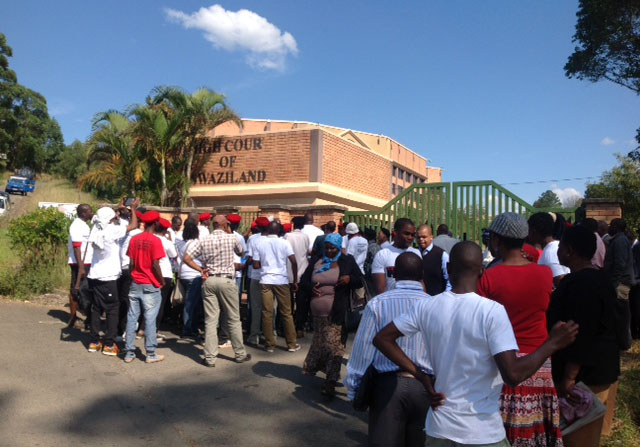
The ICJ welcomes the decision of the Supreme Court of Swaziland to uphold the appeal of imprisoned human rights defenders Thulani Maseko and Bheki Makhubu and ordering their immediate release.
“The decision marks a victory for the rule of law in Swaziland,” said ICJ Secretary-General Wilder Tayler. “We hope that this is but the first of many steps to come in restoring the integrity of the courts and reinforcing the respect for the rule of law that has undergone so much erosion in recent years.”
The ICJ considers that while the release of the two men is a necessary step for justice for the two men, alone it is not enough.
The government of Swaziland should ensure adequate reparation for their wrongful imprisonment.
More broadly, it must engage in legal and structural reforms necessary to ensure the fair and effective administration of justice, the independence of the judiciary and respect for human rights in the country.
Thulani Maseko and Bheki Makhubu were arrested on 17 March 2014 under contempt of court charges for having written articles criticizing the manner in which the then Chief Justice (CJ), Michael Ramodibedi, had handled the case of another defendant, Bhantshana Gwebu.
Mr. Gwebu had been arraigned before the CJ without legal representation, charge sheet or being informed of his rights to apply for bail.
The trial of Thulani Maseko and Bheki Makhubu was riddled with violations of basic due and fair trial principles, as affirmed by the UN Working Group on Arbitrary Detention (WGAD), which ruled on a complaint in Thulani Maseko’s case.
Background
The trial of Thulani Maseko and Bheki Makhubu resulted in their conviction and a two-year prison sentence It was improperly conducted before a presiding judge, Mpendulo Simelane, who was a potential witness and had a direct interest in the case.
They had been in custody since their arrest, save for a three-day release in June 2014, and were due for final release on the 17 July 2015.
The ICJ has previously issued a number of statements after conviction by the High Court, underscoring that the prosecution and trial Court’s judgment had constituted a breach of Swaziland’s obligations to respect the rights to freedom of expression and fair trial.
The UN WGAD opinion issued on 22 April 2015 held that the deprivation of liberty of the accused was arbitrary and in contravention of the Universal Declaration of Human Rights and Swaziland’s obligations under the International Covenant on Civil and Political Rights (ICCPR).
The WGAD also emphasized that Swaziland should release the accused and facilitate the enforceable right to compensation in accordance with article 9 of the ICCPR.
In the appeal hearing yesterday, the Crown conceded most of the legal arguments by defence counsel and in particular that Judge Simelane ought to have recused himself from presiding over the case.
The Supreme Court’s written judgment is expected to be issued at the end of the session of its sitting.
Read also:
Swaziland: ICJ condemns the harsh prison term imposed on Thulani Maseko and Bheki Makhubu
Swaziland: ICJ condemns the conviction of celebrated human rights lawyer and prominent journalist on charges of contempt of court
Swaziland: ICJ concerned at detention of human rights lawyer and journalist
American Bar Association’s statement
Contact:
Arnold Tsunga, Director, ICJ Africa Regional Programme, t +27 716 405 926 or +41 76 239 90 32 e: arnold.tsunga(a)icj.org
Matt Pollard, Senior Legal Adviser, ICJ’s Centre for the Independence of Judges and Lawyers, t: +41 22 979 38 12, e: matt.pollard(a)icj.org