Jun 25, 2015 | News
The ICJ today welcomed the decisions by the Kyrgyz Supreme Court declaring illegal the recent government searches of the homes and offices of lawyers, and seizures of their legal files.
In three related cases, the Court upheld the findings of the Osh regional court that the searches of the homes of lawyers Valerian Vakhitov and Khusanbay Saliyev and lawyers’ offices at the NGO “Bir-Duyno-Kyrgyzstan” by officers of the State National Security Committee were contrary to Kyrgyz law.
The Supreme Court also dismissed the attempts by the Prosecutor’s Office to initiate disciplinary action against judges of the Osh regional court as a result of their decision in these cases.
The decisions are an important affirmation of the rule of law in the Kyrgyz Republic, and will strengthen the independence of both the judiciary and the legal profession, the ICJ said.
“These decisions of the Supreme Court are crucial for securing the independence and strengthening of the legal profession under the newly established Association of Lawyers and for the ability of judges to issue independent decisions based on law and facts,” said Olga Zimareva, one of two ICJ observers who were present at the hearing.
“It is a demonstration of the judiciary’s willingness and capacity to effectively uphold the rule of law and safeguard the fundamental role of lawyers,” she added.
The International Covenant on Civil and Political Rights, which is binding on the Kyrgyz Republic, protects the right to a fair trial including lawyer-client confidentiality.
Furthermore, Principle 16 of the UN Basic Principles on the Role of Lawyers upholds the duty of States to ensure that lawyers can perform all of their professional functions without intimidation, hindrance, harassment or improper interference.
International standards require that judges should not be subjected to disciplinary action for discharging their judicial function, as was requested by the Prosecutor’s Office in this case.
Principle 2 of the UN Principles on the Independence of the Judiciary makes clear that: “[t]he judiciary shall decide matters before them impartially, on the basis of facts and in accordance with the law, without any restrictions, improper influences, inducements, pressures, threats or interferences, direct or indirect, from any quarter or for any reason”.
Background
On 25 March 2015, Umar Farooq, a United States national and journalist, was arrested by officers of the State National Security Committee (SNSC), who seized a number of items in his possession including the business cards of two lawyers, Valerian Vakhitov and Khusanbay Saliyev.
On 28 March, Umar Farooq was expelled from the Kyrgyz Republic on grounds of collection of information without accreditation.
The investigator sought a search warrant for the premises of the two lawyers on the grounds that they could contain documents “necessary for the investigation”. This was done despite a clear guarantee against such an interference under Article 29 of the Law On Advokatura and Lawyers’ Activity of the Kyrgyz Republic stating that “requisitioning, seizure, examination, inspection, copying documents, collection and use of information related to legal assistance in a particular criminal case are allowed only in the case involving a lawyer as a defendant …”.
Judges K.M. Matisakov and B.T. Satybaldiyev issued warrants to the State National Security Committee to search the NGO premises where the lawyers worked and to search the residence of Valerian Vakhitov and Khusanbay Saliyev, in separate proceedings on 26 and 27 March. Officers of searched the homes of lawyers and the office of the human rights organization Bir-Duyno-Kyrgyzstan” and seized certain case materials of the two lawyers.
In a statement issued on 31 March 2015, the ICJ deplored the unlawful actions against the lawyers and underscored that an independent legal profession is fundamental to ensuring the fair administration of justice and right to a fair trial for all persons who come before the courts.
The issuing of the warrants was successfully challenged by lawyers before the Osh Regional Court which issued its decision on 30 April 2015. Before the Supreme Court, the Prosecutor’s Office sought affirmation of the lawfulness of searchers of lawyer’s homes and work premises as well as recognition of the lawfulness of seizure of case materials, both guarantees clearly protected by national law in Kyrgyz Republic and international law and standards on the role of lawyers and the right to a fair trial.
The Prosecutor also sought disciplinary measures against the judges of the Regional Court who decided in favour of the protection of the professional guarantees of lawyers, ruling that the searches and seizures of documents were illegal.
Two ICJ observers attended the hearings at the Supreme Court: Olga Zimareva, a lawyer practicing in the Russian Federation and Almaz Osmanova, a lawyer in the Kyrgyz Republic and chair of the Central Asian League of Lawyers.
The Supreme Court issued its decisions finding the searches and seizures of documents illegal, on 24 June 2015. The reasons for the decisions have not yet been published.
The ICJ will publish its legal analysis of the proceedings and the judgment of the Supreme Court in due course.
Contact
Róisín Pillay, Director, Europe Programme, roisin.pillay(a)icj.org
Temur Shakirov, Legal Adviser, Europe Programme, temur.shakirov(a)icj.org
Kyrgyzstan-Supreme Court Vakhitov Saliyev-News-Press release-2015-RUS (full text in PDF, Russian)
Jun 19, 2015 | News
The ICJ today called on the Moroccan authorities to amend the draft laws on the High Judicial Council, the Conseil supérieur du pouvoir judiciaire (CSPJ), and on the Statute for Judges, to ensure their full compliance with international law and standards on judicial independence.
The ICJ called on the authorities to ensure that: the CSPJ is institutionally and organizationally independent; is exclusively competent to manage the career of judges, including the selection of trainee judges; is involved in determining the budget for the judiciary; and is empowered to administer the allocation of judicial resources.
This statement comes following the conclusion of a high-level mission to Morocco from 12 to 18 June 2015 to engage with members of the executive, legislative and judicial branches, as well as representatives of civil society, on the judicial reforms initiated by the Moroccan authorities.
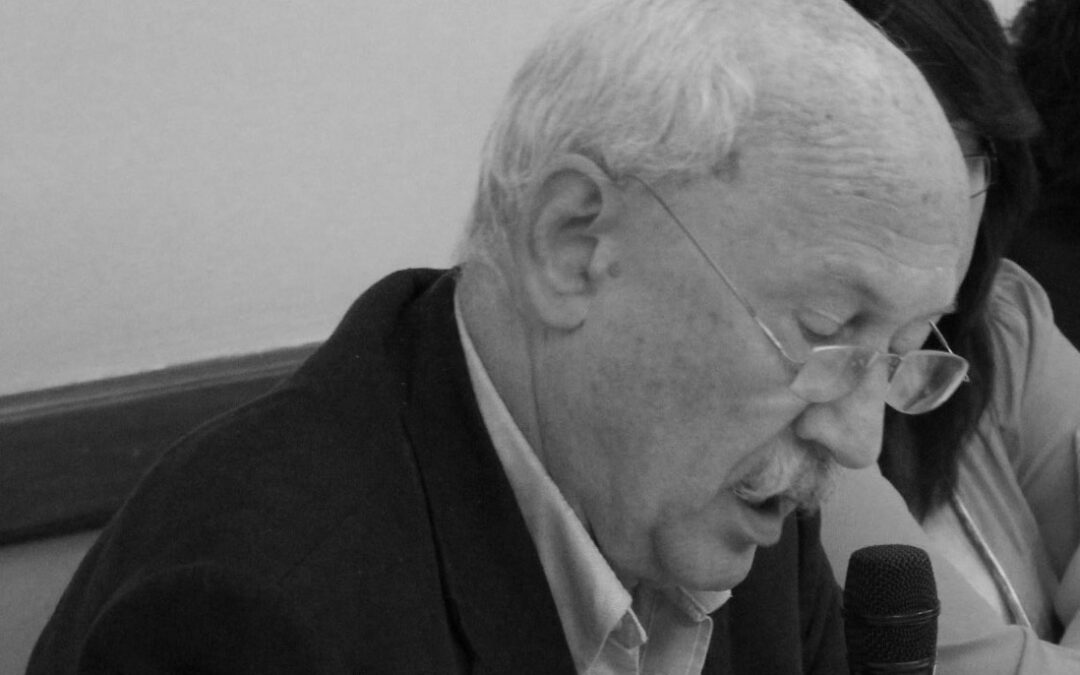
“The Draft Law on the CSPJ should enhance and expand the guarantees of judicial independence provided for by the 2011 Constitution, including by ensuring that the General Inspection Service (GIS) is under the authority of the CSPJ, that the organic law on the CSPJ sets out the GIS composition, competencies, and areas of intervention, and that the CSPJ oversees all issues pertaining to judicial administration,” said Philippe Texier, ICJ Commissioner and a former judge of the French Cassation Court (photo).
During this mission, the ICJ submitted to the authorities two memos analyzing the draft laws in light of international law and standards and formulating recommendations for amendments and reform.
In particular, the ICJ called for the majority of the members of the CSPJ to be judges who are chosen by their peers, for the selection and appointment of the President and the General Prosecutor of the Cassation Court to be based on objective criteria and made through transparent procedures, and for the grounds and procedure for dismissal of members of the CSPJ to be prescribed by the Law.
The ICJ is also deeply concerned that the draft law on the Statute for Judges does not contain any provisions on the criteria and procedure for selecting trainee judges.
Under the current framework, the process of selecting trainee judges is under the effective control of the Ministry of Justice.
Furthermore, while the Draft Laws entrusts the CSPJ to draft a Code of Judicial Conduct, they do not specify that, once adopted, the Code should be the basis on which judges will be held to account professionally, the Geneva-based organization says.
“The Draft Law should be amended to set out fair and transparent procedures for selecting trainee judges, to ensure that the CSPJ is fully competent to oversee the entire selection process, and to provide for the code of ethics and judicial conduct to be established in the law as the basis on which judges will be held to account professionally, including by clearly and precisely defining disciplinary offences,” said Said Benarbia, ICJ Director of the Middle East and North Africa Programme.
Contact:
Theo Boutruche, Legal Adviser of the ICJ Middle East and North Africa Programme, t: +96 170 888 961, e: theo.boutruche(a)icj.org
Additional information:
The ICJ delegation was led by Mr. Philippe Texier, former judge of the French Cassation Court and ICJ Commissioner.
The delegation met with Mr. Driss Dahak, Secretary General of the Government; Mr. Abdelilah Lahkim Bennani, Secretary General of the Ministry of Justice; Mr. Mustapha Farès, First President of the Cassation Court; Mr. Mohamed Meddah, Prosecutor General of the Cassation Court; Mr. Mohamed Cheikh Biadillah, President of the Chamber of Counsellors; Mr. Omar Adkhil, President of the Commission of Justice, Legislation and Human Rights of the Chamber of Counsellors; Mr. Mohamed Zerdali, President of the Commission of Justice, Legislation and Human Rights of the Chamber of Deputies; Mr. Abdellatif Chentof, President of the Judges Club; Mr. Mohamed Khadraoui, vice-President of the Amicale Hassania; and Mr. Mohamed Akdim, President of the Bar Associations of Morocco (ABAM).
Morocco-Draft Law CSPJ-News-press releases-2015-ARA (full text of statement, in PDF, Arabic)
Morocco-Memo on the CSPJ-Advocacy-Briefing paper-2015-ENG (full text of memo 1 in PDF)
Morocco-Memo on the CSPJ-Advocacy-Briefing paper-2015-ARA (full text of memo 1 in PDF, Arabic)
Morocco-Memo on Statute for Judges-Advocacy-Briefing paper-2015-ENG (full text of memo 2 in PDF)
Morocco-Memo on Statute for Judges-Advocacy-Briefing paper-2015-ARA (full text of memo 2 in PDF, Arabic)

Jun 19, 2015 | News
La CIJ pide a la Asamblea Legislativa de El Salvador elegir a las personas independientes, idóneas y honestas como magistrados de la Corte Suprema de Justicia.
La CIJ, ante la próxima elección por parte de la Asamblea Legislativa de El Salvador de cinco magistrados a la Corte Suprema de Justicia, expresa:
- De conformidad con el Derecho Internacional de los Derechos Humanos, los Estados deben hacer todos los esfuerzos posibles, para dotarse a sí mismos de un Poder Judicial Independiente. En tal sentido, es necesario que la Asamblea Legislativa haga todos los esfuerzos posibles para elegir de la lista de 30 personas, a las más idóneas, honestas e independientes;
- La Asamblea Legislativa debería dar tiempo suficiente, para permitir que en el proceso de elección, la sociedad salvadoreña pueda presentar sus observaciones y críticas hacia cada uno de los candidatos y candidatas; asimismo, después de elaborar una lista corta de posibles candidato/as (lista de 10 personas por ejemplo), la Asamblea Legislativa debería llevar a cabo audiencias púbicas con cada uno de ellos, para que la ciudadanía pueda enterarse con más detalle de la trayectoria de cada candidato/a y de su conocimiento en aspectos de administración de justicia;
- La Asamblea Legislativa debería elegir a las personas que tengan más conocimiento y experiencia en materia de administración de justicia y que sean jueces de carrera, para que quienes sean electos puedan llegar a impulsar los cambios que el Sistema de Justicia requiere. Por ejemplo, las reformas a la Carrera Judicial; separación de las facultades administrativas y jurisdiccionales de las y los magistrados de la Corte Suprema de Justicia; reformas a los procesos disciplinarios que se aplican a jueces y magistrados, entre otras.
Ramón Cadena, Director del programa la Comisión Internacional de Juristas para Centroamérica expresó en su visita a El Salvador: “Si bien los acuerdos de paz introdujeron reformas importantes, después de más de quince años se requiere introducir nuevas reformas para fortalecer la independencia del Poder Judicial, en relación a los otros poderes del Estado de El Salvador y alcanzar una mayor independencia judicial. Seguiremos observando de cerca el desarrollo y los resultados de este proceso de elección.”
Jun 18, 2015 | News
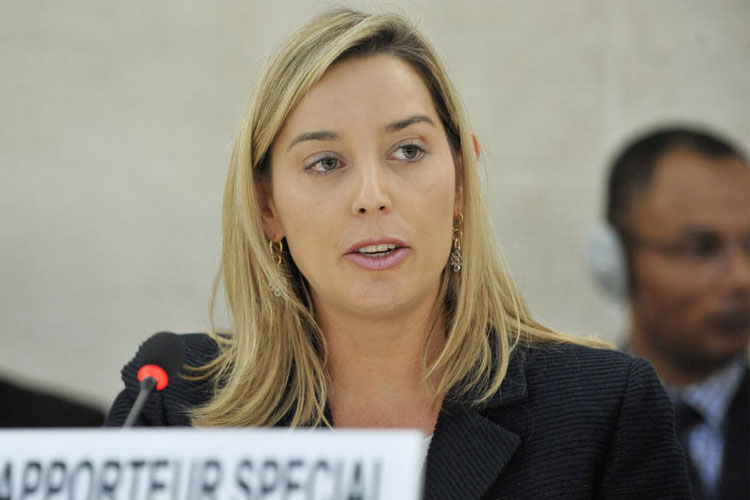
Mrs Gabriela Knaul (Brazil) today participated in an Interactive Dialogue with the Human Rights Council. Topics included children in the justice system, her visits to Qatar, United Arab Emirates, Tunisia and Portugal, and the need more generally for better implementation of relevant UN standards.
Mrs Knaul’s appearance before the Human Rights Council will be her last before her term in the mandate comes to an end in the coming months.
Her successor as UN Special Rapporteur on the independence of judges & lawyers is to be appointed at the end of the Council session, on 3 July 2015.
Following an initial presentation by the Special Rapporteur, the concerned countries responded, followed by discussion by other states, and civil society.

Jun 17, 2015 | Events, News
Head of ICJ’s Centre for the Independence of Judges & Lawyers, Matt Pollard, today moderated a side event on “Securing the independence and effectiveness of the Judiciary: European initiatives and perspectives in global context” at the UN Human Rights Council.
At the event, representatives of the Council of Europe highlighted the work of the European Commission for the Efficiency of Justice (CEPEJ) and the Consultative Council of European Judges (CCJE). The UN Special Rapporteur on the Independence of Judges and Lawyers, Ms Gabriela Knaul (from Brazil) reflected on the global relevance of European initiatives and institutions during her six years in the mandate.
Matt Pollard discussed the impact of Council of Europe standards and jurisprudence, both within Europe and in terms of global influence, from the perspective of civil society, as well as highlighting that standards and jurisprudence developed in other regions also present a rich source that European institutions should do more to draw on in their own work.
The interactive Panel discussion included extensive questions and comments from state delegations and civil society representatives in attendance at the event.
Panelists:
Mr. Georg Stawa, President of the European Commission for the Efficiency of Justice, Council of Europe
Mr. Bart van Lierop, President of the Consultative Council of European Judges
Mrs. Gabriela Knaul, UN Special Rapporteur on the Independence of Judges and Lawyers
Mr. Matt Pollard, Centre for the Independence of Judges and Lawyers, International Commission of Jurists (moderator)
This side event was organised by the Permanent Delegation of the Council of Europe to the UN Office in Geneva, with the co-sponsorship of Australia, Botswana, Hungary, Mexico as the main sponsors of the resolution on the independence of judges and lawyers