Feb 11, 2014 | News
The seminar was on “The Role of Judicial Independence and Integrity in Improving the Effectiveness of the Rule of Law”, with the participation of the ICJ.
The event, hosted by the Office of the Supreme Court of the Union (OSCU) in collaboration with the United Nations Development Programme (UNDP) and the ICJ, took place in Nay Pyi Taw on February 10th and 11th 2014.
It was attended by more than 40 judges and senior court administrators from all states and regions in Myanmar.
Discussions at the seminar focused on the ways in which Myanmar’s judicial system can continue to develop its functional independence and deliver justice for all.
In opening the seminar, the Honourable Chief Justice of the Union, U Htun Htun Oo, remarked that judicial independence and integrity are essential to building a reliable judicial system in which the people of Myanmar can trust, and which can uphold the rule of law.
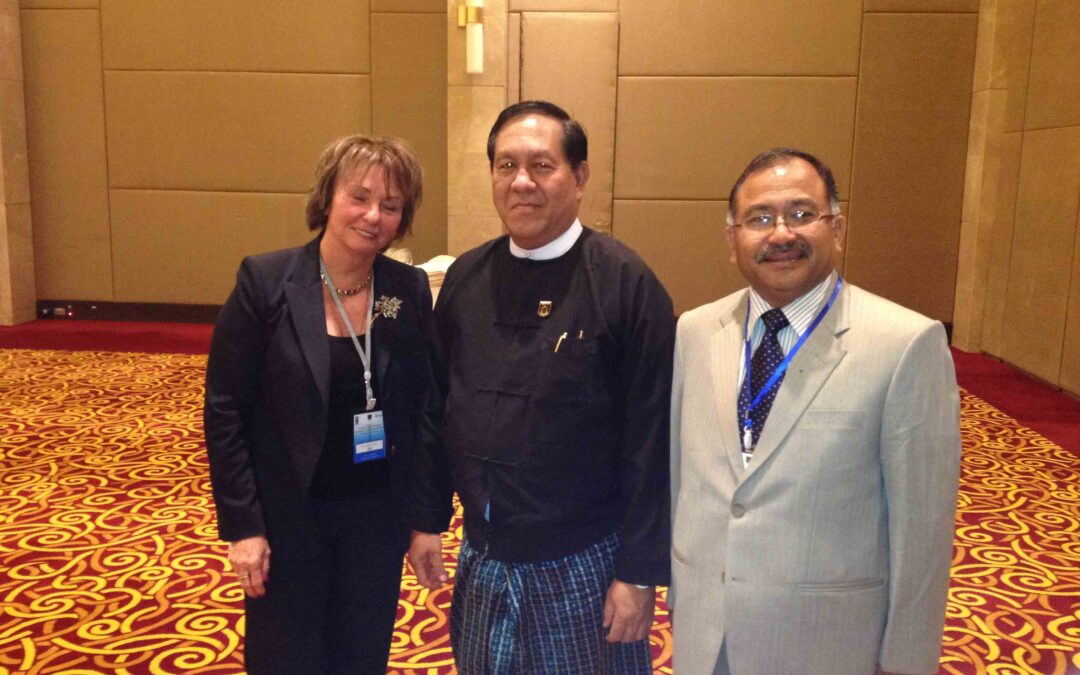
During the seminar, Justice Kalyan Shrestha of Nepal, and ICJ Vice President Justice Michèle Rivet of Canada shared their experiences of the challenges of preserving judicial independence as a key pillar of a democratic society.
In her opening remarks, Ms. Renata Lok-Dessallien, UN Resident Coordinator, also noted that in addition to the importance of a fair legal framework, a trained judiciary and well-functioning court system, “the other half of the equation is from the bottom up: it is people’s perceptions of the professionalism, integrity and fairness of the system.”
Sam Zarifi, ICJ’s regional director for Asia and the Pacific added that “access to an independent and impartial tribunal is a human right”.
Both UNDP and ICJ expressed their willingness to continue working with Myanmar’s judiciary on the issues of judicial independence, and justice for all for the long-term.
Photo: ICJ Vice President Justice Michèle Rivet, Justice Kalyan Shrestha and Chief Justice U Htun Htun Oo

Feb 11, 2014 | News
The personal decision of Khil Raj Regmi to resign and not return to his post as Chief Justice safeguards the independence of the judiciary and maintains the rule of law in Nepal, the ICJ says.
Caretaker Council of Minister Chairman Khil Raj Regmi announced this afternoon that he would not return to his former post of Chief Justice after acting as the Chairman of the Council of Ministers since March 2013.
“Khil Raj Regmi’s decision is one that will help to preserve the Supreme Court’s hard-earned reputation as an independent institution,” said Ben Schonveld, ICJ’s South Asia Regional Director.
International standards, including the International Covenant on Civil and Political Rights (ICCPR) and the UN Basic Principles on the Independence of the Judiciary, clarify that all governmental officials and institutions as well as judges must respect and preserve the independence and integrity of the judiciary.
The 2007 Interim Constitution of Nepal enshrines guarantees for the independence of the judiciary and contains safeguards for the separation of executive, legislative and judicial powers.
Article 106 of the 2007 Interim Constitution explicitly bans sitting and retired judges from assuming any appointment in government service apart from a role in the national human rights commission.
To enable former Chief Justice Regmi to act as caretaker Prime Minister, the President amended several provisions of the Interim Constitution, including Article 106.
These amendments were made in contravention of the Constitution, which required a two-thirds majority of a sitting Parliament.
“The return of Khil Raj Regmi to the post of Chief Justice would have significantly undermined the appearance of independence of the Supreme Court and the judiciary as a whole,” Schonveld added.
The Bangalore Principles of Judicial Conduct clarify that judges must not only be free from any inappropriate connections with the executive and legislative branches of government but also must appear to a reasonable observer to be free therefrom.
The ICJ applauds the personal decision of Chairman Khil Raj Regmi to resign as Chief Justice.
The ICJ calls on the new Government under the leadership of the Nepali Congress Chairperson, Sushil Koirala as well as the other elected political parties of the Constituent Assembly to honour the commitments made during the election and work to end impunity for gross violations of human rights.
Contact:
Ben Schonveld, ICJ South Asia Director, (Kathmandu); t: 977 9804596661; email: ben.schonveld(a)icj.org
Govinda Bandi Sharma, ICJ Senior Legal Adviser, Nepal (Kathmandu), t: +977 9851061167; email: govinda.sharma(a)icj.org
Sheila Varadan, ICJ Legal Adviser, South Asia Programme (Bangkok), t: +66 857200723; email: sheila.varadan(a)icj.org
Feb 7, 2014 | News
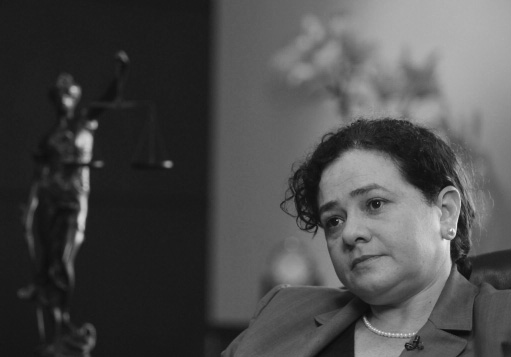
La actual Fiscal General y Jefa del Ministerio Público, Claudia Paz y Paz, fue nombrada el 10 de diciembre de 2010 para dirigir la institución por un período de 4 años, que legalmente vence el 9 de diciembre de 2014.
Su nombramiento ocurrió, hasta dicha fecha, como resultado de la repetición del proceso de selección debido a acusaciones que cuestionaban la honorabilidad e idoneidad de la persona previamente electa.
La actual Fiscal General y Jefa del Ministerio Público se ha constituido por sus resultados de gestión ante el Ministerio Público, como una figura democrática e independiente que ha realizado una importante labor en la protección y defensa de derechos humanos y en el desmantelamiento de estructuras criminales importantes. Esta figura contraviene los intereses de oscuros grupos que buscan interrumpir la continuidad del trabajo de la Fiscal.
Por ello, un abogado, ha puesto en marcha acciones jurídicas promoviendo que la Corte de Constitucionalidad acceda a reducir el período de gestión de la actual Fiscal.
El 05 de febrero del presente año, la Corte de Constitucionalidad emitió una resolución en que concede un amparo provisional y ordena al Congreso de la República convocar a la conformación de un nuevo proceso de elección para cambio de Fiscal General.
De confirmarse este amparo provisional por parte de la Corte de Constitucionalidad, se tendría como resultado que la fiscal sea removida de su cargo y se estaría violentando el Estado de Derecho.
Guatemala-Commuicado en defensa del estado de derecho-news-web story-2014-spa (full text in pdf)
Photo credit: ICTJ

Jan 21, 2014 | News
The ICJ is deeply concerned by reports that the President of Nauru has prevented the island nation’s Chief Justice from returning to the country and expelled the sole Resident Magistrate in violation of international standards on the independence of the judiciary.
According to media reports, Nauru President Baron Waqa on January 19 removed Resident Magistrate Peter Law in violation of an injunction issued by Chief Justice Geoffrey Eames. Subsequently, Chief Justice Eames, who was in Australia at the time, had his visa cancelled. Both judicial officials are Australian citizens.
Australia administered Nauru as a dependent territory until 1968 and the two countries retain strong bilateral relations. Australian judges and magistrates often serve on Nauru Courts.
“Removing judges from office, without any process whatsoever, breaches clear international standards on the independence of the judiciary,” said Sam Zarifi, ICJ’s Regional Director for Asia and the Pacific. “It also jeopardizes the right of people in Nauru, especially those currently engaged in legal proceedings, to have a fair trial.”
Nauru is an island state in Micronesia in the South Pacific.
The ICJ’s Centre for the Independence of Judges and Lawyers (CIJL) is monitoring developments.
Contact:
Sam Zarifi, ICJ Asia-Pacific Regional Director, (Bangkok), t:+66 807819002, e-mail: sam.zarifi(a)icj.org
Craig Knowles, ICJ Media & Communications, (Bangkok), t:+66 819077653, e-mail: craig.knowles(a)icj.org

Dec 11, 2013 | News
The ICJ has now published a translation of its Practitioner’s Guide, International Principles on the Independence and Accountability of Judges, Lawyers and Prosecutors in both traditional and simplified Chinese.
This is the first comprehensive analysis of the existing standards and compilation of universal and regional instruments published in Chinese.
The Guide outlines the roles to be played by a strong legal profession, an independent judiciary and an impartial and objective prosecuting authority.
References to international decisions, reports, texts of treaties and other international standards allow the Guide to be used as a reference book by legal practitioners and policy makers.
To access and download it please click here.