Sep 19, 2013 | News
The ongoing involvement of the lead prosecutor in the hearing on the appeal against the acquittal of opposition leader, Anwar Ibrahim, raises concerns about prosecutorial impartiality, the ICJ said today.
The ICJ is particularly concerned at the failure of the lead prosecutor, Datuk Seri Muhammad Shafee Abdullah, who was said to have some prior knowledge of the facts of the case, to remove himself from involvement in the proceedings and so maintain an appearance of prosecutorial integrity and impartiality.
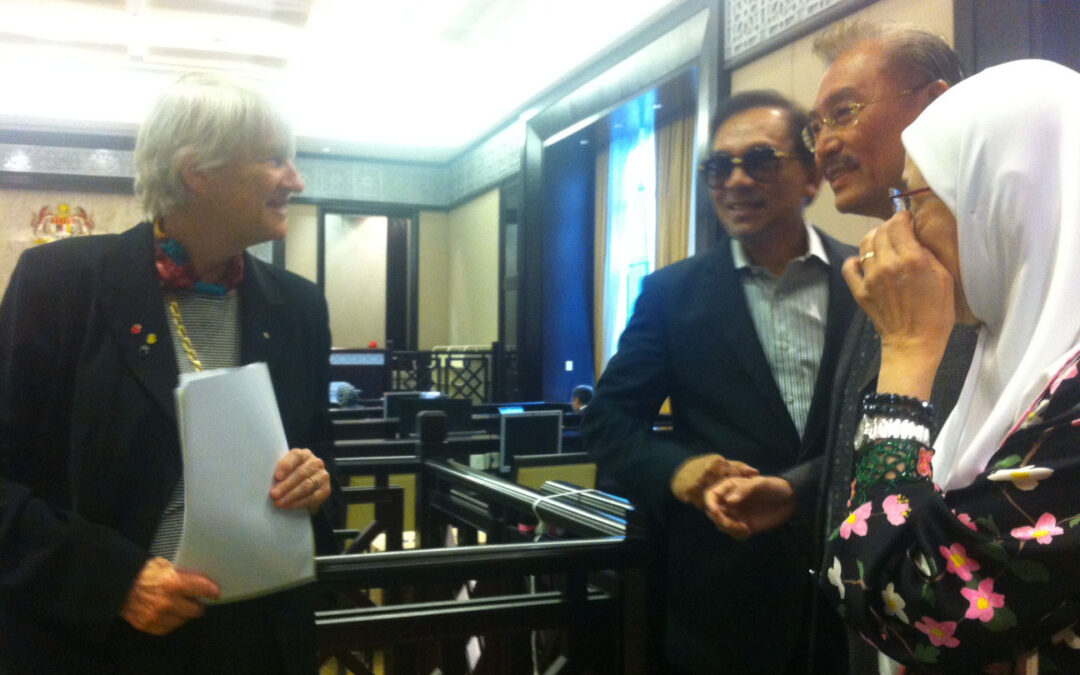
“This case is a significant test of the integrity of the judicial system in Malaysia, which for so long has been the subject of concern to human rights proponents, bodies and organizations,” said Justice Elizabeth Evatt, a Commissioner of the ICJ who was observing the proceedings.
The hearing on the appeal was postponed to allow the preliminary objection raised on the first day, 17 September, by the lawyers of Anwar Ibrahim against Judge Tengku Maimun Tuan Mat’s selection as a member of the three-person panel to hear the appeal.
The defense lawyers argued that there was a perception of bias due to Judge Tengku Maimun Tuan Mat’s former ruling in a libel suit involving Anwar Ibrahim and the then Prime Minister Mahathir Mohamad in 2007.
Judge Tengku Maimum Tuan Mat thereafter recused herself from the proceedings.
The Court of Appeal therefore reconvened on the second day, 18 September, with a new judge, Dato’ Rohana Binti Yusuf, to hear the motion objecting to the appointment of Datuk Seri Muhammad Shafee Abdullah as lead prosecutor in the case.
The motion was based partly on the fact that that Datuk Seri Muhammad Shafee Abdullah was present at Deputy Prime Minister Najib’s home at the same time as the complainant two days before the incidents leading to the filing of charges against Anwar Ibrahim.
At the very beginning of the case, Datuk Seri Muhammad Shafee Abdullah filed an affidavit concerning this fact, although he was not called as a witness in the proceedings.
The Court later denied the motion objecting to his appointment as lead prosecutor in this appeal, saying that there was no conflict of interest or apparent unfairness.
Justice Evatt, however, expressed concern that Datuk Seri Muhammad Shafee Abdullah had taken on the role of lead prosecutor in the appeal.
“We expect higher standards of prosecutorial conduct,” she said. “Considering the political overtones in this case, Datuk Seri Muhammad Shafee Abdullah should be especially sensitive to any appearance that might lead to a perception of bias and partiality that might arise from his earlier knowledge of facts of the case.”
The UN Guidelines on the Role of Prosecutors provide that in the performance of their duties, prosecutors shall carry out their duties with impartiality.
The ICJ also acknowledged Judge Tengku Maimun Tuan Mat’s recusal as a sign that the Court of Appeal recognized the need to appear impartial. Under the UN Basic Principles on the Independence of the Judiciary, “judges shall always conduct themselves in a manner as to preserve the dignity of their office and the impartiality and independence of the judiciary.”
The Bangalore Principles of Judicial Conduct, state that to ensure such impartiality “a judge shall disqualify himself or herself from participating in any proceedings in which it may appear to a reasonable observer that the judge is unable to decide the matter impartially.”
The Court did not indicate new dates on when the hearing on the appeal would take place. The ICJ will continue to monitor this case.
The ICJ has previously condemned Malaysia’s continuing use of colonial-era criminal charges of ‘sodomy’ to cover even consensual sexual relations between adults.
The ICJ believes that Article 377B of the Malaysian Penal Code is inconsistent with respect for the right to privacy under international standards.
Justice Evatt, the first female judge to be appointed to an Australian Federal Court, a former member of the United Nations Human Rights Committee, and a commissioner of the ICJ, traveled to Malaysia to observe the appeal hearing from 17 to 18 September 2013, at the Court of Appeal in Putrajaya.
Contact:
Emerlynne Gil, International Legal Adviser, t +662 6198477 ext. 206 ; email: emerlynne.gil(a)icj.org
Sep 12, 2013 | News, Uncategorized
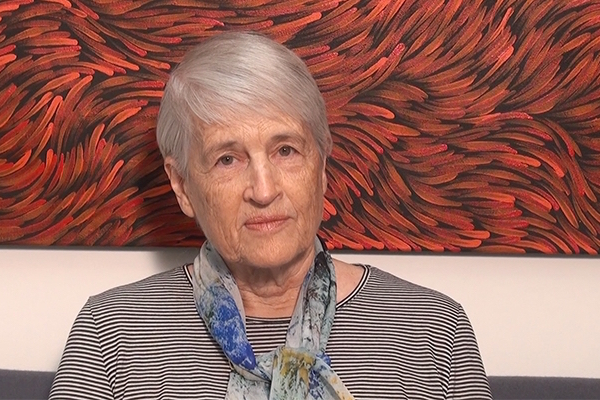
Justice Elizabeth Evatt AC (photo), will be observing the hearing of the appeal of Anwar Ibrahim’s case from 17 to 18 September 2013 at the Court of Appeal in Putrajaya.
Justice Evatt is the first female judge to be appointed to an Australian Federal Court, a former member of the United Nations Human Rights Committee, and a commissioner of the ICJ.
Anwar Ibrahim is a Malaysian politician and is currently the leader of the opposition party, Parti Keadilan Rakyat, and the opposition alliance known as Pakatan Rakyat.
The appeal hearing that Justice Elizabeth Evatt will be observing emerged from the 2008 charges filed against Anwar Ibrahim immediately after the general elections held that year.
He was charged for allegedly committing sodomy, which is a crime under Section 377B of the Penal Code and carries the penalty of up to 20 years of imprisonment and whipping.
The High Court acquitted Anwar Ibrahim on 9 January 2012.
This is the second time that Anwar Ibrahim is facing sodomy charges after his dismissal from the Malaysian Cabinet in 1998.
In 2004, The ICJ also sent a representative to observe the sodomy trial of Anwar Ibrahim, where the Federal Court overturned the High Court decision to convict him.
The ICJ called the Federal Court’s ruling “a step in the right direction in upholding the rule of law”.
Justice Evatt’s mandate as ICJ’s high-level observer to the appeal hearing includes monitoring the fairness of the proceedings against Anwar Ibrahim in the light of relevant international standards.
These standards include, among others the UN Basic Principles on the Independence of Judges, which set out standards on the independence and impartiality of judges, and the UN Guidelines on the Role of Prosecutors, which set out standards on the independence of prosecutors.
Justice Evatt will also be evaluating whether the prosecution under Section 377B of the Malaysian Penal Code is being used in this case to suppress political dissent, contrary to the right to freedom of expression.
“The right to observe trials stems from the general right to promote and secure the protection and realization of human rights. Trial observation is a key tool in monitoring the respect for human rights and the rule of law. It is an effective method to examine the level of independence and impartiality of a country’s criminal justice system,” said Emerlynne Gil, ICJ’s International Legal Adviser on Southeast Asia. “Trial monitoring also serves to promote better compliance with both domestic law and international standards that aim to ensure protection of human rights, including the rights to fair trial and due process.”
Contact:
Emerlynne Gil, International Legal Adviser for the ICJ Asia & Pacific Programme, t +662 6198477 ext. 206; email: emerlynne.gil(a)icj.org

Aug 21, 2013 | News
The ICJ today called on the government of the Kyrgyz Republic to take urgent measures to prevent repeated attacks on lawyers.
The call followed reliable reports of an assault on two lawyers in a court in the south of the country.
On 20 August 2013, lawyers Dinara Medetova and Kubanychbek Zhoroyev were physically attacked following a hearing in the Osh Regional Court.
This is the latest in a series of such attacks, which have threatened the lives and safety of lawyers, have hindered lawyers in defending the rights of their clients, and have undermined the fairness of trials.
The ICJ understands that the Ministry of Interior has denied that the attack on the lawyers took place. However this attack is confirmed by the accounts of reliable witnesses.
The ICJ is concerned that, in the face of repeated attacks of this kind, the government and law enforcement authorities have consistently failed to take effective measures to prevent them, or to ensure that they are effectively investigated and the perpetrators brought to justice.
“Denying that these attacks take place can only perpetuate the problem,” said Róisín Pillay, Director of the ICJ Europe Regional Programme. “What is needed is an independent, impartial and thorough investigation into the incident.”
“The government must work with the law enforcement authorities to ensure that the safety of lawyers, witnesses and defendants in criminal trials is ensured throughout the country, and that the Krygyz Republic protects the right to a fair trial, as required by its international legal obligations,” she added.
The two lawyers were defending Makhamatkir Bizurukov, an ethnic Uzbek, in a trial related to the 2010 ethnic clashes in the south of the country.
According to information available to the ICJ, the lawyers were repeatedly interrupted, insulted and threatened by members of the public in the course of the hearing, creating an atmosphere of intimidation which prevented the lawyers from effectively defending their client.
During the hearing, the lawyers also received death threats to which the judge did not respond.
After the hearing, reports indicate that around ten women, supporters of the victims in the case, physically attacked the lawyers.
“If it hadn’t been for my colleague who helped me to escape, I could have been very seriously injured or even dead”, lawyer Medetova told the ICJ. The lawyer later returned to Bishkek due to her fear of further attacks.
This attack took place despite an earlier written request by the defence lawyers in the case submitted to the local Police Department, President of the Court and the Osh Regional Prosecutor that security measures be taken during the hearing, in light of attacks on the accused, witnesses and lawyers at a previous hearing in the same case.
The ICJ understands that the head of the Police Department and the Prosecutor had assured lawyer Medetova that measures would be taken to guarantee the safety of the lawyers.
In the event however, the police took no action to prevent or halt the attacks on the lawyers in the courtroom.
Following the attack, the police reportedly told the lawyers that they could not protect them, as the supporters of the victim would consider such protection as bias in favour of the accused.
The ICJ recalls that international standards, including the UN Basic Principles on the Role of Lawyers, require that “where the security of lawyers is threatened as a result of discharging their functions, they shall be adequately safeguarded by the authorities”.
The ICJ urges the government to unequivocally and publicly condemn these attacks and to ensure that effective measures are taken to investigate them and bring those responsible to justice.
CONTACTS:
Róisín Pillay, Director, ICJ Europe Programme, roisin.pillay(a)icj.org
Temur Shakirov, Legal Adviser, ICJ Europe Programme, temur.shakirov(a)icj.org
Kyrgyzstan-Attack on lawyers-news-press release-2013-ENG (full text in pdf)
Kyrgyzstan-Attack on lawyers-news-press release-2013-RUS (full text in pdf)
Aug 15, 2013 | News
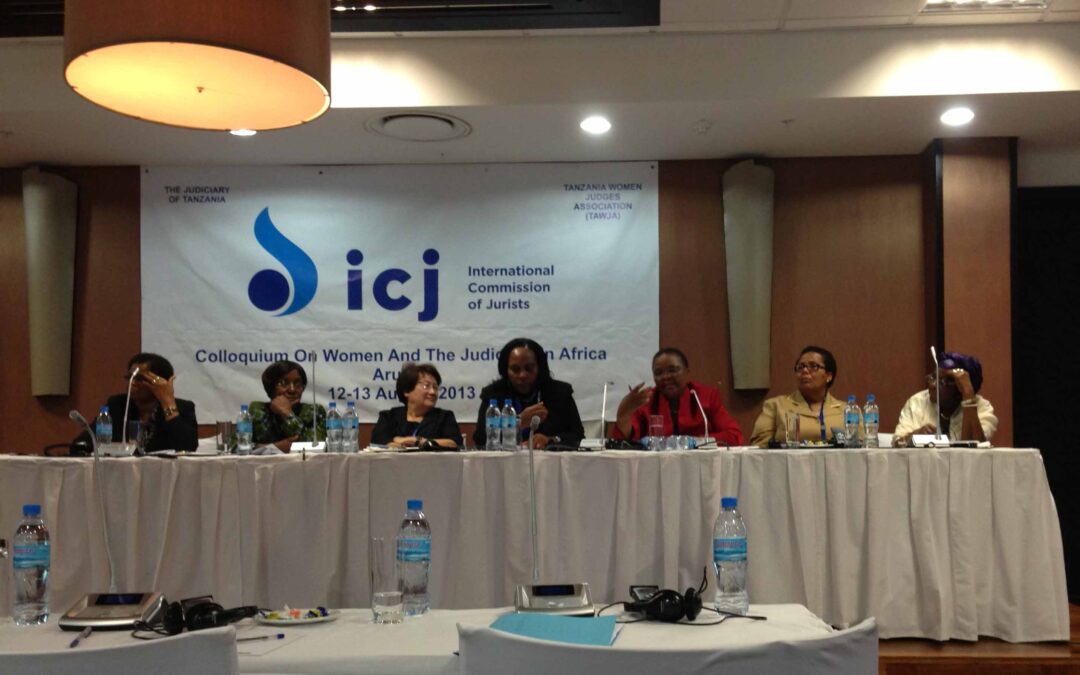
Women judges from across Africa participated in the first ICJ Colloquium on Women and the Judiciary on 12 and 13 August in Arusha, Tanzania.
The Arusha Colloquium, was opened by the Chief Justice of Tanzania and was hosted in collaboration and partnership with the Tanzania Women Judges Association and the Judiciary of Tanzania.
It enabled thirty five senior women judges from over fifteen African jurisdictions to come together to share their stories and reflect on and discuss their personal and professional experiences and challenges as women within the judiciary.
They were joined by over 15 women human rights defenders and lawyers.
Colloquium themes included the importance and role of women within the judiciary, independence and impartiality issues effecting women judges, appointment and promotion procedures, education and training needs and the role of women judges associations.
Discussions also addressed the role of the judiciary in advancing gender equality, women’s access to justice and protection of women human rights defenders.
The Colloquium marks the beginning of an ICJ multi-year initiative on women judges, lawyers and human rights defenders as agents of change.

Jul 27, 2013 | News
La CIJ condenó el asesinato de la jueza del Tribunal de Sentencia de la ciudad de El Progreso y Pro-Secretaria de la Junta de la Directiva Nacional de la Asociación de Jueces por la Democracia de Honduras.
La Jueza Mireya Mendoza fue ultimada por los disparos hechos desde una motocicleta mientras conducía su vehículo en la mañana del 23 de Julio en la ciudad de El Progreso, Departamento del Yoro, Honduras.
Ramón Cadena, Director de la CIJ para Centroamérica señaló: “Condenamos en los más enérgicos términos el asesinato de la Jueza Mendoza Peña”. Más de 50 abogados y abogadas han sido asesinados en Honduras en los últimos tres años
“Ataques de este tipo contra jueces y abogados no solamente constituyen graves crímenes sino que socavan seriamente el Estado de Derecho y la administración de la justicia en Honduras. La CIJ solicita al Gobierno de Honduras que disponga una investigación pronta, efectiva e imparcial sobre este nuevo crimen y que tome las medidas de protección necesarias para abordar la ola de intimidación y hostigamiento que sufren los profesionales del Derecho en ese país”, añadió Cadena.
La CIJ también expresó su solidaridad con la Asociación de Jueces por la Democracia en Honduras (AJD), que ahora se viste de luto por tan infame asesinato. La AJD es una organización profesional fundada en 2006, conformada por jueces y juezas comprometidos con la defensa y promoción de la independencia judicial como un presupuesto esencial para el fortalecimiento del Estado de Derecho, asumiendo la defensa de los derechos profesionales e intereses gremiales de jueces y juezas en Honduras.