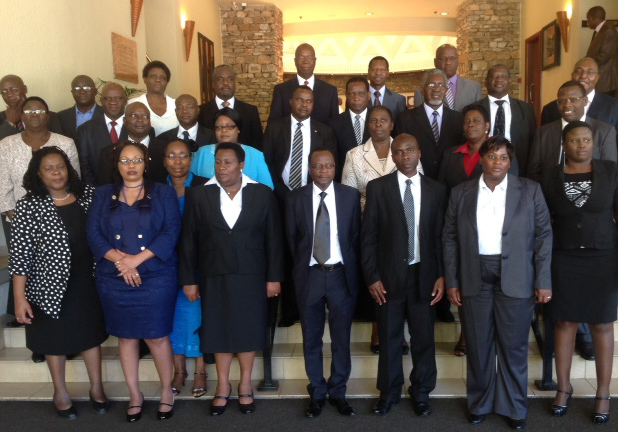
Symposium for judges in Zimbabwe
The Judicial Service Commission of Zimbabwe and the ICJ are holding a first-term symposium for Judges from Zimbabwe at Elephant Hills, Victoria Falls in Zimbabwe on 4-5 April 2014.

The Judicial Service Commission of Zimbabwe and the ICJ are holding a first-term symposium for Judges from Zimbabwe at Elephant Hills, Victoria Falls in Zimbabwe on 4-5 April 2014.

The ICJ today called on the Ukrainian authorities to discontinue criminal prosecutions and dismissals of Constitutional Court judges.
These measures, which came at a time of crisis in the country, were taken due to disagreement with a ruling made by the judges in 2010.
The measures interfere with the independence of the judiciary, and are inconsistent with the principle of separation of powers and respect for the rule of law.
Wilder Tayler, ICJ Secretary General underscored that “In times of crisis the stability and continuity of the judiciary is essential. Judges should not be subject to arbitrary removal, individually or collectively, by the executive, legislative or judicial branches”.
On 24 February 2014, the Verkhovna Rada, the Parliament of Ukraine, adopted a resolution according to which twelve of the eighteen judges of the Constitutional Court were to be dismissed by the institutions which appointed them.
Five of the judges were dismissed by the Rada itself. The Rada recommended that the Acting President and the Congress of Judges consider dismissing the other seven judges.
On 13 March, the Parliament appointed four new judges of the Constitutional Court.
The grounds for dismissals were breaching the oath of a judge.
Moreover, in accordance with the resolution, the Prosecutor General was assigned by the Parliament to initiate criminal proceedings against those judges who were “guilty of adopting the decision of the Constitutional Court of Ukraine of 30 September 2010 No 20-rp/2010”, which overturned the adoption of the Constitution of 2004.
The Parliament’s resolution against the justices of the Constitutional Court followed the Ukrainian political crisis, which reached its peak on 22 February 2014 after three months of protests and violent clashes, and resulted in a change of government.
“The ICJ is deeply concerned at the dismissal and criminal prosecution of Ukrainian Constitutional Court judges on grounds of their interpretation of the law in judicial decisions” said Wilder Tayler.
“These measures are inconsistent with respect for the independence of the judiciary and the rule of law. It is precisely at moments of transition or crisis, such as Ukraine is now experiencing, that upholding the rule of law and the separation of powers is most critical. Any disciplinary action against judges must respect the independence of the judiciary, be based on established standards of judicial conduct and be taken only following a fair procedure in which the rights of the judge concerned, including to a defence, are respected.”
The ICJ stressed that action taken against the judges of the Constitutional Court is inconsistent with the duties of all branches of the government of Ukraine to respect and protect the independence of the judiciary.
This duty, a fundamental pillar of the rule of law and a fundamental aspect of the principle of separation of powers of the three branches of government, is enshrined in both the European Convention on Human Rights and the International Covenant on Civil and Political Rights, international human rights treaties to which the State is a party.
Furthermore, Article 1 of the UN Basic Principles on the Independence of the Judiciary clarifies that all governmental and other institutions must respect and observe the independence of the judiciary.
This requires that judges have jurisdiction over issues of a judicial nature and that judicial decisions by courts must not be subject to revision (Principle 4).
Judges must have guaranteed tenure until a mandatory retirement age or the expiry of their term of office (Principle 12) and can be subject to suspension or removal only following fair procedures (Principle 17) and only for reasons of incapacity or behaviour that renders them unfit to discharge their duties (Principle 18).
The European Court of Human Rights found, in the recent case of Volkov v Ukraine, that dismissal of a judge of the Ukraine Supreme Court through a parliamentary procedure violated the right to a fair hearing under Article 6.1 of the European Convention on Human Rights, since there had been insufficient examination of the merits of the case, and it had not been heard by a tribunal established by law.
Contacts:
Róisin Pillay, Director, Europe Programme, t + 32 273 48 46, roisin.pillay(a)icj.org
Temur Shakirov, Legal Adviser, Europe Programme, t + 41 22 979 38 32, temur.shakirov(a)icj.org
Ukraine-dismissal and criminal prosecution of judges-news-2014 (Statement, PDF)
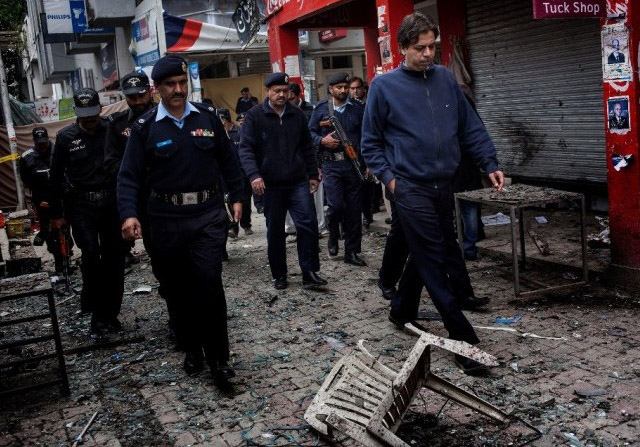
The shooting and bombing at an Islamabad Court today should be condemned as a presumed attack against the judicial officials and the independence of the judiciary in Pakistan, says the ICJ.
The attack resulted in the killing of Additional Sessions Judge Rafaqat Ahmad Khan Awan and at least ten other persons, including several lawyers.
According to reports, armed gunmen forced their way into a court complex in Islamabad, openly firing on judges and lawyers before at least two of the men blew themselves up inside the court complex.
One of the attackers detonated himself outside the door of a judge’s office, while the other targeted the office of the Lawyers’ Union President.
Another gunmen entered Judge Rafaqat Awan’s courtroom, where he shot and killed him.
“An intentional killing of a member of the judiciary can be seen as nothing other than an attack against the independence and impartiality of the judiciary as a whole,” said Sam Zarifi, ICJ Asia Pacific Regional Director.
“In addition to personal tragedy that has befallen the slain victims and their families, this attack and those like it are devastating for the people of Pakistan,” he added. “Courthouses, which should be places where justice is administered, are instead becoming slaughterhouses.”
This is the third armed attack against members of the judiciary in Pakistan in under a year. In March 2013, a judicial compound was attacked in Peshawar, killing four people.
In June 2013, a Sindh High Court judge’s convoy was attacked in Karachi, killing nine people.
As set out in the UN Principles on the Independence of the Judiciary, Pakistan must take steps to protect and ensure the safety of members of the judiciary from threats and violence from any quarter for any reason.
The Beijing Statement of Principles on the Independence of the Judiciary in the LAWASIA region further elaborates that the executive branch must at all times ensure the security and physical protection of judges and their families.
As a State party to the International Covenant on Civil and Political Rights, Pakistan is under a general obligation to ensure the safety of all persons within its territory at all times.
“If judges are under constant fear of violence from insurgent groups, they cannot function as an independent and impartial judiciary – an indispensible requirement for preserving rule of law and democracy,” Zarifi said.
The ICJ calls on the Government of Pakistan to take steps to immediately investigate and bring to justice those persons responsible for the armed attack on the Courthouse.
Contact:
Sam Zarifi, ICJ Asia-Pacific Regional Director, (Bangkok), t:+66(0) 807819002; email: sam.zarifi(a)icj.org
Reema Omer, ICJ Legal Advisor, Pakistan (London), t: +447889565691; email: reema.omer(a)icj.org
Photo credit: MYRA IQBAL

La CIJ lamenta la muerte del Sr. Magistrado de la Corte Suprema de Justicia César Ricardo Crisóstomo Barrientos Pellecer, ocurrida el día de ayer domingo 2 de marzo.
Así mismo, expresa sus más sinceras condolencias a su familia, a sus colegas del Organismo Judicial, gremio de abogados y abogadas y al pueblo de Guatemala en general.
La muerte del magistrado César Barrientos deja un vacío muy grande en el ámbito de la justicia y lucha contra la impunidad en Guatemala, ya que siempre se distinguió como un defensor de la independencia judicial y del Estado de Derecho.

The ICJ is deeply concerned by reports that the President of Nauru has prevented the island nation’s Chief Justice from returning to the country and expelled the sole Resident Magistrate in violation of international standards on the independence of the judiciary.
According to media reports, Nauru President Baron Waqa on January 19 removed Resident Magistrate Peter Law in violation of an injunction issued by Chief Justice Geoffrey Eames. Subsequently, Chief Justice Eames, who was in Australia at the time, had his visa cancelled. Both judicial officials are Australian citizens.
Australia administered Nauru as a dependent territory until 1968 and the two countries retain strong bilateral relations. Australian judges and magistrates often serve on Nauru Courts.
“Removing judges from office, without any process whatsoever, breaches clear international standards on the independence of the judiciary,” said Sam Zarifi, ICJ’s Regional Director for Asia and the Pacific. “It also jeopardizes the right of people in Nauru, especially those currently engaged in legal proceedings, to have a fair trial.”
Nauru is an island state in Micronesia in the South Pacific.
The ICJ’s Centre for the Independence of Judges and Lawyers (CIJL) is monitoring developments.
Contact:
Sam Zarifi, ICJ Asia-Pacific Regional Director, (Bangkok), t:+66 807819002, e-mail: sam.zarifi(a)icj.org
Craig Knowles, ICJ Media & Communications, (Bangkok), t:+66 819077653, e-mail: craig.knowles(a)icj.org
 South Sudan: Extend UN Investigations Amid Deteriorating Human Rights Crisis
 Nepal: Publish Reports on Violent Crackdowns on Protests
 EU: ICJ publishes strategic litigation guide on children and immigration detention
 Myanmar: Five years after the coup “justice system” remains an instrument of repression