Jan 21, 2014 | News
The ICJ is deeply concerned by reports that the President of Nauru has prevented the island nation’s Chief Justice from returning to the country and expelled the sole Resident Magistrate in violation of international standards on the independence of the judiciary.
According to media reports, Nauru President Baron Waqa on January 19 removed Resident Magistrate Peter Law in violation of an injunction issued by Chief Justice Geoffrey Eames. Subsequently, Chief Justice Eames, who was in Australia at the time, had his visa cancelled. Both judicial officials are Australian citizens.
Australia administered Nauru as a dependent territory until 1968 and the two countries retain strong bilateral relations. Australian judges and magistrates often serve on Nauru Courts.
“Removing judges from office, without any process whatsoever, breaches clear international standards on the independence of the judiciary,” said Sam Zarifi, ICJ’s Regional Director for Asia and the Pacific. “It also jeopardizes the right of people in Nauru, especially those currently engaged in legal proceedings, to have a fair trial.”
Nauru is an island state in Micronesia in the South Pacific.
The ICJ’s Centre for the Independence of Judges and Lawyers (CIJL) is monitoring developments.
Contact:
Sam Zarifi, ICJ Asia-Pacific Regional Director, (Bangkok), t:+66 807819002, e-mail: sam.zarifi(a)icj.org
Craig Knowles, ICJ Media & Communications, (Bangkok), t:+66 819077653, e-mail: craig.knowles(a)icj.org
Dec 5, 2013 | Events, News
The 4th ICJ Geneva Forum of Judges and Lawyers opened today. This year’s forum promotes the role of women in the judiciary, focusing particularly on women judges and lawyers from Africa and the Middle East.Scheduled on 5-6 December, it forms part of a broader ICJ initiative on women judges, lawyers and human rights defenders as agents of change.
The Forum is convened annually by the ICJ’s Centre for Independence of Judges and Lawyers, bringing together legal practitioners from around the world to help safeguard the independence and impartiality of the judiciary and the legal profession.
The 2013 edition of the Forum is supported by the République and Canton de Genève, Australian Aid, and PeaceNexus Foundation.
ICJGeneva Forum 2013-Final Agenda-event-2013 (download in pdf)
ICJGeneva Forum 2013-Participants list-event-2013 (download in pdf)
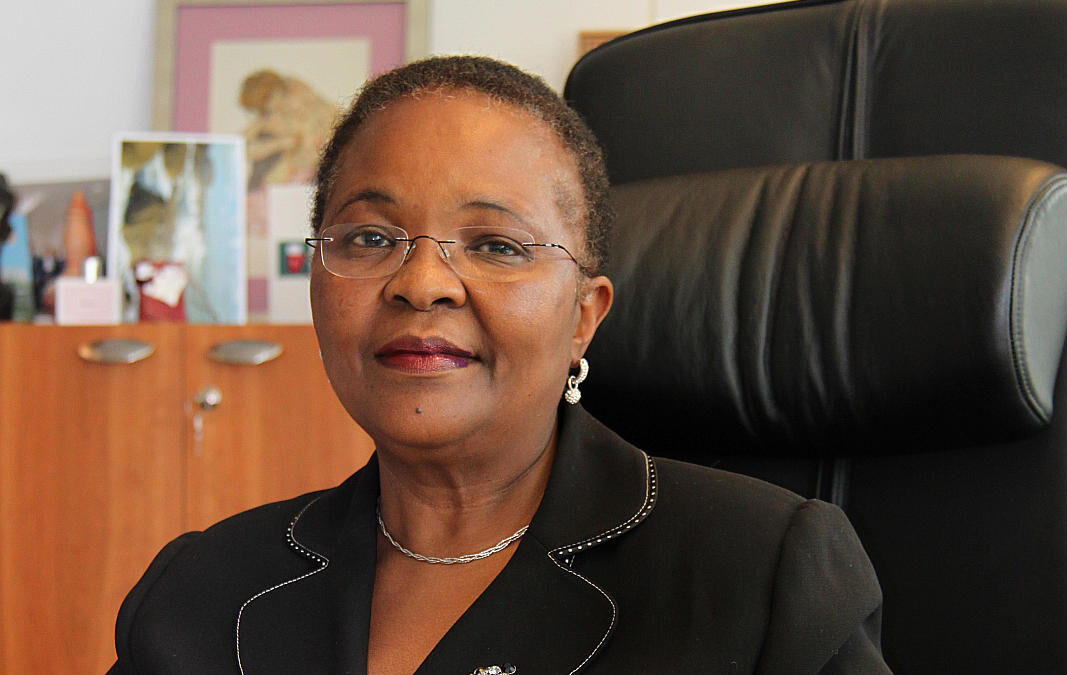
Picture: ICJ Commissioner Sanji Monageng (Botswana) will chair the session on stories from the frontline.
Dec 3, 2013 | Agendas, Events
The ICJ was at the Club de la Presse in Geneva for a roundtable ahead of the Fourth ICJ Geneva Forum of Judges and Lawyers. The event was live streamed.
Moderated by Leah Hoctor, Senior Legal Adviser at ICJ, the event was a unique opportunity to share the real life experiences of two African women, who have overcome the challenges of poverty and discrimination to become two of Africa’s most senior and admired judges.
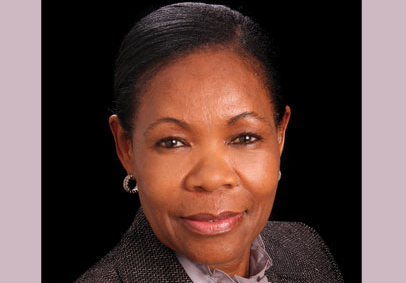
Justice Yvonne Mokgoro (photo) was the first black woman judge in South Africa and a former justice of its post-apartheid Constitutional Court.
Justice Lilian Tibatemwa-Ekirikabinza is an academic leader in Uganda. She was the first Ugandan woman to qualify for an award of a Ph.D. in Law.
The Press Club event came ahead of the Fourth ICJ Geneva Forum of Judges and Lawyers on 5-6 December.
The Forum is convened annually by the ICJ’s Centre for Independence of Judges and Lawyers, bringing together legal practitioners from around the world to help safeguard the independence and impartiality of the judiciary and the legal profession.
This year’s forum promotes the role of women in the judiciary, focusing particularly on women judges and lawyers from Africa and the Middle East.
It forms part of a broader ICJ initiative on women judges, lawyers and human rights defenders as agents of change.
Watch the event here:
Nov 24, 2013 | News
Women judges and lawyers from across the Middle East and North Africa participated in the ICJ Colloquium on Women and the Judiciary in MENA on 22 and 23 November in Tunis.
The event brought together women of different generations from a range of countries including Bahrain, Egypt, Kuwait, Libya Morocco, Palestine and Tunisia.
They discussed the significant personal and professional challenges faced by women judges and lawyers in the region.
Sharing their personal testimonies and experiences, participants underscored the specific challenges which arise for women judges and lawyers in situations of transition, conflict and occupation or in contexts where women’s participation in the judiciary is not possible or subject to significant restrictions.
They identified recommendations for change and highlighted the need for increased cross-regional support networks and opportunities for dialogue and joint action.
The Colloquium marks the initial phase of an ICJ initiative to support women judges, lawyers and human rights defenders in the Middle East and North Africa as agents of change.
Nov 1, 2013 | News
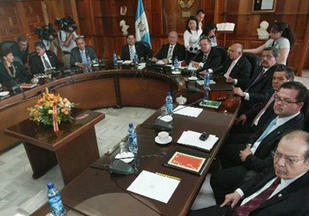
Jueces europeos y centroamericanos expresaron en Tegucigalpa su preocupación por la falta de independencia del sistema judicial en países como Honduras, Guatemala y El Salvador.
Instaron a los Estados a tomar medidas para garantizar la autonomía de esa rama del poder público.
El 31 de octubre y 1 de noviembre se llevó a cabo en la ciudad de Tegucigalpa (Honduras) el foro denominado “Encuentro de Juristas Europeos y Centroamericanos: experiencias sobre la defensa de la independencia judicial”.
Durante el mismo, se tuvo la oportunidad de intercambiar experiencias en torno a las amenazas que hoy día persisten en contra de la independencia judicial y las medidas que los estados de Centroamérica deben tomar para fortalecer los diferentes sistemas de justicia en la región.
El foro reconoce el papel fundamental que tienen todos los jueces y juezas en la construcción y consolidación de la Democracia y el Estado de Derecho en Centroamérica; las y los participantes expresan su preocupación porque aún existen serias amenazas a la independencia judicial, entendiéndose dicha independencia como una garantía para los ciudadanos y ciudadanas.
En tal sentido, los estados centroamericanos deben respetar plenamente la independencia del Poder Judicial.
Honduras-Foro Jueces Independencia en CA-news-web story-2013-spa (full text in pdf)