Mar 26, 2020 | News
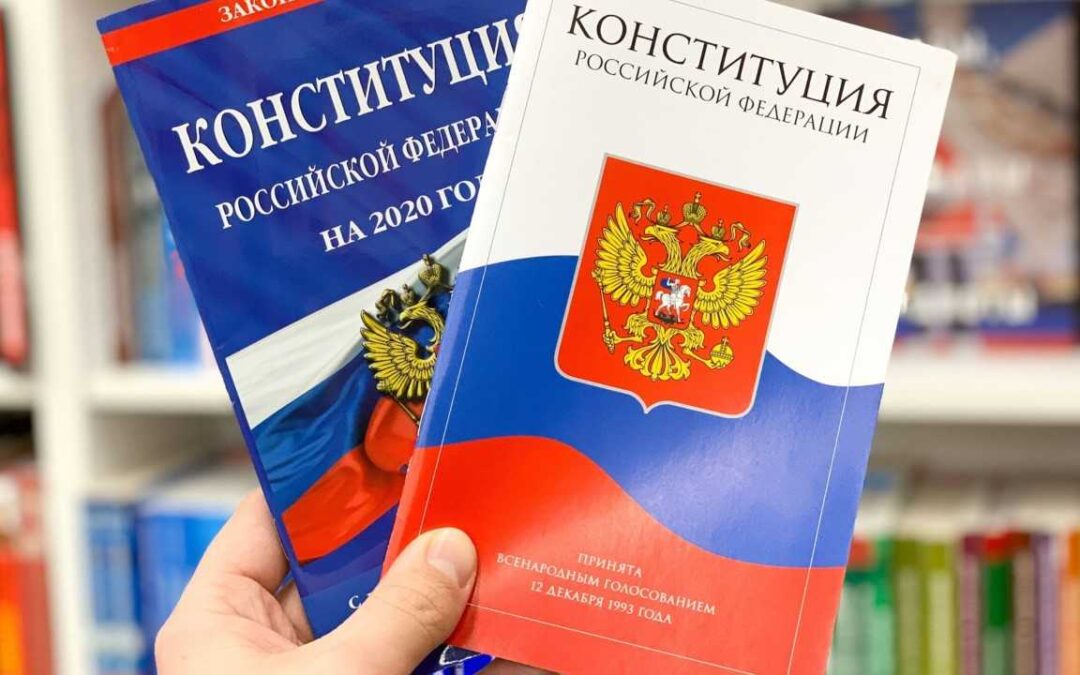
Following the decision to postpone a referendum on amendments to the Russian Constitution, the ICJ calls on the authorities of the Russian Federation to refrain from adoption of the amendments or revise those amendments which are likely to have a detrimental effect on the rule of law and human rights protection.
“Amongst the wide range of amendments proposed, are some that would restrict the implementation of international human rights law, and in particular the decisions of international human rights courts, in the Russian Federation,” said Róisín Pillay, Director of the Europe and Central Asia Programme of the ICJ.
“Other amendments would damage the independence of the Russian judiciary through changes to judicial appointments and dismissal procedures.”
The ICJ draws attention to these issues in a briefing paper on certain amendments to the Constitution of the Russian Federation, published today.
“We urge the Russian authorities to use the opportunity presented by the postponement of the referendum, to reconsider amendments that would damage the ability of the justice system to provide an effective remedy to people whose human rights have been violated,” added Pillay.
Background
On 15 January 2020 the President of the Russian Federation announced a decision to introduce more than forty amendments to the Constitution adopted in 1993. They are to be adopted through an extraordinary procedure which includes public vote, organised specifically for these amendments.
The amendments touch upon a range of issues not necessarily connected with each other. They among other things erode the role of international law and tribunals as well as weaken the independence of the national judiciary.
On 25 March, Russian Federation President Vladimir Putin announced that a planned referendum on the constitutional amendments would be postponed due to COVID-19.
This ICJ briefing paper analyses how these amendments may run contrary to international commitments of the Russian Federation and further impede the judicial independence. The briefing paper addresses three particular changes proposed to the 1993 Constitution:
- The role of international law and of decisions of international courts or other mechanisms (Article 125 of the Constitution)
- Appointment of judges (Article 83 of the Constitution)
- Procedures of appointment and removal for judges (Articles 83, 102 and 128 of the Constitution).
Full Briefing Paper (in PDF): Russia-constitution changes-Advocacy-Analysis Brief-2020-ENG
Dec 6, 2019 | News
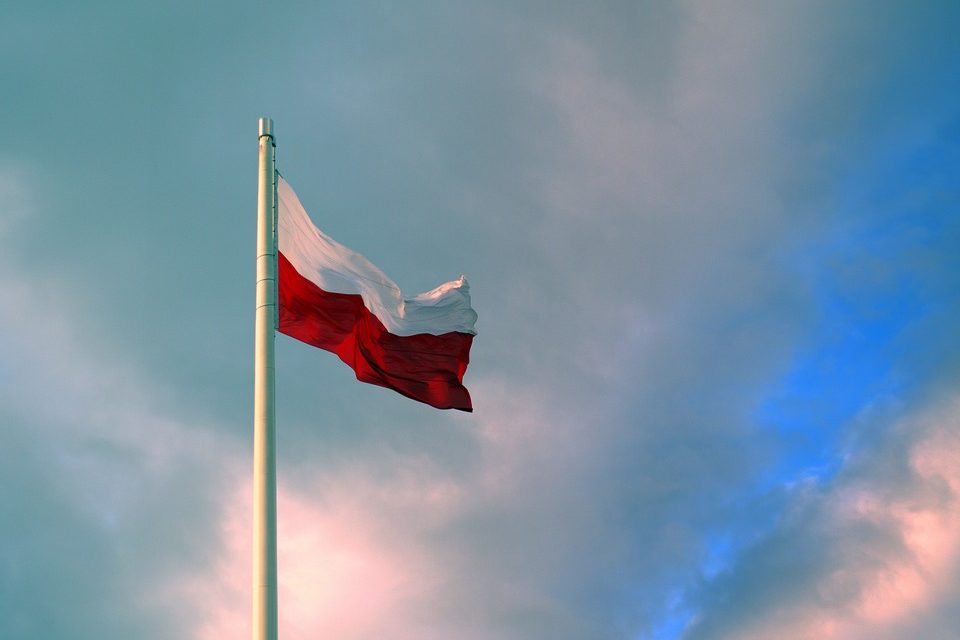
The ICJ calls on the Polish authorities to put an immediate end to unjustified disciplinary proceedings initiated against judges, including Krystian Markiewicz, Chairperson of the Polish Judges’ Association “Iustitia”.
The ICJ considers that the disciplinary action against Judge Markiewicz’ was initiated because of his questioning of the Polish government’s “reforms” that have severely eroded the independence of the judiciary in Poland.
“The disciplinary action taken against Judge Markiewicz for his criticism of the government’s attack on judicial independence violates international standards on the independence of the judiciary and should be ended immediately”, said Róisín Pillay, Director of the ICJ Europe and Central Asia Programme.
“Judges have a right to freedom of expression and to form and take part in associations of judges. They have a particularly important role in speaking up to defend the rule of law and the independence of the judiciary, which is undermined by arbitrary disciplinary proceedings such as those against Judge Markiewicz”, she added.
By order of the Deputy Disciplinary Commissioner of the ordinary court judges, on 4 December, disciplinary proceedings alleging 55 instances of misconduct were initiated against Judge Krystian Markiewicz. These include: inciting disrespect for Poland’s legal order by questioning the independence and legality of the National Council of the Judiciary (NCJ), and the constitutionality of the Disciplinary Chamber of the Supreme Court; and calling for appeals to the Disciplinary Chamber to be suspended.
The disciplinary action against Judge Markiewicz comes within a week of the decision to suspend with immediate effect district Judge Paweł Juszczyszyn, who, in presiding over an appeal, questioned the impartiality of the judge who had delivered the original verdict as a result of being elected by the National Council for the Judiciary. On 1 December 2019, the Polish Judges’ Association Iustitia organized rallies in support of Judge Juszczyszyn.
The ICJ stresses that such actions taken against judges are inconsistent with the duties of all branches of the State to respect and protect the independence of the judiciary. The ICJ calls for Judge Juszczyszyn to be immediately re-instated in his post.
On 4 December 2019, the labour law chamber of the Supreme Court, in implementation of a recent ruling of the Court of Justice of the UE, held that the NCJ is not an impartial and independent body, and that the disciplinary chamber of the Supreme Court is not a “court” under EU or Polish law, thereby confirming the concerns raised by both Judge Juszczyszyn and Judge Markiewicz.
Background
The UN Basic Principles on the Independence of the Judiciary clarify that all governmental and other institutions must respect and observe the independence of the judiciary (Principle 1), and that judges must decide all matters before them impartially, on the basis of facts and in accordance with the law, without any restrictions, improper influences, inducements, pressures, threats or interferences, direct or indirect (Principle 2). Judges can be subject to suspension or removal only following fair procedures (Principle 17) and only for reasons of incapacity or behaviour that renders them unfit to discharge their duties (Principle 18).
In recent years, the Polish executive and legislative authorities have systematically undermined the independence of the judiciary in the country, including through laws that have sought to force the dismissal of judges by lowering the mandatory retirement age. In addition, they have brought the appointment of judges under political control by re-structuring the National Council of the Judiciary (NCJ), with a majority of its members selected by the Polish Parliament. (see ICJ statement)
This move has also politicized the Disciplinary Chamber of the Supreme Court, whose members are selected by the NCJ, and the disciplinary court of first instance. In October 2019, the European Commission referred Poland to the CJEU on the grounds that the new disciplinary regime for judges undermines their independence.
In June 2019, the Court of Justice of the European Union (CJEU) held that the Polish Law on the Supreme Court lowering the retirement age of judges of the Supreme Court and providing discretionary power to the President to allow a judge to remain in office following the mandatory retirement date was contrary to the principle of effective judicial protection and therefore in violation of EU law. In November 2019, the CJEU held that Poland violated the independence of the judiciary by lowering in 2017 the pension age of Polish judges and giving the power to maintain them in office to the Minister of Justice.
Jun 12, 2019 | News
The ICJ today expressed concern at recent developments in Moldova, which are effectively paralyzing governance in the country.
During the past week, the Constitutional Court has ordered the dissolution of Parliament, suspended its functioning and invalidated its subsequent acts, including the appointment of a government and speaker, and has triggered the removal of the President.
The ICJ is particularly concerned at the excessively swift procedure through which the Constitutional Court reached its decisions to dissolve Parliament, remove a sitting President of the Republic and replace him with the Prime Minister. The ICJ calls attention to the unhelpful timing of the Constitutional Court ruling that was issued on the very day it identified as the end of the Parliamentary term, depriving Parliament of the clarity needed to exercise its powers.
These developments occur against the background of the manifest deficiencies in the institutional independence of the Moldova judiciary which were documented in a recent ICJ report.
In the report issued in March 2019, the ICJ highlighted the problematic appointment in 2018 of three judges of the Constitutional Court in circumstances that did not ensure a sufficient level of transparency, during an electoral campaign and without an open competition process. The report noted that the three appointed judges have previously been Prosecutor General, director of the intelligence service and chair of the legal committee of Parliament, part of the then ruling political majority.
The ICJ welcomes the announcement by the Secretary General of the Council of Europe that the Venice Commission has been asked to issue an urgent opinion on the constitutional crisis.
“The rule of law is the common ground on which constitutional conflicts must be solved”, said Massimo Frigo, Senior Legal Adviser of the Europe Programme of the ICJ. “We call on all institutions and parties in Moldova to seek a solution that squarely complies with the rule of law and the international law and standards to which Moldova has subscribed. In this regard, we urge all parties concerned to wait for the opinion by the Council of Europe Venice Commission in this matter and to reconsider the situation in light of its findings.”
Background
The Constitutional Court, in decisions issued on 7, 8 and 9 June 2019, held that Parliament should be dissolved for having been unable to establish a government within three months of the end of the previous Government’s term of office.
The decisions triggered the removal from office of the President of the Republic, Igor Dodon, for having refused to dissolve Parliament. This led to the interim appointment of Pavel Filip, as acting President of the Republic.
The Court also declared unconstitutional and void any act issued by Parliament after 7 June.
Neither Parliament nor President Dodon have accepted the decisions of the Constitutional Court on their removal or on the validity of their acts, nor do they consider as legitimate the appointment of Pavel Filip as acting President.
Parliamentary factions constituting the current majority in Parliament had reached a deal to form a coalition government and appointed a speaker and Prime Minister.
According to the Constitutional Court’s interpretation of article 85 of the Constitution, these agreements failed to respect the three-month deadline.
Others have put forward different interpretations of when the deadline of the three months period to appoint a Government would elapse, and of the obligation of the President of the Republic to dissolve Parliament.
Article 85 of the Constitution states:
(1) In the event of impossibility to form the Government or in case of blocking up the procedure of adopting the laws for a period of three months, the President of the Republic of Moldova, following consultations with parliamentary fractions, may dissolve the Parliament.
(2) The Parliament may be dissolved, if it has not accepted the vote of confidence for setting up of the new Government within 45 days following the first request and only upon declining at least two requests of investiture.
(3) The Parliament may be dissolved only once in the course of one year.
(4) The Parliament may not be dissolved within the last six months of the term of office of the President of the Republic of Moldova nor during a state of emergency, martial law or war.
Contact:
Massimo Frigo, ICJ Senior Legal Adviser: t: +41 22 979 3805; e: massimo.frigo(a)icj.org
Dec 15, 2018 | Events, News
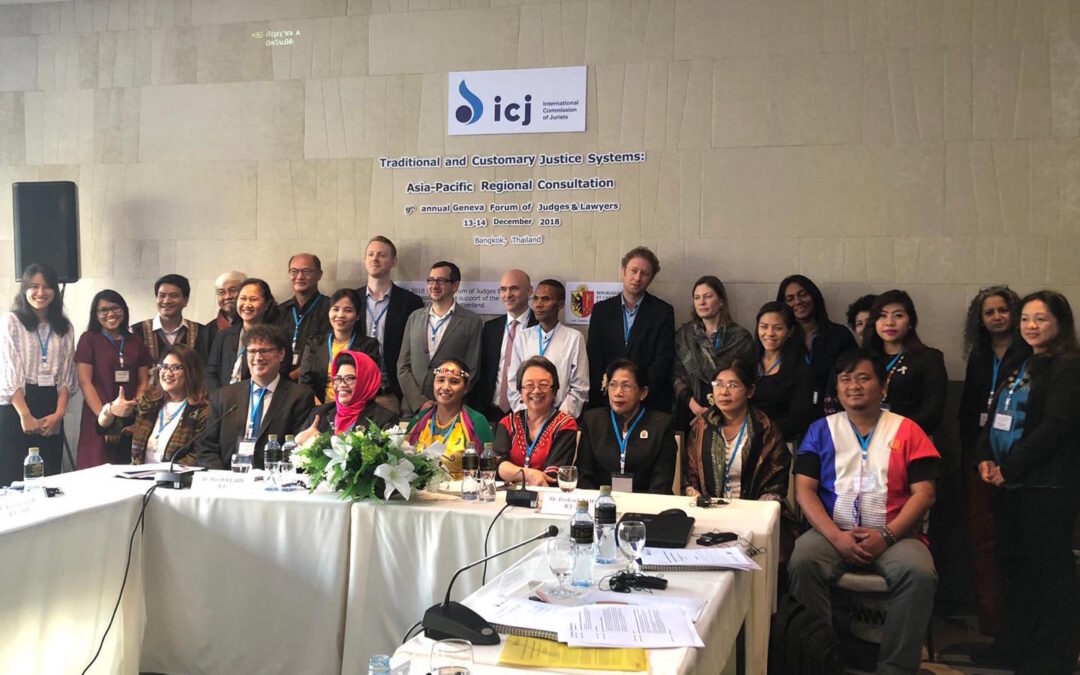
The ICJ convened the 9th annual “Geneva Forum” of Judges and Lawyers in Bangkok, Thailand, 13-14 December 2018, on the topic of indigenous and other traditional or customary justice systems in Asia.
Indigenous and other traditional or customary justice systems play a significant role in many societies around the world, in terms of access to justice for rural communities, indigenous peoples, minorities, and other marginalized populations. At the same time, such systems raise a series of questions in terms of their relationship to international fair trial and rule of law standards, and impacts on human rights including particularly those of women and children.
9th annual Geneva Forum of Judges & Lawyers, 13-14 December 2018, Bangkok, Thailand
Following discussions on these topics at the 2017 ICJ Geneva Forum (an annual global meeting of senior judges, lawyers, prosecutors and other legal and United Nations experts, convened by the ICJ with the support of the Canton and Republic of Geneva (Switzerland) and other partners), the ICJ decided that in order to better engage with customary justice systems, the Geneva Forum would be “on the road” in 2018 and 2019, convening for a regional consultation in the Asia-Pacific in 2018, and in Africa in 2019.
Additional consultations will take place in the Americas. The Forum will return to Geneva for an enlarged session in 2020 to adopt final conclusions and global guidance.
The ninth annual Geneva Forum in Bangkok brought together judges, lawyers, and others engaged with traditional justice systems in the Asia-Pacific region, and practitioners from ordinary justice systems in the region, together with UN Special Rapporteur on the rights of indigenous peoples Ms. Victoria Tauli Corpuz, as well as ICJ and UN representatives from Geneva, to discuss and develop practical recommendations, in a private small-group setting.
Participants came from a number of countries across the region, including: Cambodia, Indonesia, Malaysia, Myanmar, Pakistan, Philippines, Thailand and Timor Leste.
The potential and the risks for equal and effective access to justice and human rights
Many participants re-affirmed that traditional and customary justice systems can make an important contribution to improving access to justice for indigenous, and other rural or otherwise marginalized populations, as a result of such factors as geographic proximity, lower cost, lesser cultural or linguistic barriers, and greater trust by local communities, relative to the official justice system.
Indeed, for these and other reasons, for some marginalized and disadvantaged rural populations, traditional and customary courts may in practical terms be the only form of access they have to any kind of justice.
Furthermore, article 34 of the UN Declaration on the Rights of Indigenous Peoples affirms the right of indigenous peoples “have the right to promote, develop and maintain their institutional structures and their distinctive customs, spirituality, traditions, procedures, practices and, in the cases where they exist, juridical systems or customs, in accordance with international human rights standards”.
Furthermore, official recognition of traditional or customary courts in a country can more generally be a positive reflection of the cultural and other human rights of other ethnic, religious or linguistic minorities.
At the same time, the Forum discussions confirmed that, as with formal justice systems, certain characteristics and processes of some traditional and customary justice systems can conflict with international standards on fair trial and the administration of justice, and human rights, particularly of women and children.
Participants in the 2018 Forum discussed a variety of ways in which the relevant communities, their leaders, and decision-makers in indigenous or other traditional systems, together with government authorities, international actors, development agencies, and civil society, can cooperate and coordinate with a view to seeing both formal and traditional systems operate more consistently with international standards on human rights and the rule of law.
There was a range of views on which forms of engagement or intervention were most appropriate or effective. It was also emphasized that work should continue to build the accessibility and capacity of official justice systems to ensure that individuals seeking justice have a real choice.
The above conclusions were subject to the acknowledgement that traditional and customary justice systems take many different forms across the region, and that they exist in many different contexts.
A full report of the Forum discussions will be published by the ICJ in the first part of 2019.
Development of Guidance by the International Commission of Jurists
The ICJ’s global experience and expertise, together with research and global consultations with judges, lawyers and other relevant experts, including the 2017 Geneva Forum, the 2018 session in Bangkok, and subsequent regional consultations in Africa and the Americas, will provide a foundation for the publication by ICJ in 2020 of legal, policy and practical guidance on the role of traditional and customary justice systems in relation to access to justice, human rights and the rule of law.
The ICJ guidance will focus on the mechanisms and procedures of traditional and customary justice systems, as opposed to tackling all aspects of the substantive law.
The guidance will seek to assist all actors involved in implementation and assessment of relevant targets of Sustainable Development Goal 16 on access to justice for all and effective, accountable and inclusive institutions, as well as Goal 5 on gender equality, including: decision-makers and other participants in traditional and customary justice systems; judges, lawyers and prosecutors operating in official justice systems; other government officials; development agencies; United Nations and other inter-governmental organizations; and civil society.
The guidance will be published and disseminated through activities with ICJ’s regional programmes, and its national sections and affiliates, through a series of regional launch events and workshops, as well as at the global level at the United Nations and in other settings.
The guidance will provide the basis for ICJ strategic advocacy at the national level in the years following the conclusion of this initial phase of this work.
Background Materials
Available for download in PDF format:
A Compilation of selected international sources on traditional and customary courts, is available here.
The Final report of the 2018 Geneva Forum, on traditional and customary justice systems, is available here: Universal-Trad-Custom-Justice-GF-2018-Publications-Thematic-reports-2019-ENG
The Final report of the previous, 2017 Geneva Forum, on traditional and customary justice systems, is available here: Universal-Trad Custom Justice Gva Forum-Publications-Thematic reports-2018-ENG
For more information, please contact matt.pollard(a)icj.org.
Jun 24, 2018 | News
“Judges from the High Risk Tribunals in Guatemala, including Ericka Aifán, Yassmín Barrios, Miguel Ángel Gálvez and Pablo Xitumul, are facing unjustified disciplinary hearings,” nine Latin American Commissioners from the ICJ, meeting in Bogotá on 24 June, stated today.
The Commissioners understand that these judges are facing unjustified disciplinary hearings instigated by groups or persons who are displeased with judicial rulings in high-impact cases involving transitional justice or corruption.
They expressed serious concern about the precarious state of the independence of the judiciary in Guatemala. Judges are subjected to on-going attacks that seek to impact their work as honourable and impartial justice operators.
According to international standards, judges should exercise their functions free of any extraneous influence and with total impartiality; without any limitations, inducements, pressures, threats or interference, direct or indirect, from any quarter or any reason.
The Commissioners also expressed their complete support for Commissioner Iván Velásquez, head of the International Commission against Impunity in Guatemala (CICIG), who because of the exercise of his functions, has also suffered from a series of hostile acts and smear campaigns.
The ICJ Commissioners extend their full support to the CICIG in its struggle against impunity and corruption.
The Commissioners request that the international community continues to support the CICIG with sufficient human and financial resources.
At the same time, the Commissioners call upon the Inter-American Commission of Human Rights, the Sub-Committee of Human Rights of the European Parliament and the UN Special Rapporteur on the Independence of Judges and Lawyers, to visit Guatemala and to verify “in situ” the precarious state of judicial independence in the country.
The nine ICJ commissioners who issued the statement
Carlos Ayala, Vice-President of the International Commission of Jurists (Venezuela)
Mónica Pinto, Commissioner (Argentina)
Miguel Carbonnel, Commissioner (Mexico)
Victor Rodriguez Rescia Commissioner (Costa Rica)
Wilder Tayler, Commissioner (Uruguay)
Belisário dos Santos, Commissioner Brazil
Juan Mendez, Commissioner (Argentina)
Roberto Garretón, Commissioner (Chile)