Nov 25, 2015 | Advocacy
AI y la CIJ apoyan la propuesta de creación de una Comisión Bicameral de la Verdad, la Memoria, la Justicia, la Reparación y el Fortalecimiento de las Instituciones de la Democracia en el país.
Esta comisión tratará de identificaciar las complicidades económicas y financieras en relación con violaciones de los derechos humanos y crímenes de derecho internacional cometidas durante la última dictadura militar, entre 1976 y 1983.
El trabajo de esta Comisión puede ser una contribución muy importante a la obtención de la verdad, justicia y reparación para las víctimas de la dictadura y sus cómplices económicos.
Sin embargo, esta iniciativa no debe reemplazar ni dilatar la actividad de la justicia ordinaria.
Argentina-Declaracion conjunta AI ICJ Complicidad economica-Advocacy-2015-SPA (full text in PDF)
Aug 20, 2015 | News
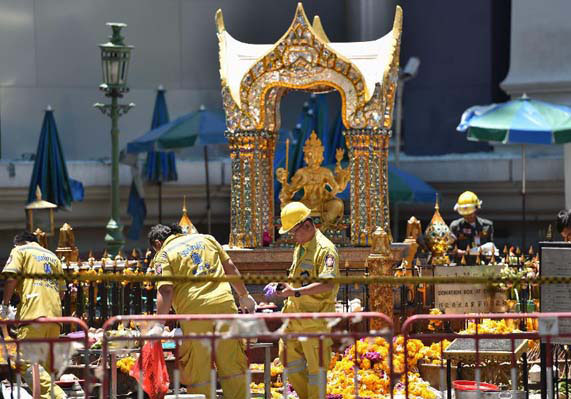
The bombing in Bangkok that killed 20 people and injured more than 120 constitutes a serious attack on human rights and demands an impartial and effective investigation to bring the perpetrators to justice, the ICJ said today.
“Targeting ordinary people, mostly tourists visiting a religious shrine, is an assault upon our shared humanity and human rights,” said Sam Zarifi ICJ’s Regional Director for Asia and the Pacific. “Thailand must counter this vile attack with a credible investigation that aims to deliver justice to the victims by identifying the perpetrators and bringing them to justice in accordance with the rule of law.”
“The Thai authorities must also resist the pressure to display progress through hasty conclusions and commit unwaveringly to an investigation that meets international standards and respects all legal and due process guarantees. Only a credible and fair process will provide truth and justice to the many victims and survivors,” he added.
As part of an effective investigation, the ICJ recommends Thailand to:
- protect the rights of the victims including by ensuring they:
o are treated with respect,
o receive regular information about the progress of the investigation and their rights in relation to it,
o receive all necessary support and assistance;
- ensure that the investigation hypothesis is not influenced by discrimination or bias based on ethnic, religious, political or other such grounds; and
- actively seek out and accept offers of assistance from other states including in the areas of:
o intelligence,
o forensic examination of crimes scenes, bodies and vehicles,
o analysis of phone material including call data and cell sites, and
o enhancement and analysis of Closed Circuit Television (CCTV) footage.
Thailand is required to effectively investigate the attack, to prosecute and punish those responsible, and to ensure victims have access to effective remedies and reparation, as part of its international legal obligations as a Party to the International Covenant on Civil and Political Rights (ICCPR), including pursuant to the right to life and the right to security of person.
Background:
On 17 August 2015 at approximately 19:00, an Improvised Explosive Device (IED) was detonated near the popular Erawan religious shrine at the Ratchaprasong intersection in central Bangkok.
On 18 August 2015 at approximately 13:00, a second IED was detonated near Bangkok’s Sathorn boat pier that exploded harmlessly in the water.
To date, no groups or individuals have claimed responsibility for either attack.
Contact:
Sam Zarifi, ICJ Asia Regional Director, (Bangkok), t:+66 807819002, e-mail: sam.zarif(a)icj.org
Kingsley Abbott, ICJ International Legal Adviser, (Bangkok), t:+66 944701345, e-mail: kingsley.abbott(a)icj.org
Thailand-BKK Blast-News-Press releases-2015-THA (full text in pdf, THAI)
Photo: Xinhua / Li Mangmang
Aug 14, 2015 | News
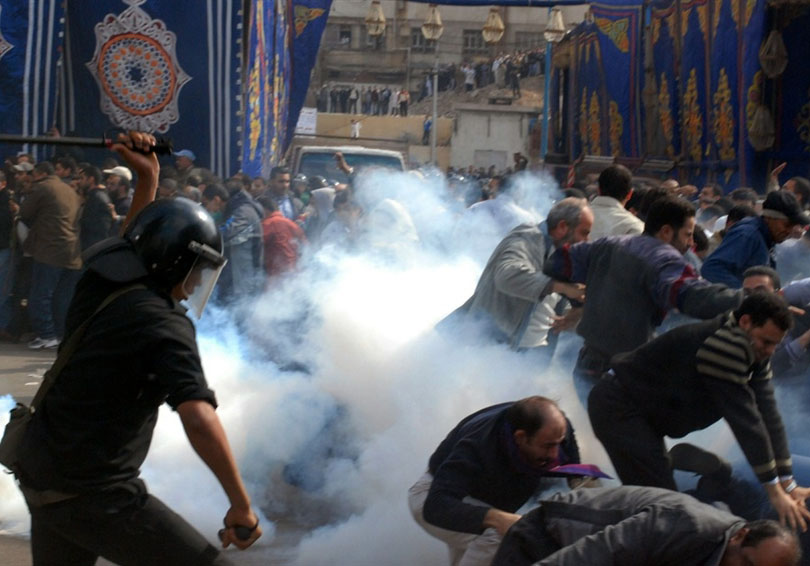
Today, on the second anniversary of the killing by the armed and security forces of more than 1,000 individuals during the dispersal of the Rabaa’ Al-Adawyia and Al Nahda Square sit-ins, the ICJ calls on the Egyptian authorities to end its policy of impunity for serious human rights violations.
The authorities must conduct thorough, effective, independent and impartial investigations into protestor deaths with a view to holding to account all those responsible for unlawful killings and other human rights violations committed in the course of the demonstrations, the ICJ says.
“It is a measure of the total disregard for victims’ rights and the absolute impunity of the armed and security services that in the two years that have passed, no effective investigations in line with international standards have taken place and not a single person has been brought to justice for the mass killings of protestors,” said Said Benarbia, Director of the ICJ’s Middle East and North Africa Programme.
“The victims of human rights violations and their family members have been left without any effective remedies or reparation, including an acknowledgment by the Egyptian authorities of their responsibility for the hundreds of killings and injuries that day,” he added.
Although fact-finding initiatives were conducted by Egypt’s quasi-governmental National Human Rights Council and by a government-appointed commission, the ICJ considers these investigations to be deeply flawed and ineffective.
The ICJ says both had inadequate access to first hand or physical evidence from the scene, because they did not begin their work until weeks or months after the events took place; lacked the ability to compel State authorities to testify and provide evidence; failed to document the full extent of human rights violations that took place; and neither led to any form of criminal investigation, much less prosecution of those responsible for these violations.
Further, while the government-appointed commission found that over 700 people had been killed during the Rabaa’ and Nahda dispersals, the shambolic report it issued dedicated just 9 pages to these two dispersals, concluding summarily and without substantiation that the police had been justified in violently dispersing the protest and blaming primarily the organizers of the sit-ins as well as the protestors for the high death toll.
There are credible allegations that in dispersing these demonstrations the armed and security forces unlawfully resorted to excessive and disproportionate use of force, the ICJ adds.
“By turning a blind eye to gross human rights violations committed by the armed and security forces, and by shielding their members from any form of criminal accountability, the Egyptian authorities are fostering the structural impunity that prevails in Egypt instead of combatting it,” said Benarbia.
“To meet their obligations under international law, the authorities must dismantle such policies and practices and establish the truth about the sit-ins’ dispersal,” he added.
Under international law lethal force may never be used unless strictly necessary to protect life.
States are obliged to provide access to an effective remedy and reparation to victims of human right violations.
They are also required to conduct prompt, thorough and impartial investigations, with a view to holding criminally accountable persons responsible for serious human rights violations, particularly those involving a denial of the right to life.
Contact:
Alice Goodenough, Legal Adviser of the ICJ Middle East and North Africa Programme, t: +44 7815 570 834; e: alice.goodenough(a)icj.org
Nader Diab, Associate Legal Adviser of the ICJ Middle East and North Africa Programme, t: +41 229 793 804; e: nader.diab(a)icj.org
Egypt-Impunity Rabaa Sq-News-Press releases-2015-ARA (full text in pdf, ARABIC)
Jun 26, 2015 | Advocacy, Cases, Legal submissions, News
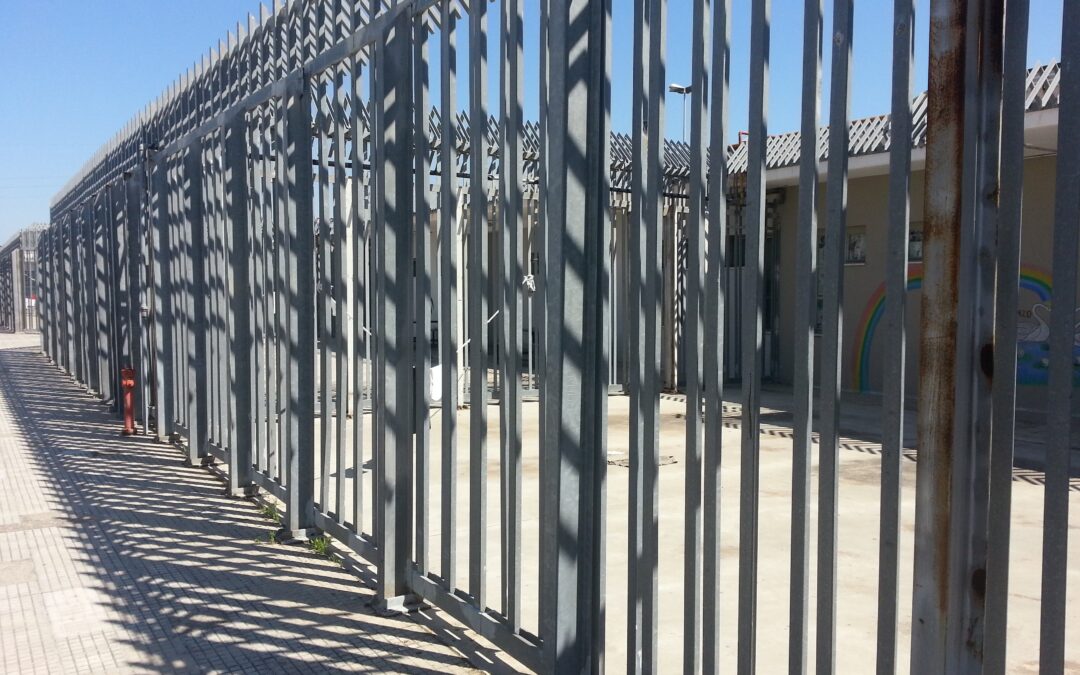
The ICJ submitted today a third party intervention before the European Court of Human Rights in the case of Richmond Yaw and others v. Italy regarding the detention of four migrants in Italian Centres for Identification and Expulsion.
The case raises issues related to the lawfulness of their detention in immigration centres, and the compliance of the mechanisms of judicial review and compensation for unlawful detention with the European Convention on Human Rights.
Taky Berko Richmond Yaw, Yaw Ansu Matthew, Darke Isaac Kwadwo, and Dominic Twumasi, nationals of Guinea, had been detained in the Centre for Identification and Expulsion of Ponte Galeria (Rome).
In these submissions, the ICJ presented the Court with a summary of its findings regarding the law and practice of detention of migrants and the related judicial guarantees in Italy, in its 2014 report, “Undocumented” Justice for Migrants in Italy.
Furthermore, the ICJ presented an analysis of the principles that apply in regard to arbitrary detention of persons detained for the purposes of immigration control under article 5.1.f. ECHR, in particular:
- The principle of legality, including the fact that the basis, procedures and conditions for detention must be provided by law, and the principle that detention must be carried out in good faith; and the due process guarantees related to these principles;
- The requirement that detention be undertaken only pursuant to the permitted purposes of article 5.1.f ECHR, and the need for strict construction of this requirement, and ongoing scrutiny of compliance with it, in particular in the context of long periods of detention;
- The requirements of access to an effective judicial mechanism to secure the right to habeas corpus and review of the legality, necessity and proportionality of the detention of migrants, under article 5.4. ECHR;
- The requirements of an effective remedy and reparation mechanism for unlawful deprivation of liberty under article 5.5 ECHR.
ECtHR-AmicusBrief-Yaw&others v Italy-Advocacy-Legal Submission-2015-ENG (download the third party intervention)

Apr 16, 2015 | News
Thailand must strengthen its efforts to solve the apparent enforced disappearance of Karen human rights defender, Pholachi “Billy” Rakchongcharoen, who “disappeared” one year ago this Friday, said the ICJ.
“Thailand must strengthen its efforts to carry out a thorough and effective investigation into Billy’s fate and whereabouts in a manner that complies with its international obligations,” said Kingsley Abbott, International Legal Adviser at the ICJ.
“As part of this process, it is essential that the authorities evaluate the investigation objectively to ensure it has been carried out independently and impartially, that the necessary resources have been allocated, and that all investigative opportunities have been pursued,” he added.
The ICJ reiterates its call for the Department of Special Investigations (DSI) to assume responsibility for the investigation because of the need for the DSI’s special expertise.
The DSI has the power to assume jurisdiction over special criminal cases including complex cases that require special inquiry, crimes committed by organized criminal groups, and cases where the principal is an influential person.
A six-day habeas corpus inquiry monitored by the ICJ and which concluded on 17 July 2014, and a subsequent appeal delivered on 26 February 2015, were unsuccessful in shedding any light on Billy’s fate or whereabouts.
Thailand, as a Party to the International Covenant on Civil and Political Rights, is required to investigate, prosecute, punish and provide a remedy and reparation for the crime of enforced disappearance.
Background
Billy (photo) was last seen on 17 April 2014 in the custody of Kaeng Krachan National Park officials. The officials claimed they detained Billy for illegal possession of honey but released him later the same day.
Billy had been working with ethnic Karen villagers and activists on legal proceedings the villagers had filed against the National Park, the Wildlife and Plant Conservation Department, the Ministry of Natural Resources and Environment, and the former Chief of Kaeng Krachan National Park concerning the alleged burning of villagers’ homes and property in the National Park in 2010 and 2011.
The Royal Thai Government has signaled its recognition of the gravity of the crime of enforced disappearance, and its commitment to combating it, by signing the International Convention for the Protection of All Persons from Enforced Disappearance on 9 January 2012.
The Convention affirms the absolute right not to be subject to enforced disappearance and places an obligation on states to investigate acts of enforced disappearance and to make it a criminal offence punishable by appropriate penalties that take into account its “extreme seriousness”, and to take the necessary measures to bring those responsible to justice.
Contact:
Kingsley Abbott, ICJ International Legal Adviser, t: +66 (0) 94 470 1345 ; e: kingsley.abbott(a)icj.org
Thailand-Billy one year-News-PressRelease-2015-THA (full text in PDF)