Mar 16, 2015 | Advocacy, Legal submissions
The ICJ has made further submissions to the UN Working Group on Arbitrary Detention on its elaboration of Draft Principles and Guidelines on habeas corpus.
In February 2015, the Working Group released for public input a revised set of ‘Draft Principles and Guidelines on remedies and procedures on the right of anyone deprived of his or her liberty by arrest or detention to bring proceedings before a court without delay, in order that the court may decide without delay on the lawfulness of his or her detention and order his or her release if the detention is not lawful’.
The ICJ’s submission welcomes the elaboration by the Working Group of the revised Draft Principles and Guidelines as a means of assisting States to enhance, in law and in practice, respect for the right to habeas corpus and especially welcomes certain aspects of the document. It suggests means of further improving the revised Draft Principles and Guidelines, concerning:
- The temporary nature of any derogating measures impacting upon the application of some procedural elements of the right to habeas corpus;
- The competence of courts to make orders for immediate release;
- The implementation of court orders for release;
- The public nature of judicial decisions following adjudication of habeas corpus petitions;
- Guarantees applicable to specialized tribunals;
- The right to legal aid and legal assistance;
- Confirming that the procedure must be available at all times and to all detained persons, including prisoners or war, as a remedy to protect non-derogable rights such as the prohibition against torture and ill-treatment; and
- The inadmissibility of evidence obtained by torture.
The Working Group will present its final draft to the Human Rights Council’s 30th regular session in September 2015.
Attachments
ICJ-WGAD-RevisedDraftPrinciplesAndGuidelines-3rdLegalSubmission-2015-EN (The ICJ’s latest submission in PDF)
WGAD-Habeas-RevisedDraftPrinciplesAndGuidelines-2015-EN (PDF)
Additional links for reference
The ICJ’s first written submissions to the Working Group in November 2013
The ICJ’s second written submissions to the Working Group in April 2014
Panel presentations at the September 2014 Global Consultation by ICJ staff Matt Pollard and Alex Conte
Jan 29, 2015 | News
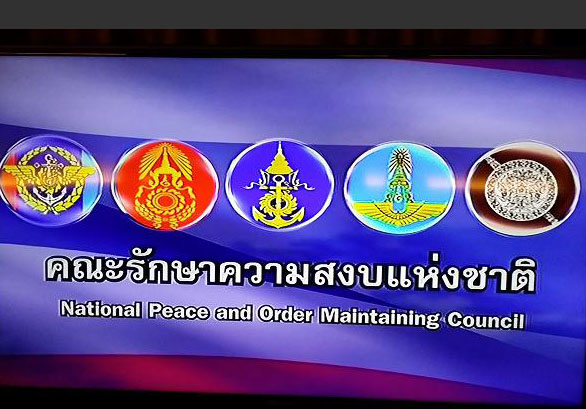
Three recent decisions by the Bangkok Military Tribunal affirming its jurisdiction over civilians violate international law and represent another serious setback for human rights in Thailand, the ICJ said today.
“International standards are clear – military tribunals are not competent to prosecute civilians,” said Wilder Tayler, ICJ’s Secretary General. “Military tribunals are not independent from the executive and the lack of an appeal removes any possibility of a remedy against the judgments of the Tribunal.”
The first case concerns a political activist, Sirapop Korn-arut, who was charged with violating an order of Thailand’s ruling military junta, the National Council for Peace and Order (NCPO), to report to the military for allegedly violating Thailand’s highly restrictive lese majeste law. The second case concerns the prosecution of an anti-military coup activist, Sombath Boonngam-anong, accused of violating NCPO orders and instigating rebellion in June 2014. In the third, a Thammasat University law lecturer, Worajet Pakeerat, is charged with violating a NCPO summons to report to the military.
All three had challenged the jurisdiction of the Tribunal to prosecute civilians.
In three separate rulings, delivered on 22, 23 and 26 January 2015, the Tribunal rejected the defendants’ challenges to its jurisdiction.
“These decisions set a worrying precedent for all civilians currently facing prosecution before military tribunals in Thailand. All cases of civilians facing charges before military tribunals must be transferred to civilian courts immediately if Thailand is to comply with its international obligations,” said Tayler.
According to observers, at least 100 civilians have faced prosecution in military tribunals since the military coup. The Royal Thai Government has not yet released the official number.
While the ICJ observed Professor Worajet’s hearing on 26 January, written decisions have not yet been made publically available in these cases.
Background
Under Article 14 of the International Covenant on Civil and Political Rights (ICCPR), to which Thailand is a state party, everyone has the right to a “fair and public hearing by a competent, independent and impartial tribunal established by law.”
The imposition of Martial Law and the State’s suspension of some of its obligations under the ICCPR, including the right to appeal guaranteed by Article 14(5) for cases heard by military tribunals, does not affect the applicability of this provision.
Article 61 of the Thai Act for the Organization of the Military Court prevents any appeal from the decision of military tribunals so long as Thailand remains under Martial Law, which has been in force nationwide since 22 May 2014.
The Principles Governing the Administration of Justice through Military Tribunals sets out principles that apply to state use of military tribunals.
Principle 5 states “Military courts should, in principle, have no jurisdiction to try civilians. In all circumstances, the State shall ensure that civilians accused of a criminal offence of any nature are tried by civilian courts.”
Further, Principle 2 clarifies that even in times of crisis military tribunals must “apply standards and procedures internationally recognized as guarantees of a fair trial.”
Jul 9, 2014 | News
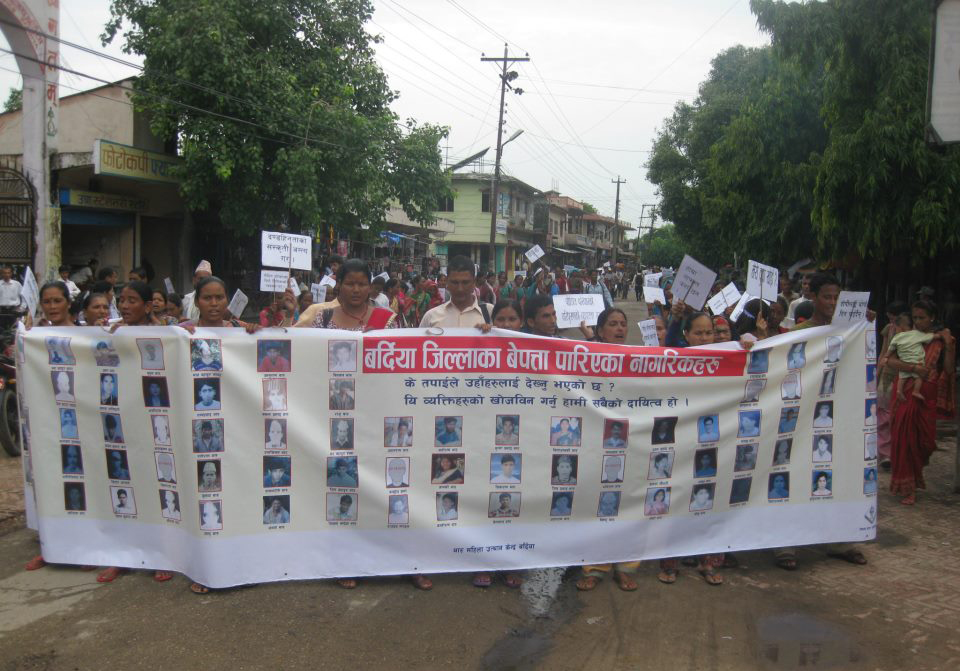
The Nepal government should immediately fix crucial flaws in the Truth and Reconciliation Commission (TRC) Act, particularly those highlighted in a new United Nations evaluation, the ICJ and other rights groups said today.
Jun 25, 2014 | Advocacy, Non-legal submissions
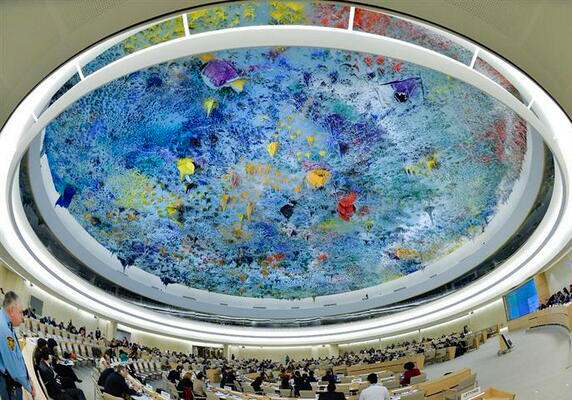
The ICJ made an oral statement at the UN Human Rights Council, highlighting a severe lack of domestic judicial capacity, and the large needs for justice in relation to gross violations and international humanitarian law, as well as ordinary civil and criminal matters, in South Sudan.
The ICJ reported in 2013 that, notwithstanding substantial legal reforms, the justice system in South Sudan was so under-resourced that statutory courts were effectively unavailable to a large majority of the population. Further, judicial appointment procedures were insufficiently independent or transparent to satisfy international standards. Customary courts have a greater presence, but rightly do not have criminal jurisdiction, and further do not meet international standards as regards, for instance, institutional guarantees for independence and impartiality.
In addition to the difficulties most residents already faced in accessing justice, the conflict has resulted in gross violations of human rights and international humanitarian law. South Sudan must ensure effective remedy and reparation for victims of such violations, and that anyone reasonably suspected of responsibility is investigated and, if there is sufficient evidence, prosecuted. At the same time, it must fulfill the fair and effective administration of ordinary civil and criminal justice.
Particularly given the scale and gravity of the violations, the South Sudanese justice system simply does not have the capacity to bear this burden, at least not alone. In addition to building the capacity of the domestic judiciary, it is clear that an international criminal tribunal, preferrably the International Criminal Court, will need to play a key role. Other states, too, will have to exercise all grounds of jurisdiction at their disposal, and deliver effective mutual legal cooperation.
The ICJ considers that the lack of an effective, independent and impartial court system in South Sudan may well have contributed to the rapid deterioration of the situation over the past months. Building an independent and impartial justice system in which all residents of South Sudan can have confidence is essential to preventing recurrence of the violations in the future.
HRC26-Oral statement on SouthSudan-Advocacy-non legal submission-2014 (full statement in PDF)
Jun 23, 2014 | News
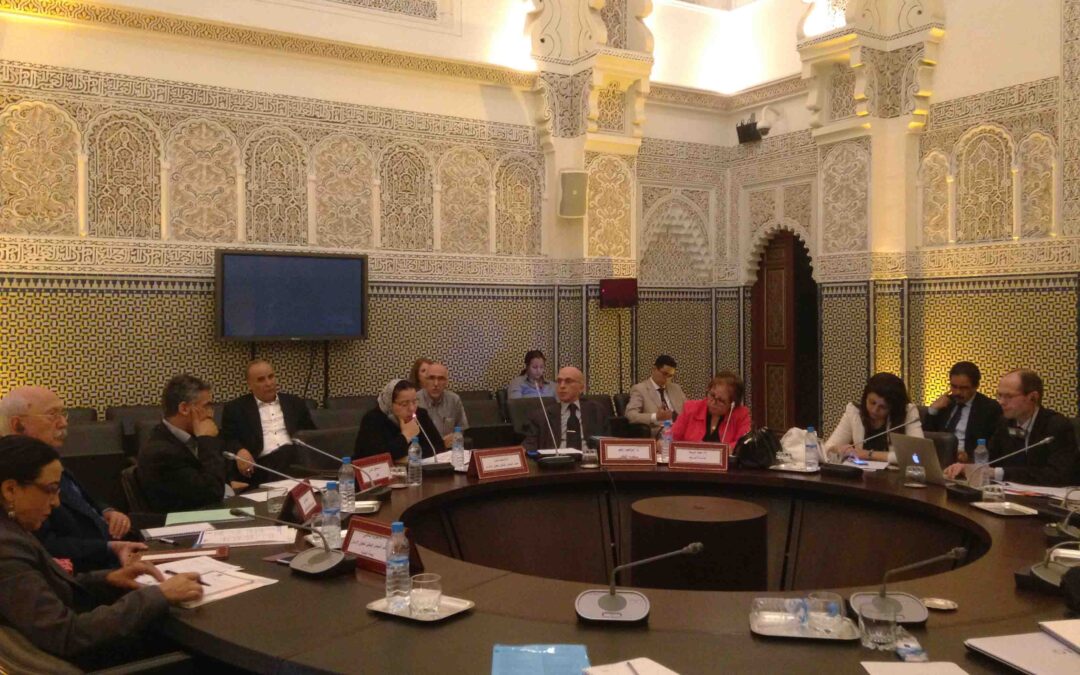
An ICJ delegation including ICJ Commissioners Justice Philippe Texier and Professor Olivier De Schutter concluded a one-week mission in Morocco to discuss access to justice for social rights in the country.
During its stay, the ICJ delegation met with various public authorities and civil society actors.
Among these meetings, the ICJ organized a round table discussion together with the Conseil National des Droits de l’Homme, and a discussion with civil society together with the Organisation Marocaine des Droits Humains and the Friedrich Ebert Foundation.
All the meetings allowed to discuss the normative advances as well as the remaining difficulties in the implementation of Morocco’s international obligations in the area of economic, social and cultural rights, including the obligation to guarantee effective mechanisms for the remedy and reparation of violations of these rights when they occur.
In this latter field, weaknesses have been identified in law and practice, with important efforts still to be realized in strengthening an institutional framework that is able to inquire, sanction and redress violations of ESCR.
During the discussions and consultations, the ICJ paid particular attention to the situation of marginalized and disadvantaged individuals and groups, including those who work in, and live around, free trade zones and areas for export-oriented agricultural production.