Jun 23, 2016 | Events
Side-event to the 32nd regular session of the Human Rights Council
24 June 2016, from 13:30 to 15:00 hrs
Room IX, Palais des Nations, Geneva
Accountability and remedy for business-related human rights abuse have been key advocacy objectives for many human rights organizations over the years.
Accountability and remedy have been identified as being some of the most salient normative and governance gaps in business and human rights. States and international organizations are now taking some action in response to those gaps and are considering initiatives and ways to tackle accountability and remedy deficits.
The Human Rights Council is currently engaged in a treaty-making process through an Intergovernmental Working Group, and it is considering a report by OHCHR on Accountability and Remedy during its 32nd session. Just one week prior, the International Labour Conference carried out crucial deliberations about ways to address those governance gaps and promote decent work in the global supply chain and to deter abuse.
This panel will look at these issues from the perspective of civil society and practitioners’ work, drawing from concrete experiences, recent achievements in the field and ongoing concerns.
Introduction:
- Surya Deva, UN Working Group on Business and Human Rights
Panel:
- Gabriela Kletzel – CELS
- Richard Meeran – Leigh Day
- Anna Biondi – ILO
- Gaëlle Dusepulchre- FIDH
- Moderator : Carlos López – ICJ
From the groundbreaking work to investigate and prosecute serious abuse against workers during the Argentinian military regime to the forward looking work of litigators of cases concerning parent and subsidiary companies’ responsibilities, exploring the new paths being broken in the recent International Labour Conference’s decisions on decent work on supply chains and the UN IGWG on transnational corporations and other business enterprises with respect to human rights, this panel will discuss ways in which these initiatives may address the crucial issues of accountability and remedy looking at past and present achievements and plans for the future.
The event flyer may be downloaded (PDF) here: Past abuses and remaining challenges_flyer_side event_HRC32
The event is organized by ICJ, Franciscans International, FIDH and CELS.
Jun 13, 2016 | Events
Who judges the judges?
Accountability for judicial corruption and judicial complicity
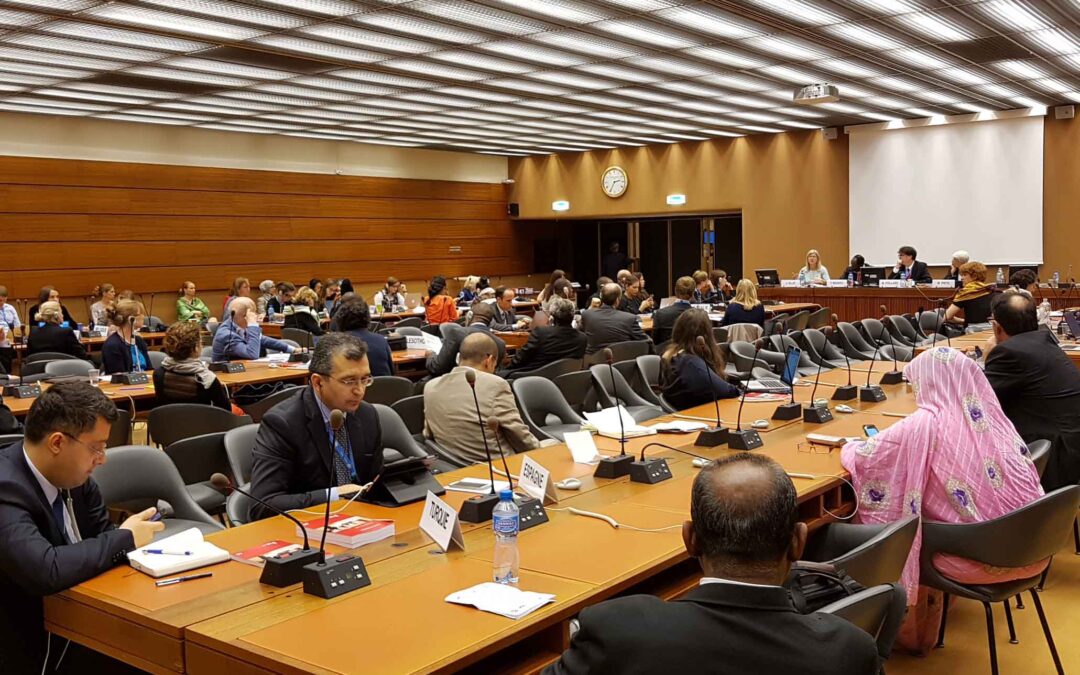
Side Event Tuesday 14 June 2016, 14:00 – 16:00
Room XXIII, Palais des Nations, Geneva.
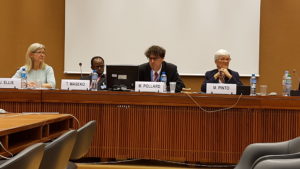
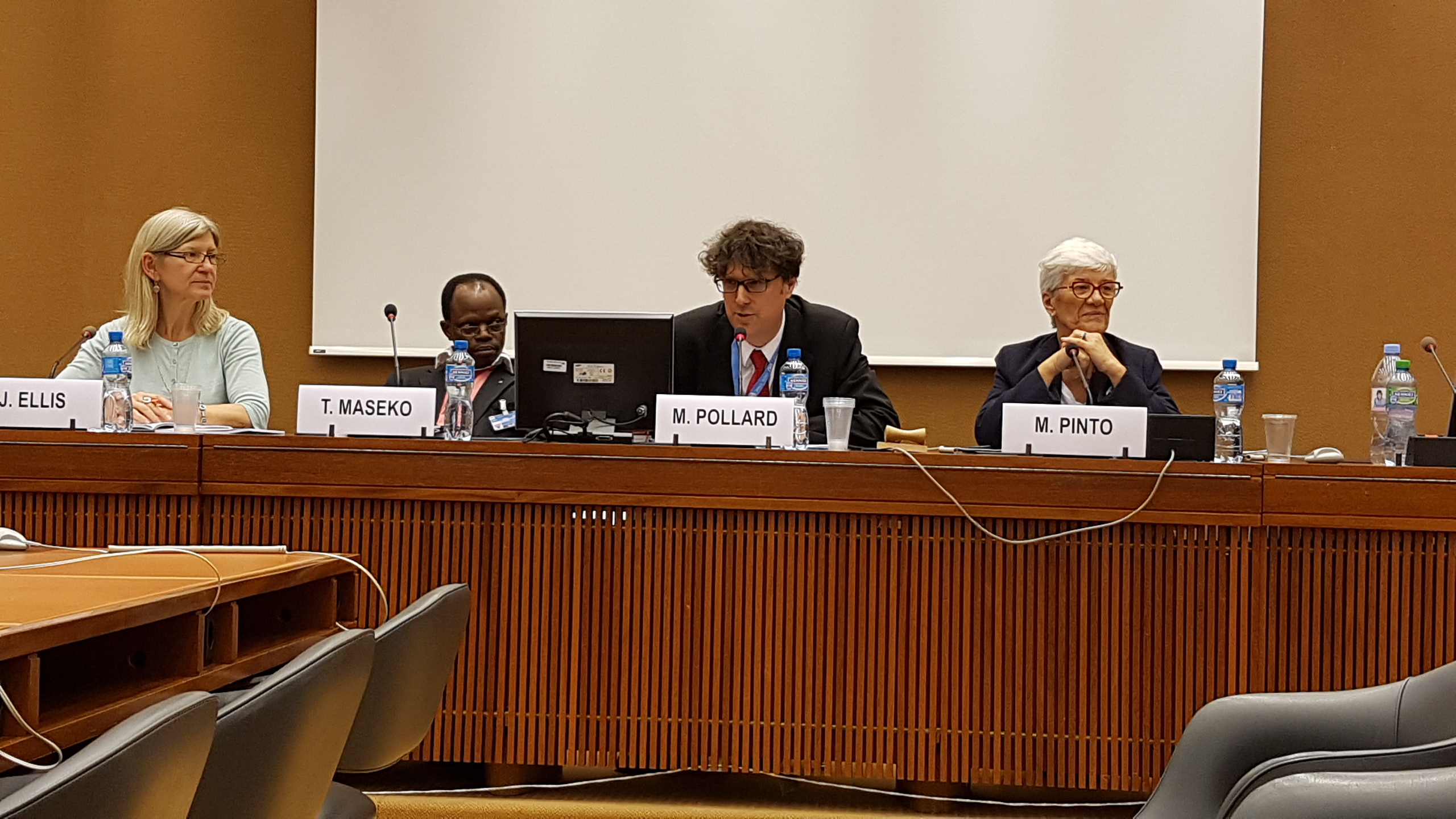
The International Commission of Jurists (ICJ) and the International Bar Association (IBA) organised a side event to the 32nd session of the Human Rights Council, on the topic of accountability for judicial corruption and judicial involvement in human rights violations.
The well-attended event considered the need for judicial accountability, and different options for effective mechanisms and procedures of accountability. Recommendations for ordinary situations were complemented with reflections on circumstances of transitions where the judiciary have been deeply implicated in the violations of the previous regime, as well as particular challenges in developing countries.
At the event the ICJ launched its new Practitioners’ Guide on Judicial Accountability, and the IBA presented the recent report of its Judicial Integrity Initiative on Judicial systems and Corruption. Print copies of both publications were distributed.
A panel discussion also featured the UN Special Rapporteur on the independence of judges and lawyers, as well as Thulani Maseko, a lawyer from Swaziland who was subjected to prolonged arbitrary detention and imprisonment by judges in Swaziland, for speaking publicly about judicial misconduct in the country.
Speakers:
- Mónica Pinto Special Rapporteur on the independence of judges and lawyers
- Thulani Maseko Lawyer, Swaziland
- Jane Ellis, Director, Legal & Policy Research Unit, International Bar Association
- Matt Pollard, Centre for the Independence of Judges & Lawyers, International Commission of Jurists
In addition to the ICJ and IBA, side event co-sponsors included:
- The Permanent Mission of Hungary to the UN
- Commonwealth Magistrates’ and Judges’ Association
- Commonwealth Lawyers Association
- Rechters voor Rechters (Judges for Judges), Netherlands
- International Legal Assistance Consortium
The ICJ Practitioners’ Guide on Judicial Accountability, and the research and consultations on which it is based, was made possible with the financial support of the Republic and Canton of Geneva and the Ministry of Foreign Affairs of Finland.
For more information, please contact Matt Pollard.
ICJ Practitioners’ Guide No. 13 on Judicial Accountability
The ICJ’s Practitioners’ Guide No. 13 on Judicial Accountability aims to help practitioners ensure accountability for serious judicial misconduct, such as corruption or complicity in human rights violations, while preserving the independence of the judiciary.
It focuses on international standards on accountability mechanisms and procedures, illustrated by practical examples. It addresses not only the accountability of individual judges, and the accountability of judiciary as an institution, but also State responsibility under international law, particularly in relation to harm caused to victims of violations by judges.
The Guide was greatly informed by discussions among eminent judges and lawyers from around the world, convened by the ICJ Centre for the Independence of Judges & Lawyers, in Tunisia in October 2015 , and in Geneva in December 2015.
Among the topics covered by the new ICJ Guide are:
- The obligation to ensure an independent, impartial and accountable judiciary.
- The forms of judicial accountability, including:
- Remedy and reparation for victims,
- The responsibility of the State,
- Removal from office, disciplinary sanctions, and other administrative measures,
- Criminal responsibility, and
- The right to the truth.
- The structure and elements of accountability bodies, such as:
- Review of decisions through appeal or judicial review,
- Judicial councils,
- The ordinary courts,
- Parliamentary procedures,
- Ad hoc tribunals,
- Anti-corruption bodies,
- Civil society monitoring and reporting,
- National human rights institutions,
- Professional associations,
- International accountability mechanisms.
- Procedural issues, including:
- Necessary powers for accountability mechanisms,
- Procedural rights of the judge,
- Procedural rights of complainants and victims,
- Publicity and transparency,
- Procedures for lifting judicial immunity,
- Temporary suspension during proceedings, and
- Selective enforcement for improper purposes.
- Mechanisms in exceptional circumstances, such as transitions from undemocratic or authoritarian regimes, including:
- Truth commissions,
- Vetting, and
- Mass removal and re-application.
- Particular challenges in relation to developing countries.
Mar 31, 2016 | News
A Delhi Court acquitted human rights defender Irom Sharmila of an “attempt to commit suicide” charge. The government of Manipur must in turn immediately drop the charges against her, said the ICJ today.
Irom Sharmila, was charged under section 309 the Indian Penal Code.
She has been on a continuous hunger strike for over 15 years, demanding repeal of the Armed Forces Special Powers Act (AFSPA).
“This order is a welcome recognition that Irom Sharmila’s hunger strike is a form of peaceful dissent and protest protected by the right to freedom of expression,” said Sam Zarifi, ICJ’s Asia Director.
This week, Iron Sharmila was acquitted of the charges against her in Delhi. The case against her in Manipur is, however, still on-going.
The decision of the Delhi court is not binding on the courts in Manipur, but the charges are analogous, and similar reasoning should prevail, the ICJ says.
“The government of Manipur should drop the other charges under section 309 against her, and release her immediately and unconditionally,” said Zarifi.
On at least two occasions previously, courts in Manipur have directed that Irom Sharmila be released, saying that charges under section 309 were not applicable.
“The use of section 309 against Sharmila highlights the outdated and absurd nature of this law,” Zarifi said.
“The government should expedite the repeal of 309 and, instead of criminalizing Irom Sharmila’s protest, focus on the reason behind it and repeal the AFSPA,” he added.
The AFSPA gives armed forces a range of “special powers” in “disturbed areas”, which include the power to arrest without warrant, to enter and search any premises, and in certain circumstances, “fire upon or otherwise use force, even to the causing of death”.
Furthermore, under the AFSPA, governmental permission, or sanction, is required before any member of the armed forces can be prosecuted for crimes in a civilian court.
These provisions are inconsistent with a range of human rights, including the right to life and right to remedy.
They have also facilitated torture, rape and enforced disappearances in areas where operational, the ICJ notes.
“This law is inconsistent with India’s human rights obligations, and has led to human rights violations, wide-spread impunity, and immense grief and suffering in the areas where it operates”, Zarifi said.
“It is high time that it was taken off the books”.
Background
Irom Sharmila began a hunger strike in November 2000, calling for the repeal of the AFSPA, following the unlawful killing of 10 civilians by security forces purportedly acting under it in Malom.
She was arrested by the Manipur government in 2000 under section 309 of the Indian Penal Code, which prohibits an “attempt to commit suicide”.
Irom Sharmila has been in custody almost continuously since her initial arrest, and has continued her hunger strike.
She is fed through a nasal tube at the Jawaharlal Nehru hospital in Imphal where she is usually held.
The Delhi government also charged her on similar grounds with respect to an incident from 2006, when she held a protest in their jurisdiction.
In 2014, a Manipur court quashed charges under section 309 against Irom Sharmila, saying “The agitation of Irom Chanu Sharmila is a political demand through lawful means of repealing a valid statute. … she may continue with the fast till her demand is met politically by the Government”.
However, since she continued her hunger strike, she was immediately re-arrested on the same grounds.
In its 210th report, the Indian Law Commission has recommended that section 309 be repealed. In 2011, the Supreme Court said: “the time has come when [section 309] should be deleted by Parliament as it has become anachronistic.”
In 2014, the government announced that it was in the process of repealing 309.
The AFSPA applies to “disturbed areas” in the states of Arunachal Pradesh, Assam, Manipur, Meghalaya, Mizoram, Nagaland and Tripura.
An almost identical law is also applicable in Jammu and Kashmir.
Dec 22, 2015 | News
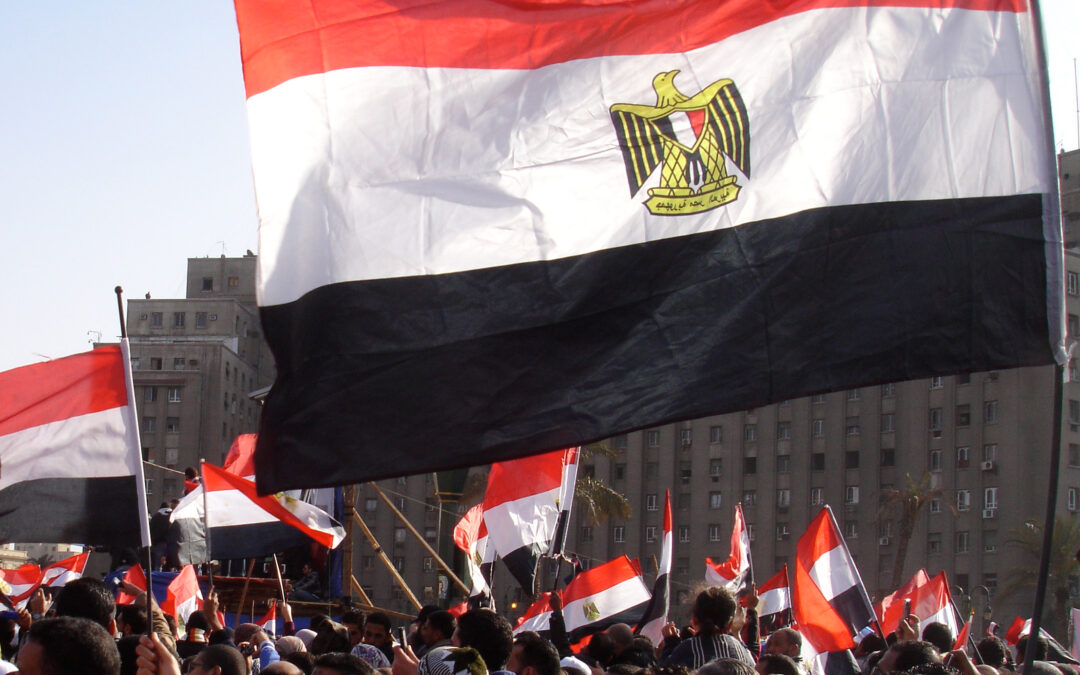
The ICJ today called on Egypt’s newly elected House of Representatives to amend or annul the web of repressive presidential decrees promulgated since the ouster of President Morsi.
“Egypt’s House of Representatives must dismantle the catalogue of repressive presidential decrees that have been used by the authorities to stifle dissent, curtail fundamental rights and freedoms and shield state officials from accountability in cases of human rights violations,” said Said Benarbia, Director of the ICJ’s Middle East and North Africa (MENA) Programme.
Article 156 of the Egyptian Constitution provides that decrees issued by the President while the House of Representatives is not in session must be discussed and approved by the new House of Representatives within 15 days of it convening.
Failure to do so results in the laws being automatically nullified with retroactive effect.
The ICJ and others have detailed how many of these presidential decrees, including the Demonstration Law (No.107 of 2013), the Counter-Terrorism Law (No.94 of 2015), the Terrorist Entity Law (No.8 of 2015), the Law on Military Courts (No.136 of 2014) and laws amending the Criminal Code (No.128 of 2014) and the Prison Law (No.106 of 2015), violate Egypt’s obligations under international law.
Key concerns relate to the right to life, the right to liberty and the right not to be subjected to arbitrary detention, fair trial rights, and the rights to freedom of expression, association and assembly.
These fundamental rights are protected by for instance the International Covenant on Civil and Political Rights, which Egypt ratified in 1982 and which today counts 168 states as parties.
Over the last two years, thousands of individuals have been prosecuted and convicted pursuant to such decrees, including the Demonstration Law, through proceedings that fell short of international fair trial standards.
Further, many of these decrees, in particular the Counter-Terrorism Law and the Demonstration Law, institutionalise the immunity of state officials from legal proceedings against any use of force committed in the course of their duties, including the use of lethal force when it is not strictly necessary to protect lives.
The decrees also fail to provide for any reparations mechanism for victims.
“Egypt’s parliament should, as a matter of urgency, ensure that those who have suffered human rights violations on the basis of these laws obtain effective remedy and reparations, remove all obstacles to justice and accountability, and address the impunity of state officials underpinned by these decrees”, Benarbia added.
Contact:
Alice Goodenough, Legal Adviser of the ICJ Middle East and North Africa Programme, t: +44 7815 570 834; e: alice.goodenough(a)icj.org
Nader Diab, Associate Legal Adviser of the ICJ Middle East and North Africa Programme, t: +41 229 793 804; e: nader.diab(a)icj.org
Egypt-New House of Representatives-News-Press releases-2015-ARA (full text in Arabic, PDF)