Aug 24, 2017 | News
On the one-year anniversary of the enactment of a law establishing the Office on Missing Persons (OMP), the ICJ called on the Sri Lankan Government to swiftly operationalize the Office.
The ICJ also urged the Government to set up other transitional justice mechanisms it committed to in the context of a key 2015 UN Human Rights Council resolution, without further delay.
On 23 August 2016, the OMP Act received the Speaker’s assent and became law. Even after one year, however, the Office has not been operationalized.
Organizations have reportedly made the claim that the President has unconstitutionally allocated the subject of the OMP to himself.
The Government’s failure to follow Constitutional provisions when setting up an important office such as the OMP, which has a permanent mandate to search and trace the whereabouts of “missing persons”, leaves the office exposed to future uncertainty- a move that affected communities can ill afford after a long and unjustifiable delay in setting up the OMP, the ICJ notes.
“The delay has already resulted in affected communities losing hope and faith in the Government’s transitional justice agenda, as is evident by continuous protests in the North,” said Frederick Rawski, ICJ’s Asia and Pacific Director.
The ICJ noted that in September 2015, the Government of Sri Lanka made a promise to the people of Sri Lanka and the international community, to initiate a process of reconciliation which “involves addressing the broad areas of truth seeking, justice, reparations and non-recurrence and for non-recurrence to become truly meaningful, the necessity of reaching a political settlement that addresses the grievances of the Tamil people”.
In the context of UN Human Rights Council resolution 30/1, adopted 1 October 2015, the Government of Sri Lanka made a commitment to establish four main transitional justice mechanisms, a Commission for Truth, Justice, Reconciliation and Non-recurrence, an Office on Missing Persons, an Office for Reparations and a Judicial Mechanism with a Special Counsel, amongst numerous other reforms.
Almost two years since these promises were made, only one mechanism, the OMP, has been established by law.
In March 2017, the need for implementation of these commitments related to reconciliation, accountability and human rights were reaffirmed, and a comprehensive report, followed by a discussion on the implementation of Council resolution 30/1, is due at the Human Rights Council’s 40th session in March 2019.
The Consultation Task Force on Reconciliation Mechanisms (CTF), a panel of 11 independent eminent persons appointed by Prime Minister Ranil Wickremesinghe, publicly released its final report on 3 January 2017.
The report already outlines structures and recommendations for the promised mechanisms based on country-wide consultations.
The ICJ called on the government of Sri Lanka to implement Task Force recommendations to deliver justice for victims of human rights abuse.
“The Government of Sri Lanka should make public its plans and drafts for the proposed mechanisms based on consultations, as well as a timeline for when it hopes to establish them, in order to stop further erosion of faith by the affected communities,” Rawski added.
In February, President Sirisena affirmed that he will prioritize Constitutional Reform over Transitional Justice-related reforms adding that there is a need to foster support for Transitional Justice amongst all communities.
The linkages between the two reform processes are many and one process cannot be seen independent of the other.
There is, however, very little progress on either front or a broad-based campaign to garner support for transitional justice, the ICJ said.
Two years into its tenure, the Government of Sri Lanka must take stock of its commitments and forge ahead with its reform agenda before the increasingly negative perception of the Government compromises the change it pledged and incumbency fatigue sets in, the ICJ added.
“The Government must act, and act now, to stop the disconnect between the hopes of affected communities and the lack of substantive progress of the transitional justice agenda from growing further, and deliver on its commitments before the opportunity for progressive reform is lost for good,” Rawski added.
Contact:
Frederick Rawski, ICJ’s Asia Pacific Regional Director (Bangkok), e: frederick.rawski(a)icj.org
Thyagi Ruwanpathirana, ICJ’s National Legal Advisor (Sri Lanka), e: thyagi.ruwanpathirana(a)icj.org
May 29, 2017 | Multimedia items, News, Video clips
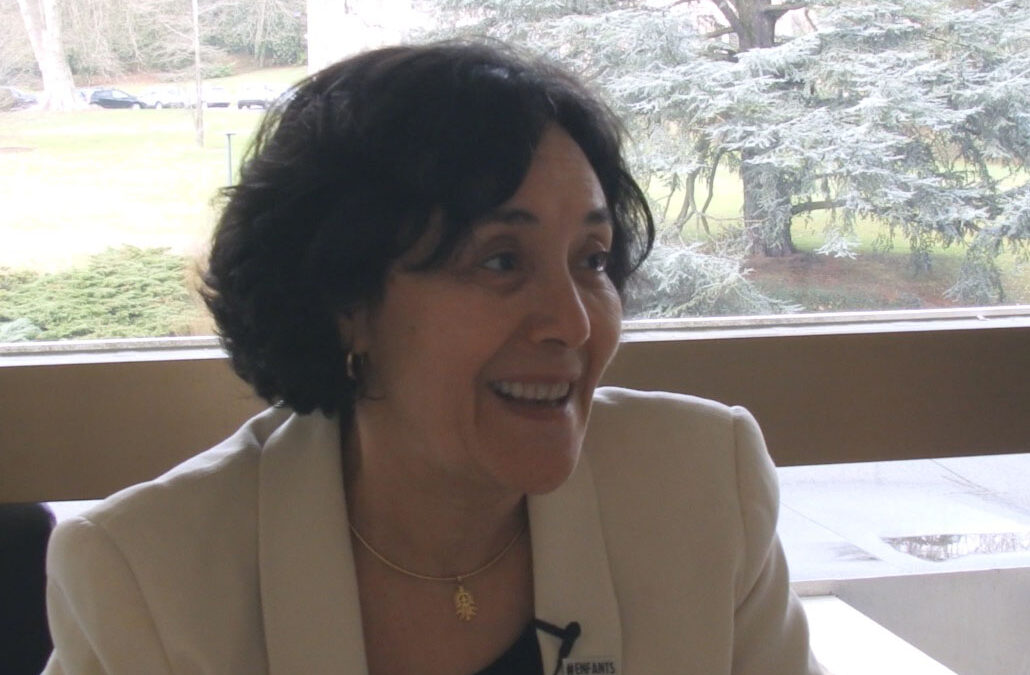
Honorary ICJ Member Leila Zerrougui speaks about the obstacles in accessing justice that women face, particularly in conflict settings, in the latest ICJ profile on women human rights defenders.
Professor Leila Zerrougui is an Algerian legal expert on human rights and administration of justice. She has served as a juvenile judge, judge of first instance, appeals court judge and was appointed to the Algerian Supreme Court.
She was the Deputy Special Representative of the Secretary-General and Deputy Head of the United Nations Stabilization Mission in the Democratic Republic of the Congo (MONUSCO) where, from 2008, she spearheaded the Mission’s efforts in strengthening the rule of law and protection of civilians. From 2012 to 2017 she served as Special Representative of the Secretary-General for Children and Armed Conflict.
Prof. Zerrougui explained that she was part of a first generation of women who had access to education in her country and that the opportunity to study law helped her to understand rights, how to exercise these and how to protect them.
When she started as a juvenile judge, the family code was very unjust for women, and she was motivated to try and fix these injustices.
Although confronted by occasional misogyny, Prof. Zerrougui considered that in some ways her gender enabled her to enjoy more opportunities when she started her career as there were so few female judges and male peers felt less threatened by her.
Prof Zerrougui said that throughout her career she has been supported by many men, but emphasized that it is important that men understand that gender issues are about the relationships between men and women and that it is in everyone’s best interests to promote gender equality in all aspects of life.
Among the many obstacles facing women in accessing justice, she cited administrative blockages, lack of knowledge about legal procedures, lack of financial means and family pressures and interference. Women without access to education or other public spaces, particularly those whose families do not support them, are totally disempowered.
Prof. Zerrougui said that as a judge she observed many cases were thrown out because those filing cases didn’t understand the legal procedures that were involved. She therefore decided to spend two hours every week taking part in a TV programme to explain these procedures to citizens in a way that they could access and understand.
Prof. Zerrougui has worked in many conflict settings and is known for her innovative methods. She said: “In many conflict settings, you don’t have justice. So it is not about how can you access justice, the system is not there.” Prof. Zerrougui went on to explain that in these settings it is first necessary to take justice to where the victims are.
In the Democratic Republic of the Congo, Prof. Zerrougui established mobile criminal justice courts, with an investigator, prosecutor and a mobile court and a prison in every Province. It was the first stage to bring justice to remote areas, and to allow the victim to face the perpetrators, sometimes high ranking military.
In this context, she explained how rewarding it was to see a colonel taken to the village where he and his solders had raped women and to face justice there. His victims were able to participate in the process and see him face justice and receive his sentence. The decision was then made to detain the perpetrator in a different area, where he would not have the influence to arrange his release.
Prof. Zerrougui explained that children are often victims of conflicts they have not instigated but, despite sometimes constituting as much as 50 or 70 per cent of the overall population in conflict zones, are frequently forgotten and left without a voice.
In her role as UN Special Representative for Children and Armed Conflict, she was involved with the Colombia peace process and the first agreement signed there was about releasing children and reintegrating them into their family or society rather than seeking punishment. However, she explained it is also vital to ensure that perpetrators of abuses against children are punished.
Prof. Zerrougui encouraged more young women to think about working in human rights and said: “just choose the space when you have the opportunity to get it, don’t think about all the obstacles, it’s good to know them but not stop at that, and you will achieve results, the recognition will come.”
She added that this work is important, “because without human rights defenders, without people that dedicate their lives, their careers, to defend the most vulnerable, the voiceless, then the world becomes a jungle.”
Watch the interview:
The series of profiles introducing the work of ICJ Commissioners and Honorary Members on women’s rights was launched on 25 November 2016 to coincide with the International Day to Eliminate Violence against Women and the first day of the 16 Days of Activism Against Gender-Based Violence Campaign.