Jun 29, 2018 | Advocacy, Non-legal submissions
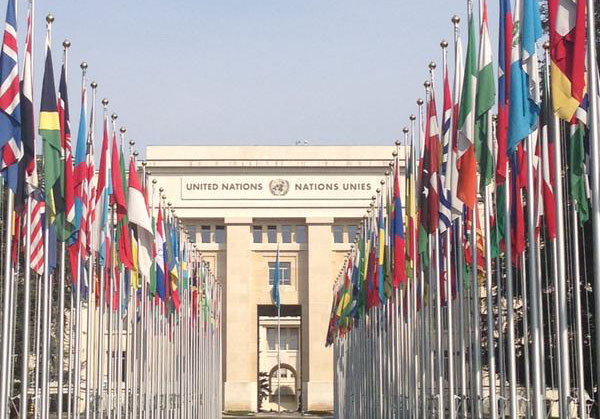
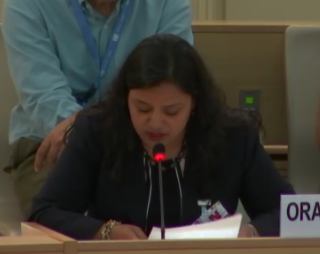
The ICJ today highlighted Nepal’s failure to implement recommendations accepted under its Universal Periodic Review, at the United Nations.The statement was made during General Debate on the Universal Periodic Review, at the UN Human Rights Council in Geneva. The statement read as follows:
“The UPR can help ensure that States comply with international human rights standards, but only if accepted recommendations are in fact implemented. Lack of follow-up on States’ implementation after adoption of UPR outcomes allows States to disregard their UPR commitments, undermining the mechanism, as is illustrated by the example of Nepal.
More than two years after its last review, the Government has still not implemented accepted recommendations related to transitional justice and accountability for past human rights violations.
Of particular concern is the continuing failure of the Government to establish credible transitional justice mechanisms to effectively address past human rights violations.
The Truth and Reconciliation Commission and Commission on Investigation of Disappeared Persons continue to fall short of international standards, both in constitution and operation.
The recently published draft bill on transitional justice provides for short-term community service as an alternative punishment for perpetrators convicted of international crimes, including torture and enforced disappearance. Such manifestly inadequate punishment would constitute a form of impunity.
Furthermore, the establishment of a special court under the bill will not be effective unless crimes such as torture, enforced disappearance, war crimes and crimes against humanity are criminalized in national law in accordance with international standards.
The ICJ urges the Council to adopt measures to ensure effective implementation of accepted UPR recommendations.”
May 3, 2018 | News
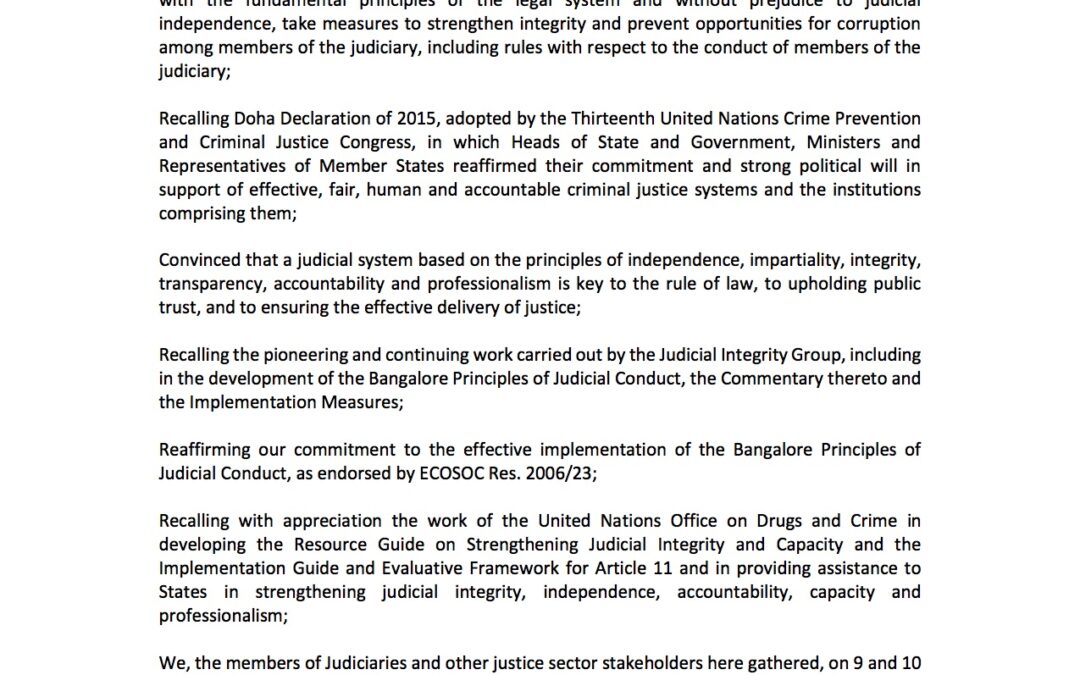
The UN Office on Drugs and Crime (UNODC) today published a Declaration on Judicial Integrity, adopted by Chief Justices and other judges and stakeholders at the launch of a new Global Judicial Integrity Network in Vienna.
ICJ actively participated in the launch event, which took place 9-10 April at the UN offices in Vienna, Austria. It was one of the largest-ever gatherings of Chief Justices and other senior judges, together with other experts and stakeholders.
In addition to organising a panel discussion on judicial selection and appointment procedures in Southern and East Africa, the ICJ made the following statement to the plenary session of the launch event:
Throughout the decades since its inception in 1952, the primary and most effective means by which the International Commission of Jurists has worked to promote the rule of law around the world is precisely by bringing judges from different countries together to share experience and expertise with one another, and together to seek solutions to the common challenges they face. The Judicial Integrity Network should make a huge contribution by creating a platform for this kind of judge-to-judge engagement to take place on a global scale and a continuous basis. The sessions today and yesterday have truly illustrated the very great potential of the Network. The ICJ strongly supports the efforts of UNODC, Chief Justices, and other stakeholders to bring the Network into being, and we look forward to participating in it, promoting it, and using it in our own work with judiciaries around the world, in the years ahead.
The plenary session also accepted, by consensus, the ICJ’s proposal to include key language from the UN Basic Principles on the Independence of the Judiciary, in the Declaration.
The Declaration, Terms of Reference, and Participants List is available on the UNODC website here or can be downloaded from the following links:
Declaration on Judicial Integrity (UNODC event 2018)
UNODC GJIN Terms of Reference 2018
ICJ Practitioners Guide no 13, on Judicial Accountability, can be downloaded here: Universal-PG 13 Judicial Accountability-Publications-Reports-Practitioners Guide-2016-ENG
Nov 1, 2017 | News, Publications, Reports, Thematic reports
The arrest of absconding murder convict Bal Krishna Dhungel, a senior Maoist leader, highlights the weaknesses, as well as the promises, for victims seeking accountability through Nepal’s judicial system, said the ICJ as it released a report on accountability mechanisms in the country.
The ICJ’s report Achieving Justice for Gross Human Rights Violations in Nepal concludes that impunity for gross human rights violations is one of the major obstacles to the creation of a stable and legitimate democratic government and lies at the heart of the rule of law crisis in Nepal.
It found that a lack of commitment by Nepal’s political leadership to address past and ongoing human rights violations continues to allow perpetrators to escape justice and undermines victims’ right to effective remedies and reparation.
“In the past, the promise to shield perpetrators for human rights violations has been used as a bargaining chip to garner political support and build political alliances,” said Frederick Rawski, Director of the ICJ’s Asia Pacific Regional Programme.
“It is imperative that accountability for human rights violations remains a priority for Nepal’s political leadership after Parliamentary elections, and that alliances between political parties are not once again used as an excuse to undermine Nepal’s human rights obligations,” added Rawski.
Attempts to thwart justice have also included the cynical manipulation of justice sector actors, from the police to the Attorney General’s office, in a way that threatens the independence and credibility of the institutions responsible for safeguarding human rights and the rule of law in Nepal, the report highlights.
This pattern of impunity persists despite demands for accountability by civil society and victims’ organizations, as well as the National Human Rights Commission and Nepal’s Supreme Court.
“In many ways, the Supreme Court of Nepal has emerged as a beacon of hope for victims of human rights violations,” said Rawski.
“The Court has given domestic effect to Nepal’s obligations under international law and has set high standards for accountability, remedy and reparations,” he added.
However, the Government’s disregard of key judgments has limited the impact of the Supreme Court’s jurisprudence, the report says.
Attacks on the independence of the judiciary, as demonstrated by the impeachment motion against former Chief Justice Sushila Karki, also indicate a worrying trend.
The ICJ’s report found that the mandate and operation of transitional justice mechanisms fall short of international standards despite the repeated reinforcement of such standards by the Supreme Court.
Though ostensibly formed to provide a measure of public accountability, the practice of forming ad hoc commissions of inquiry to investigate rights violations has promoted impunity by diverting investigations from the criminal justice process – where they belong – into parallel mechanisms that are established by means that make them vulnerable to political interference and manipulation.
The ICJ’s report also concludes that gross human rights violations in Nepal are not a thing of the past, but are ongoing.
Notably in the Terai region, the State has responded to the Madhesh movement with excessive use of force, extrajudicial killings, and torture and other ill-treatment.
Political expediency has trumped calls for justice and accountability and the Government continues to use State machinery to shield perpetrators rather than serve the interests of justice.
“In a seemingly perpetual cycle, the weak rule of law in the country contributes to impunity for human rights violations, and this culture of impunity further erodes the rule of law,” said Rawski.
“The search for truth and justice in Nepal will not be realized unless this cycle is ended,” he added.
Additional information
Dhungel had been absconding since the Supreme Court upheld his conviction for murder in 2010. The arrest comes after a contempt of court petition was filed before the Supreme Court against the Inspector General of Police for failing to implement multiple Supreme Court orders directing Dhungel’s arrest.
Contact
Frederick Rawski, ICJ Asia Pacific Regional Director, t: +66 64 478 1121, e: frederick.rawski@icj.org
Alex Conte, ICJ Global Redress and Accountability Initiative, t: +41.79.957.2733; e: alex.conte@icj.org
Download
Nepal-GRA Baseline Study-Publications-Reports-Thematic reports-2017-ENG (full report in PDF)
Read also
ICJ Discussion Paper Nepal’s Transitional Justice Process: Challenges and Future Strategy (August 2017)
ICJ Report Authority without Accountability: The struggle for justice in Nepal (October 2013)
Sep 28, 2017 | Advocacy, Uncategorized
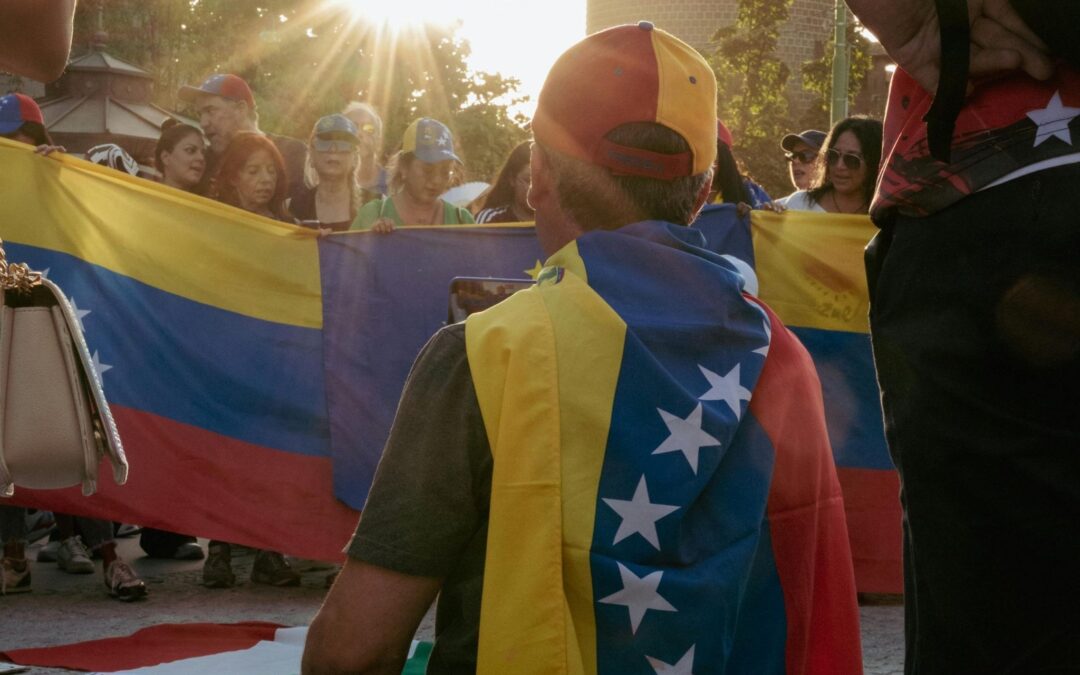
The ICJ today called on the UN Human Rights Committee and a group of UN Special Procedure mandates to take urgent follow up action on Venezuela in light of the grave and ever deteriorating human rights situation in the country.
In a letter to the UN Human Rights Committee, the treaty body responsible for monitoring implementation by States parties to the International Covenant on Civil and Political Rights (ICCPR), the ICJ called for urgent action by the Committee, either through its established follow-up procedure and/or through requesting a special interim report. The Committee’s follow-up procedure was referenced in the Committee’s Concluding Observations on Venezuela’s fourth periodic report under the ICCPR. Special interim reports may be requested by the Committee under Article 40(1)(b) of the ICCPR.
The ICJ also called for urgent action to be taken by the following UN Special Procedure mandates: the Working Group on Arbitrary Detention, the Special Rapporteur on freedom of opinion and expression, the Special Rapporteur on freedom of assembly and of association, the Special Rapporteur on the independence of judges and lawyers and the Special Rapporteur on torture and other cruel, inhuman or degrading treatment. This group of Special Procedure mandates had on 4 August 2017 issued a joint statement on the human rights situation in Venezuela.
The ICJ’s letters draw attention to several critical areas of concern:
- The rapidly deteriorating human rights situation;
- The lack of accountability of perpetrators of human rights violations;
- The lack of effective remedies and reparation for victims of human rights violations;
- The lack of independence of the judiciary;
- The institutional crisis arising from decisions of the Supreme Court of Justice;
- The unconstitutional election of the new National Constituent Assembly;
- The dismissal of the former Attorney General;
- The recent establishment of a ‘Truth Commission’;
- The intended revision of Venezuela’s Constitution; and
- Venezuela’s failure to notify its state of emergency under the ICCPR.
ICJ-Correspondence-VenezuelaFollowUp-HRCttee-2017-09-28 (download letter to the Human Rights Committee, in PDF)
ICJ-Correspondence-VenezuelaFollowUp-SPs-2017-09-28 (download letter to the Special Procedure mandates, in PDF)
ICJ reports:
Venezuela: the Supreme Court of Justice has become an arm of an authoritarian executive
Venezuela: rule of law and impunity crisis deepens
Venezuela: dismissal of Attorney General a further blow to the rule of law and accountability
Venezuela: Human rights and Rule of Law in deep crisis
Strengthening the Rule of Law in Venezuela