Jul 9, 2020 | Advocacy, Non-legal submissions
The ICJ filed a submission to the Human Rights Council’s Working Group on the Universal Periodic Review in advance of its review of Lebanon’s human rights record between January and February 2021.
Information provided in the submission was based on a number of recent ICJ publications, including on the independence of the judiciary; military courts; gender-based violence; and a forthcoming publication on the human rights of refugees and migrants in Lebanon.
In the submission, the ICJ drew the attention of the Working Group to the following concerns with respect to Lebanon:
- The independence of the judiciary and the use and jurisdiction of military courts;
- The obstacles that continue to impede women’s and girls’ access to justice for sexual and gender-based violence (SGBV); and
- The inadequate framework and practices undermining migrants’ and refugees’ rights.
The ICJ called on the Working Group and Human Rights Council to urge the Lebanese authorities to take the following actions:
With regard to the independence of the judiciary and the use and jurisdiction of military courts:
- End executive control and undue influence over the judiciary, including by divesting the Minister of Justice of any role in the selection, appointment, promotion, transfer, secondment or any other aspects of the management of the career of judges;
- Ensure that the High Judicial Council is independent from the executive, including by amending its composition to ensure that the majority of members are judges elected by their peers, and that it is pluralistic, gender and minority representative, competent to decide on all issues relating to the career of judges, and empowered to uphold the independence of the judiciary;
- Ensure that military courts have no jurisdiction to try civilians, and that such jurisdiction is restricted to military personnel over alleged breaches of military discipline or ordinary crimes not involving the commission of human rights violations, to the exclusion of human rights violations and crimes under international law.
With regard to women’s access to justice for SGBV:
- Repeal all discriminatory provisions against women, particularly those in the Criminal Code, the Nationality Code and Personal Status Laws;
- Adopt a unified civil Personal Status Law for all religious groups, where all customs discriminating against women and girls are overridden in accordance with article 2(f) of CEDAW; and ensure that issues related to divorce, inheritance and custody are adjudicated before ordinary courts consistent with international standards;
- Amend Law No. 293/2014 on the protection of women and other family members from domestic violence (Law No. 293/14) and the Criminal Code to ensure that it criminalizes all forms of SGBV, including by properly defining rape as a type of sexual assault characterized by a physical invasion of a sexual nature without consent or under coercive circumstances, and ensure that marital and all other acts of rape be criminalized; and, to this end, abolish provisions of Law No. 293/14 providing for a religion-based claim to marital rights;
- Amend the Criminal Code, the Code of Criminal Procedure and Law No. 293/14 to include gender-sensitive investigations and evidence-gathering procedures in order to enable women to report violence against them, and take effective steps to address the social and practical factors that continue to impede women’s access to justice, such as gender-based stereotypes and prejudices that operate in society and in the justice system;
- Remove obstacles related to gender stereotypes, economic and social realities that continue to impede access to justice in SGBV cases, including by ensuring that where law enforcement officers fail to ensure an effective investigation into an incident of SGBV, their omissions be actionable as a breach of their duties and subject to disciplinary measures as appropriate;
- Provide routine capacity building training to justice sector actors on the application of international human rights law, including CEDAW and related jurisprudence.
With regard to the treatment of refugees and migrants:
- Become a party to the 1951 UN Refugee Convention and its 1967 Protocol, and pass legislation to adequately protect the human rights of refugees, asylum seekers, stateless people and migrants, in compliance with Lebanon’s international obligations;
- Amend the 1962 Law on the Entry, Stay in and Exit from Lebanon (Law 1962) to ensure full compliance with these obligations, and that people entitled to international protection, chiefly refugees, asylum seekers, and stateless individuals, are not penalized, automatically arrested or deported for their “illegal” entry and stay in the country;
- Ensure that no individual is deprived of their liberty solely on the grounds of their immigration status, and, to this end, amend articles 32 and 36 of Law 1962; until then, provide automatic, periodic judicial review of the lawfulness, necessity and proportionality of any immigration-related detention;
- Strictly comply with Lebanon’s non-refoulement obligations, including by ensuring that no individual is transferred to a country where they face a real risk of persecution or other forms of serious harm; that nobody is forcibly returned without an individualized, fair and effective procedure guaranteeing due process; and by establishing a moratorium on all removals to Syria.
Lebanon-UPR Submission-Advocacy-Non Legal submission-2020-ENG (full submission, in PDF)
Mar 28, 2019 | Advocacy, Non-legal submissions
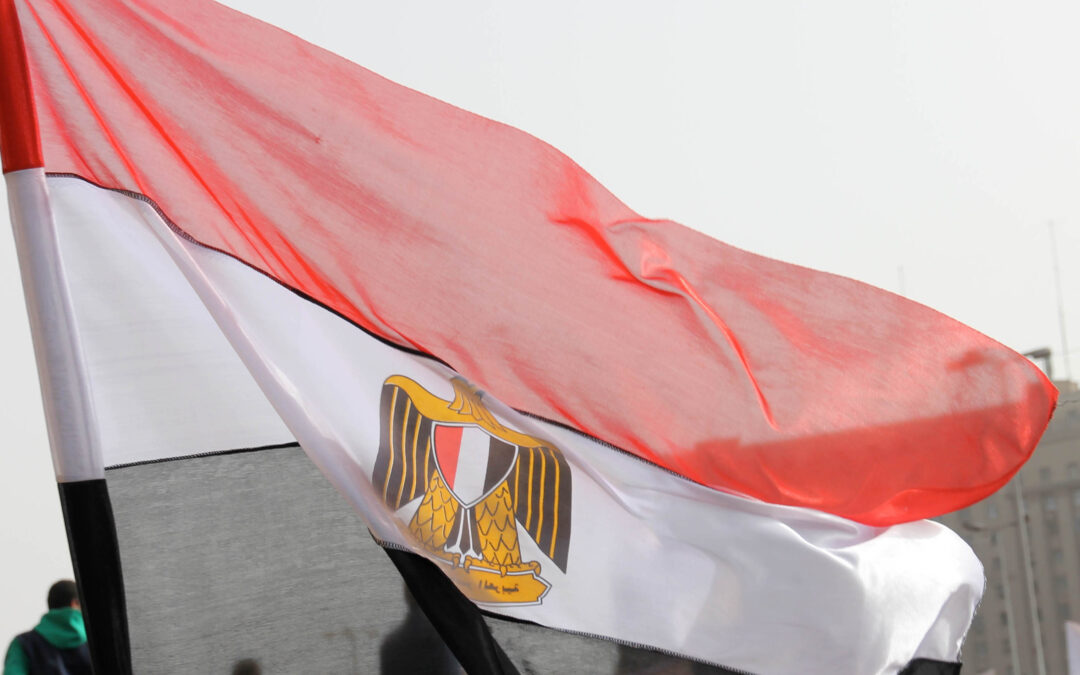
Today, the ICJ and Adalah for Rights and Freedoms (Adalah) filed a submission to the Human Rights Council’s Working Group on the Universal Periodic Review in advance of its review of Egypt’s human rights record in November 2019.
In their submission, the ICJ and Adalah drew the the attention of the Working Group on the UPR to the following concerns:
- arbitrary arrests and detentions and systematic use of pre-trial detention;
- the systematic use of torture, ill-treatment and enforced disappearance;
- the imposition of death penalty following unfair trials; and
- the politicization of the judiciary and the use of courts as a tool of repression.
The ICJ and Adalah called on the Working Group and the Council to urge the Egyptian authorities to :
- End the practice of holding detainees incommunicado;
- End all other forms of arbitrary detention;
- Comprehensively reform the pre-trial detention framework, including by ensuring that resort to it is exceptional, and that such detention may be ordered only when it is determined on the basis of evidence that it is necessary, proportionate and reasonable in the circumstances of the individual case;
- Ensure that pre-trial detention is not mandatory for all individuals charged with a particular category of felony or misdemeanor, or based on the potential sentences for the offences alleged;
- Ratify the International Convention for the Protection of All Persons from Enforced Disappearance (CED);
- Enact a crime of enforced disappearance in the Egyptian Criminal Code consistent with article 2 of the CED;
- Amend article 126 of the Criminal Code with a view to enacting a crime of torture consistent with article 1 of the CAT;
- Accept independent monitoring of detention facilities by allowing independent observers immediate access to detainees and prisoners, and to that end, accede to the Optional Protocol to the CAT;
- Implement all the recommendations of the CAT following its article 20 inquiry;
- Amend Egyptian law and abolish the use of the death penalty;
- Pending abolition, implement an immediate moratorium on all executions and on the imposition of capital punishment, including in cases of involving intentional killings;
- Pending abolition, ensure that proceedings in death penalty cases conform to the highest standards of judicial independence, competence and impartiality, and strictly comply with all fair trial rights;
- Pending abolition, ensure that the right to appeal in death penalty cases include review of both the factual and the legal aspects of the case by a higher ordinary, independent and impartial tribunal;
- Pending abolition, provide for the right of individuals convicted in death penalty cases to seek a pardon, commutation of sentence or clemency.
- Ensure that all convictions in death penalty cases that followed unfair trails are quashed;
- End Executive interference in judicial affairs;
- Limit the jurisdiction of military courts to trials of military personnel only for breaches of military discipline; and
- Abolish Emergency State Security Courts.
Egypt-Adalah_ICJ UPR-Advocacy-Non Legal Submissions-2019-ENG (full text of submission, in PDF)
Dec 15, 2018 | Agendas, Events
Today begins in Ankara (Turkey) a one-day workshop for lawyers and CSO practitioners on the use and strategies of UPR mechanisms.
This event is organized by ICJ, in cooperation with its partners Kapasite Geliştirme Derneği and Human Rights Joint Platform, as part a/the EU co-financed project Rebuilding and Ensuring Access to justice with civil society in Turkey.
20 lawyers and civil society practitioners are taking part in the workshop on 15 December in Ankara.
The workshop aims at discussing the functioning of the Universal Periodic Review of the UN Human Rights Council in which all States undergo periodically a peer-review of their human rights situation by other States. Turkey is set for its third cycle of examination in 2019
The main thematic areas to be discussed will be access to justice in Turkey, the situation of the judiciary and the rule of law, and the protection of womens’ rights.
The project is funded by the European Instrument for Democracy and Human Rights (EIDHR) of the European Union.
Turkey-Training-Agenda-UPR-Ankara-2018-tur (download the agenda in Turkish)
Turkey-Training-Agenda-UPR-Ankara-2018-eng (download the agenda in English)
Jul 12, 2018 | Advocacy, Non-legal submissions
Today, the ICJ filed a submission to the Human Rights Council’s Working Group on the Universal Periodic Review in advance of its review of Cambodia’s human rights record in January/February 2019.
In its submission, the ICJ expressed concern about the following issues:
(1) Misuse of the law under the false pretext of the ‘rule of law’; and
(2) Lack of an independent and impartial judiciary.
The ICJ further called upon the Human Rights Council and the Working Group on the Universal Periodic Review to recommend to the Cambodian authorities to:
(i) Repeal or amend domestic laws to bring them in line with Cambodia’s international human rights obligations;
(ii) Repeal or amend domestic laws to ensure the independence of the judiciary and remove excessive powers granted to members of the Executive branch;
(iii) Abolish government-issued regulations or directives that contravene human rights protected under international human rights law;
(iv) Halt efforts to bring into force legislation drafted with the purpose of – or in any event –violating rights protected under international human rights law;
(v) End the prosecution of individuals on so-called lèse-majesté charges under the Cambodian Criminal Code and release individuals detained in connection with them;
(vi) End all use of legislation as a tool of harassment, intimidation or silencing of members of the political opposition, civil society, critical media, lawyers, prosecutors, judges and/or individuals;
(vii) Release all prisoners currently imprisoned or detained on politically motivated charges;
(viii) Uphold the right to fair trial of all persons, including of detained persons;
(ix) Take necessary measures to hold to account perpetrators of harassment, intimidation and violence against members of the political opposition, civil society, critical media, lawyers, prosecutors, judges and/or individuals for the legitimate exercise of their fundamental freedoms;
(x) Take necessary measures, in law and in practice, to guard against legal harassment of lawyers, prosecutors and judges on the basis of the political affiliations or agendas of their clients.
Contact
Kingsley Abbott, ICJ Senior Legal Adviser, e: kingsley.abbott(a)icj.org
Full submission in English (PDF) : Cambodia-UPR-Advocacy-Non legal-submission-July-2018-ENG
Nov 10, 2017 | News
As Pakistan is set to undergo its third Universal Periodic Review (UPR) on 13 November, the ICJ has urged Pakistani authorities to meaningfully engage with the process to improve the human rights situation in the country.
“Pakistan’s past engagement with the UPR has been characterized by denial and defensive posturing,” said Frederick Rawski, ICJ’s Asia Director.
“As a recently-elected member of the UN Human Rights Council, it is more important than ever for the Pakistan to show that it takes its human rights obligations seriously by engaging with the upcoming UPR in its true spirit,” he added.
During its second UPR in 2012, Pakistan received 167 recommendations, of which it rejected seven, noted 34, and accepted 126.
The seven recommendations rejected by Pakistan relate to some of the most serious human rights violations in the country, including recommendations to adopt an official moratorium on the death penalty with a view to abolishing capital punishment in law and practice, repeal blasphemy laws, and decriminalize adultery and non-marital consensual sex.
Even accepted recommendations have been largely ignored in the four years since the previous UPR, the ICJ notes.
Enforced disappearances are still not recognized as a distinct, autonomous crime; perpetrators of gross human rights violations continue to escape justice; there has been complete inaction to prevent abuse of so-called blasphemy laws; and freedom of expression is often restricted on vague grounds such as “national security” and “immorality”.
“Pakistan’s human rights situation has in many ways deteriorated since 2012,” Rawski added.
“Yet – as reflected by Pakistan’s national report for the upcoming UPR – the authorities apparently remain in a state of denial about the dire human rights implications of these new measures,” he said.
These measures include the lifting the informal moratorium on the death penalty and carrying out nearly 500 executions in less than three years – among the highest in the world; passing laws allowing military courts to try civilians for certain terrorism-related offences; and a new wave of crackdowns on NGOs, journalists and human rights defenders, including retaliating against NGOs for presenting “a very bleak picture” of the country’s human rights situation to the UN.
“UN member states on Monday should urge Pakistan to end the dangerous downward spiral on rights by ending repression, respecting fundamental freedoms, and holding perpetrators of violations responsible,” Rawski said.
Contact
Frederick Rawski, ICJ Asia Pacific Regional Director, t: +66 64 478 1121, e: frederick.rawski(a)icj.org
Reema Omer, ICJ International Legal Adviser for Pakistan (London), t: +447889565691; e: reema.omer(a)icj.org
Additional information
The UPR is a unique mechanism of the UN Human Rights Council aimed at improving the human rights situation of each of the 193 UN Member States. Under this mechanism, the human rights record of all UN Member States is peer-reviewed every four to five years by the UPR Working Group, consisting of the 47 UN Member States of the Human Rights Council; however, any UN Member State can take part in the discussions and the dialogue during the UPR of the reviewed States. States then make recommendations to the country under review, which has the option of accepting or noting the recommendations.