Mar 22, 2019 | News
The ICJ today strongly welcomed the renewal of the key UN expert on counter-terrorism and human rights, on terms that maintain the mandate’s independence, integrity and its essential focus on human rights.
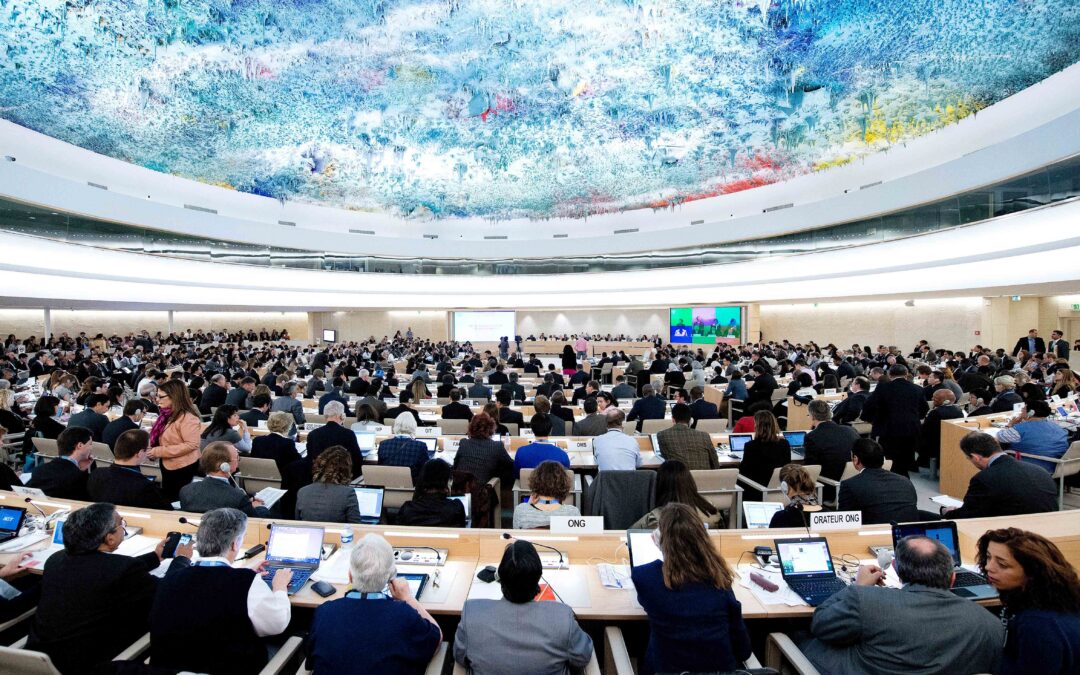
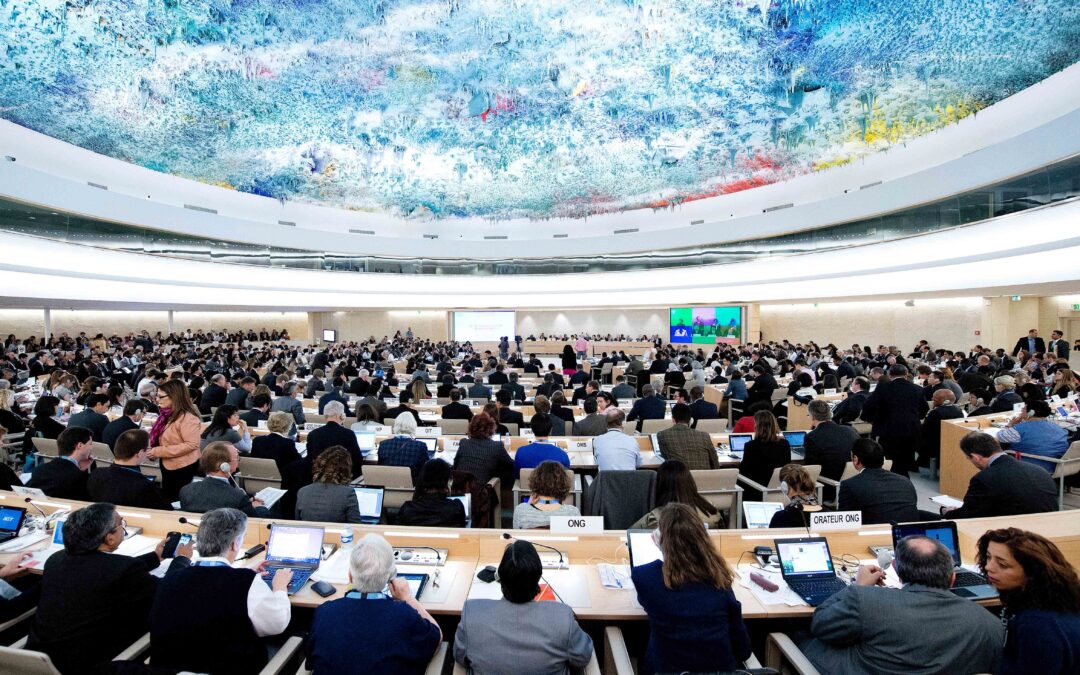
The renewal of the mandate of the Special Rapporteur on the promotion and protection of human rights and fundamental freedoms while countering terrorism, was enacted by a resolution adopted by consensus at the UN Human Rights Council in Geneva.
To acheive this successful outcome, Mexico (which leads the resolution) and other States had to defend the text of the resolution against attempts by Egypt and other States to insert language aimed at diluting, distorting or distracting the mandate from its current focus on preventing and responding to violations of human rights and on securing respect, protection and fulfilment of the human rights of victims of terrorism.
The Special Rapporteur delivers thematic reports to the Human Rights Council, carries out visits to countries, and acts on individual complaints. In the overall counter-terrorism architecture of the UN, the Special Rapporteur is also the only person with an exclusive independent mandate to remind States of their human rights obligations while countering terrorism, to advise them how to do so, and to draw public attention when they do not. So any dilution of the mandate would have also put the integrity and efficacy of the overall UN counter-terrorism strategy and architecture at risk.
Following the adoption of the mandate renewal resolution by the Council, the ICJ and other organisations expressed its deep appreciation for Mexico’s efforts, together with the strong support of numerous other States, to secure the future of the mandate.
The resolution text is available here: https://undocs.org/A/HRC/RES/40/16
Additional background is here.
Mar 20, 2019 | Advocacy, Non-legal submissions
The ICJ today joined other NGOs in addressing the UN Human Rights Council session in Geneva, on the situation for human rights in Guatemala.
The statement, delivered by Franciscans International on behalf also of ICJ and other NGOs, read as follows (translation of Spanish original):
“We welcome the High Commissioner’s Report concerning the activities of her Office in Guatemala. We share the concerns and recommendations in the report, especially those related to the indigenous peoples, migrants and legislative initiatives that would impact in the full enjoyment of human rights.
As it was highlighted in the report, we are also concerned by the current discussions on the initiative to reform the National Reconciliation Law. This reform would give amnesty to those who committed serious crimes during the armed conflict, including those who have already been convicted. This puts at risk not only the fulfillment of the state’s obligations to end impunity, but also the security and access to justice of hundreds of victims and witnesses. Guatemala should dismiss immediately the initiative and refrain from promoting any other initiative that would promote impunity.
Additionally, the political and social tensions are intensifying towards the upcoming elections, and the inclusion of various groups, especially indigenous peoples, is at risk. Currently there is a low participation and representation of indigenous peoples in the political scene of the country. Out of 178 seats in the Congress, only 18 are occupied by Mayans (from which only two are women). The State must guarantee free participation, without intimidation or threats, of indigenous peoples running for different positions.
Lastly, the regional human rights situation of migrants is aggravating and the response by Guatemala, as evidenced in the last months, shows the lack of an effective policy to deal not only with migrants in transit, but also to create conditions to prevent forced migration of Guatemalans.
We thank the work that the Office of the High Commissioner for Human Rights has done, and we stress the importance of its activities in the country.”
The full statement may be downloaded in English and the original Spanish, in PDF format, here: HRC40-OralStatement-GDitem2-Guatemala-2019-EN-ESP
Mar 18, 2019 | Advocacy, Non-legal submissions
The ICJ today called for prompt release of a database of businesses involved in certain activities in the Occupied Palestinian Territory, that has been prepared by the UN Office of the High Commissioner for Human Rights (OHCHR).The statement, delivered in a general debate, read as follows:
“Regarding the Database of business enterprises involved in listed activities in the settlements on the Occupied Palestinian Territory, the ICJ recognizes the important work that has been done, but is deeply concerned at OHCHR’s failure to publicly release it.
All States, including the home States of the companies involved, have a responsibility to prevent companies from operating in breach of international law. Businesses themselves should see the database as an opportunity to more proactively incorporate respect for human rights within their policies and operations.
The prompt publication of the database should contribute to global efforts to hold all business enterprises accountable for their role in violations of human rights and humanitarian law and to give them an incentive to cease in such behaviour. The ICJ urges all States, including those that have supported the creation of this database, to redouble efforts to prevent business complicity in serious human rights abuses and to hold businesses legally accountable when abuses occur in their own territories as well as in the global operations of businesses for which they are the home State.”
Mar 12, 2019 | Advocacy, Non-legal submissions
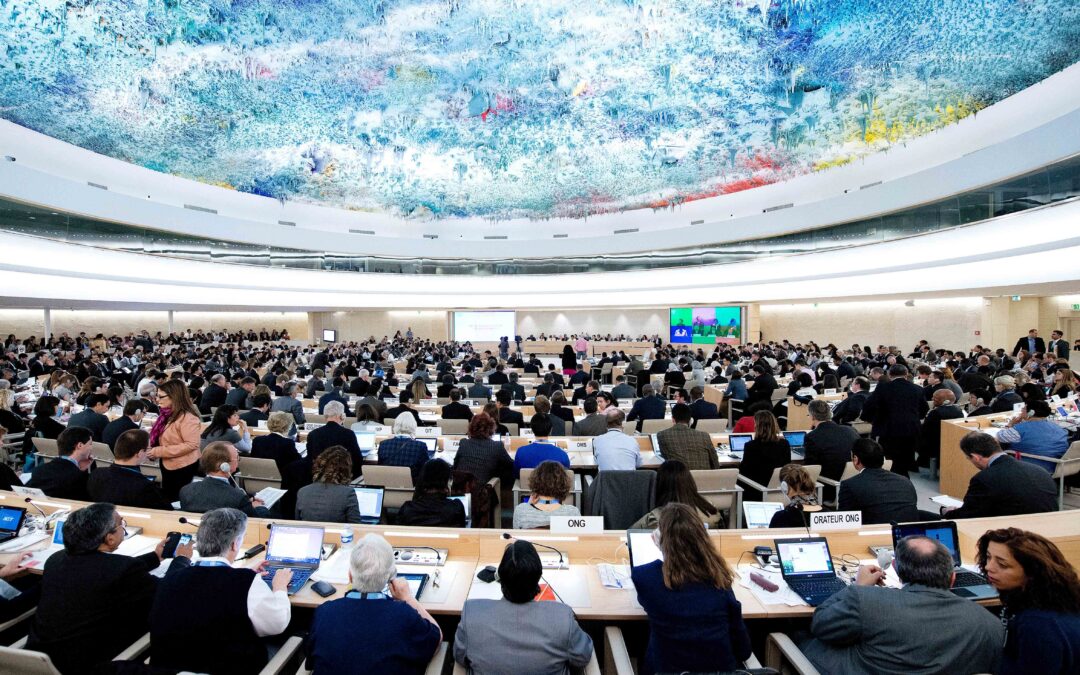
The ICJ today highlighted threats to the rule of law in Turkey, Poland, Hungary and Azerbaijan, and the need to address corporate complicity in South Sudan, at the UN Human Rights Council in Geneva.The statement, delivered during general debate, read as follows:
“The situation remains grave for the rule of law and legal protection of human rights in Turkey and Poland.
In Turkey, constitutional reforms in 2017 that undermined the independence of the judiciary should be abolished. Civil society members are prosecuted under overbroad and vague terrorism offences.
In Poland, the Legislature is trying arbitrarily to remove one third of the Supreme Court, a measure that is on hold only temporarily. Unjustified disciplinary proceedings are also being pursued against Polish judges for having sought a ruling of the Court of Justice of the EU.
Elsewhere, in Hungary civil society is ostracized and subject to legislation that risks criminalizing their legitimate activities. In Azerbaijan, as one example of a broader pattern of interference with lawyers and other human rights defenders, lawyer Elchin Sadigov was reprimanded for advising in a confidential manner to his client in detention to complain about torture to which he allegedly had been subjected.
The ICJ is also concerned at the findings by the Commission on Human Rights in South Sudan (A/HRC/40/69, A/HRC/40/CRP.1) that point to the oil industry as a “major driver” in the continuation of the armed conflict and resulting human rights violations. Potential corporate complicity with crimes under international law demand investigation and a strong monitoring mechanism for the use of oil revenues should be established.”
Mar 8, 2019 | Advocacy, Non-legal submissions
Speaking at the UN, the ICJ today urged all States from all regions to participate actively in the process towards a treaty on business and human rights.
The statement, delivered during a general debate on thematic issues at the UN Human Rights Council in Geneva, read as follows:
“Mr President,
The report on the Fourth session of the Intergovernmental Working Group to establish a legally binding instrument in the field of business and human rights opens opportunities for States and the international community to build a multilateral legal framework in this field.
We continue to urge all States from all regions – especially those that have been reluctant to engage- to actively participate in this process.
The ICJ considers that this draft should be based on transparent consultation and participation and respect standards of clarity and precision.
Recent dramatic events in Brazil and South Sudan show the central place that a system of legal responsibility for businesses, including for complicit participation in abuses, should have in an international treaty.
The dam collapse in the Brazilian locality of Brumadhino and the evidence pointing to oil industry complicity with serious human rights violations in South Sudan show the global scale of the problem and the involvement of companies from all corners of the world.
A treaty should also provide to all states a set of common standards effective collective action to guarantee access to justice in a transnational setting.
The creation of an international legally binding framework for States to maximize action and cooperation regarding human rights abuses in the context of business operations remains a compelling necessity of our times.
I thank you.”
The statement may be downloaded in PDF format here: HRC40-OralStatement-GDitem3-2019