Sep 11, 2019 | Advocacy, Non-legal submissions
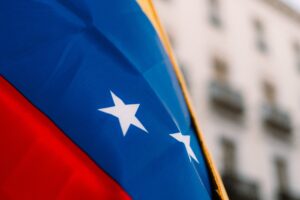
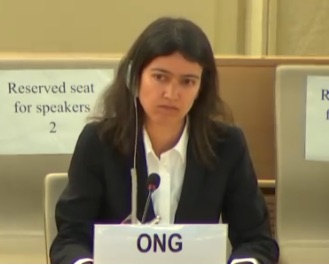
The ICJ today reiterated its call for the UN Human Rights Council to establish an international independent Commission of Inquiry on the human rights situation in Venezuela.
The statement, delivered in a general debate at the Council following the oral update by the UN High Commissioner for Human Rights mandated by the previous Human Rights Council resolution on Venezuela, read as follows:
“Mr. President,
The International Commission of Jurists (ICJ) welcomes the High Commissioner for Human Rights’ oral update on the situation in Venezuela.
The update and previous reporting point to a wide range of human rights violations, which continue to occur inside the country. These include arbitrary deprivation of liberty, serious violations of indigenous people’s rights, excessive use of force by security forces and attacks on freedom of expression, among others, as well as the impacts of laws, policies and practices that have adversely affected the independence of the judiciary.
Over the years, the International Commission of Jurists has monitored and documented the lack of judicial independence in Venezuela and the absence of accountability for those responsible for gross human rights violations.
The ICJ urges the Human Rights Council to establish an independent Commission of Inquiry on the human rights situation in Venezuela, given that Venezuelan authorities have been unable or unwilling to pursue effective domestic accountability, and judicial and prosecutorial mechanisms in the country lack independence and impartiality.
The Commission of Inquiry should be mandated to investigate reports of violations of international human rights law in Venezuela, establish the facts and circumstances of violations committed since at least 2014, and identify those responsible with a view to contributing to full accountability for all violations, including those that constitute crimes under international law.
Thank you.”
The oral update of the UN Human Commissioner for Human Rights, on the situation in Venezuela, may be accessed here.
In August 2019, the ICJ joined other NGOs in calling for an international commission of inquiry on Venezuela.
States are expected to discuss a further resolution on Venezuela at the current Human Rights Council session, for adoption on 26 or 27 September.
Sep 3, 2019 | Advocacy, News
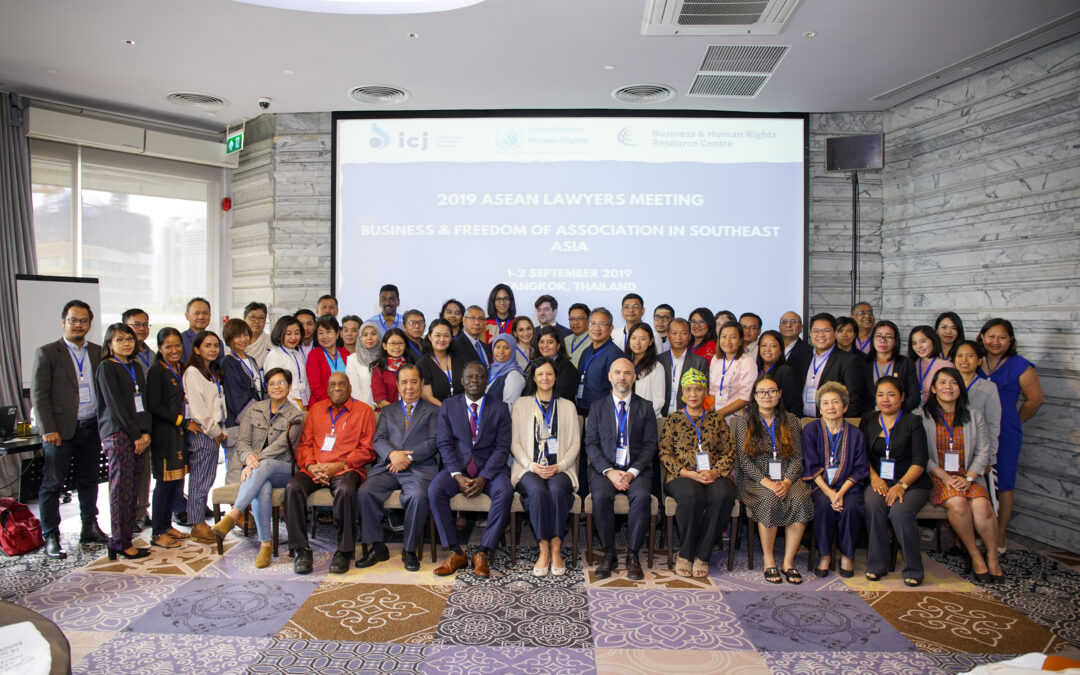
From 1 and 2 September 2019, the UN Special Rapporteur on freedom of association and assembly, Clément Nyaletsossi VOULE, and lawyers and trade union representatives met and discussed challenges faced in Southeast Asia on exercising the right to freedom of association of workers.
The event was organized by the ICJ together with Business & Human Rights Resource Centre (BHRRC), and supported by the Office of the United Nations High Commissioner for Human Rights (OHCHR).
At the meeting’s conclusion, the participants reached a consensus to work for the development regional guidelines on freedom of association of workers in the ASEAN and agreed to form a Working Group that would be tasked to develop these guidelines. The Working Group nominated by the participants is composed of trade union representatives at the national level, lawyers, among other experts.
In his keynote speech, the Special Rapporteur emphasized that freedom of association is a fundamental right for all workers without which they lack the power to fight discrimination and injustice in the workplace. He also explained the link between the rights to freedom of association and expression, “Freedom of association is closely related to freedom of expression as they both represent opening up of space for dialogue and an enabling environment where unions can participate freely.”
The participants at the meeting were practicing lawyers from Southeast Asia focusing on labor and employment and trade unions leaders and representatives. Other participants included representatives from human rights organizations addressing business and human rights and the right to freedom of association; the ASEAN Secretariat; the International Labor Organization (ILO), the ASEAN Trade Union Council (ATUC), and the International Trade Union Confederation (ITUC).
“Shrinking political and civic space combined with inequality and social marginalization are key challenges at the heart of business-related human rights violations in Southeast Asia,” said Katia Chirizzi, Deputy Regional Representative for UN Human Rights. “Governments must implement their obligations to respect, protect and promote human rights in relation to business activities. It is equally critical to ensure that businesses meet their responsibilities to respect human rights.”
During the meeting, the participants also discussed the role of women in labour organizing and the additional challenges women face when they exercise the right to freedom of association in the workplace. Betty Yolanda, Asia Regional Manager of the Business and Human Rights Resource Center (BHRRC) said: “Women workers face multiple forms of discrimination and challenges. They are fighting for their rights as workers in the company and at the same time they are also fighting the patriarchy.”
The participants identified common challenges confronted in the region where workers’ rights to freedom of association face legal and physical limitations. Migrant workers, women workers and workers in Special Economic Zones (SEZs) were identified as being particularly at risk in exercising their rights.
“It is crucial that we discuss these challenges openly and with all stakeholders, particularly issues that affect those who work in the informal sector, and other vulnerable communities such as migrant workers. Special investment frameworks, special economic zones and other government-led initiatives meant to attract foreign investment potentially create new opportunities to increase transparency and accountability. Unfortunately, they are more often used to justify lowering human rights standards, or impose new restrictions that act to limit workers and communities abilities to express their grievances or exercise their rights to association,” said Frederick Rawski, ICJ’s Regional Director for Asia and the Pacific.
Contact:
Boram Jang, International Legal Adviser, Asia & the Pacific Programme, e: boram.jang(a)icj.org
Jul 17, 2019 | Advocacy, News, Non-legal submissions
Today, the ICJ filed a submission to the Human Rights Council’s Working Group on the Universal Periodic Review in advance of its review of Turkey’s human rights record in January 2020.
In its submission, the ICJ considered:
- the situation with the independence of the judiciary in Turkey, during and after the state of emergency of 2016-2018;
- the lack of effective remedies for the mass dismissals in the public sector occurred in that period;
- the shortcomings in fair trial rights in the criminal justice system:
- the obstacles to the action of civil society;
- the lack of accountability for torture and enforced disappeareances; and
- provided information on the status of international human rights treaties ratified by Turkey.
Contact:
Massimo Frigo, ICJ Senior Legal Adviser, e: massimo.frigo(a)icj.org
Full submission in English (PDF) : Turkey-UPR-Advocacy-non-legal submissions-2019-ENG
Jul 12, 2019 | Advocacy, Non-legal submissions
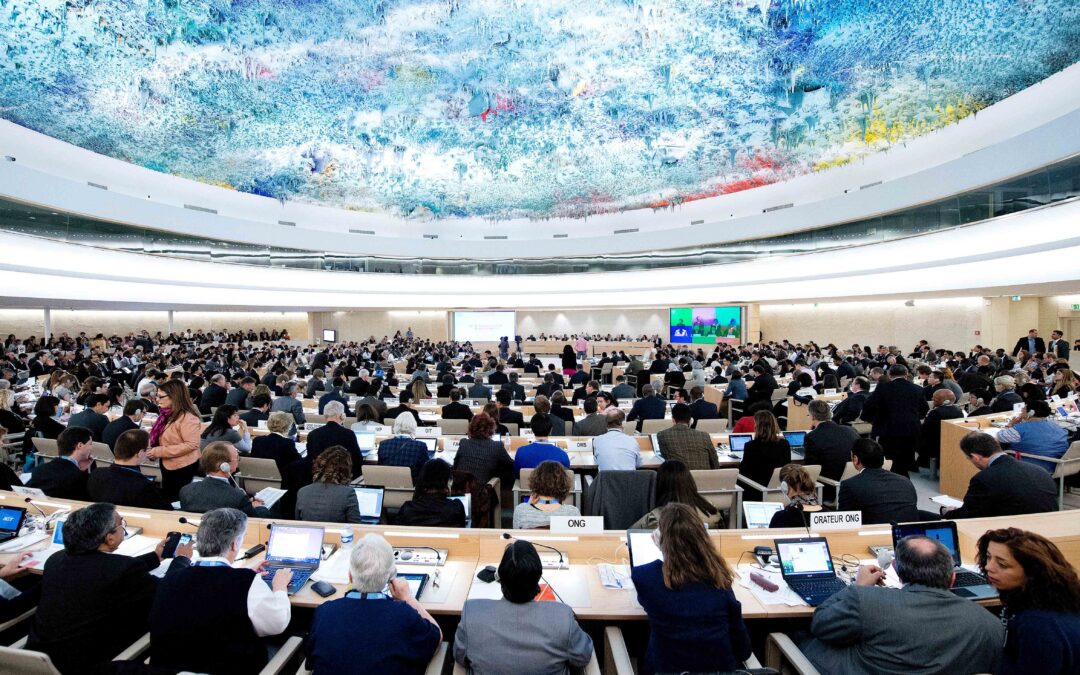
The ICJ joined other NGOs in an end-of-session statement, highlighting the achievements and shortfalls of the 41st Ordinary Session of the UN Human Rights Council, 24 June – 12 July 2019.
The statement, delivered by International Service for Human Rights (ISHR), reads as follows:
By renewing the mandate of the Independent Expert on protection against violence and discrimination based on sexual orientation and gender identity (SOGI), the Council has sent a clear message that violence and discrimination against people of diverse sexual orientations and gender identities cannot be tolerated. It reaffirmed that specific, sustained and systematic attention is needed to address these human rights violations and ensure that LGBT people can live a life of dignity. We welcome the Core Group’s commitment to engage in dialogue with all States, resulting in 50 original co-sponsors across all regions. However, we regret that some States have again attempted to prevent the Council from addressing discrimination and violence on the basis of SOGI.
The Council session also sent a clear message that Council membership comes with scrutiny by addressing the situations of Eritrea, the Philippines, China, Saudi Arabia and the Democratic Republic of Congo. This shows the potential the Council has to leverage its membership to become more effective and responsive to rights holders and victims.
The Council did the right thing by extending its monitoring of the situation in Eritrea. The onus is on the Eritrean Government to cooperate with Council mechanisms, including the Special Rapporteur, in line with its membership obligations.
We welcome the first Council resolution on the Philippines as an important first step towards justice and accountability. We urge the Council to closely follow this situation and be ready to follow up with additional action, if the situation does not improve or deteriorates further. We deeply regret that such a resolution was necessary, due to the continuation of serious violations and repeated refusal of the Philippines – despite its membership of the Council– to cooperate with existing mechanisms.
We deplore that Council members, such as the Philippines and Eritrea, sought to use their seats in this Council to seek to shield themselves from scrutiny, and those States[1] who stand with the authorities and perpetrators who continue to commit grave violations with impunity, rather than with the victims.
We welcome the written statement by 22 States on China expressing collective concern over widespread surveillance, restrictions to freedoms of religion and movement, and large-scale arbitrary detention of Uyghurs and other minorities in Xinjiang. We consider it as a first step towards sustained Council attention and in the absence of progress look to those governments that have signed this letter to follow up at the September session with a resolution calling for China to allow access to the region to independent human rights experts and to end country-wide the arbitrary detention of individuals based on their religious beliefs or political opinions.
We welcome the progress made in resolutions on the rights of women and girls: violence against women and girls in the world of work, on discrimination against women and girls and on the consequences of child, early and forced marriage. We particularly welcome the renewal of the mandate of the Working Group on Discrimination Against Women and Girls under its new name and mandate to focus on the intersections of gender and age and their impact on girls. The Council showed that it was willing to stand up to the global backlash against the rights of women and girls by ensuring that these resolutions reflect the current international legal framework and to resist cultural relativism, despite several amendments put forward to try and weaken the strong content of these resolutions.
However, in the text on the contribution of development to the enjoyment of all human rights, long standing consensus language from the Vienna Declaration for Programme of Action (VDPA) recognising that, at the same time, “the lack of development may not be invoked to justify the abridgement of internationally recognized human rights” has again been deliberately excluded disturbing the careful balance established and maintained for several decades on this issue.
We welcome the continuous engagement of the Council in addressing the threat posed by climate change to human rights, through its annual resolution and the panel discussion on women’s rights and climate change at this session. We call on the Council to continue to strengthen its work on this issue, given its increasing urgency for the protection of all human rights.
The Council has missed an opportunity on Sudan where it could have supported regional efforts and ensured that human rights are not sidelined in the process. We now look to African leadership to ensure that human rights are upheld in the transition. The Council should stand ready to act, including through setting up a full-fledged inquiry into all instances of violence against peaceful protesters and civilians across the country.
During the interactive dialogue with the Special Rapporteur on extrajudicial and summary executions, States heard loud and clear that the time to hold Saudi Arabia accountable is now for the extrajudicial killing of journalist Jamal Khashoggi. We recall that women human rights defenders continue to be arbitrarily detained despite the calls by 36 States at the March session. We urge States to adopt a resolution at the September session to establish a monitoring mechanism over the human rights situation in the country.
We welcome the landmark report of the High Commissioner on the situation for human rights in Venezuela; in response to the grave findings in the report and the absence of any fundamental improvement of the situation in the meantime, we urge the Council to adopt a Commission of Inquiry or similar mechanism in September, to reinforce the ongoing efforts of the High Commissioner and other actors to address the situation.
We welcome the renewal of the mandate on the freedom of peaceful assembly and association. This mandate is at the core of our work as civil society and we trust that the mandate will continue to protect and promote these fundamental freedoms towards a more open civic space.
We welcome the renewal of the mandate of the Special Rapporteur on Belarus. We acknowledge some positive signs of re-engagement in dialogue by Belarus, and an attempted negotiation process with the EU on a potential Item 10 resolution. However, in the absence of systemic human rights reforms in Belarus, the mandate and resolution process remains an essential tool for Belarusian civil society. In addition, there are fears of a spike in violations around upcoming elections and we are pleased that the resolution highlights the need for Belarus to provide safeguards against such an increase.
We welcome the renewal of the quarterly reporting process on the human rights situation in Ukraine. However, we also urge States to think creatively about how best to use this regular mechanism on Ukraine to make better progress on the human rights situation.
The continued delay in the release of the UN database of businesses engaged with Israeli settlements established pursuant to Council resolution 31/36 in March 2016 is of deep concern. We join others including Tunisia speaking on behalf of 65 states and Peru speaking on behalf of 26 States in calling on the High Commissioner to urgently and fully fulfil this mandate as a matter of urgency and on all States to cooperate with all Council mandates, including this one, and without political interference.
Numerous States and stakeholders highlighted the importance of the OHCHR report on Kashmir; while its release only a few days ago meant it did not receive substantive consideration at the present session, we look forward to discussing it in depth at the September session.
Finally, we welcome the principled leadership shown by Belgium, Luxembourg and the Netherlands, in pursuing accountability for individual victims of acts of intimidation and reprisals under General Debate Item 5, contrasting with other States which tend to make only general statements of concern, and call on States to raise all individual cases at the interactive dialogue on reprisals and intimidation in the September session.
(text in italics was not read out due to the limited time)
Signatories:
- International Service for Human Rights (ISHR)
- Amnesty International
- ARTICLE 19
- Asian Forum for Human Rights and Development (FORUM-ASIA)
- Association for Progressive Communications (APC)
- Cairo Institute for Human Rights Studies
- Center for Reproductive Rights
- CIVICUS: World Alliance for Citizen Participation
- DefendDefenders (the East and Horn of Africa Human Rights Defenders Project)
- Franciscans International
- Global Initiative for Economic, Social and Cultural Rights
- Human Rights House Foundation
- Human Rights Watch
- International Commission of Jurists (ICJ)
- International Federation for Human Rights (FIDH)
- International Lesbian and Gay Association (ILGA)
[1] States who voted against the resolution on Eritrea: Bahrain, Burkina Faso, Cameroon, China, Cuba, Egypt, Eritrea, Iraq, India, Saudi Arabia, Somalia, the Philippines and Pakistan.
States who voted against the resolution on the Philippines: Angola, Bahrain, Cameroon, China, Cuba, Egypt, Eritrea, Hungary, Iraq, India, Qatar, Saudi Arabia, Somalia, and the Philippines.
Jul 11, 2019 | Advocacy, Non-legal submissions
The ICJ today called on the Human Rights Council to seek to allow the International Commission Against Impunity in Guatemala (CICIG) to continue its essential work, and to promote similar initiatives elsewhere.
The statement, delivered during a general debate on technical cooperation, read as follows:
“The International Commission of Jurists (ICJ) welcomes the technical cooperation the United Nations has provided to the International Commission Against Impunity in Guatemala (CICIG).
For more than ten years, the CICIG has been essential to the fight against corruption and impunity in Guatemala. It has provided invaluable support to prosecutors and judges in the investigation and and trial of major crimes of corruption.
The combination of provision of technical assistance and actual participation in the proceedings as “querellante adhesivo” (“complementary prosecutor”) has been important to the CICIG’s effectiveness. For instance, the CICIG helped ensure that investigations took place into high-level officers from the Government and against people that had illegally financed their public campaigns. Several public officers have been brought to justice.
The ICJ therefore expresses its deepest concern that the Government of Guatemala has decided to allow the mandate of the CICIG to expire on the 3rd of September, despite its role remaining as essential as ever to the fight against corruption and impunity in the country.
We urge the Human Rights Council to seek to allow the work of the CICIG to continue, as well as to promote more generally the important potential of UN involvement in such mechanisms to strengthen the fight against impunity at the national level.”