Dec 21, 2018 | Multimedia items, News, Video clips
The ICJ invited a number of women lawyers to Geneva to participate in a training workshop and gain practical experience of UN human rights mechanisms as part of a project supported by the German Mission to the United Nations in Geneva.
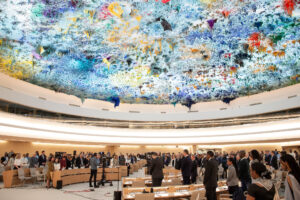
One group of women came to Geneva in June during the 38th session of the UN Human Rights Council and 70th session of the Committee on the Elimination of Discrimination against Women, and the other group came in September to coincide with the 39th session of the Human Rights Council.
During the week long training workshops participants learned about the international human rights mechanisms available to tackle issues of women’s access to justice and gained hands-on exposure to the operation of these mechanisms in practice.
Participants spoke about the impact that the CEDAW Convention has had in their domestic legislation.
Donia Allani a lawyer and lecturer at the Faculty of Legal, Political and Social Sciences of Tunis, discussed the impact of CEDAW in shaping legislation in Tunis to eliminate violence against women and facilitate access to justice but noted that women still faced stigmatization.
Donia Allani commented, however, that UN mechanisms could be improved to ensure that all activists and feminists can access these mechanisms without fear of reprisals.
Uzbek lawyer Sabina Saparova, also spoke of the impact that international law and standards can have domestically. She explained that Uzbekistan’s ratification of the CEDAW Convention provided an international commitment to incorporating equality between men and women into its legal structure. Recently the president of Uzbekistan initiated the first steps toward the adoption of a law on the prevention of domestic violence.

Dec 18, 2018 | Multimedia items, News, Video clips
Lawyers from a diverse range of countries, including Egypt, Lebanon, Nepal, the Philippines, Tunisia and Uzbekistan have identified the many barriers that women typically face in accessing justice in their countries.
Common trends and practices identified included socio-economic marginalization, gender stereotypes and patriarchal attitudes.
The observations came during two training workshops held in Geneva in June and September to coincide with sessions of the UN Human Right Council and UN Committee on the Elimination of Discrimination against Women. The workshops were part of a project on enhancing women’s access to justice through UN human rights mechanisms, supported by the Permanent Mission of the Federal Republic of Germany to the UN in Geneva.
A lawyer from Uzbekistan noted that domestic violence flourishes in states where common attitudes hold that this is an internal matter to be resolved within families.
A particular concern raised in respect of Lebanon was discrimination linked to transference of nationality, where Lebanese women married to a foreigner cannot pass their nationality to their children but Lebanese men married to a foreigner can.
Meera Maharjan, lawyer from Nepal, noted the cultural, educational and economic barriers that impede women from being able to take on decision-making roles and the impact this has on the exercise of their rights.
Malaysian lawyer Yvonne Lim explained that the women who are often in need of access to justice tend to be from the lower rungs of the socio-economic strata and lack the resources, support and basic awareness about their human rights and the remedies that may be available to them.
During the September training session the ICJ organized a side event to the 39th session of the Human Rights Council on ‘applying a women-centred approach to access to justice’ to further explore these issues.
Secretary-General Saman Zia-Zarifi moderated the event and panelists included:
• ICJ Commissioner Justice Sanji Monageng, former Vice-President of the International Criminal Court
• Lisa Gormley, Research Officer for the Centre for Women, Peace and Security at the London School of Economics
• Meera Maharjan, Nepalese lawyer and legal officer for Resilience for Sustainable Women Empowerment (RISE)
You can watch a recording of the event, and interviews with two of the workshop participants below.
https://www.facebook.com/ridhglobal/videos/565112000574216/UzpfSTQ3MTQ2NzA4NjIyMTM3MzoyMjEyNTUzNjc1NDQ2MDMw/
Dec 15, 2018 | Agendas, Events
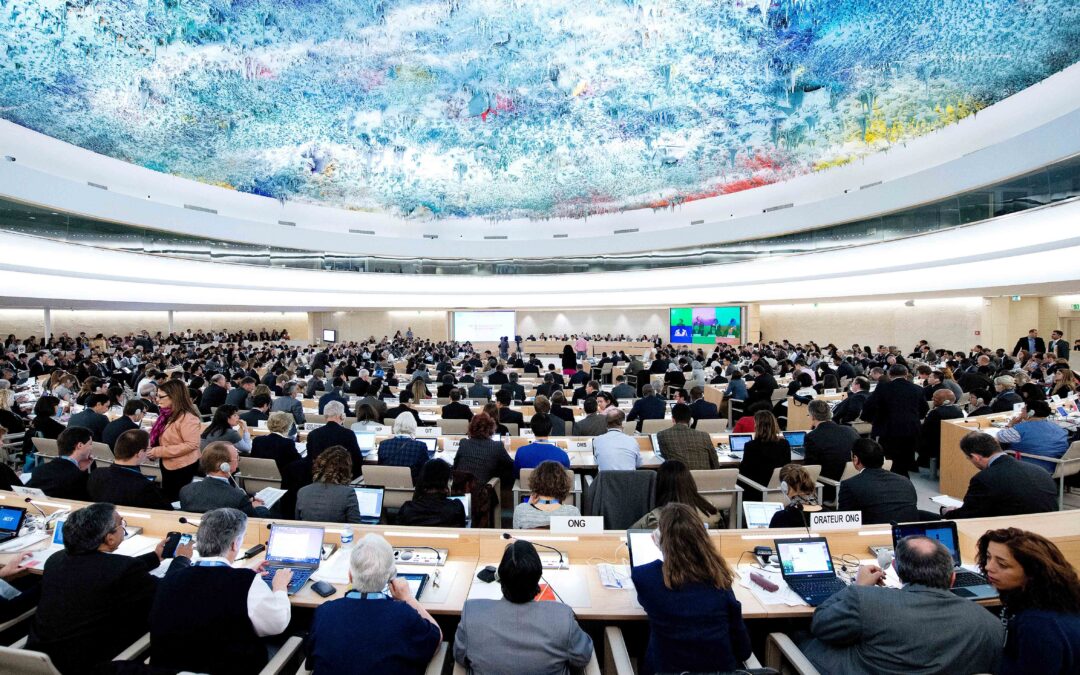
Today begins in Ankara (Turkey) a one-day workshop for lawyers and CSO practitioners on the use and strategies of UPR mechanisms.
This event is organized by ICJ, in cooperation with its partners Kapasite Geliştirme Derneği and Human Rights Joint Platform, as part a/the EU co-financed project Rebuilding and Ensuring Access to justice with civil society in Turkey.
20 lawyers and civil society practitioners are taking part in the workshop on 15 December in Ankara.
The workshop aims at discussing the functioning of the Universal Periodic Review of the UN Human Rights Council in which all States undergo periodically a peer-review of their human rights situation by other States. Turkey is set for its third cycle of examination in 2019
The main thematic areas to be discussed will be access to justice in Turkey, the situation of the judiciary and the rule of law, and the protection of womens’ rights.
The project is funded by the European Instrument for Democracy and Human Rights (EIDHR) of the European Union.
Turkey-Training-Agenda-UPR-Ankara-2018-tur (download the agenda in Turkish)
Turkey-Training-Agenda-UPR-Ankara-2018-eng (download the agenda in English)
Oct 19, 2018 | Advocacy, Non-legal submissions
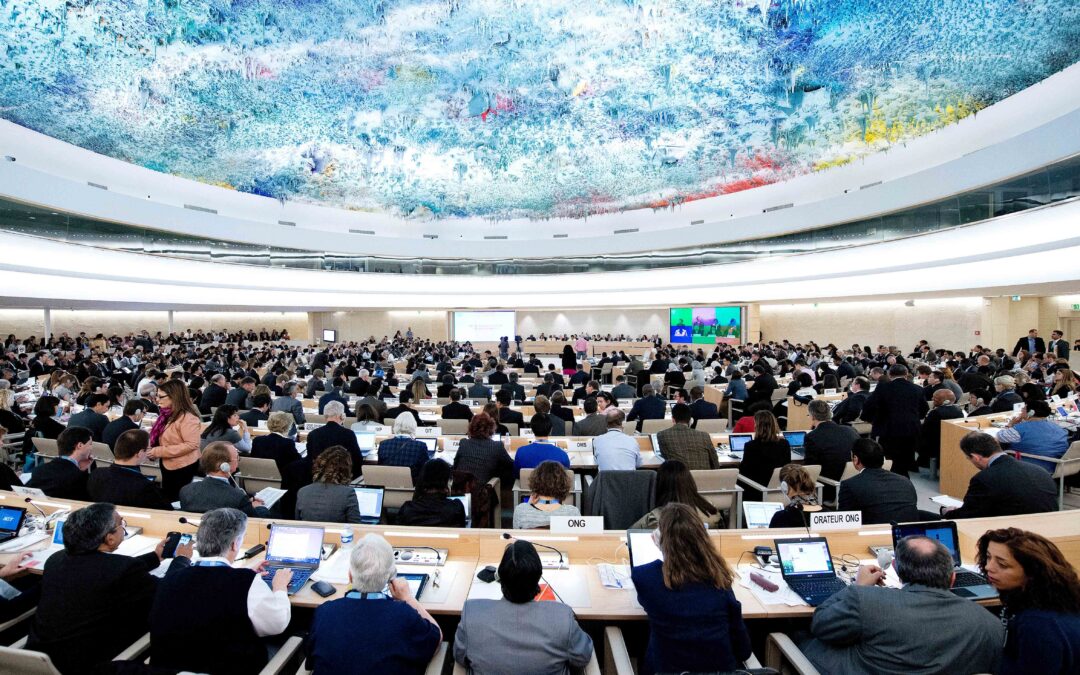
The International Commission of Jurists participated in the fourth session of the open-ended intergovernmental working group on transnational corporations and other business enterprises with respect to human rights that took place at the Palais de Nations from 15-18 October 2018. Below are the interventions the ICJ made at this session.
UN-ICJ statement IGWG4 general debate-Advocacy-ENG-2018
UN-ICJ statement IGWG4 prevention-Advocacy-ENG-2018
UN-ICJ statement IGWG4 legal liability-Advocacy-ENG-2018
Oct 12, 2018 | Events, News
First side event: Multi-stakeholder dialogue on the scope and content of a treaty on business and human rights, Monday 15 October 2018, from 13.00-15.00, Room XXVII, Palais des nations.
Second side event: What kind of international monitoring and/or adjudicating mechanism do we need? Tuesday 16 October 2018, from 13.00-15.00 Room XXI, Palais des nations.
On 26 June 2014, the United Nations Human Rights Council (HRC) adopted Resolution 26/9 establishing an “open ended intergovernmental working group on transnational corporations and other business enterprises with respect to human rights” with the mandate to “elaborate an international legally binding instrument to regulate, in international human rights law, the activities of transnational corporations and other business enterprises”.
The first two sessions were dedicated to open deliberations about the format, scope and content of the future instrument, and a document with «elements» of the treaty was presented to the third session in 2017.
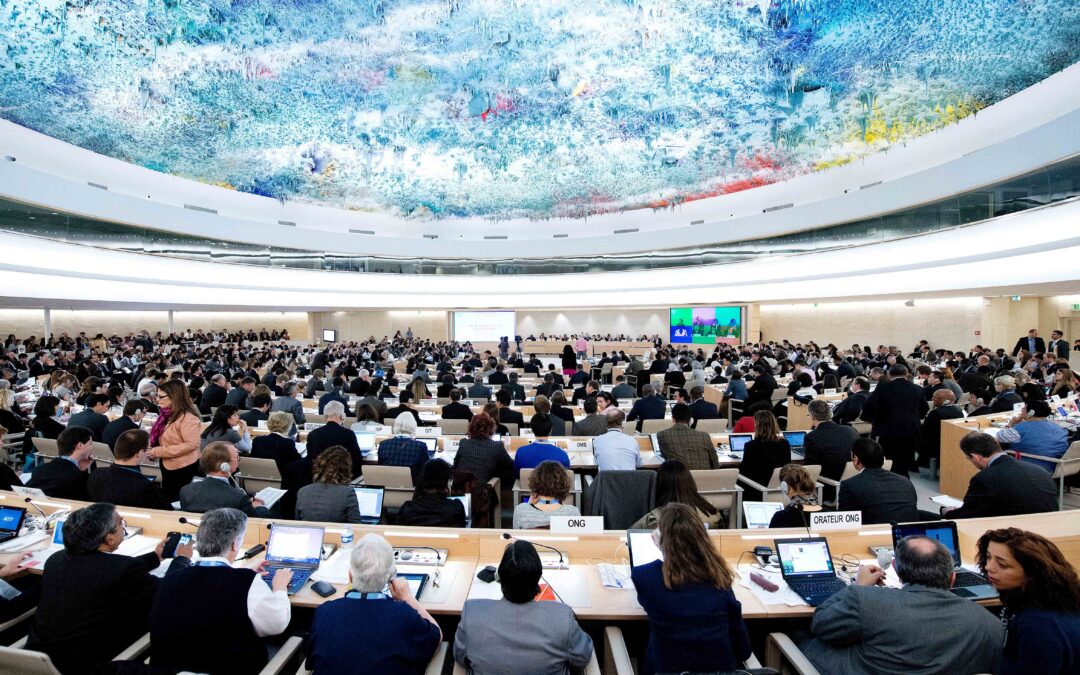
The fourth session of the OEIWG opens on 15 October with a «zero draft» of a treaty prepared by the Working Group Chairperson on the table for discussion.
The draft has so far met a mixed reception.
While much of the debate on a treaty has focussed on substantive questions around the scope and nature of substantive rights and responsibilities, the international monitoring and adjudicating mechanism has so far received far less attention.
Both side events organized on October 15-16 by the ICJ will be a space of discussion where stakeholders will be invited to share their views on key sections of the «zero draft» on business and human rights as well as on the best way to proceed in the negotiations in the next period.
Multi-stakeholder dialogue on the scope and content of a treaty on business and human rights (flyer in PDF)
What kind of international monitoring and/or adjudicating mechanism do we need? (flyer in PDF)
Contact:
Carlos Lopez, ICJ Senior Legal Adviser, t: 022 979 3816; e: carlos.lopez(a)icj.org