Nov 20, 2017 | Advocacy
The ICJ, with 35 other human rights organizations, today called on members and observers of the UN Human Rights Council to convene a special session on the deteriorating human rights situation in Myanmar.
In open letter to member and observer States of the Human Rights Council, delegations are urged to support holding a special session of the Council against the backdrop of serious reports of human rights violations, including crimes against humanity, committed by Myanmar security forces in northern Rakhine state.
The letter also sets out key elements that should be included in the text of a resolution adopted by the Human Rights Council at such a session, considering action that should be taken by the Government of Myanmar, as well as by neighbouring and other States and by human rights mechanisms.
The ICJ on the same day released a briefing note, entitled Questions & Answers on Human Rights Law in Rakhine State, clarifying national and international law and standards applicable to the crisis.
Myanmar Joint Civil Society Letter 20 November 2017 (download open letter in PDF format)
For a copy of the ICJ’s Q&A briefing, go to ‘Myanmar: rule of law must drive responses to Rohingya crisis’
Nov 17, 2017 | News
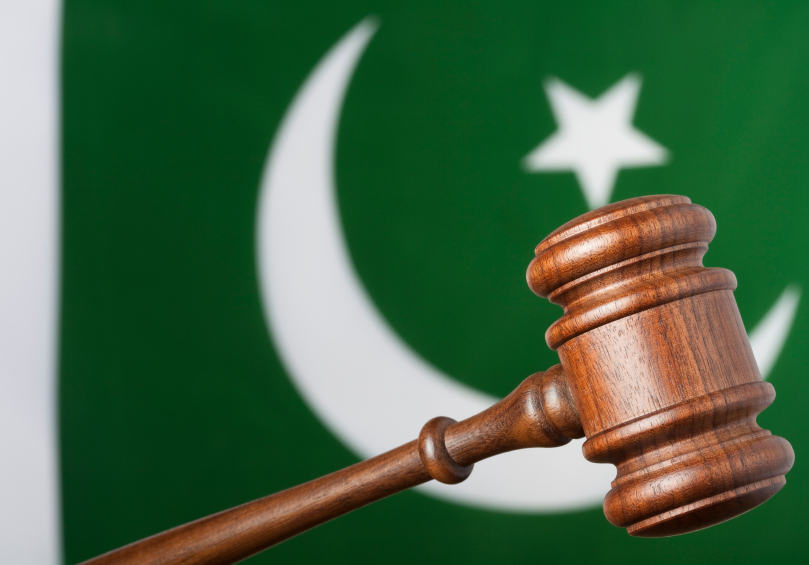
Pakistan’s third Universal Periodic Review (UPR) has drawn global attention to a number of serious human rights failures in the country, said the ICJ today.
On 16 November, the UPR Working Group of the Human Rights Council adopted a draft UPR outcome report for Pakistan. Pakistan received a total of 289 recommendations – a substantial increase from its previous UPR in 2012, when Pakistan received 167 recommendations. As many as 111 State delegations took the floor to make statements, and 14 States submitted their questions in advance.
“That well over a hundred delegations participated in the review indicates the global community’s interest in Pakistan’s human rights situation,” said Frederick Rawski, ICJ’s Asia Director.
Key recommendations urge Pakistan to:
- Reinstate a moratorium on executions with the view to abolishing the death penalty;
- Repeal or amend “blasphemy laws” to bring them in line with international human rights law;
- Ratify the International Convention for the Protection of All Persons from Enforced Disappearance and a number of other human rights treaties;
- Ensure effective protection of the rights of religious minorities, human rights defenders, journalists and other vulnerable groups;
- Strengthen the National Commission for Human Rights;
- Ensure prompt, impartial and effective investigations of human rights violations and bring perpetrators to justice;
- Set 18 as the minimum legal age for marriage; and
- Ensure effective implementation of laws on violence against women.
“The States’ recommendations echo the concerns of dozens of civil society organizations and even the National Commission of Human Rights – who all agree that the Government must take urgent measures to address the downward spiral of rights in the country”, Rawski said.
Pakistan will now examine the recommendations and respond to the Human Rights Council at latest by the Council’s next session in March 2018.
Pakistan’s review comes at a time of serious concern about the rights situation in the country.
The Government lifted the informal moratorium on the death penalty and carried out nearly 500 executions in less than three years – among the highest execution rates in the world; Parliament enacted laws allowing military courts to try civilians for certain terrorism-related offences in secret trials; and the authorities started a new wave of crackdowns on NGOs, journalists and human rights defenders, including subjecting them to enforced disappearance.
Persecution of religious minority communities also continues despite the Government’s claims that religious minorities “enjoy equal rights as equal citizens of Pakistan”. Last month, three Ahmadi men were sentenced to death for blasphemy for allegedly scratching anti-Ahmadi pamphlets that had the “Mohr-e-Nabbuwat” (seal of the Prophet Muhammad) printed on them. And earlier this week, the Islamabad High Court directed the Government to respond to a petition demanding a separate database for Ahmadis in the civil service to ensure they are not “posted in offices involving sensitive matters”.
“As a member of the Human Rights Council, Pakistan is expected to uphold the highest standards in the promotion and protection of human rights, something it has clearly failed to do,” added Rawski.
“Pakistan should make use of this process by accepting the recommendations made during the review and adopting a concrete, action-based national human rights plan to ensure their effective implementation.”
Contact
Frederick Rawski, ICJ Asia Pacific Regional Director, t: +66 64 478 1121, e: frederick.rawski@icj.org
Reema Omer, ICJ International Legal Adviser for Pakistan (London), t: +447889565691; e: reema.omer(a)icj.org
Pakistan-UPR-PressRelease-2017-eng (download the press release)
Additional information
UN Member States reviewed Pakistan’s human rights record for the third time on Monday, 13 November, through the UPR process.
The UPR is a unique mechanism of the UN Human Rights Council aimed at improving the human rights situation of each of the 193 UN Member States. Under this mechanism, the human rights record of all UN Member States is peer-reviewed every four to five years by the UPR Working Group, consisting of the 47 UN Member States of the Human Rights Council; however, any UN Member State can take part in the discussions and the dialogue during the UPR of the reviewed States. States then make recommendations to the country under review, which has the option of accepting or noting the recommendations.
Oct 6, 2017 | Advocacy, Non-legal submissions
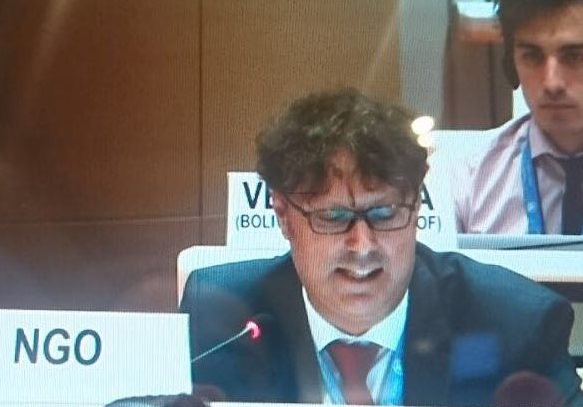
The ICJ today highlighted the role of judges, lawyers, and prosecutors at a UN seminar on prevention of torture in police custody and pre-trial detention.
The ICJ made the interventions during the “Seminar on the implementation of effective safeguards to prevent torture and other cruel, inhuman or degrading treatment or punishment during police custody and pre-trial detention” organized by the Office of the High Commissioner for Human Rights pursuant to a mandate from Human Rights Council resolution 31/31 (2016). A report of the seminar will be delivered and discussed at the March 2017 session of the Council.
The ICJ stated as follows in the first session:
The ICJ’s Commissioners are 60 senior judges and lawyers from all parts of the world. The ICJ works extensively with judges and absolutely agrees that their role is key to prevention of torture and ill-treatment in police custody and pre-trial detention.
Some of the key aspects of the role of judges include:
Judges should rigorously pursue all allegations. They should inquire when there are signs of abuse even if the detainee does not specifically allege abuse. They should demand that detainees be physically brought before them. Judges should be prepared to hold authorities in contempt of court when the authorities do not comply. The ICJ was very interested in what the Panelist Judge Dias Toffoli from Brazil said during the session about developments for custody hearings there, and how the judiciary can take practical systematic measures to fulfil their role even when legislators and other authorities may hesitate to act.
Judges should recognise and balance for evidentiary issues faced by detainees and their lawyers given the control authorities exercise over the place of detention
Judges should ensure that authorities respect rights of access to the outside world (including lawyers, family, friends, doctors, letters, and so on), both as safeguard but also to ensure detainees are not subjected to isolation that in its cumulative impact can itself amount to ill-treatment or even torture. The ICJ was pleased that Special Rapporteur Melzer highlighted the importance of such access.
Judges should ensure that confessions, other information and evidence obtained by torture and similar abuse is not allowed to be part of proceedings before them. The ICJ was interested in what justice Donoso from Chile said about relevant developments there.
In many places, judicial authorities are responsible for supervision of places of pre-trial detention. Where this is the case, judges should visit regularly, and at times without prior notice, such places of detention.
Judges should ensure accountability of perpetrators.
Judges should ensure rigorous constitutional review of relevant laws and practices, and maintain knowledge of and apply in practice international law against torture and ill-treatment. Even non-legally-binding international standards (such as the UN Standard Minimum Rules for the Treatment of Prisoners or “Mandela Rules”, and the UN Body of Principles for the protection of all persons under any form of detention or imprisonment) should be seen by judges as a useful and persuasive source of guidance in interpreting national laws.
To effectively fulfil their role, the judiciary must enjoy all necessary guarantees of independence from other authorities and other powerful interests in society. At the same time, at the ICJ we have also more recently been concerned to ensure accountability of judges when they fail to fulfil their duties to prevent and respond to torture, or are indeed intentionally complicit in mistreatment of prisoners.
Judges acting to protect human rights of criminal detainees are often subject to public criticism, and are often unable for reasons of impartiality and dignity of the court to defend themselves. It is therefore incumbent on members of the Executive, Legislature, legal profession, and others to defend such judges, and certainly not to pile on further unjustified criticism.
Finally, the ICJ would note that recent resolutions of the Human Rights Council on the independence of judges and lawyers, and on the administration of justice, stress the role of continuing professional education of judges on human rights issues (best organised by judicial institutions themselves, but involving other actors). Continuing education on prevention of torture and ill-treatment is a key area needed by all judiciaries in all countries.”
The ICJ continued as follows in the second session:
“A common thread that has already emerged from the first two panels is the role that pressure on police to obtain confessions plays in the incidence of torture and abuse in police custody. Thank you to the Panelists for their insights on this issue.
Values and signales from superiors and political leadership, including for instance in relation to practical aspects like career progression of police officials, is very important. Having clear rules is also very important in this regard. As is the perception of police that they lack alternatives to confessions as form of proof. Training on interviewing techniques, having an adequate number of officers, access to materials like fingerprinting kits and means of assuring chain-of-custody for physical evidence, are all also important.
The Seminar has addressed judges and police already, and will discuss lawyers later; the ICJ would also like to highlight the role of prosecutors in removing incentives on police to focus on obtaining confessions by any means.
The UN Guidelines on the Role of Prosecutors (Article 16) provide that prosecutors shall refuse to use evidence that they believe to have been obtained by torture.
A similar provision is incorporated in the professional standards adopted by the International Association of Prosecutors (which have also been endorsed by the UN Crime Commission). This also is an example of how international and regional professional associations can play an important role with their members in practical measures for prevention of torture and ill-treatment in police custody and pre-trial detention.”
In the third Session, the ICJ expressed its agreement with points made by Ms Miti-Drummond, the representative of the International Bar Association Human Rights Institute regarding the role of the legal profession in the prevention of torture, particularly regarding the importance of access to and presence of a competent and independent lawyer prior to and during any interview.
The ICJ also pointed out that some States have period of delay or even preclusion of access of detainee to the lawyer of his or her choosing, for instance in counter-terrorism, national security or similar cases. Often these are cases where there is a particular risk of abuse, and also may involve delay in bringing the person before a judge. In some places the independent bar association assigns a lawyer who has immediate access, if the access to the person’s lawyer of choice is denied or delayed. The ICJ invited comments or recommendations about this practice or other means to ensure lawyers can effectively prevent torture in such circumstances.
Oct 5, 2017 | News
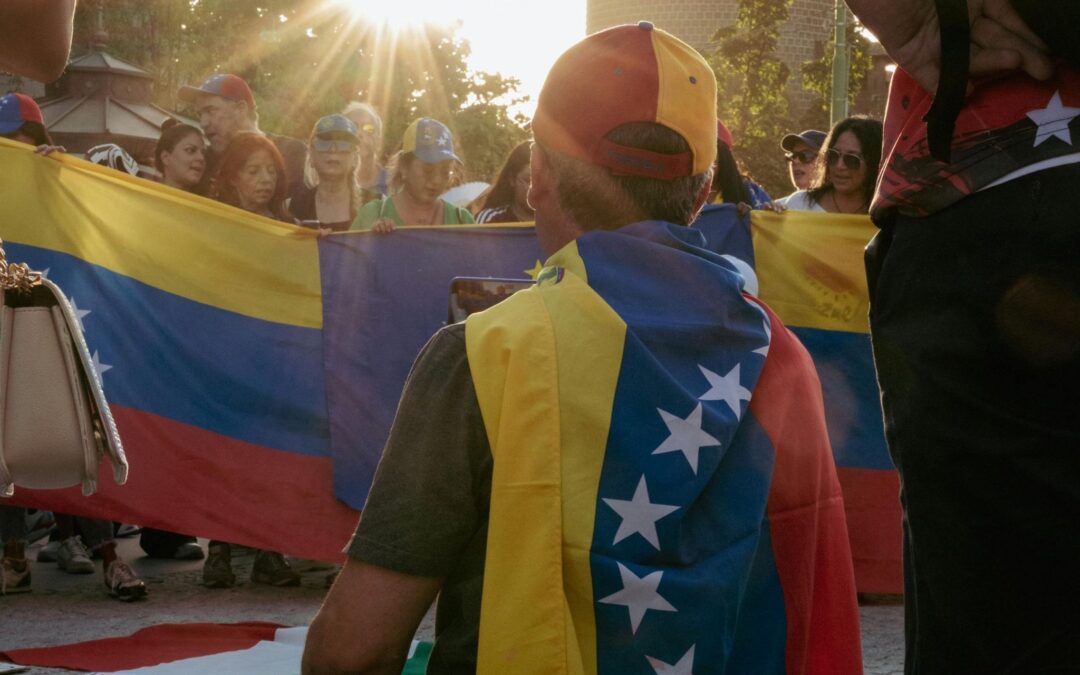
The ICJ calls for Venezuela to accept long-standing requests for country visits by UN Special Procedures whose mandates are most relevant to the rule of law and human rights crisis in the country.
The ICJ takes note of the announcement by the Venezuelan Government that it is inviting the UN Independent Expert on the promotion of a democratic and equitable international order, Mr. Alfred de Zayas, to visit the country.
This announcement, together with a recent invitation to the Special Rapporteur on the right to development is significant. For more than a decade, the Venezuelan Government has denied or left unanswered requests for visits to the country by numerous other of the independent experts (known as “Special Procedures”) of the United Nations. The last mission to Venezuela by a special procedure was the Special Rapporteur on Torture in 1996.
However, the breakdown of the rule of law and the extremely serious human rights situation in Venezuela make visits by other United Nations Special Procedures of urgent relevance.
“In the course of this year, extrajudicial and arbitrary executions, torture and ill-treatment of detainees, arbitrary detention, trial of civilians by military tribunals, and persecutions and attacks against opponents, dissidents and human rights defenders have become systematic and generalized practices in Venezuela, said Federico Andreu Guzman, ICJ South America Representative.
“It is therefore difficult to see why the Government of Venezuela would not respond to long-standing requests from Special Procedure mandates relevant to these violations in favour of proactively inviting other UN experts”, Andreu Guzman added.
The ICJ therefore calls on the Government of Venezuela to invite to visit the country the Working Group on Arbitrary Detention and the Special Rapporteurs on extrajudicial, summary or arbitrary executions; the independence of judges and lawyers; torture and other cruel, inhuman or degrading treatment or punishment; the rights to freedom of peaceful assembly and association; the promotion and protection of the right to freedom of opinion and expression; and on the situation of human rights defenders. All of these UN experts have long-standing requests to visit Venezuela, some for many years, which the Venezuelan Government has failed so far to accept.
“Under the Charter of the United Nations, Member States have the obligation to cooperate with the UN Special Procedures on human rights. This duty is of particular importance when the State is a member of the Human Rights Council, as is the case with Venezuela”, said Andreu Guzman.
The ICJ also calls on the Government of Venezuela to accept the request for a visit to the country that, since 2004, has been repeatedly issued by the Inter-American Commission on Human Rights.
Background
For several years, the following Special Procedures of the UN Human Rights Council have made requests to visit Venezuela: the Special Rapporteur on extrajudicial, summary or arbitrary executions; the Special Rapporteur on the situation of human rights defenders; the Working Group on Arbitrary Detention; the Special Rapporteur on the independence of judges and lawyers; the Special Rapporteur on the rights to freedom of peaceful assembly and association; the Special Rapporteur on violence against women, its causes and consequences; the Special Rapporteur on torture and other cruel, inhuman or degrading punishment; the Special Rapporteur on the promotion and protection of the right to freedom of opinion and expression; the Working Group on the issue of human rights and transnational corporations and other business enterprises; the Special Rapporteur on adequate housing as a component of the right to an adequate standard of living; and the Special Rapporteur on the right to food.
At the regional level, although it denounced the American Convention on Human Rights in September 2012, Venezuela is still a State party to three Inter-American human rights treaties (Inter-American Convention to Prevent and Punish Torture; Inter-American Convention on Forced Disappearance of Persons; and Inter-American Convention on the Prevention, Punishment and Eradication of Violence Against Women). However, Venezuela has systematically ignored recommendations of the Inter-American Commission on Human Rights (IACHR) and has also denied IACHR requests to visit the country, made since 2004.
Contacts
Federico Andreu-Guzmán, ICJ South America Representative, tel: +57 311 481 8094; email: federico.andreu(a)icj.org
Carlos Ayala Corao, ICJ Commissioner (Venezuela), tel: +57 414 243 4872; email: cayala(a)cjlegal.net
Alex Conte, ICJ Global Redress and Accountability Initiative, tel: +22 979 3802; email: alex.conte(a)icj.org
Oct 5, 2017 | Advocacy, Non-legal submissions
Today, the ICJ made a submission to the Universal Periodic Review of Azerbaijan.
The submission brings to the attention of the members of the Human Rights Council’s Working Group on the UPR issues concerning:
- Azerbaijan’s legislation governing the legal profession;
- the situation of lawyers in practice;
- the lack independence of the legal profession;
- the role of the Bar Association with regard to attacks on lawyers;
- international human rights instruments.
With respect to each of the above-mentioned concerns, the ICJ calls upon the Working Group on the UPR and the Human Rights Council to make a number of recommendations to the authorities of Azerbaijan.
Azerbaijan-UPR-Advocacy-non-legal submissions-2017-ENG (download the submission)