Sep 19, 2016 | Advocacy, Non-legal submissions
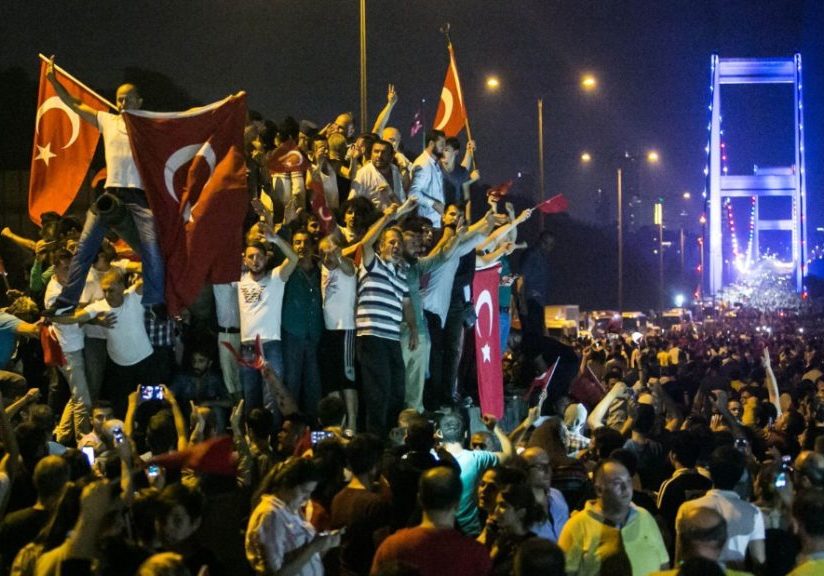
The ICJ today expressed concern at the UN for the independence of the judiciary, human rights, and the rule of law in Turkey, highlighting measures taken by the government, almost immediately after a failed coup in July, to suspend or dismiss thousands of judges and prosecutors.
The statement, which was delivered in General Debate on country situations, at the UN Human Rights Council in Geneva.
The statement read as follows:
The International Commission of Jurists (ICJ) wishes to draw the Council’s attention to the crisis of the rule of law in Turkey, and its serious consequences for the protection of human rights.
Within hours of the failed coup attempt in July, the Government initiated a purge of the judiciary on an unprecedented scale.
At least 3,300 judges and prosecutors have been dismissed or suspended, and hundreds have been arrested, including members of the High Council for Judges and Prosecutors.
Many of these measures appear to be arbitrary and fail to respect the right to a fair hearing before an independent authority.
These actions have done severe damage to the already fragile independence of the judiciary in Turkey, and threaten the right to a fair trial.
They represent a dramatic escalation of the attack on judicial independence that was already underway before the attempted coup, documented in an ICJ report published in June.
State-of-emergency decrees further undermine protection of human rights.
Periods for pre-trial detention have been extended and detainees’ confidential access to lawyers has been restricted. There are credible reports of ill-treatment of detainees, and of harassment of lawyers representing them.
The ICJ recalls that certain rights, including the prohibition on torture or other ill-treatment, and essential elements of the prohibition of arbitrary detention and right to a fair trial by an impartial tribunal, can never be derogated from, even in the most serious states of emergency.
The ICJ urges Turkey to take measures to restore the rule of law and ensure respect for human rights under the state of emergency.
The statement may be downloaded in PDF format here: hrc33-oralstatement-gditem4-turkey-2016
Sep 16, 2016 | News
Indian authorities have detained a Kashmiri human rights activist after stopping him from traveling to the United Nations Human Rights Council in Geneva, Human Rights Watch and the ICJ said today.
Khurram Parvez was arrested in his home on 15 September 2016, a day after being prevented from leaving the country with a group of rights activists who were traveling to Geneva to raise concerns about the security force crackdown in Jammu and Kashmir.
Human Rights Watch and the ICJ call on authorities to immediately release Parvez and allow him to attend the Human Rights Council session.
“Indian authorities seem to have missed the irony of blocking a rights activist on his way to the UN Human Rights Council,” said Sam Zarifi, Asia Director at the International Commission of Jurists.
“Monitoring and engage
ment by civil society is necessary to prevent human rights violations and ensure accountability. The Government should immediately release Khurram Parvez and begin working with him and other activists to address the difficult issues facing Jammu and Kashmir,” he added.
Parvez, 39 years of age, is chair of the Asian Federation Against Involuntary Disappearances (AFAD) and program coordinator of the Jammu Kashmir Coalition of Civil Society (JKCCS).
He has documented cases of enforced disappearances and investigated unmarked graves in Kashmir.
According to his lawyer, Parvez has been detained by Kashmir police under “preventive detention” provisions of the Code of Criminal Procedure, including section 151 (arrest to prevent the commission of cognizable offense).
The Government’s actions against Parvez violate his right to freedom of movement.
Under international human rights law, any restrictions on freedom of movement for security reasons must have a clear legal basis, be limited to what is necessary and be proportionate to the threat.
This is further supported by article 5 of the UN Declaration on Human Rights Defenders, which states that “[f]or the purpose of promoting and protecting human rights and fundamental freedoms, everyone has the right, individually or in association with others, at the national and international levels… to communicate with nongovernmental or intergovernmental organizations.”
“Instead of trying to silence human rights activists, India should be addressing the serious human rights problems in Jammu and Kashmir and holding perpetrators of abuses to account,” said Meenakshi Ganguly, South Asia Director at Human Rights Watch.
“Preventing open discussion of these issues, whether in India or in Geneva, sends a message to Kashmiris that the government has no interest in addressing their concerns,” she added.
Background
Violent protests broke out in Jammu and Kashmir state after the killing of Hizb-ul-Mujahedin militant Burhan Wani in an armed encounter on 8 July.
Since then, the authorities have placed large parts of the state under curfew restrictions to try to stop protesters who hurl stones at security forces and attack police posts.
Security forces have used unnecessary lethal force to contain the violence, which has resulted in the death of 80 protesters and 2 police officers, and thousands injured.
Some protesters, including children, lost their vision from pellets fired from riot-control guns.
While police have a duty to protect lives and property, under the UN Basic Principles on the Use of Force and Firearms by Law Enforcement Officials, they should use non-violent means as far as possible, only use force when unavoidable and in a proportionate manner, and use lethal force only when absolutely necessary to save lives, Human Rights Watch and International Commission of Jurists said.
The authorities have also attempted to censor news and restrict access to information.
The Government shut down local newspapers for three days, blocked mobile internet services temporarily, and ordered local cable operators to block the transmission of five news channels on television.
India has failed to address longstanding grievances in Jammu and Kashmir.
Numerous expert committees in India have recommended steps to address past human rights violations, including a repeal of the draconian Armed Forces Special Powers Act, but the Indian Government has ignored these recommendations.
Contact:
Sam Zarifi, ICJ Asia-Pacific Regional Director, (Bangkok); t:+66(0) 807819002; e: sam.zarifi@icj.org
Sep 16, 2016 | Advocacy, Non-legal submissions
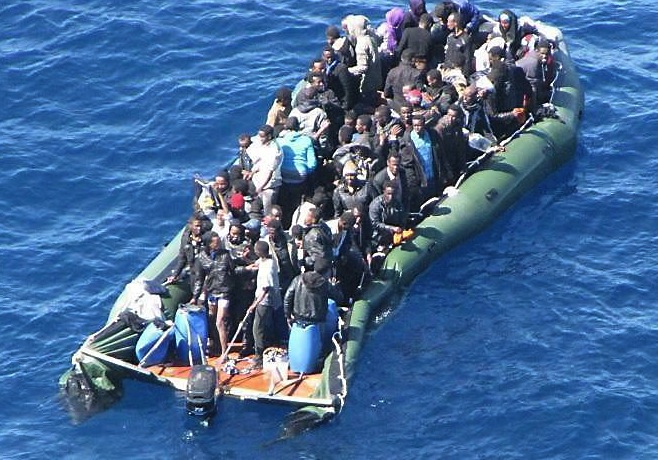
At the UN Human Rights Council, the ICJ today emphasized the role of judges and lawyers in securing human rights and the rule of law for refugees and migrants, including in situations of large-scale movements.The statement, delivered during a general debate, read as follows:
As the report of the High Commissioner for Human Rights, on Promotion and protection of the human rights of migrants in the context of large movements (UN doc A/HRC/33/67), recognizes, all such persons must have “access to justice”, including effective access to courts and lawyers.
This includes fair and effective individualized procedures in relation to key decisions such as: entitlement to refugee status or other international protection; detention or criminal proceedings based on entry or presence in the country; and expulsion or onward transfer.
The roles of the executive, legislature and judiciary in such situations has been debated in many countries. In some cases, governments have invoked the concept of “crisis” or “emergency” to justify radical departures from ordinary procedures, including reducing effective access to independent judges and lawyers.
In the experience of the International Commission of Jurists (ICJ), over many decades and in all regions of the world, the role of judges and lawyers in securing human rights and the national and international rule of law is in fact even more important in times and circumstances perceived to be “exceptional”, or of “crisis” or “emergency”. The ICJ is therefore deeply concerned about any reduction of the role of judges and lawyers in relation to large-scale movements of refugees and migrants.
The seventh annual ICJ Geneva Forum of Judges & Lawyers, 17-18 November 2016, will bring together judges, lawyers, and refugee and migration experts from around the world, as well as relevant UN, regional, and other agencies, to discuss the role of judges and lawyers in situations of large-scale movement of refugees and migrants. Based on the discussion, the ICJ will produce and disseminate guidance on the important role of judges and lawyers to protect human rights and the rule of law in all such circumstances.
The statement may be downloaded in PDF format here: hrc33-oralstatement-gditem3-migrantsrefugees-16092016

Sep 15, 2016 | Advocacy, Non-legal submissions
The ICJ, with support of the NGO the Human Rights Commission of Pakistan (HRCP), spoke at the UN Human Rights Council today on the continuing problem of enforced disappearances in Pakistan.
The statement was delivered during an interactive dialogue with the Working Group on Enforced or Involuntary Disappearances.
The ICJ, with support of the Human Rights Commission of Pakistan (HRCP), welcomed the Working Group’s follow-up report on recommendations from its 2012 visit to Pakistan, and stated further as follows:
The practice of enforced disappearance has persisted and expanded since the Working Group’s visit. Previously restricted mainly to Balochistan, the Federally Administered Tribal Areas and Khyber Pakhtunkhwa, enforced disappearances are now a nation-wide phenomenon.
In August 2015, Zeenat Shahzadi, a Pakistani journalist, went “missing” from Lahore, a rare case of alleged enforced disappearance of a woman.
Estimates of the overall number of cases of enforced disappearance vary. The official Commission of Inquiry on Enforced Disappearances has reported nearly 1,400 unresolved cases.
The HRCP, an NGO that documents human rights violations in 60 districts, has reported 370 cases of enforced disappearance since 2014.
Other NGOs claim between 5,000 to 18,000 cases. Even by the most conservative estimates, a significant number of enforced disappearances remain unresolved.
The Government has not brought perpetrators to account in even a single case of enforced disappearance. Rather than effective measures to prevent the practice or to strengthen existing accountability mechanisms, recent legislation actually facilitates enforced disappearances.
In January 2015, Pakistan empowered military courts to try civilians for terrorism-related offences. These courts have since sentenced at least 100 people to death, and at least 12 have been hanged, after grossly unfair trials without possibility of appeal to any civilian courts, including the Supreme Court.
Families allege that some of those tried had been subjected to enforced disappearance by military authorities, and military control over the proceedings leaves the family and victim without effective remedy.
Victims’ groups, lawyers, and activists working on enforced disappearance also continue to face security risks including attacks, harassment, surveillance, and intimidation.
The ICJ and HRCP commend the Working Group for its systematic follow-up, which can have a positive impact, and urge the Working Group to continue to monitor and report on the situation in Pakistan.
The statement may be downloaded in PDF format here: hrc33-oralstatement-disappearances-pakistan-15092016

Sep 14, 2016 | Events
This panel discussion features two Iraqi torture survivors, Salah Hassan Nsaif and Ali Shallal Abbas, who will share their first-hand accounts serious abuse suffered at Iraq’s notorious Abu Ghraib prison, and the role of U.S. contractors in that torture and abuse.
The event organised by the International Commission of Jurists, the International Federation of Human Rights (FIDH), and the Center for Constitutional Rights, takes place 15 September 2016, 11:00-12:00, at the Palais des Nations Room XXVII in Geneva, Switzerland.
CCR Senior Staff Attorney Katherine Gallagher will discuss legal cases, Saleh v Titan and Al Shimari v CACI, brought in the United States on behalf of victims as they seek justice. The cases will be placed in context of broader corporate accountability efforts, including those of the UN Working Group on Mercenaries and the Open-Ended Working Group on a legally binding instrument on transnational corporations and other business enterprises.
Speakers:
Salah Hassan, journalist and photographer for Al Jazeera network and Abu Ghraib torture survivor
Ali Shallal Abbas, Founder and President of the Association of victims of the American and Iranian prisons in Iraq, and Abu Ghraib torture survivor
Katherine Gallagher, Senior Staff Attorney, Center for Constitutional Rights
Carlos Lopez, Senior Legal Adviser, Business and Human Rights, International Commission of Jurists (moderator)
Remarks will also be made by Patricia Arias, Chair of the UN Working Group on Mercenaries.
Following the event, there will be the opening of an art exhibit organized by the UN Working Group on the use of mercenaries. Ms. Arias, Mr. Nsaif, and Mr. Abbas will make remarks, and guests are invited to engage with the photographs, multimedia display, and virtual reality film. The exhibit is open to delegates, NGOs, and the public. “Private Actors in Warfare: Stories from victims of private military and security companies and foreign fighters” will take place at 13:00 – 15:00 in Palais des Nations Room XXIII.
A flyer for the event may be downloaded, in PDF format, here: side-event-pmsc-abu-graib-sept2016