Feb 12, 2021 | Advocacy, News
The Myanmar military should immediately abandon the draft Cyber Security Law and end Internet restrictions it has imposed since taking power in a coup on 1 February, said ARTICLE 19, Open Net Association, and the ICJ today.
“It is telling that controlling cyberspace is one of the top priorities of the Myanmar military, which seized power through an illegitimate coup d’etat only last week,” said Sam Zarifi, ICJ’s Secretary General. “The military is used to having total power in Myanmar, but this time they have to face a population that has access to information and can communicate internally and externally.”
Under international law, the rights to freedom of expression and information may only be restricted if prescribed by law, in pursuit of a legitimate aim, and necessary and proportionate to that aim. This right applies equally online. In 2018, the UN Human Rights Council condemned ‘all undue restrictions on freedom of opinion and expression online that violate international law’.
“Having illegally seized control of government, the military is trying to ram through a hugely problematic law that would imperil the Myanmar public’s ability to share and access information online,” said Matthew Bugher, ARTICLE 19’s Head of Asia Programme. “The draft law is further evidence of the military’s intent to control online discourse and permanently undermine Internet freedom in the country.”
Human rights bodies and experts have repeatedly condemned Internet shutdowns, which are inherently unnecessary and disproportionate irrespective of their purported objectives. Four UN special procedures with mandates from the Human Rights Council stated in their 2011 Joint Declaration on Freedom of Expression and the Internet that, ‘Cutting off access to the Internet, or parts of the Internet, for whole populations or segments of the public (shutting down the Internet) can never be justified, including on public order or national security grounds’. The UN Human Rights Council has repeatedly called on Myanmar to lift Internet restrictions in the country.
Anonymity is furthermore crucial to protecting the right to freedom of expression and other human rights, including the right to privacy. UN Human Rights Council Resolution 38/7 recognizes that ‘privacy online is important for the realization of the right to freedom of expression and to hold opinions without interference, and the right to freedom of peaceful assembly and association’. The UN Special Rapporteur on freedom of expression in a 2015 report stated that restrictions on encryption must confirm to the three-part test on restrictions to the freedom of expression noted above.
“The ban on online anonymity in the cybersecurity law is not just bad for Myanmar but sets a dangerous precedent for the whole of Asia”, said Kyung Sin Park, Executive Director of Open Net Association, whose founders spearheaded a successful constitutional challenge against a similar law in South Korea in 2012. “The content takedown provisions and criminalization of online speech in the draft law are extremely broad and utterly lacking due process even in comparison to other Asian countries. The proposal smacks of a legislative attempt to extend the powers the military had taken in an unlawful, anti-democratic coup.”
ISPs, online service providers (as defined by the draft law to mean content providers) and other stakeholders have only been given until 15 February for input. This is a clear indication that the military has no intention of engaging in meaningful consultation.
On 10 February, a group of 158 Myanmar civil society organizations released a statement rejecting the draft Cyber Security Law, while reiterating their view that the Myanmar military could not legitimately exercise legislative authority.
“All online service providers inside and outside the country should be alarmed at this intrusion of military authority into cyberspace and refuse to implement these hugely problematic restrictions,” said ICJ’s Sam Zarifi.
SPECIFIC PROBLEMATIC PROVISIONS OF THE DRAFT CYBERSECURITY LAW (based on an unofficial translation of the draft law):
Many provisions in the draft law are vague and overbroad, in contravention of the principle of legality. If enacted, the draft law would greatly extend the powers of military authorities to restrict and punish online expression.
The law provides overarching control to the military’s ‘State Administration Council’, a newly-formed body appointed by the Commander-in-Chief. The direct military control of Internet service provision and its role in the policing of content online is in and of itself cause for alarm. Further, the military should in no circumstances be charged with protecting personal data.
Section 29 of the draft law is overly broad as it demands the prevention, removal, destruction and cessation of a broad and vaguely defined range of expression, including online comments deemed ‘misinformation’ or ‘disinformation’, any expression that causes hate and risks disrupting unity, stability, and peace, and ‘written and verbal statements against any existing law’.
Under section 64, any person convicted of creating ‘misinformation’ and ‘disinformation’ with the intent of causing public panic, loss of trust or social division in cyberspace is punishable by three years’ imprisonment, a fine, or both.
International human rights bodies have repeatedly urged governments against laws that create ‘false news’ offences, warning about their potential abuse by governments to suppress criticism and other forms of speech protected by international human rights law.
Section 30 threatens the right to online anonymity by requiring online service providers to retain usernames, IP addresses, national IDs, and other personal data for up to three years, and to provide this information to authorities upon request. For this purpose, Section 28 requires an online service provider to ensure that any device that stores the user’s information must be kept in a place designated by the relevant Ministry.
The draft law also has overly broad catch-all provisions in Sections 61 and 73 respectively whereby online service providers that fail to comply with any provisions of the draft law face a maximum penalty of three years’ imprisonment and a fine and individuals failing to comply with any rules, regulations, notifications, orders, directives, and procedures issued under the draft law are subject to one year’s imprisonment and a fine. These sanctions which are punitive in purpose and effective are non-compliant with the requirement of proportionality under international human rights law and standards on freedom of expression.
The draft law also provides for enhanced power to control the Internet without the benefit of judicial review by independent civilian courts. In the ‘public interest’, a ministry approved by the State Administration Council may temporarily prohibit any online service or take control of devices related to online service provision, as well as permanently ban any online service provider. This is a less stringent standard than that provided under the problematic and much-criticized section 77 of the Telecommunications Act, which allows for shut downs or control of telecommunications in an ‘emergency situation’.
Download
Statement in Burmese.
Contact
Osama Motiwala, ICJ Asia-Pacific Communications Officer, e: osama.motiwala(a)icj.org
Feb 11, 2021 | News
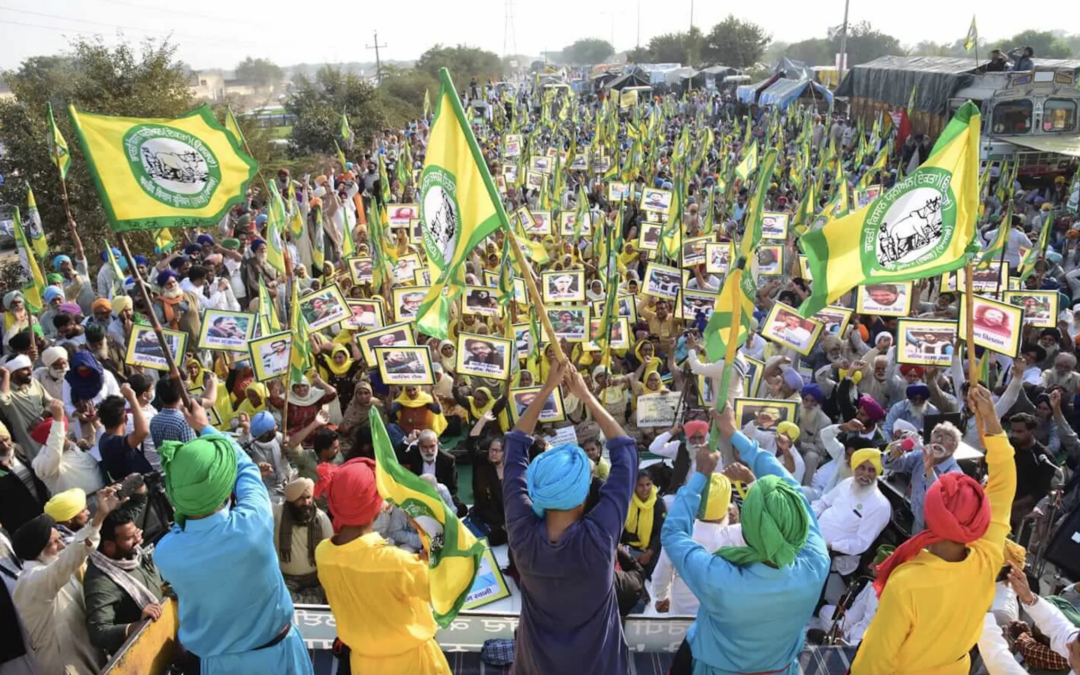
The ICJ today condemned the unlawful repression of peaceful protests and urged the Indian authorities to respect the right to freedom of assembly of Indian farmers who have been demonstrating in Delhi since November 26, 2020 against newly promulgated agricultural laws.
Since early February 2021, police have used metal barricades, cement walls and iron nails to block the roads leading to Tikri, Singhu, Ghazipur, the three main borders where the farmers have assembled. They have done so to prevent any vehicles from these areas entering Delhi. The barricades have also served to deny male and female farmers and their families, including children, consistent access to water and sanitation facilities. The protests at these sites over the past two months are reported to have been peaceful.
Thousands of farmers from all over India, and most heavily from Punjab, Haryana and Uttar Pradesh, have demanded the repeal of a new set of agricultural laws, fearing that these will serve to eliminate government protections for crop prices and thereby impact their livelihoods.
Two journalists were detained and assaulted for reporting from the ground, while nine senior journalists have been threatened with criminal charges including sedition charges by the Indian Government. More than 125 persons, including farmers and also bystanders have reportedly been arrested largely in response to a violent clash that occurred on 26 January 2021. At least 21 farmers are reported to be currently missing.
“Rather than protecting the right to peaceful protest as required by law, the Indian authorities have cracked down on farmers in an arbitrary and aggressive manner, using unlawful force and preventing free movement as well as access to essential facilities”, said Ian Seiderman, ICJ’s Legal and Policy Director.
The Indian Supreme Court on 17 December 2020, upheld the right to protest of farmers calling it “part of a fundamental right” which can be exercised “subject to public order”. The Court has further said that “[t]here can certainly be no impediment in the exercise of such rights as long as it is non-violent and does not result in damage to the life and properties of other citizens and is in accordance with law.”
“The suppression of the right to peaceful assembly has become a pattern in India, as we saw in December 2019 and January 2020 with the mass arrests of students and human rights defenders who were protesting against the Citizenship Amendment Act,” said Seiderman.
The ICJ called on the responsible authorities to remove barricades around protest sites, enable access to water and sanitation facilities and to desist from further arbitrary arrests.
Background
The three contentious farm laws being the Farmers’ Produce Trade and Commerce (Promotion and Facilitation) Act, 2020, Farmers (Empowerment and Protection) Agreement on Price Assurance and Farm Services Act, 2020 and Essential Commodities (Amendment) Act, 2020 were brought in through executive ordinance without legislative consultation and adequate scrutiny and received presidential assent on 27 September 2020.
Farmer unions from Punjab, Haryana and Uttar Pradesh began to set up protest sites on the borders of Delhi on 26 November 2020. There have been a series of unsuccessful negotiations between the Ministry of Agriculture and Farmers Welfare and the farmer representatives. In response to the protests, the Indian Supreme Court on 12 January ordered the suspension of the “implementation of the three farm laws until further orders”. The Court set up a four-person expert committee to negotiate between farmers and the Government. However the committee’s efforts have become stalled.
On 26 January, India’s Republic Day, some tens of thousands of farmers drove into Delhi in tractors, with some protestors deviating from the sanctioned routes permitted by the Delhi Police. There were clashes with the police where one protestor was killed in the violence, and nearly 400 policemen were injured. Some protestors also entered the Red Fort, an historical monument, and hoisted the Sikh religious flag on a flagpole.
On 29 January, police and at least some private forces tried to forcibly disperse the protests on Ghazipur, Singhu and Tikri borders through stone pelting and baton charging. Farmer protestors allege that the some of those working with the police were associated with Rashtriya Swayamsevak Sangathan (RSS), the ideological outfit associated with the ruling party Bhartiya Janata Party.
On 6 February there was a three-hour blockade on state and national highways placed by farmers throughout large parts of India in protest against the agricultural laws, the government’s measures against the protestors and the reduction of budgetary allocation for farmers.
Freedom of assembly is protected under the International Covenant on Civil and Political Rights, to which India is a party.
Contact
Maitreyi Gupta, ICJ India Legal Adviser, t: +91 77 560 28369 e: maitreyi.gupta(a)icj.org
Feb 10, 2021 | News
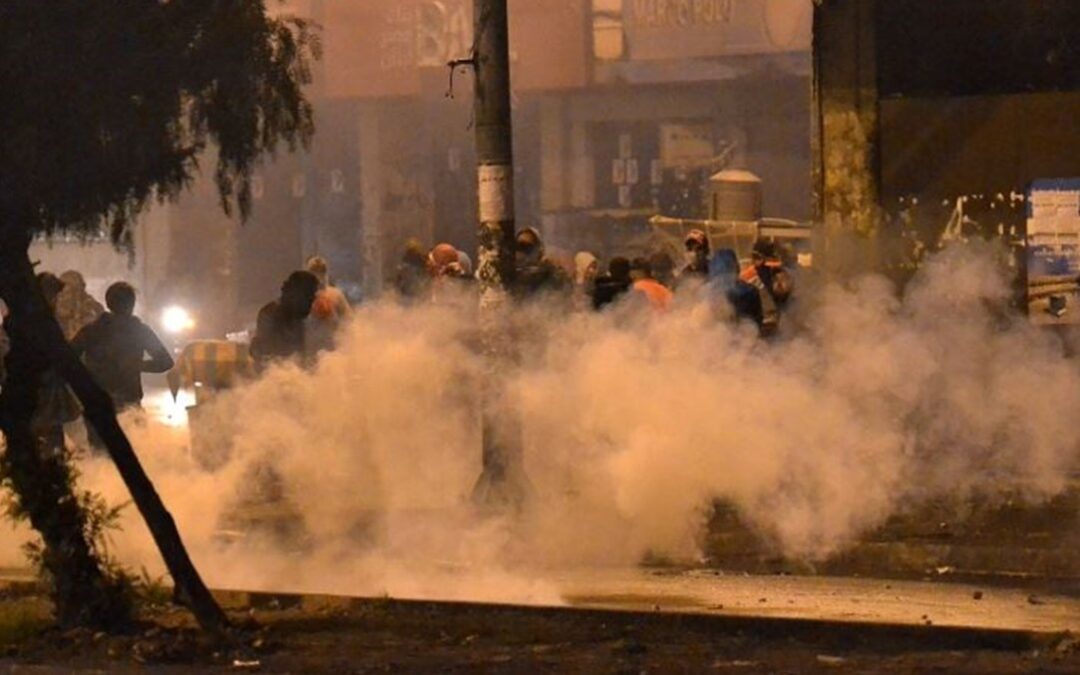
The ICJ and the Lebanese Center for Human Rights (CLDH) are deeply concerned about the role of the military in the arrest, detention and referral for prosecution by military courts of dozens of civilians in Tripoli.
The military’s crackdown has taken place in the context of ongoing protests in the city against a dire economic situation exacerbated by the nation-wide lockdown imposed by the government with the stated intention of combatting the COVID-19 pandemic.
“Under the Rule of Law, the military has no business policing demonstrations, detaining protesters or prosecuting civilians,” said Said Benarbia, the ICJ’s Middle East and North Africa Programme Director. “Instead of addressing the legitimate grievances of those protesting, the Lebanese government is using the military to silence dissenting voices by arresting and sending protestors for trial before military tribunals.”
While the military reported the arrest of five individuals on 27 January, five on 29 January and another 17 on 31 January, for, among other things, allegedly engaging in “rioting,” “vandalism” and “obstruction of civil defence,” other sources suggest at least 58 civilians were arrested by the military in connection with the above-mentioned protests in Tripoli. The whereabouts of many detainees remained undisclosed for days following their arrest. According to lawyers, the military’s Office of Public Prosecution has referred at least 14 individuals to a military Investigating Judge.
The ICJ and CLDH call on the Lebanese authorities to ensure that the military plays no role in policing the ongoing protests and in other law enforcement functions that are properly the sole responsibility of civilian law enforcement agencies. The military courts’ jurisdiction, in particular, must be confined exclusively to the commission of military offences by military personnel and, in turn, totally exclude the possibility of prosecuting civilians, as well as cases involving the perpetration of human rights violations by military personnel.
Referrals by the military’s Office of Public Prosecution follow an increasing, worrying trend of trying those involved in anti-government protests before military courts, which are neither independent nor impartial, and whose procedures do not comply with international fair trial standards.
“Lebanon’s military tribunals have a grim history of unfair trials and politicized proceedings against those suspected of opposing the government,” said Fadel Fakih, CLDH’s Executive Director. “If faith in the Lebanese justice system is to be restored, the jurisdiction of military tribunals must be fully reformed,” he added.
In a 2018 briefing paper entitled “The Jurisdiction and Independence of the Military Courts System in Lebanon in Light of International Standards,” the ICJ called on the Lebanese authorities to enhance the independence and impartiality of military courts, ensure the fairness of their procedures, and restrict their jurisdiction to cases involving members of the military for military offences.
Contact
Said Benarbia, Director of the ICJ Middle East and North Africa Programme, t: +41 22 979 38 17; e: said.benarbia(a)icj.org.
Fadel Fakih, Director of the Lebanese Center for Human Rights, t +961 81 065 041; e: ffakih(a)cldh-lebanon.org
Download
Lebanon-Military-Courts-COVID19-Press-Release-2021-ENG.pdf (English)
Lebanon-Military-Courts-COVID19-Press-Release-2021-ARB.pdf (Arabic)
Feb 8, 2021 | News
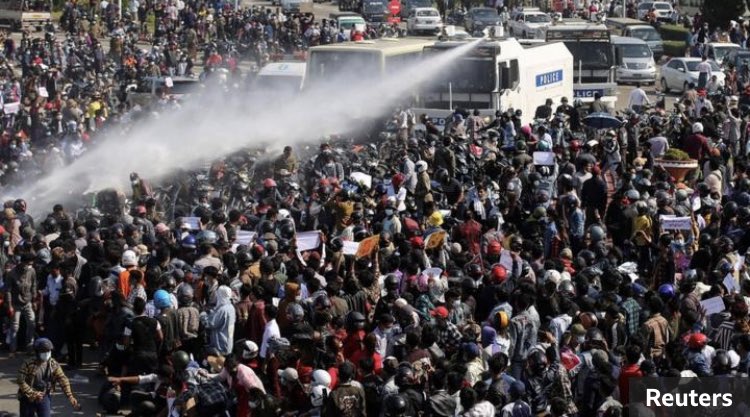
The Myanmar military’s coup d’etat of 1 February is unconstitutional and fails to comply with basic rule of law principles, said the ICJ today.
“The Myanmar military’s actions violate even the flawed Constitution that the military itself imposed in 2008,” said Sam Zarifi, ICJ’s Secretary General. “The irregularities alleged by the military in the recent elections do not justify declaring a state of emergency and shattering the already weak rule of law in the country.”
The coup d’etat does not comply with the Constitution of the Republic of the Union of Myanmar 2008, which suffers from multiple shortcomings in basic respect for the rule of law and international human rights standards.
Article 417 of the Constitution requires the President to declare a state of emergency when there is a risk to the sovereignty of the country.
Article 418 requires the President to hand over all power to the Commander-in-Chief of the Army. Contrary to this provision, the state of emergency was declared by the Vice-President, after the military detained President Win Myint.
“The accountability of the military to the civilian authorities is a core rule of law principle”, said Sam Zarifi “Myanmar’s military leaders have turned this principle on its head by usurping total authority again.”
The ICJ is concerned that Myanmar’s Constitution provides for the possibility of suspending protections for a number of human rights, such as freedom of expression and association and the right to habeas corpus. Under international human rights law, derogations from certain rights are permissible only when strictly necessary to meet a specific threat to the life of the nation, conditions not met under the current emergency.
The right to habeas corpus is among those rights that may never be suspended. The writ of habeas corpus allows any person detained by any State agent, including during emergencies, to challenge the lawfulness of the detention.
“The right to test the lawfulness of any detention needs to be restored and the judiciary must be able to independently examine the legality of any arrests and detentions and order to release of those it finds are detained illegally” said Sam Zarifi.
Of particular concern to the ICJ is the near-total impunity provided to the military after the declaration of the State of Emergency, and the proliferation of arbitrary detention without recourse to legal review.
Article 432 of the Constitution effectively shields the military and security forces from any review of ’legitimate measures’ pursuant to the declaration of a state of emergency, which the ICJ notes also flies in the face of the rule of law.
“After the shock of the coup d’etat, we are now seeing brave lawyers and civil society activists trying to use peaceful means at their disposal to demand their rights,” Zarifi said. “This movement is not focused around an icon or even one party, but on the notion that the people of Myanmar should be able to government themselves and decide their future.”
Contact
Sam Zarifi, ICJ’s Secretary General, sam.zarifi(a)icj.org
Feb 8, 2021 | News
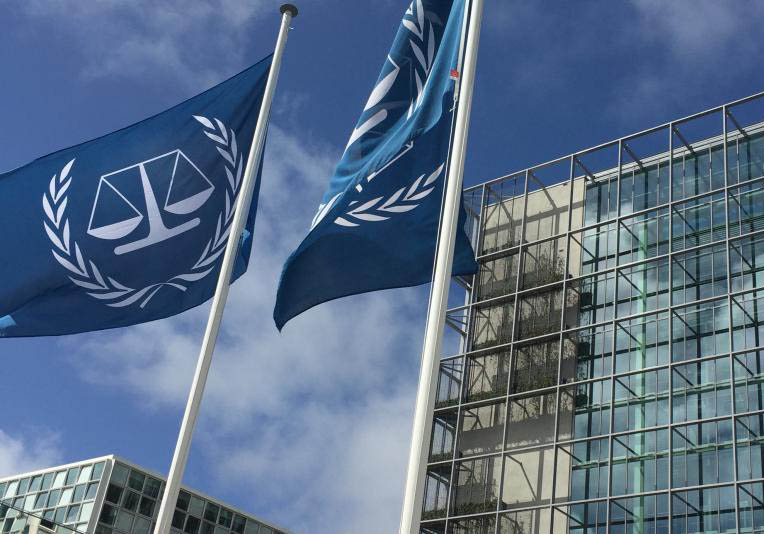
The ICJ welcomes the International Criminal Court’s (ICC) decision establishing that the Court can assert its jurisdiction over serious crimes alleged to have occurred in the State of Palestine since 13 June 2014.
On 5 February 2021, the ICC Pre-Trial Chamber I held by majority that: (i) Palestine has correctly acceded to the Rome Statute and has thus become a State party to it; and (ii) the ICC’s territorial jurisdiction extends to “the territories occupied by Israel since 1967, namely Gaza and the West Bank, including East Jerusalem.”
“The ruling is a first step towards breaking the cycle of impunity for crimes under international law committed by all parties to the conflict in Palestine,” said Said Benarbia, the ICJ’s MENA Programme Director. “The Prosecutor should immediately open an investigation with a view to establishing the facts about such crimes, and identifying and prosecuting those most responsible.”
The decision was prompted by a request of the ICC Office of the Prosecutor seeking confirmation of the Court’s territorial jurisdiction.
The Prosecutor had previously concluded that there is a reasonable basis to believe that “war crimes have been or are being committed in the West Bank, including East Jerusalem, and the Gaza Strip.”
On 16 March 2020, the ICJ submitted amicus curiae observations in support of the Court’s jurisdiction, arguing that:
- Palestine has successfully acceded, and is a State Party, to the Rome Statute. The Court should accordingly exercise its jurisdiction over Palestine as it does in respect of any other State Party;
- The Palestinian Territory over which the Court should exercise jurisdiction comprises the West Bank, including East Jerusalem, and Gaza; and
- Palestine is a State under international law, satisfying recognized international law criteria for statehood, displaying State activity and engaging in diplomatic relations with other sovereign States. The decades-long belligerent occupation of Palestine by itself has no decisive legal effect on the validity of its claim to sovereignty and statehood.
The Pre-Trial Chamber decision confirmed the first two of these observations, without considering the status of Palestine’s statehood under general international law.
Contact
Said Benarbia, Director, ICJ Middle East and North Africa Programme; t: +41 22 979 3817 e: said.benarbia(a)icj.org
Vito Todeschini, Legal Adviser, ICJ Middle East and North Africa Programme; t: +216 53 334 679 e: vito.todeschini(a)icj.org