Feb 6, 2021 | News
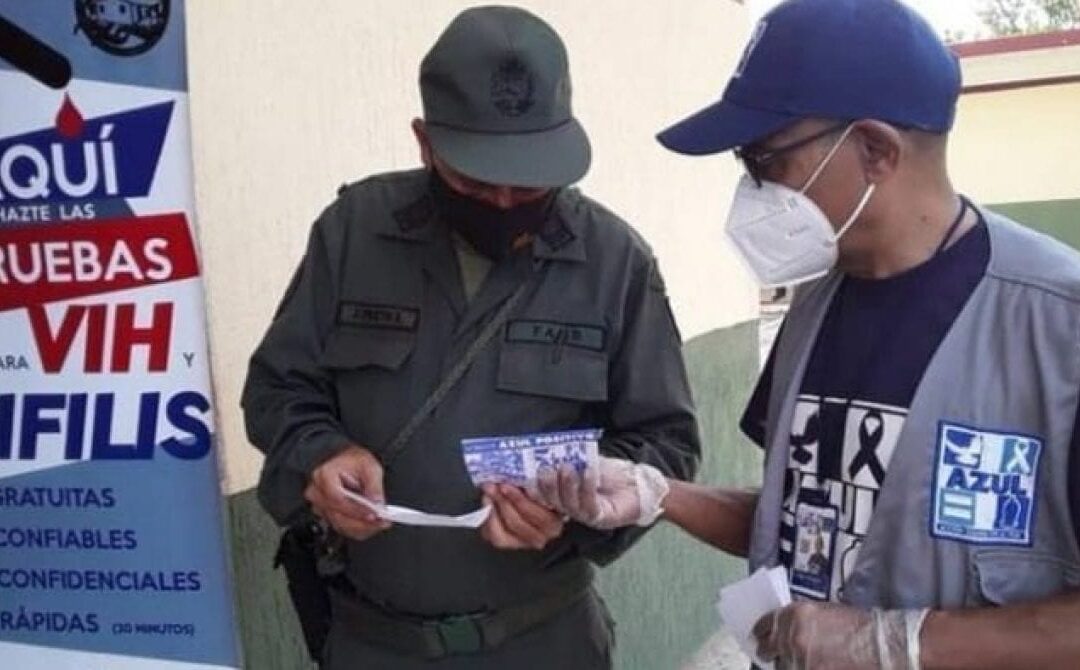
The recent, ongoing and unwarranted detention of five members of the Venezuelan NGO ‘Azul Positivo’ is one more event in a series of threats, harassment, attacks, restrictions, reprisals and criminal proceedings against Venezuelan civil society organizations and human rights defenders, which has been intensifying since November 2020.
In recent months and weeks, state agents have forcibly entered the offices of civil society organizations; public threats have been made against defenders who have been engaging with human rights mechanisms, NGO bank accounts have been frozen and arrest warrants issued for aid workers.
Venezuelan civil society operate in a context of serious legal and administrative obstacles with domestic laws used to target human rights defenders, such as the ‘Law Against Hate’, or having the effect of limiting the operations of NGOs and restricting their access to funding, essentially blocking the work of many organizations vital for Venezuelans in need.
In a public statement, a number of UN independent human rights experts and regional experts have described threats and measures taken against Venezuelan civil society since November 2020 as amounting to ‘systematic persecution and stigmatization.’
It is essential that humanitarian and human rights organizations responding to the grave humanitarian and human rights crises in the country, pushing for accountability for violations and abuses and the return of guarantees provided by democratic institutions and processes are able to do their work without fear or hindrance.
Human rights defenders are critical, constructive and essential to democracies and the functioning of the rule of law. Attempts to silence and cow them are counterproductive and shameful.
We urge the Venezuelan authorities to ensure that harassment and threats against Venezuelan defenders stop and for all international legal guarantees to be respected. We call on all states and UN bodies and agencies to actively support civil society organizations, defenders and activists and to speak up loudly and consistently for the right to defend human rights in Venezuela and globally.
We are inspired by the daily commitment and courage of Venezuelan human rights defenders and humanitarian workers and stand in solidary with our Venezuelan partners and friends.
Amnesty International
Center for Justice and International Law (CEJIL)
CIVICUS
Civil Rights Defenders
Conectas Diretos Humanos
Freedom House
Global Centre for the Responsibility to Protect
Human Rights Watch
International Commission of Jurists
International Service for Human Rights
People in Need
Washington Office on Latin America (WOLA)
Feb 5, 2021 | Advocacy, Non-legal submissions
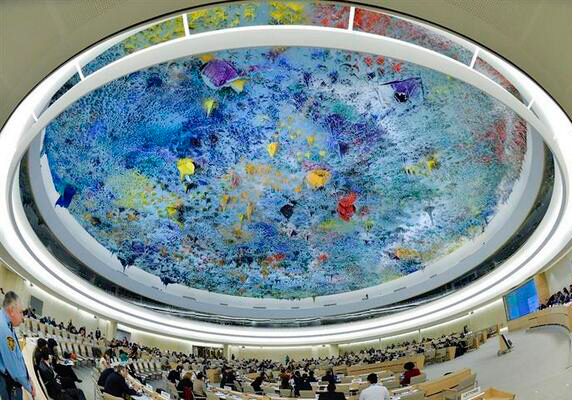
Today, the ICJ and other human rights NGOs have written to UN Member States to call for a renewal of the mandate of the UN Commission on Human Rights in South Sudan.
The joint letter highlights the existing remaining concern on the human rights situaion in South Sudan and provide with key recommendation for its functioning.
Find the joint letter here: SouthSudan-UN-JointLetter-Advocacy-NonLegal-2021-ENG
Contact:
Massimo Frigo, ICJ UN Representative, e: massimo.frigo(a)icj.org, t: +41797499949
Feb 5, 2021 | Advocacy, Non-legal submissions
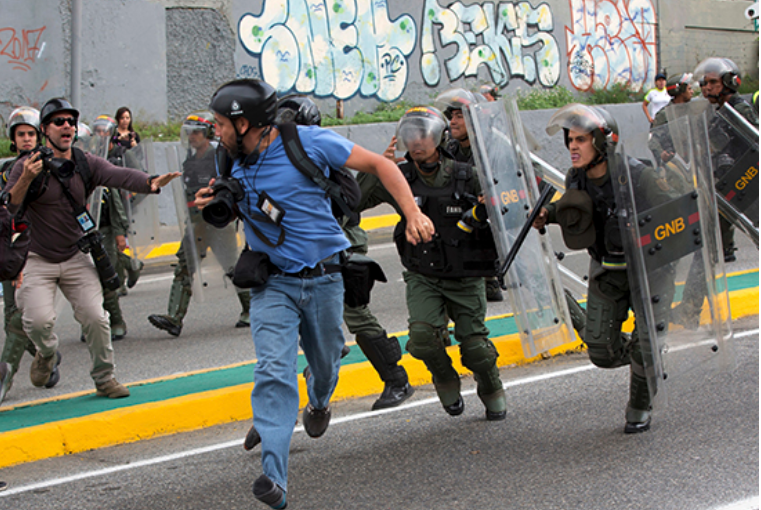
Today, the ICJ joined several human rights NGOs to stand in solidarity with Venezuelan NGOs subject to threats, harassment, attacks, restrictions, reprisals and criminal proceedings by State authorities.
The joint statement reads as follows:
The recent, ongoing and unwarranted detention of five members of the Venezuelan NGO ‘Azul Positivo’ is one more event in a series of threats, harassment, attacks, restrictions, reprisals and criminal proceedings against Venezuelan civil society organizations and human rights defenders, which has been intensifying since November 2020.
In recent months and weeks, state agents have forcibly entered the offices of civil society organizations; public threats have been made against defenders who have been engaging with human rights mechanisms, NGO bank accounts have been frozen and arrest warrants issued for aid workers.
Venezuelan civil society operate in a context of serious legal and administrative obstacles with domestic laws used to target human rights defenders, such as the ‘Law Against Hate’, or having the effect of limiting the operations of NGOs and restricting their access to funding, essentially blocking the work of many organizations vital for Venezuelans in need.
In a public statement, a number of UN independent human rights experts and regional experts have described threats and measures taken against Venezuelan civil society since November 2020 as amounting to ‘systematic persecution and stigmatization.’
It is essential that humanitarian and human rights organizations responding to the grave humanitarian and human rights crises in the country, pushing for accountability for violations and abuses and the return of guarantees provided by democratic institutions and processes are able to do their work without fear or hindrance.
Human rights defenders are critical, constructive and essential to democracies and the functioning of the rule of law. Attempts to silence and cow them are counterproductive and shameful.
We urge the Venezuelan authorities to ensure that harassment and threats against Venezuelan defenders stop and for all international legal guarantees to be respected.
We call on all states and UN bodies and agencies to actively support civil society organizations, defenders and activists and to speak up loudly and consistently for the right to defend human rights in Venezuela and globally.
We are inspired by the daily commitment and courage of Venezuelan human rights defenders and humanitarian workers and stand in solidary with our Venezuelan partners and friends.
Signatories:
- Amnesty International
- Center for Justice and International Law (CEJIL)
- CIVICUS
- Civil Rights Defenders
- Conectas Diretos Humanos
- Freedom House
- Global Centre for the Responsibility to Protect
- Human Rights Watch
- International Commission of Jurists
- International Service for Human Rights
- People in Need
- Washington Office on Latin America (WOLA)
Feb 4, 2021 | Agendas, Events, News
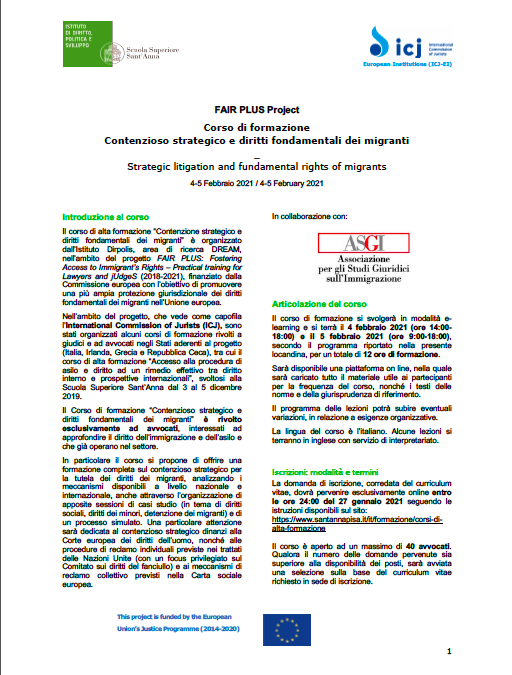
Today, the ICJ in collaboration with Scuola Universitaria Sant’Anna is holding an online training seminar on strategic litigation and fundamental rights of migrants.
The two-day training (4-5 February 2021) brings together 40 lawyers working in the field of migration and refugee law in Italy.
Experts from ASGI (Association for Juridical Studies on Immigration), ICJ and Scuola Universitaria Sant’Anna will provide an overview and analysis of redress mechanisms available at national and international level to migrants and their representatives. The training pays particular attention to strategic litigation before the European Court of Human Rights, the individual complaint procedures under the UN treaties with a focus on the Committee on the Rights of the Child, and to the collective complaint mechanism under the European Social Charter. The training will also cover social rights, children’s rights, immigration detention, and a moot court exercise.
See the full agenda here.
This training is a part of FAIR PLUS project. It was carried out with the financial support of the European Union’s Justice programme (2016-2020). Its contents represents the views of ICJ only and is its sole responsibility. The European Commission does not accept any responsibility for use that may be made of the information it contains.
Feb 4, 2021 | Advocacy, News
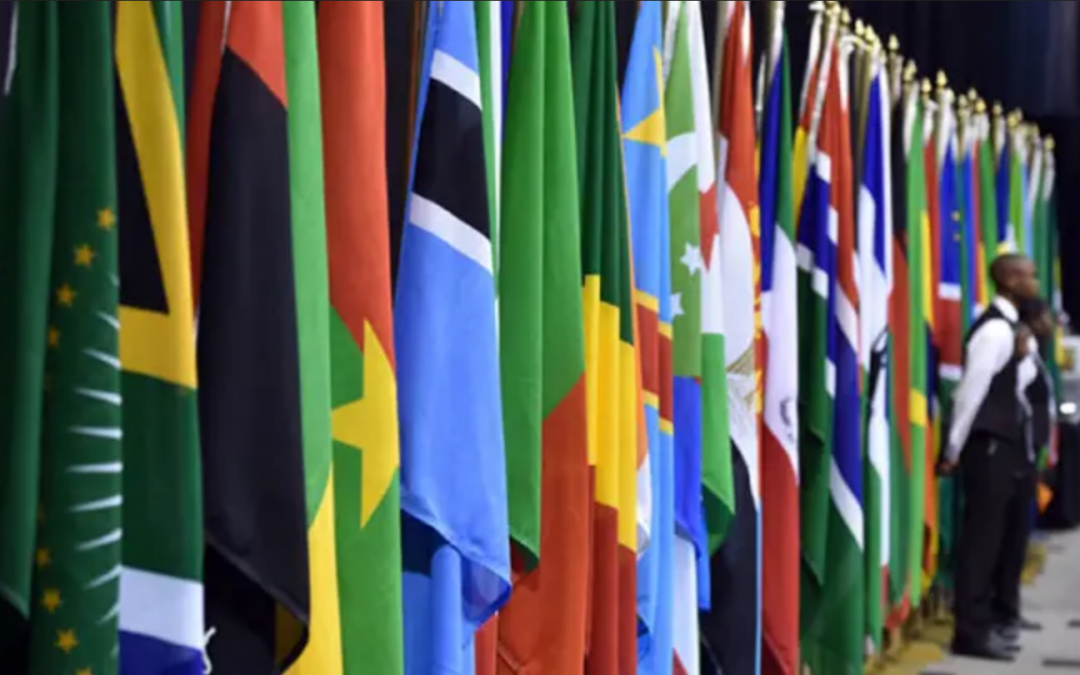
The ICJ, in a letter to the Chairperson of the African Union, recommended that the African Union acknowledge that COVID-19 vaccines are a “public good” and all States must ensure access to these vaccines in order to realize the human rights of their inhabitants.
The African Charter on Human and People’s Rights, to which most AU Member States are Party, provides that “every individual shall have the right to enjoy the best attainable state of physical and mental health” (Art 16(1)). The Charter also places an obligation on the States Parties to take all “necessary measures to protect the health of their people and to ensure that they receive medical attention when they are sick” (Art 16(2)).
This obligation must be understood consistently with the equivalent Article 12 of the International Covenant on Economic, Cultural and Social Rights (ICESCR), to which most AU Member States are also Party. That provision protects the right to the “highest attainable standard of physical and mental health”, and requires States to take all necessary measures to realize this right including to ensure “the prevention, treatment and control of epidemic, endemic, occupational and other diseases” (Art 12(1)(c)). Vaccines, for some such diseases including COVID-19, are necessarily an integral part of prevention, treatment and control.
“It is essential for the process of vaccine procurement and allocation to be in line with international human rights standards. The African continent and its people cannot afford to be left behind, and the best way to ensure that does not happen is to move forward and prioritize each individuals right to health and corresponding human rights.” –
Justice Sanji Monageng, ICJ Commissioner, Botswana
Therefore, under these treaties and other internationally binding human rights law, it is clear access to certain vaccines is necessary to fulfill a human right, must not be seen as a privilege. Vaccines are a public good and should be treated as such by States. This understanding was affirmed by the UN Committee on Economic, Social and Cultural Rights (CESCR) in December in a statement on universal and equitable access to vaccines. CESCR stressed that: “every person has a right to have access to a vaccine for COVID-19 that is safe, effective and based on the application of the best scientific developments”. It further implored States to “give maximum priority to the provision of vaccines for COVID-19 to all persons”.
Recommendations of the International Commission of Jurists
The AU will be expected by the constituents of its Members to fulfil its proper leadership function in terms its Constitutive Act an ensure the promotion and protection of human rights in Africa. To this end, the ICJ calls upon the AU to adopt resolutions:
- Calling on all member States to ensure that their COVID-19 responses, including vaccine acquisition and distribution, comply with international human rights law and standards including those particularly relating to the rights to health and to duty ensure this right is realized through international cooperation.
- Calling on all member States to endorse and fully participate in the WHO’s COVID-19 Technology Access Pool.
- Calling on all member States to openly support the approval and implementation of a waiver of intellectual property rights in terms of the TRIPS agreement in order to ensure equitable and affordable access of COVID-19 vaccines and treatment for all.
- Calling on all member States to urgently publish public, comprehensive vaccine rollout plans and transparently provide clear and full health-related information to their populations.
- Calling on all participants in COVAX to endorse and fully participate in the WHO’s COVID-19 Technology Access Pool.
- Calling on the WTO to respond expeditiously and favourably to the proposal communicated by India and South Africa for waiver of IP protection for vaccines.
To read the full submission, click here.
Contact
Kaajal Ramjathan-Keogh, ICJ Africa Director Kaajal.Keogh(a)icj.org +27 84 5148039
Tanveer Jeewa, Media and Legal Consultant Tanveer.Jeewa(a)icj.org