May 26, 2017 | News
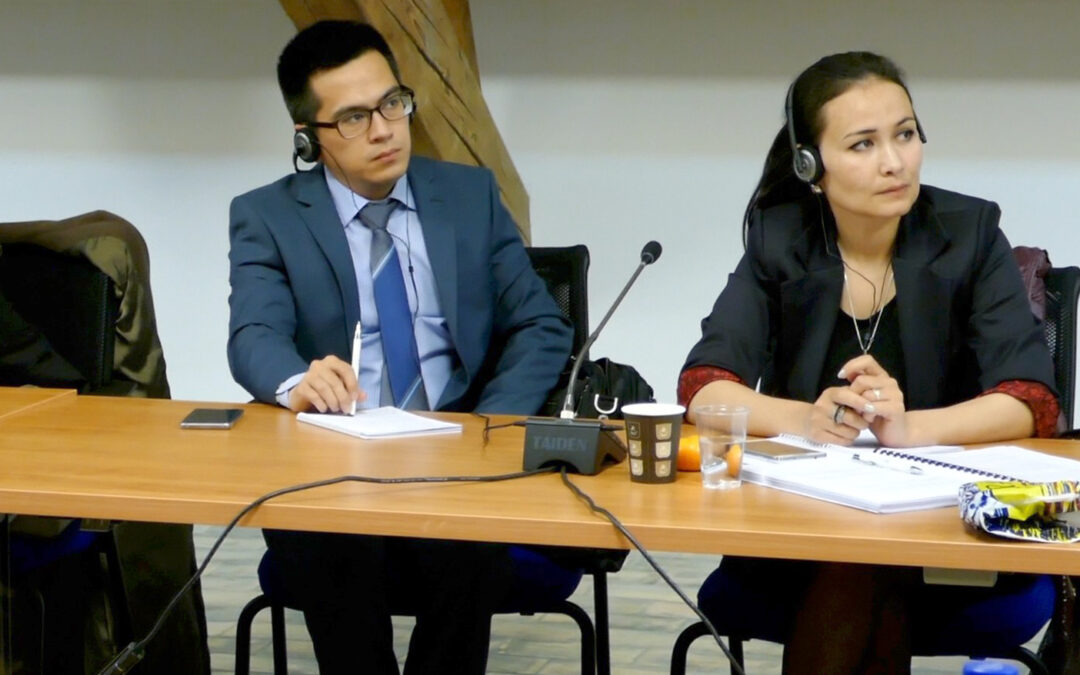
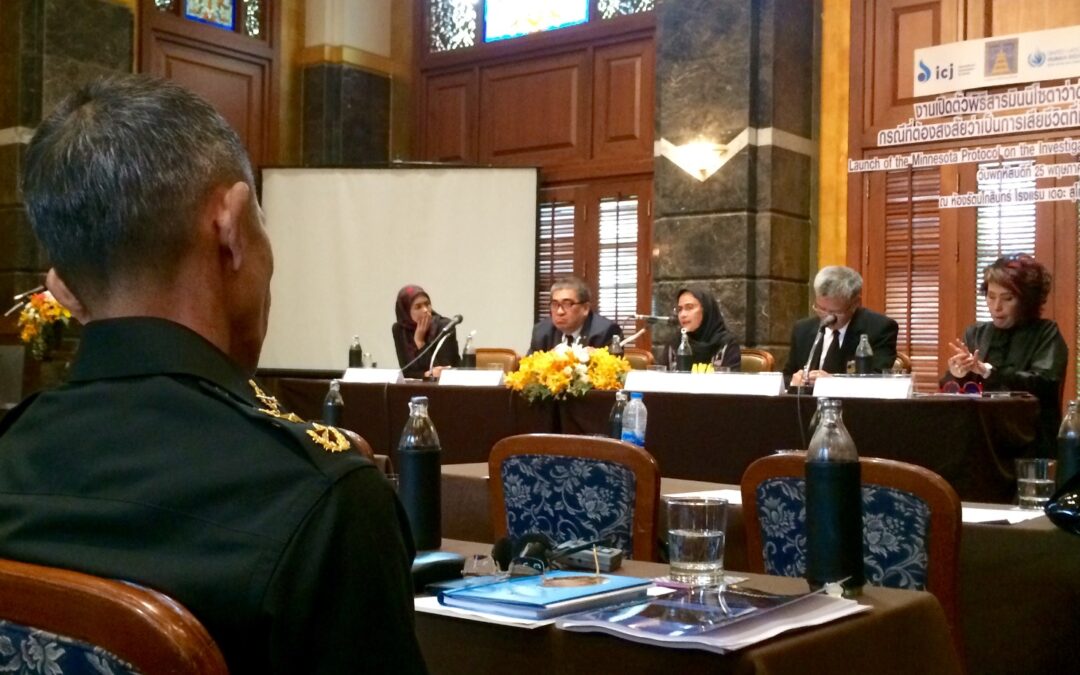
The ICJ has launched the revised Minnesota Protocol on the Investigation of Potentially Unlawful Death (2016) in Thailand, together with the Thai Ministry of Justice, the Office of the High Commissioner for Human Rights and the German Embassy in Bangkok.
The launch on Thursday coincided with a parallel launch of the revised Minnesota Protocol by the Office of the High Commissioner for Human Rights in Geneva.
The Minnesota Protocol is a companion document to the UN Principles on the Effective Prevention and Investigation of Extra-legal, Arbitrary and Summary Executions (1989), and sets a common standard of performance in investigating potentially unlawful death and a shared set of principles and guidelines for States, as well as for institutions and individuals who play a role in death investigations.
The launch was attended by representatives of the Ministry of Justice, Ministry of Foreign Affairs, the Royal Thai Police, the Office of the Attorney General, the Ministry of Defence, and the National Human Rights Commission of Thailand.
Kingsley Abbott, ICJ Senior International Legal Adviser for Southeast Asia and member of the Forensics and Legal Working Groups which assisted with the revision the Minnesota Protocol, opened the event for the ICJ by commending Thailand for hosting the first national launch of the revised Minnesota Protocol.
“Investigations play a key role in accountability by upholding the right to life which is guaranteed by Article 6 of the International Covenant on Civil and Political Rights, to which Thailand is a State Party,” said Abbott. “All over the world we witness impunity in cases of unlawful death because either investigations do not take place or are inadequate and non-compliant with international law and standards.”
“The Minnesota Protocol makes it clear that investigations must be prompt, effective and thorough, as well as independent, impartial and transparent, and we expect that the revised Minnesota Protocol will help Thailand and other States to meet that obligation,” added Abbott. “The ICJ wishes to take this opportunity to reaffirm our long-standing commitment to the Thai authorities to assist them in efforts to implement Thailand’s international human rights obligations.”
The other speakers at the launch were:
- Ms Pitikarn Sitthidech, Director General, Rights and Liberties Protection Department, Ministry of Justice
- Ms Katia Chirizzi, Deputy Head, Office of the High Commissioner for Human Rights (OHCHR), Regional Office for Southeast Asia
- Prof. Stuart Casey-Maslen, Project Manager of the revision of the Minnesota Protocol, University of Pretoria
- Dr Pornthip Rojanasunan, Adviser, Central Institute for Forensic Science (CIFC) and member of the Expert Advisory Panel of the revision of the Minnesota Protocol
- Ms Angkhana Neelapaijit, Commissioner, National Human Rights Commission of Thailand and Victim Representative
- Mr Kittinan Thatpramuk, Deputy Director General, Department of Investigation, Office of the Attorney General
- Pol.Lt.Col. Payao Thongsen, Commander, the Special Criminal Cases Office 1, Department of Special Investigation (DSI)
Contact
Kingsley Abbott, ICJ Senior International Legal Adviser for Southeast Asia, t: +66 94 470 1345; e: kingsley.abbott(a)icj.org
Universal-Minnesota Protocol-Advocacy-2017-ENG (PDF, English)
Universal-Minnesota-Protocol-Advocacy-2017-THA (PDF, Thai)
Universal-Minnesota Protocol-Advocacy-2017-BUR (PDF, Burmese)
May 25, 2017 | News, Op-eds
An opinion editorial by Daniel Aguirre, ICJ Legal Adviser in Myanmar.
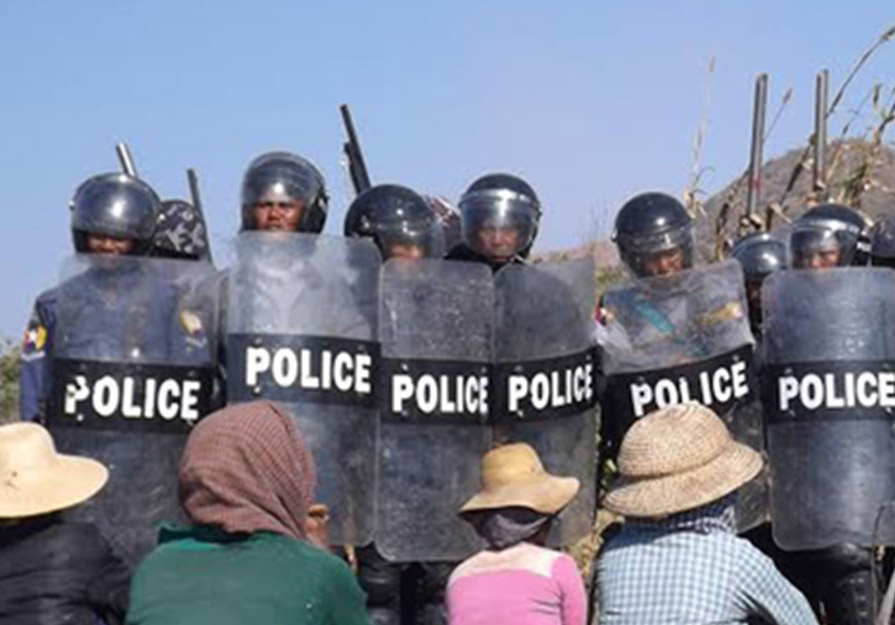
Burma’s 2016 Investment Law and the implementing Investment Rules issued in April 2017 create space for the government and civil society to facilitate responsible investment and exclude investors that have track records of environmental destruction and human rights abuses.
This means that affected individuals and communities must now test Burma’s commitment to the rule of law.
There are new opportunities for civil society to use law to hold them accountable. In this regard, both international law and Burma’s constitution guarantee access to justice for rights abuses.
The Investment Rules instruct the Myanmar Investment Commission (MIC) to consider whether investors have demonstrated a commitment to responsible investment. In considering the good character and reputation of the investor, the MIC may study whether the investor or any associate with an interest in the investment broke the law in Burma or any other jurisdiction.
The rules explicitly mention environmental, labor, tax, anti-bribery and corruption or human rights law.
What this means is that if an investor is determined to have committed a crime, has violated environmental protection standards or was involved with human rights abuses, the MIC should not grant it a permit.
If such a company applies for an investment permit, civil society should bring its record to the attention of the MIC and advocate for the rejection of a permit.
Successive governments in Burma have focused on increased investment to develop the country and improve its people’s standard of living.
At the same time, human rights and environment proponents from civil society have opposed many investment projects, citing the impact on the environment and human rights of local communities.
They complain that land rights are not adequately protected, that environmental impact assessments are not implemented and that they lack access to justice for corporate human rights abuses.
There are challenges to using the law to protect human rights in Burma.
Disputes related to business activity are often considered sensitive political matters in which the courts are unable or unwilling to intervene.
They are reluctant to review crucial decisions of administrative bodies or to hold rights abusers accountable.
But community activists, human rights defenders and lawyers have increased opportunities to pressure the courts to apply the law and should do so.
Lawyers have an important role in protecting human rights by representing local communities.
Courts must become a venue to challenge administrative decisions that allow for irresponsible investment that does not comply with national law, and where appropriate, obtain remedies and reparations for victims of human rights violations.
The Investment Law and its rules, which govern both local and foreign investment except within special economic zones, provide legal guarantees for investors to access information and protections against expropriation including compensation and access to due process if changes in regulation affect their business.
Investors can also access long-term rights to use land.
Civil society should help to ensure that only responsible investors benefit from these protections.
According to the law, the MIC is the gatekeeper that issues permits and endorsements for many would-be national and international investments likely to cause a large impact on the environment and local community.
In order to ensure that the protective aspects of the law are effective, courts must have some power of review, at least to ensure that administrative bodies, such as the MIC, are acting reasonably and in accordance with the law, while respecting and protecting human rights.
If the MIC grants permits for companies that do not meet the requirements outlined in the Investment Rules, their decisions must be subject to review by the judiciary.
Burma’s courts have the authority to review administrative decisions, particularly through the application of constitutional writs.
Lawyers can use the writs of mandamus and certiorari to secure the performance of public duties and quash an illegal order already passed by public bodies such as the MIC.
This would help ensure the MIC uses its mandate to prevent irresponsible investment.
Likewise, investors that fail to respect human rights or unlawfully cause damage to the environment must be held accountable; but there are few options to do so in Burma.
Criminal prosecutions against companies, actions imposing administrative sanctions, and civil suits face a variety of procedural hurdles, particularly if involving joint ventures with state run enterprises.
For example, a negligence civil suit brought by villagers against the Heinda tin mine in Dawei District was unsuccessful because the 1909 Limitations Act demands complaints to be brought within one year of damage.
Section 80 of the Civil Procedure Code requires prior notice and the names of plaintiffs to be given to the government two months before filing a suit against the government and allows small procedural defects to preclude a claim.
Lawyers are sometimes unfamiliar with these procedures and communities are reluctant to put their names to such cases fearing reprisals.
Clearly there are significant challenges to ensuring that investment in Burma does not adversely affect human rights.
To overcome these, civil society and lawyers must engage the administration—the MIC—to ensure only responsible investments is permitted and start to use the judiciary to review its actions.
Likewise, cases must continue to be taken against investors that abuse human rights and harm the environment.
Powerful investors must be constrained by the confines of the law, including human rights law.
Unless civil society and lawyers can use the legal framework to address these concerns, Burma’s judicial system is unlikely to develop; lawyers will not gain valuable experience and the public will remain distrustful.
The process is long and arduous but necessary to protect human rights and the environment from irresponsible investment.

May 25, 2017 | News, Training modules
Today, the ICJ and the Immigrant Council of Ireland are holding a training for lawyers on the rights of migrant children and on accessing international human rights mechanisms in Dublin.
The training aims to support the strategic use of national and international mechanisms to foster migrant children’s access to justice.
The training will take place over the course of two days: 25-26 May 2017.
The training will focus on accessing the international mechanisms in order to protect and promote the rights of migrant children, the child’s procedural rights including the right to be heard, the right to family life, access to housing and education and immigration detention.
A practical case analysis will be part of the training. Trainers include Róisín Pillay, Director of ICJ’s Europe Programme, Dr. Patricia Brazil, BL and Joris Sprakel, Hague University.
The training is based on draft training materials prepared by the ICJ (to be published in the second half of 2017) and the ICJ Practitioners Guide no. 6: Migration and International Human Rights Law.
It is organized as part of the FAIR project co-funded by the Rights, Equality and Citizenship Programme of the European Union and OSIFE.
As part of the project, this training follows the trainings on the rights of migrant children in Spain, Italy, Bulgaria, Malta and Greece. Training in Germany and Strategic litigation Retreat will follow later this year.
Download the agenda here: Ireland-FAIRtraining-Event-agenda-2017-ENG
May 11, 2017 | Advocacy
Today the ICJ presented its views on counter-terrorism, security and human rights in Europe, to the Committee on Civil Liberties, Justice and Home Affairs (LIBE) of the European Parliament, as part of a hearing on the EU’s Comprehensive Assessment of EU Security Policy.
The exchange of views, Chaired by the Chair of the LIBE Committee, Claude Moraes, included contributions by Commissioner Julian King of the European Commission, as well as representatives of national parliaments, civil society organisations and MEPs.
The ICJ presentation by Róisín Pillay (photo), Director of the ICJ Europe Programme, emphasised the need to make human rights and the rule of law central to EU security policy, to the development of EU legislation and its implementation at national level.”
The full text of the presentation can be downloaded here: Europe-Presentation LIBE-Advocacy-2017-ENG (in PDF)
More on LIBE