Mar 21, 2014 | Advocacy, Non-legal submissions
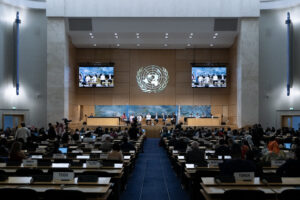
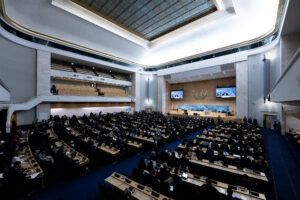
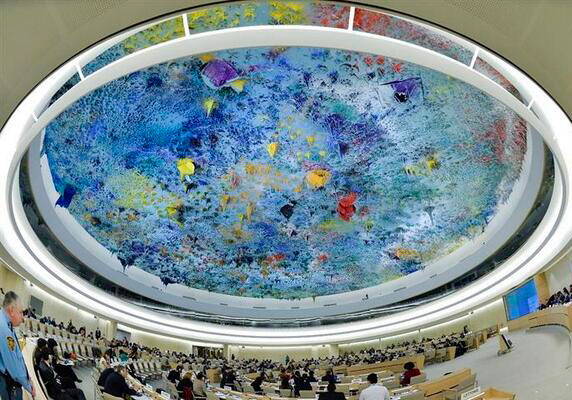
The ICJ spoke at the UN Human Rights Council on the lack of progress in Nepal on ending impunity.The oral statement was delivered during the general debate on the Universal Periodic Review (UPR).
Nepal has failed to take concrete action to implement key UPR recommendations, including those crucial to implementing the right to an effective remedy and reparation, creating effective mechanisms for transitional justice and ending impunity.
The Government continues to try to force through a Truth and Reconciliation Commission that is not human rights complicant and has already been ruled invalid by the Supreme Court of Nepal.
Nepal has also failed to take meaningful measures to investigate human rights violations and abuses that arose during the armed conflict.
The ICJ called on Nepal to take specific measures towards ending impunity.
The full written statement can be downloaded, in PDF format: Advocacy-UN-HRC25-Nepal-OralStatement-2103214
The representative of Nepal exercised the right of reply in response to ICJ’s oral statement.
Video of the oral statement, and Nepal’s statement in reply, via the official UN webcast.
Mar 20, 2014 | News
The ICJ today called on the Ukrainian authorities to discontinue criminal prosecutions and dismissals of Constitutional Court judges.
These measures, which came at a time of crisis in the country, were taken due to disagreement with a ruling made by the judges in 2010.
The measures interfere with the independence of the judiciary, and are inconsistent with the principle of separation of powers and respect for the rule of law.
Wilder Tayler, ICJ Secretary General underscored that “In times of crisis the stability and continuity of the judiciary is essential. Judges should not be subject to arbitrary removal, individually or collectively, by the executive, legislative or judicial branches”.
On 24 February 2014, the Verkhovna Rada, the Parliament of Ukraine, adopted a resolution according to which twelve of the eighteen judges of the Constitutional Court were to be dismissed by the institutions which appointed them.
Five of the judges were dismissed by the Rada itself. The Rada recommended that the Acting President and the Congress of Judges consider dismissing the other seven judges.
On 13 March, the Parliament appointed four new judges of the Constitutional Court.
The grounds for dismissals were breaching the oath of a judge.
Moreover, in accordance with the resolution, the Prosecutor General was assigned by the Parliament to initiate criminal proceedings against those judges who were “guilty of adopting the decision of the Constitutional Court of Ukraine of 30 September 2010 No 20-rp/2010”, which overturned the adoption of the Constitution of 2004.
The Parliament’s resolution against the justices of the Constitutional Court followed the Ukrainian political crisis, which reached its peak on 22 February 2014 after three months of protests and violent clashes, and resulted in a change of government.
“The ICJ is deeply concerned at the dismissal and criminal prosecution of Ukrainian Constitutional Court judges on grounds of their interpretation of the law in judicial decisions” said Wilder Tayler.
“These measures are inconsistent with respect for the independence of the judiciary and the rule of law. It is precisely at moments of transition or crisis, such as Ukraine is now experiencing, that upholding the rule of law and the separation of powers is most critical. Any disciplinary action against judges must respect the independence of the judiciary, be based on established standards of judicial conduct and be taken only following a fair procedure in which the rights of the judge concerned, including to a defence, are respected.”
The ICJ stressed that action taken against the judges of the Constitutional Court is inconsistent with the duties of all branches of the government of Ukraine to respect and protect the independence of the judiciary.
This duty, a fundamental pillar of the rule of law and a fundamental aspect of the principle of separation of powers of the three branches of government, is enshrined in both the European Convention on Human Rights and the International Covenant on Civil and Political Rights, international human rights treaties to which the State is a party.
Furthermore, Article 1 of the UN Basic Principles on the Independence of the Judiciary clarifies that all governmental and other institutions must respect and observe the independence of the judiciary.
This requires that judges have jurisdiction over issues of a judicial nature and that judicial decisions by courts must not be subject to revision (Principle 4).
Judges must have guaranteed tenure until a mandatory retirement age or the expiry of their term of office (Principle 12) and can be subject to suspension or removal only following fair procedures (Principle 17) and only for reasons of incapacity or behaviour that renders them unfit to discharge their duties (Principle 18).
The European Court of Human Rights found, in the recent case of Volkov v Ukraine, that dismissal of a judge of the Ukraine Supreme Court through a parliamentary procedure violated the right to a fair hearing under Article 6.1 of the European Convention on Human Rights, since there had been insufficient examination of the merits of the case, and it had not been heard by a tribunal established by law.
Contacts:
Róisin Pillay, Director, Europe Programme, t + 32 273 48 46, roisin.pillay(a)icj.org
Temur Shakirov, Legal Adviser, Europe Programme, t + 41 22 979 38 32, temur.shakirov(a)icj.org
Ukraine-dismissal and criminal prosecution of judges-news-2014 (Statement, PDF)
Mar 18, 2014 | News
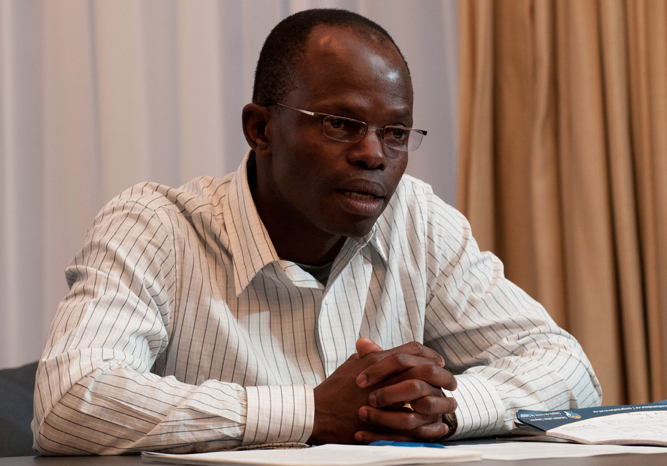
The ICJ today condemned the arrest and detention on 17 March of prominent human rights lawyer, Thulani Maseko and Nation Magazine editor, Bheki Makhubu.
The ICJ is concerned that Thulani Maseko is being subject to persecution for the legitimate exercise of his professional functions as a lawyer, and that both men appear to be detained for exercising their right to freedom of expression.
The men were arrested after Chief Justice Ramodibedi had issued a warrant for their arrest on charges of “scandalizing the judiciary” and contempt of court.
The charges arise from articles allegedly written by Thulani Maseko and Bheki Makhubu in February and March 2014, in which they questioned circumstances surrounding the arrest of government vehicle inspector, Vincent Gwebu.
The vehicle inspector had been arrested and charged with contempt of court after he had arrested the driver of a High Court Judge.
Thulani Maseko and Makhubu, were jointly charged on 18 March 2014 and remanded to appear on 24 March for a bail hearing.
Their lawyer was not allowed to appear on their behalf, in contravention of international and African regional law and standards guaranteeing the right to be represented by a lawyer in legal proceedings.
The ICJ is also concerned that the accused did not appear in open court, but instead in the Chief Justice’s chamber and were not allowed to apply immediately for bail, also in contravention of international and African regional standards.
The ICJ calls upon the Swazi immediately to release the two men. For as long as they are in detention they must be given access to their lawyers.
For further information contact:
Arnold Tsunga, Arnold.tsunga(a)icj.org, Director, ICJ Africa Regional Programme
Or
Martin Okumu-Masiga, Martin.okumu-masiga(a)icj.org, Deputy Director.
Mar 18, 2014 | Advocacy, Non-legal submissions
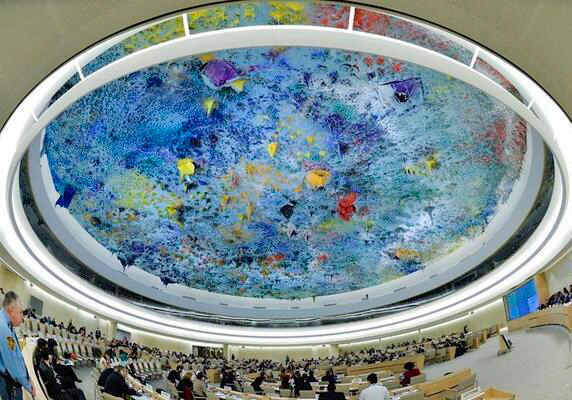
The ICJ made an oral statement to the UN Human Rights Council, during the session with the Commission of Inquiry on Syria, concerning failures to protect the civilian population and the need for justice and calling for referral of the situation to the International Criminal Court.The ICJ underscored that for more than three years, the international community has failed to respond in a meaningful or effective manner to serious violations of international human rights and humanitarian law and other human rights abuses committed in the context of the Syrian conflict, to ensure that perpetrators on all sides are held accountable, and to implement concrete measures towards justice for victims.
The statement called on the Human Rights Council to request the Security Council to take effective measures, in accordance with the UN Charter, to protect the civilian population, bring an end to the conflict, and restore and maintain peace and security in the region.
The ICJ said that states, including the member States of this Council, should also act to provide urgent humanitarian relief to refugees, IDPs, and those trapped in besieged areas.
The statement emphasised that as the armed conflict continues to escalate, government forces and opposition groups have both been responsible for war crimes, crimes against humanity and other crimes under international law, including murder, hostage-taking, torture and other ill-treatment (including rape and other sexual violence), enforced disappearance, recruiting and using children in the hostilities, and disproportionate and indiscriminate attacks against civilians and civilian objects.
To address the pervasive and structural culture of impunity, the ICJ called on the Council to request the Security Council to refer the situation in Syria to the International Criminal Court. States, individually and collectively, must also comply with their obligations under international law to prevent war crimes and crimes against humanity and to exercise all grounds of jurisdiction at their disposal to investigate and prosecute anyone suspected of responsibility for such crimes.
The full statement, in PDF: Advocacy-UN-HRC25-Syria-OralStatement-032014
Mar 17, 2014 | Advocacy, Non-legal submissions
The ICJ made an oral statement at the UN Human Rights Council, on the need for fundamental reform of the legal system in Myanmar.
The oral statement was delivered during an interactive dialogue with the Special Rapporteur on human rights in Myanmar.
While noting some progress on legal reform to establish the rule of law during Myanmar’s economic and political transition, the ICJ noted that reforms are fragile and legal obstacles continue to block improvements to the extremely poor state of the rule of law and respect for human rights.
The ICJ considers that Myanmar’s judiciary is not yet independent. State authorities continue to exert improper influence on politically sensitive cases.
The ICJ was therefore deeply disappointed to hear the Representative of Myanmar state during the Council session that the Government rejected as “intrusive and prescriptive, infringing upon the national sovereignty” the Special Rapporteur’s basic recommendation that “the Government … Initiate fundamental reforms to establish a judiciary that is impartial and independent, including from the direct control of the Government and the military”.
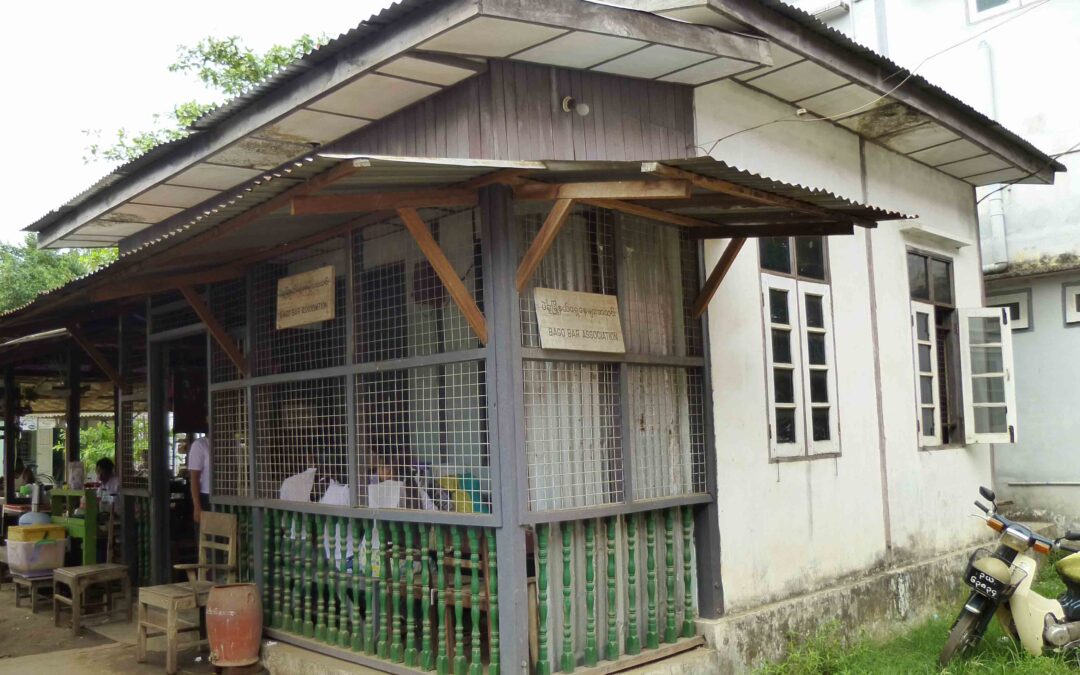
Systemic problems affect the independence of lawyers, including the poor state of legal education and undue restrictions on licensing. Lawyers in Myanmar lack an independent Bar Council.
The ICJ stressed the need for Myanmar to ratify and implement all core human rights treaties, to cooperate with international human rights mechanisms, and to agree to the establishment of an OHCHR office in the country. At the same time, ICJ emphasised the continued need for a robust mandate for the UN Special Rapporteur on Myanmar.
The full statement may be downloaded in PDF: Advocacy-UN-HRC25-Myanmar-OralStatement-032014
The report of the Special Rapporteur is available here in Word format: SR Myanmar Report March 2014
For further information, please see the recent ICJ report Right to Counsel: The Independence of Lawyers in Myanmar (click to download PDF).