
EU: Towards ending detention of migrant children
On 23-24 January, the ICJ will hold two events in Brussels on the impact of immigration detention on children and on alternatives to detention for migrant children.

On 23-24 January, the ICJ will hold two events in Brussels on the impact of immigration detention on children and on alternatives to detention for migrant children.
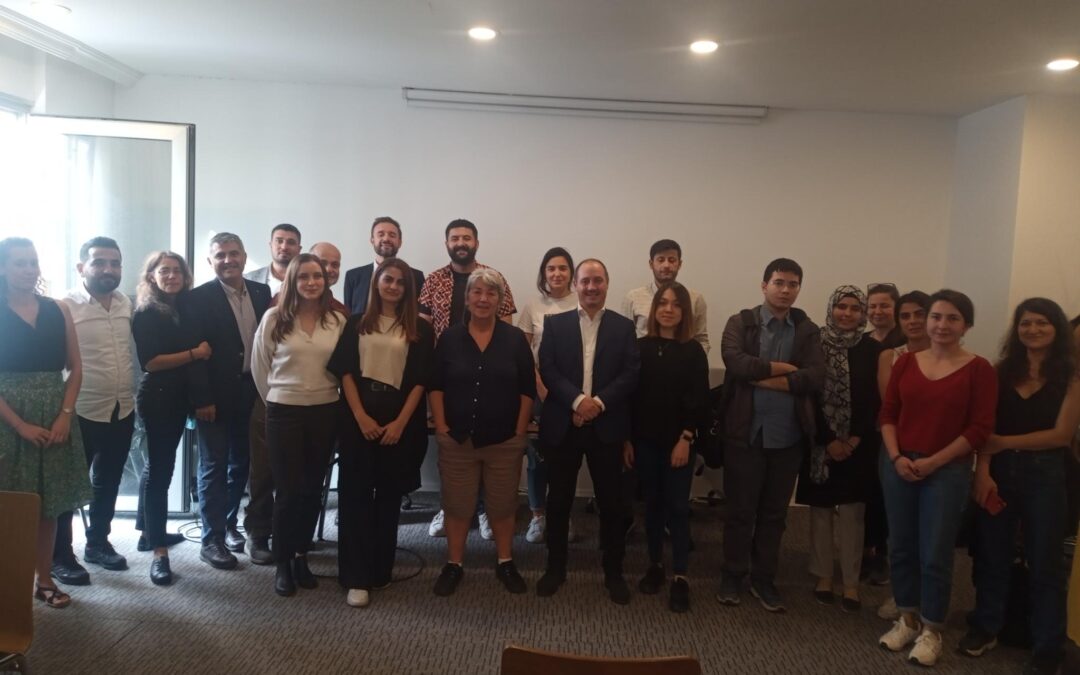
The ICJ, together with KAGED and the Human Rights Joint Platform has held a series of four trainings for lawyers and civil society in Türkiye to empower them in using human rights law to protect the environment.
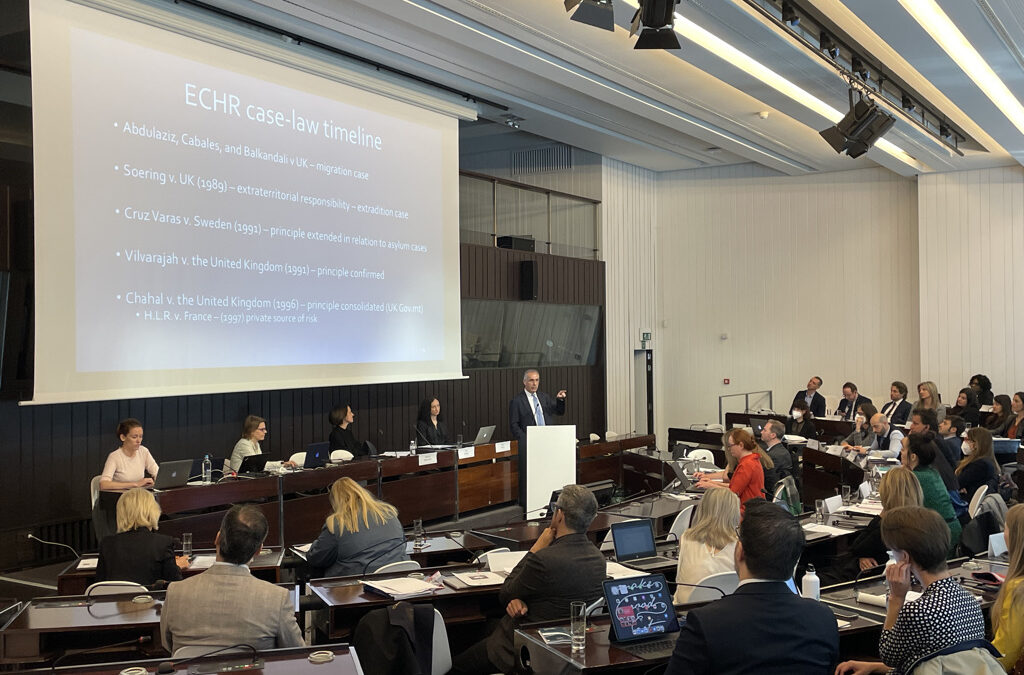
During the International Roundtable on the Rights of Migrants and Refugees in the European Union, held by the International Commission of Jurists (ICJ) and its partner organizations Immigration Council of Ireland, Scuola Superiore Sant’Anna, the Greek Council for Refugees and Forum for Human Rights, judges, lawyers, experts and NGO representatives from Italy, Greece, the Czech Republic and Ireland came together to discuss the challenges involved in safeguarding the rights of migrants and refugees in the EU.

Immigration detention of children is unlawful according to international law and States are obliged to implement alternatives to detention. One of the best solutions for unaccompanied children is their placement into mainstream child protection systems, which already works well in some countries in the EU, an ICJ webinar was told.
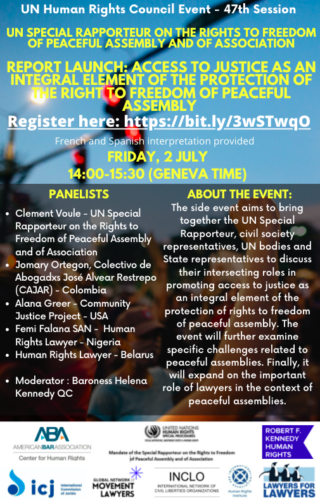
On Friday 2 July, the ICJ, alongside IBAHRI, OHCHR and other partners, organize an online event to launch the report of the UN Special Rapporteur on the rights to freedom of peaceful assembly and of association: “Access to justice as an integral element of the protection of the right to freedom of peaceful assembly”.
This side event aims to bring together the UN Special Rapporteur, civil society representatives, UN bodies and State representatives to discuss their intersecting roles in promoting access to justice as an integral element of the protection of rights to freedom of peaceful assembly. The event will further examine specific challenges related to access to justice in relation to peaceful assemblies. Finally, it will expand on the important role of lawyers in the context of peaceful assemblies.
The event will also examine how the mandate of the UN Special Rapporteur can address impunity for violations of the right to freedom of peaceful assembly; explore how the international human rights community can support the work of national legal networks to protect and promote the right to freedom of peaceful assembly; and, discuss practical measures necessary to follow up the reports recommendations.
Format: The side event will be held online with experts from civil society, state and UN bodies. Space will be provided for interactions with participants from the floor.
Date: 2 July 2021 – 47th UN Human Rights Council Session
Time: 14:00-15:30 Geneva, Switzerland
Language: English, French and Spanish Translation will be provided
Panelists:
Moderator: Baroness H. Kennedy QC
Register here.
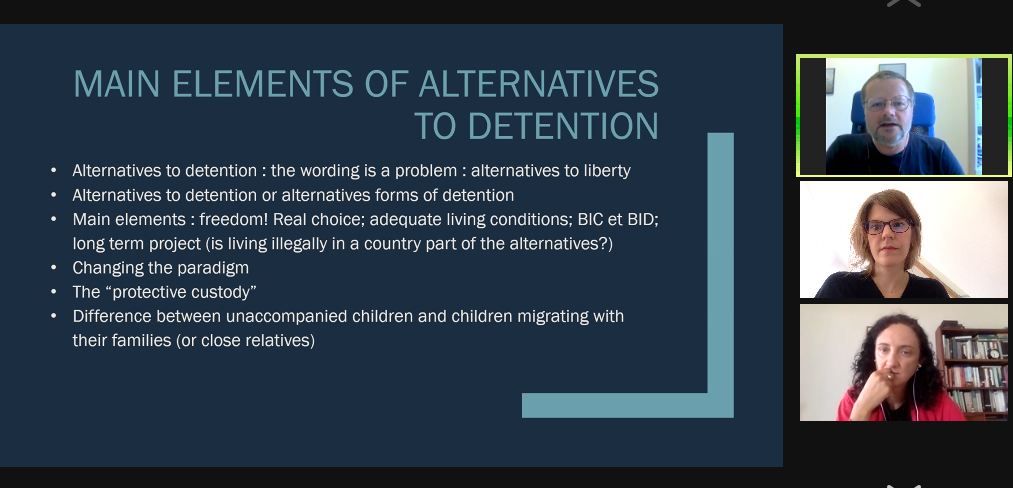
Children should never be detained in immigration context. Immigration detention of children is never in their best interests and is not justifiable, said experts during a transnational workshop on Alternatives to detention vs. alternative forms of detention of migrant children held by the International Commission of Jurists (ICJ) and partners on June 17 and 18.
“Instead of detaining children, case management should be used instead, and a community assistance and placement model should be used for families and children as an effective alternative to detention. Unaccompanied children should be placed within the mainstream care system,” Karolína Babická, legal adviser at the ICJ said.
During the workshop experts and practitioners from seven EU countries and international experts explored good and bad practices of alternatives to detention. In particular, the principle of the ‘best interests of the child’ was discussed as well as procedures for age assessment, and specific alternative arrangements for the care of children in migration, such as the return houses in Belgium, and regular reporting.
The group further explored ways to include unaccompanied migrant children in the mainstream child-care system rather than under the management of immigration authorities. The case-management and community placement model by the International Detention Coalition (IDC) was discussed in detail.
It was agreed that children must have access to procedural rights, including the right to be heard and to participate, access to information and to legal assistance and legal aid, access to interpretation, effective remedy and a guardian. Best interest of the child assessments as well as age assessment must be done through a rights-based approach, following child-friendly procedures and safeguards.
Any alternatives to detention applied by states should be monitored and regularly evaluated to ensure these do not constitute alternative forms of detention.
The workshop took place as part of the CADRE project and will be followed by second and third workshop as well as by on-line conferences and national trainings during the second year of duration of the project.
See the agenda here: Agenda CADRE Transnational workshop_17-18 June_final
 Joint Statement: Attacks on the Rule of Law, Judicial Independence and Access to Justice in Zambia
 HRC63: ICJ Raises Concern over Widespread and Systematic Arbitrary Detention in Egypt
 Myanmar: As armed conflict rages and military rule continues, critical measures can be taken towards eventual justice and accountability for victims of Enforced Disappearance
 HRC63: ICJ Raises Alarm over Repression in Tunisia and Arbitrary Detention in El Salvador