Jul 3, 2020 | News
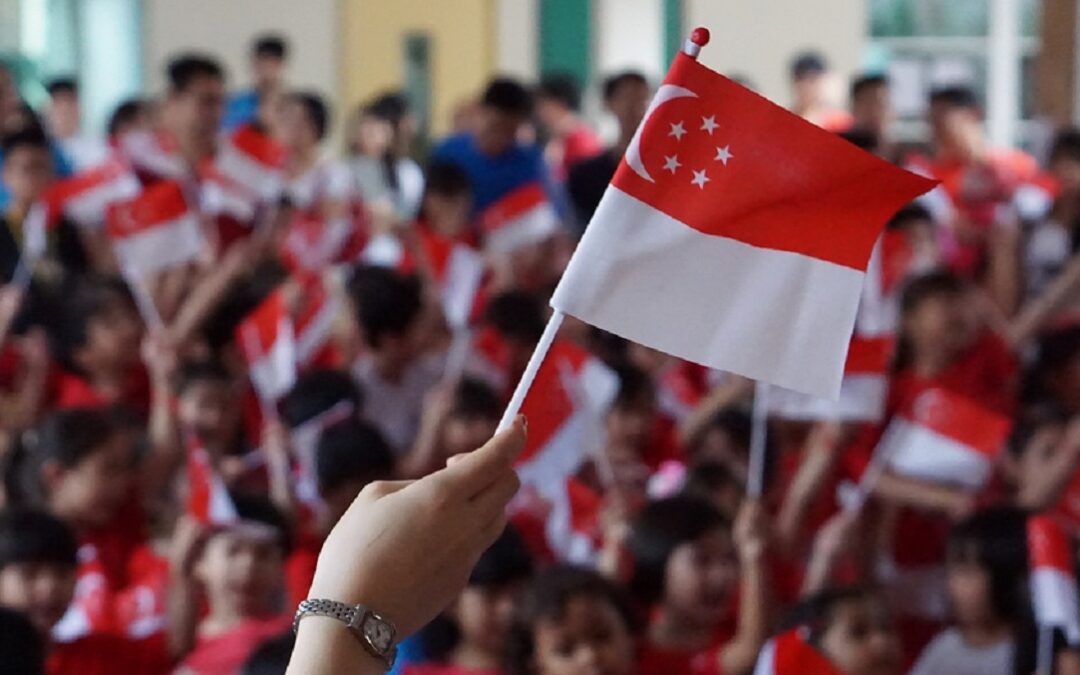
In the lead-up to general elections on 10 July, today, the ICJ, Asian Forum for Human Rights and Development (FORUM-ASIA) and CIVICUS: World Alliance for Citizen Participation (CIVICUS) urged all political parties and parliamentary candidates in Singapore to commit to respecting and protecting human rights and fundamental freedoms as part of their mandate.
The organizations noted the ongoing abuse of legal frameworks by the State to limit the rights to freedom of expression, information, association and peaceful assembly in Singapore. These included the use of civil defamation suits and criminal defamation charges; contempt of court provisions including under the Administration of Justice (Protection) Act; the Protection from Online Falsehoods and Manipulation Act; and the Public Order Act to penalize and harass individuals for mere exercise of their fundamental freedoms.
The organizations urged all political parties and parliamentary candidates to address concerns raised by these laws and ensure fundamental freedoms – including the rights to expression, information, association and peaceful assembly – remain at the forefront of the debate in Singapore.
The open letter is available here.
In a 2019 ICJ report on freedom of expression and information online across Southeast Asia, the ICJ highlighted how defamation provisions, the AJPA and POFMA had been wielded by the State to curtail free speech and access to information online by targeting critical dissent of the regime by human rights defenders, lawyers, independent media outlets and members of the political opposition. The report detailed problematic provisions in the laws and selected case studies detailing this trend.
Contact
Frederick Rawski, ICJ Asia and Pacific Regional Director, e: frederick.rawski(a)icj.org
See also
ICJ, ‘Dictating the Internet: Curtailing Free Expression, Opinion and Information Online in Southeast Asia’, December 2019

Jul 3, 2020 | Advocacy, News
The ICJ published a legal memorandum concluding that the Ministry of Transport and Communications (MOTC) Order to block access to specific websites is not compliant with international human rights law.
The legal memorandum also sets out various remedial options under Myanmar law to question the lawfulness of the Order.
The ICJ focused its human rights analysis on the rights to freedom of expression and access to information and the right to health, which includes access to health information. These rights are well established under general and customary international law. The right to health is guaranteed under the International Covenant on Economic, Social and Cultural Rights (ICESCR) and the Convention on the Rights of the Child, to which Myanmar is a party.
The MOTC, presumably invoking Section 77 of the Telecommunications Law, ordered telecommunication service providers in March 2020 to take down 2,147 websites found by it to have disseminated “fake news,” adult content, and child sexual abuse content. It is not clear if any of the information under sanction relates to COVID-19, although the pandemic was mentioned elsewhere in one mobile service provider’s press release. Immediately after the release of the MOTC Order, it was discovered that the ban included ethnic news media websites, such as Rakhine-based Development Media Group and Narinjara News, thereby prompting speculation as to the true reasons behind the ban.
The ICJ emphasized the following in the legal memorandum:
- Blocking access to specific websites engages a wide range of human rights concerns, including but not limited to the person’s right to freedom of expression and right of access to information protected under Article 19 of the International Covenant on Civil and Political Rights and customary international law. While lack of transparency about the State rationale and evidence was an obstacle to a full analysis, the permissible conditions that would justify sweeping limitations on this right do not appear to have been met.
- In the context of the COVID-19 pandemic, the MOTC Order also undermines the right to health of all persons in Myanmar. The right to health guaranteed under the ICESCR is reserved to all persons without discrimination and includes access to health information. The MOTC Order effectively hinders access to health information by blocking legitimate sources of information.
- To challenge the MOTC Order, the following domestic legal remedies are available: (i) filing a complaint with the Myanmar National Human Rights Commission; (ii) filing an application for a constitutional writ before the Union Supreme Court and/or (iii) filing a declaration suit under the Specific Relief Act.
Download
Myanmar-Memo-on-MOTC-Order-Legal-Memorandum-2020-ENG (PDF)
Contact
Jenny Domino, ICJ Associate Legal Adviser, e: jenny.domino(a)icj.org
Hnin Win Aung, ICJ Legal Adviser, e: hninwin.aung(a)icj.org
Related work
Publication: Myanmar’s ongoing Internet shutdown and hostilities threaten right to health during COVID-19
Statement: Government must lift online restrictions in conflict-affected areas to ensure access to information during COVID-19 pandemic
Report: Curtailing the Right to Freedom of Expression and Information in Myanmar
Publication: Four Immediate Reforms to Strengthen the Myanmar National Human Rights Commission
Publication: Strategic Litigation Handbook for Myanmar
Jul 1, 2020 | News
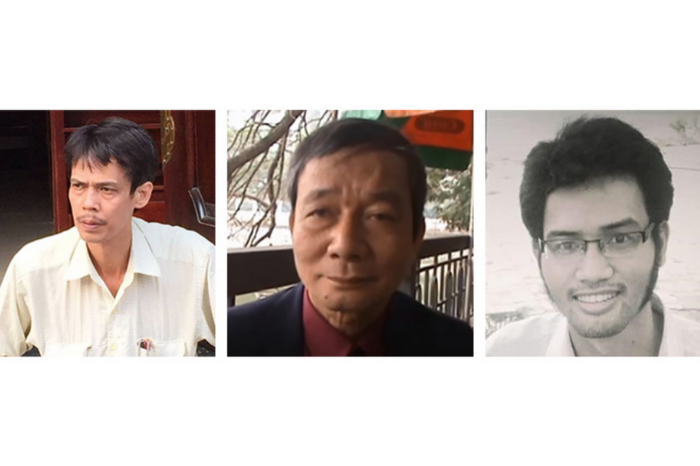
On 30 June, the ICJ and five other organizations sent open letters to the Prime Minister of Vietnam and the European Union (EU) calling for the immediate and unconditional release of human rights defenders, Dr. Phạm Chí Dũng, Nguyễn Tường Thụy and Lê Hữu Minh Tuấn.
The ICJ, Boat People SOS, Human Rights Watch, International Federation for Human Rights, VETO! Human Rights Defenders’ Network and Vietnam Committee on Human Rights in their address to the Prime Minister, urged the Vietnamese government to cease all harassment of other activists from the Independent Journalists Association of Vietnam (IJAVN).
In November 2019, Dr. Phạm Chí Dũng, founding member and Chairman of IJAVN, was arrested in Ho Chi Minh City for allegedly “making, storing, distributing or disseminating materials” that “oppose the State” in violation of article 117 of Vietnam’s Penal Code. He has since been held in incommunicado detention.
Following Phạm’s arrest, a number of persons were subjected to various forms of harassment up to and including arrest and prosecution in connection with their IJAVN membership. In May and June 2020, two IJAVN members, journalist Nguyễn Tường Thụy and law student Lê Hữu Minh Tuấn, were arrested in Hanoi and Quang Nam provinces on similar charges.
In their letters, the ICJ and other organizations raised concerns that Phạm had been targeted and arrested for his human rights advocacy. From 2013 till his arrest, Phạm wrote independently on key rights issues in Vietnam, including on freedom of expression, labour rights, detention of human rights defenders, and harassment of independent civil society. In July 2012, he was arbitrarily arrested under charges of “conducting propaganda against the State” and released in February 2013 after months in prison without trial. In 2014, he was prevented by Vietnamese authorities from travelling to Geneva to participate in a United Nations Human Rights Council side-event connected to the Universal Periodic Review of Vietnam, following which his passport was confiscated.
The organizations noted that the arrest and arbitrary detention of Phạm, Nguyễn Tường Thụy and Lê Hữu Minh Tuấn contravened article 19 of the International Covenant on Civil and Political Rights (ICCPR) which guarantees the right to freedom of expression, as they appeared to have been politically motivated to curtail the rights of the three individuals to freely express their opinions and share information relating to domestic affairs.
In a 2019 ICJ report on freedom of expression and information online across Southeast Asia, national security-related provisions in Vietnam’s Penal Code, including article 117, were shown to have often been abused to curtail free speech and access to information online.
The organizations further noted that the prolonged incommunicado detention of Phạm constituted a violation of the prohibition on torture and other ill-treatment, the right to liberty and the right to be treated with dignity under articles 7, 9 and 10 of the ICCPR.
They further called on Vietnam to protect and facilitate the work of human rights defenders in line with the UN Declaration on the Right and Responsibility of Individuals, Groups and Organs of Society to Promote and Protect Universally Recognized Human Rights and Fundamental Freedoms (Human Rights Defenders Declaration).
The letter to the Prime Minister of Vietnam by the ICJ, Human Rights Watch and VETO! Human Rights Defenders’ Network is available here.
The letter to the European Union by the ICJ, Boat People SOS, Human Rights Watch, International Federation for Human Rights, VETO! Human Rights Defenders’ Network and Vietnam Committee on Human Rights is available here.
Contact
Frederick Rawski, ICJ Asia and Pacific Regional Director, e: frederick.rawski(a)icj.org
See also
ICJ, ‘Dictating the Internet: Curtailing Free Expression, Opinion and Information Online in Southeast Asia’, December 2019
Jun 20, 2020 | News
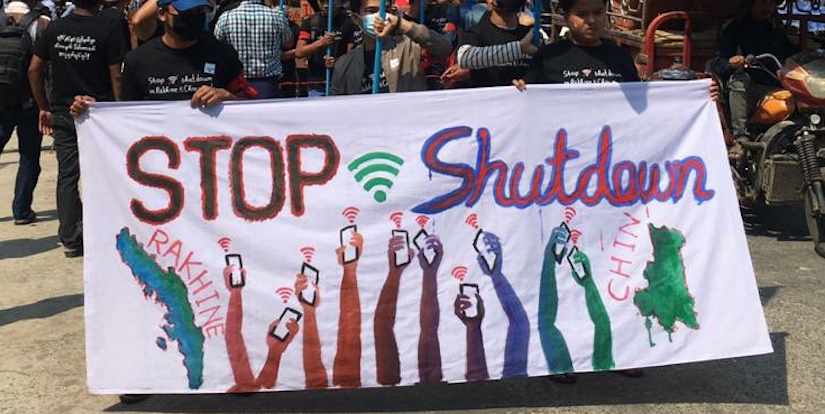
As the general internet shutdown in Rakhine and Chin states reaches one year, the ICJ repeated its call for the Myanmar Government to end mobile internet restrictions and temporarily halt hostilities with the Arakan Army.
The ICJ also called for an amendment of Section 77 of the Telecommunications Act, pursuant to which the government can order telecommunications providers to suspend internet services.
“The internet shutdown in Rakhine and Chin states stifles freedom of expression, prevents information-sharing, and exacerbates the plight of affected communities by impeding humanitarian and health access during a global pandemic,” said Frederick Rawski, ICJ Asia-Pacific Director. “Such a drastic measure is disproportionate and unnecessary. The government should focus on fighting COVID-19, instead of waging a battle against its own population.
The shutdown was first imposed on 21 June 2019 by the Ministry of Transport and Communications (MOTC), purportedly to facilitate government objectives in the armed conflict with the Arakan Army.
Section 77 of the Telecommunications Law authorizes the the MOTC to “direct the licensee to suspend a Telecommunications Service, to intercept, not to operate any specific form of communication, to obtain necessary information and communications, and to temporarily control the Telecommunications Service and Telecommunications Equipments” in the event of an “emergency situation” for the “public interest.” However, the law does not define the scope of an “emergency situation.” The ICJ previously described Section 77 to be vague, and warned of abuse by authorities in the absence of independent judicial oversight by civilian courts.
In April, as Myanmar encountered its initial cases of COVID-19, the ICJ highlighted how arbitrary and unnecessary online media restrictions not only violate a person’s right to freedom of expression and information, but also deny access by affected communities to essential health information. Access to health information is a component of the right to health protected under the International Covenant on Economic, Social and Cultural Rights (ICESCR), to which Myanmar is a party.
“The internet shutdown effectively deprives large swathes of the population in ethnic minority states of the benefits of government services, and information about its COVID-19 response,” said Frederick Rawski. “Such a blanket internet shutdown is not necessary for reasons of national security, and undermines the government’s own public health efforts.”
The ICJ recalled that the ICESCR requires States to observe the principle of non-discrimination in enacting measures to protect the right to health. The internet shutdown clearly has a disproportionately adverse impact on the human rights of members of ethnic minorities.
Despite appeals from UN officials, rights groups, ethnic armed organizations, and ambassadors to Myanmar, the Myanmar Government still refuses to hold a ceasefire throughout the country, including areas of Rakhine and Chin states where the Arakan Army operates. The conflict has resulted in deaths, many from unlawful killings, as well as serious physical and emotional injury, and mass displacement of persons.
Download
Myanmar-Internet-Shutdown-Press-Release-2020-BUR (PDF)
Contact
Frederick Rawski, ICJ Asia-Pacific Regional Director, e: Frederick.rawski(a)icj.org
Related work
Publication: Myanmar’s ongoing Internet shutdown and hostilities threaten right to health during COVID-19
Statement: Government must lift online restrictions in conflict-affected areas to ensure access to information during COVID-19 pandemic
Report: Curtailing the Right to Freedom of Expression and Information in Myanmar

Jun 16, 2020 | News
Today, the ICJ condemned the prosecution and conviction of journalists Maria Ressa and Reynaldo Santos, Jr. after the Manila Regional Trial Court found them guilty of cyber-libel for an article published on the news website Rappler. The ICJ called for the judgment to be reversed on appeal.
The ICJ also called on the Philippines to reform its laws to remove the possibility of criminal sanction for defamation and libel offenses, in line with its international legal obligations. The ICJ recalled that imprisonment for such offenses is never permissible.
“The guilty verdict is a new low for the Duterte administration, and adds to an atmosphere of intimidation that creates a chilling effect on online expression, especially for journalists seeking to hold the government to account,” said Frederick Rawski, ICJ Asia-Pacific Director.
“The conviction is not only a miscarriage of justice in this particular case; it also sets a terrible precedent for the use of criminal defamation laws to prosecute speech online in the Philippines and elsewhere in the region.”
Ressa and Santos were convicted pursuant to Section 4(c)(4) of the 2012 Cybercrime Prevention Act (CPA), and sentenced to imprisonment of up to six years and a fine of PhP 200,000 (approx. USD 4,000). Ressa is the executive editor of Rappler while Santos was the author of the article. Ressa’s conviction comes after years of legal harassment, forming part of a pattern of attacks upon the press by the Duterte government and placing the Philippines in violation of the right to freedom of expression under the International Covenant on Civil and Political Rights (ICCPR), to which the Philippines is a party.
The charges involved an article first published in May 2012 on the Rappler website, months before the CPA was enacted in September 2012. The article reported on businessman Wilfredo Keng’s alleged involvement in “human trafficking and drug smuggling.” Keng initiated the criminal proceedings against Ressa and Santos in October 2017, five years after the article was published.
However, the trial court considered the article to have been “republished” on 19 February 2014 when Rappler updated the article on its website to fix a typographical error. Further, since the CPA does not expressly mention the prescriptive period, the trial court held that Republic Act No. 3326 applies, which provides a 12-year prescriptive period for offenses punished under a ‘special law’ such as the CPA. In contrast, ordinary libel under the Revised Penal Code carries a one-year prescriptive period.
“Regardless of the merits of the case, criminal sanction involving imprisonment must never be imposed for defamation,” said Rawski.
“On top of this general consideration, the judgment even sets a dangerous precedent by expanding the prescriptive period and ‘publication’ requirement for the crime of libel, contradicting well-established protections against ex post facto laws and that any ambiguity in penal laws must be resolved in favor of the accused.”
The right to freedom of expression under Article 19 of the ICCPR extends to political discourse, commentary on public affairs and journalism. The UN Human Rights Committee, the supervisory body for the ICCPR, has called on States to abolish existing criminal defamation laws and reserve defamation for civil liability. The Committee concluded in 2012 that the Philippines’ criminalization of defamation, including under the CPA, breaches its obligations under the ICCPR. Article 15 of the ICCPR also prohibits the prosecution of persons for acts that were not considered a crime at the time of commission.
The Committee and the UN Human Rights Council have affirmed that these safeguards apply online as well as offline, as Article 19 protects expression regardless of frontiers and through any media of one’s choice. The UN Special Rapporteur on freedom of expression has consistently called for decriminalization of defamation as a criminal offence, which is inherently harsh and encourages self-censorship.
Contact
Emerlynne Gil, Senior International Legal Adviser, +662 619 8477 (ext. 206), emerlynne.gil(a)icj.org
Download
Philippines-Maria-Ressa-Press-Release-2020-ENG (PDF)
Related work
Report: Curtailing Free Expression, Opinion and Information Online in Southeast Asia
Philippines: order to major media outlet to stop airing violates freedom of expression and access to information
May 22, 2020 | News
In order to comply substantially with the International Court of Justice’s provisional measures Order in the case of The Gambia v. Myanmar, Myanmar should carry out legal reforms and cooperate with international accountability processes, said the ICJ today.
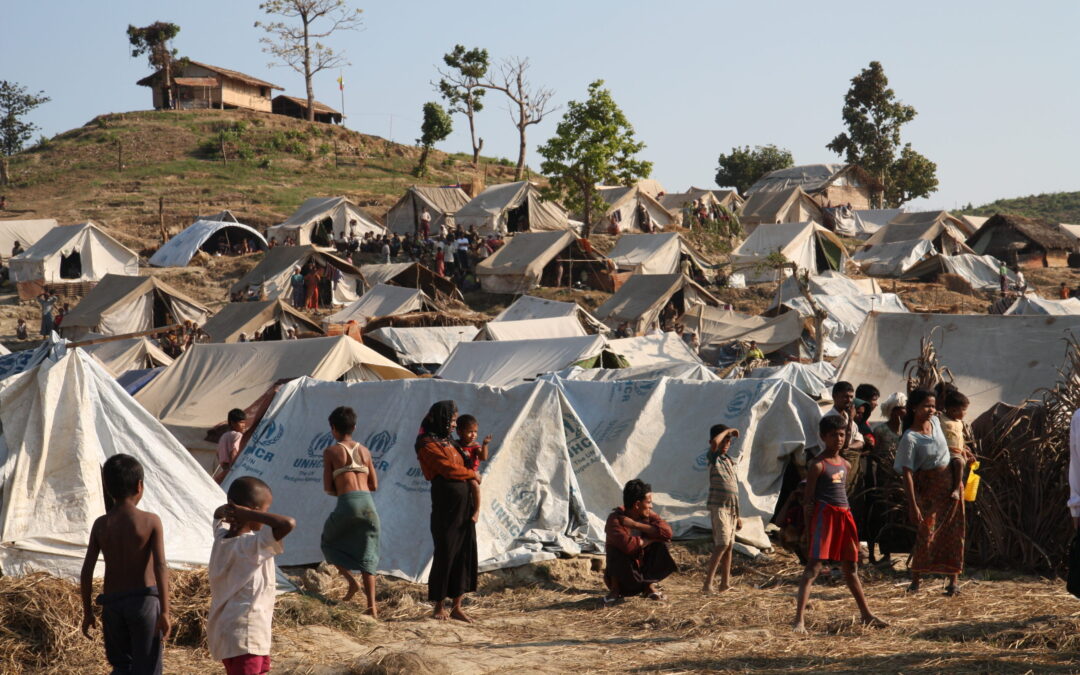
The Gambia has accused Myanmar of violations of the 1948 Genocide Convention in respect of its treatment of Rohingya population, characterized by acts of widespread killing and displacement of the population.
The call comes as Myanmar is scheduled to report on “all measures taken” to give effect to the provisional measures Order (Order) issued by the Court on 23 January 2020.
“Myanmar has not taken ‘all measures within its power’ to prevent acts of genocide until it implements comprehensive legal and constitutional reforms,” said Sam Zarifi, Secretary General of the International Commission of Jurists. “Accountability lies at the heart of prevention, and so long as the Tatmadaw remains unaccountable to the civilian authorities the cycle of impunity for criminal atrocities within the country will continue.”
Since the Order, Myanmar has taken a limited number of steps linked to its compliance with the Order, including issuing three Presidential Directives encouraging anti-hate speech activities, and ordering compliance with the Genocide Convention and the preservation of evidence of human rights and related violations in Rakhine.
Myanmar has also asserted that the findings of the Government-commissioned Independent Commission of Inquiry (ICOE), which made selective admissions including that war crimes may have been committed during the 2017 “clearance operations” in Rakhine, have been transmitted to the Attorney General and the Commander-in-Chief of the Tatmadaw and that action would be taken “in conformity with military justice procedures if there is credible evidence of any commission of offence by members of the Tatmadaw.”
However, the Government has yet to amend or repeal key laws that facilitate discrimination against the Rohingya, including the 1982 Citizenship Law, 2015 Race and Religion Protection Laws and 2014 Myanmar National Human Rights Commission Law. On 6 May 2020, the International Commission of Jurists published a report on the killing of a journalist, Ko Par Gyi, in September 2014, which condemned the fundamentally flawed “military justice procedures” used to address allegations of serious human rights violations. The report highlighted the many deficiencies in ensuring to accountability for serious human rights violations in Myanmar under its prevailing legal framework, including:
- that several provisions of national laws facilitate impunity for serious human rights violations by soldiers against civilians, shield security forces from public criminal prosecutions and deny victims and their families of the right to truth about violations;
- investigations into unlawful killings routinely lack the independence, impartiality and effectiveness necessary to establish the truth and to provide accountability and redress; and
- the rights of victims and their families are rarely respected, including the right to access information concerning the violations and accountability processes, and the right to remedies and reparations.
The UN Human Rights Council has established an Independent Investigative Mechanism to look at allegations of genocide, crimes against humanity and other atrocities in Myanmar, but the government has failed to extend its cooperation with the mechanism.
“Myanmar’s inability to prevent serious human rights violations under the existing legal framework underscores the need for it to cooperate with international justice processes, including the UN’s Independent Investigative Mechanism for Myanmar – and for the UN Security Council to refer the situation to the International Criminal Court,” added Zarifi.
Download the statement with detailed background information here.
Contact
Sam Zarifi, Secretary General of the International Commission of Jurists, t: +41 79 726 4415; e: sam.zarifi(a)icj.org
Kingsley Abbott, Coordinator of the ICJ’s Global Accountability Initiative, t: +66 94 470 1345; e: kingsley.abbott(a)icj.org
Related work
Report: Remove barriers to justice for killing of journalist Ko Par Gyi
Statement: Why law reform is urgent and possible
Statement: Implement International Court of Justice provisional measures Order without delay
Briefing Paper: Four immediate reforms to strengthen the Myanmar National Human Rights Commission
Briefing Paper: Myanmar’s discriminatory citizenship laws can and must be reformed